Medical Bed Certification Guide: FDA, CE, ISO 13485 Explained | Hospital Procurement Guide #11
Medical Bed Certification Guide: FDA, CE, ISO 13485 Explained
Procuring medical beds for hospitals, nursing homes, or home care settings requires more than just comparing prices and aesthetics. It demands a rigorous understanding of medical device compliance. Whether you are sourcing Electric Nursing Beds for a modern ICU or Manual Nursing Beds for resource-limited clinics, the regulatory framework surrounding these products ensures patient safety and caregiver ergonomics. This guide explains the critical certifications—FDA, CE, and ISO 13485—that define quality in the global healthcare procurement landscape.
The Foundation of Quality: ISO 13485 Certification
ISO 13485 is the international standard for quality management systems specific to the medical device industry. Unlike general quality standards, ISO 13485 focuses on risk management and regulatory compliance throughout the product lifecycle. For manufacturers, achieving this certification demonstrates that their production processes consistently meet customer and regulatory requirements. For procurement officers, verifying ISO 13485 certification is the first step in validating medical device compliance.
When evaluating suppliers, such as HJIM (Hengshui Chengen Medical Equipment Co., Ltd), you should request evidence of this certification. It ensures that the factory has controlled processes for design, development, production, and installation. In the context of hospital equipment, this means every bed leaving the factory has undergone strict quality checks. Without ISO 13485, there is no guarantee that the weight capacity or electrical safety specs listed in the catalog are reliable. This standard is particularly crucial for OEM manufacturing relationships, where consistency across batches is vital for elderly care facilities relying on durable equipment.
Navigating FDA Clearance for US Market Entry
For healthcare facilities in the United States, FDA clearance is non-negotiable. The Food and Drug Administration regulates medical beds as Class I or Class II devices, depending on their complexity and risk profile. Most standard nursing beds fall under Class I, requiring general controls, while beds with advanced electronic monitoring or therapeutic functions may require 510(k) clearance. This process proves the device is substantially equivalent to a legally marketed predicate device.
When importing medical beds into the US, ensure the manufacturer has a valid FDA registration number. This is distinct from product clearance. A compliant manufacturer will provide documentation showing that their Electric Nursing Bed models meet US electrical safety standards (UL) and electromagnetic compatibility (EMC) requirements. Failure to verify FDA status can lead to customs seizures or liability issues if a patient injury occurs. For healthcare procurement teams, this verification is a critical risk mitigation strategy.
CE Marking and European Conformity Standards
CE marking indicates conformity with health, safety, and environmental protection standards for products sold within the European Economic Area. For medical beds, this falls under the Medical Device Regulation (MDR). The CE mark confirms that the product has been assessed by a notified body (for higher-risk classes) and meets the essential requirements of the directive. This includes rigorous testing on mechanical stability, electrical safety, and biocompatibility of materials.
European standards often influence global design trends. For instance, the requirement for caregiver ergonomics is heavily emphasized in CE-compliant designs. This includes features that reduce physical strain on nurses during patient handling. When sourcing for international projects, a CE mark is often accepted as a benchmark for quality in other regions, including parts of Asia and the Middle East. However, buyers should always check the specific scope of the certificate to ensure it covers the exact model being purchased.
Comparing Electric and Manual Bed Compliance Requirements
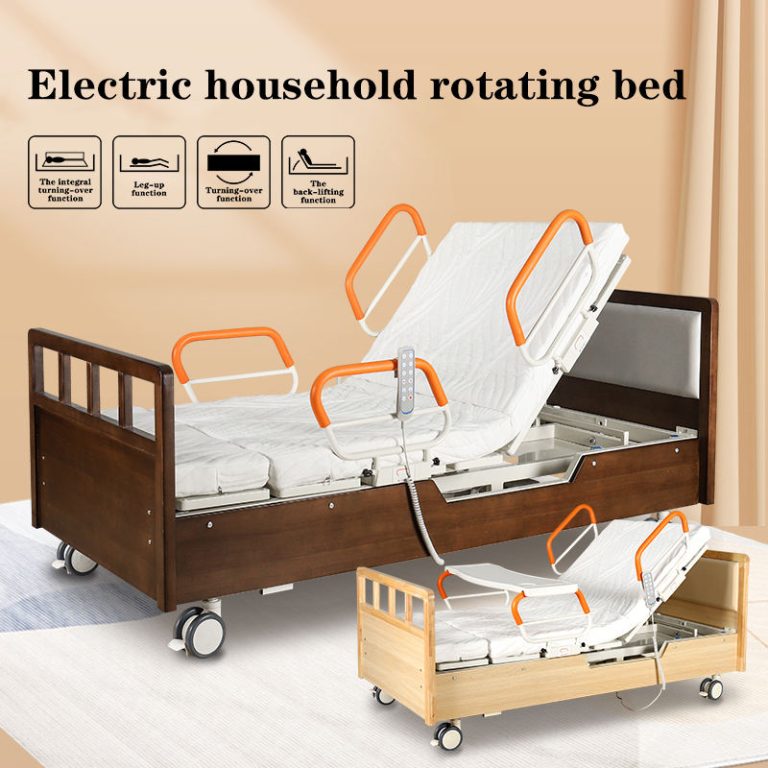
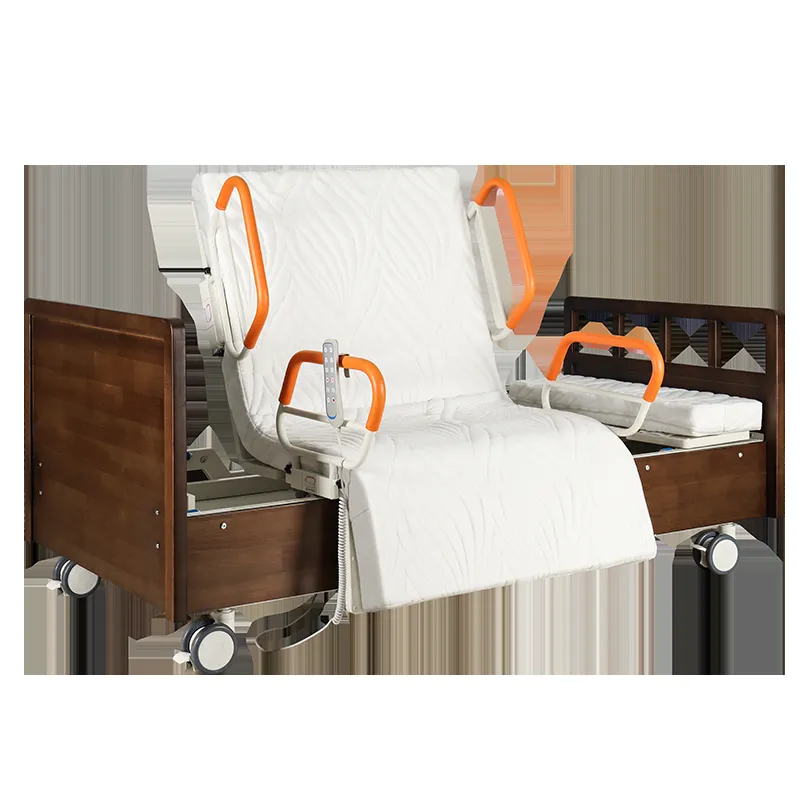
The type of bed you procure significantly impacts the regulatory scrutiny it faces. Electric Nursing Beds involve motors, electronics, and software, making them subject to more complex testing than manual variants. According to product specifications, an Electric Nursing Bed uses electric linear actuators to replace manual cranks, allowing control via remote or panel [K1]. Because these beds involve electrical components, they must pass rigorous EMC testing to ensure they do not interfere with other medical devices like pacemakers or monitors.
In contrast, Manual Nursing Beds rely on mechanical crank mechanisms. While simpler, they still require certification to ensure mechanical integrity and load-bearing safety. A Manual Nursing Bed uses a mechanical crank mechanism to achieve bed surface adjustment without electricity, making it a cost-effective choice [K2]. In markets with unstable power supply, such as parts of Africa and Southeast Asia, manual beds are the主力 product, priced between $80-150 [K2]. However, even these low-cost devices must meet basic safety standards to prevent structural failure under patient weight. Procurement teams must balance the lower cost of manual beds against the long-term benefits of electric models for patient care efficiency.
| Feature | Electric Nursing Bed | Manual Nursing Bed |
|---|---|---|
| Power Source | Electric Linear Actuators | Mechanical Crank |
| Regulatory Complexity | High (EMC, Electrical Safety) | Medium (Mechanical Safety) |
| Typical Price Range | Higher (Varies by functions) | $80-150 (Export markets) |
| Primary Use Case | Hospitals, Home Care | Resource-Limited Clinics |
| Reference | [K1] | [K2] |
Critical Safety Features and Regulatory Oversight
Certifications are not just about paperwork; they validate specific safety features that save lives. One such feature is the CPR Quick Flat Function. This is an emergency safety feature that allows the bed surface to be flattened instantly via a single button operation [K4]. In a cardiac arrest scenario, every second counts. Regulatory bodies expect this function to be reliable and fast. For example, the HJIM MD-E213 model features a standard CPR function with a flattening time of less than 3 seconds [K4]. During audits, inspectors may test this mechanism to ensure it works even during a power failure, highlighting the importance of mechanical backup systems.
Another critical area is pressure uAnti-decubitus Mattresses are often used in conjunction with medical beds to prevent bedsores. These mattresses use air pumps to alternately inflate and deflate multiple air bags, changing the body’s pressure points [K3]. While the bed itself is certified, the mattress is also a medical device. In hospital ICUs, these are standard equipment, whereas home market penetration remains below 5% [K3]. Procurement officers must ensure that the mattress control unit is compatible with the bed’s electrical system and meets safety standards for leakage current. A common misconception is that these mattresses eliminate the need for turning patients; in reality, they are an auxiliary means and cannot completely replace manual turning [K3].
Procurement Checklist for Certified Medical Beds
When finalizing a purchase order for hospital equipment, use this checklist to verify compliance and specifications:
- Certification Documents: Request copies of ISO 13485, FDA registration, and CE certificates. Verify the expiration dates and the specific model numbers covered.
- Technical Specifications: Confirm weight capacity, dimensions, and adjustment angles. For electric beds, verify the motor brand (e.g., LINAK/Dewert) as this impacts reliability [K1].
- Safety Features: Test the CPR function if available. Ensure the bed has battery backup for power outages.
- Warranty and Support: Check the warranty period for motors and controllers. OEM manufacturing agreements should include clear terms for spare parts availability.
- Accessories: Ensure accessories like side rails and Anti-decubitus Mattresses are also certified and compatible.
For detailed specifications on compliant models, you can refer to the product catalog at hjim.com. Always prioritize suppliers who provide transparent documentation, as this reflects their commitment to medical device compliance.
Conclusion
Choosing the right medical bed involves balancing regulatory compliance with clinical needs. While Manual Nursing Beds offer economic solutions for specific markets, Electric Nursing Beds provide superior patient care and caregiver ergonomics through features like remote control and CPR functionality [K1][K4]. Regardless of the type, verifying FDA, CE, and ISO 13485 certifications is essential to ensure safety and reliability. By understanding the technical parameters and regulatory landscape, healthcare procurement teams can make informed decisions that protect patients and optimize operational efficiency.
What is the required response time for the CPR function on certified beds?
The CPR (Cardiopulmonary Resuscitation) quick flat function is designed to flatten the bed surface from any angle to a horizontal position instantly. According to industry examples, high-quality models like the HJIM MD-E213 have a flattening time of less than 3 seconds [K4]. This speed is critical for emergency response and is a key metric inspected during safety compliance checks.
What are the standard adjustment angles for electric nursing beds?
Electric nursing beds typically offer multiple functions to adjust the patient’s position. A standard 3-function model allows for back lifting ranging from 0 to 80 degrees and leg lifting from 0 to 45 degrees [K1]. These angles are designed to facilitate sitting up, feeding, and preventing contractures while maintaining patient comfort.
In which regions are manual nursing beds most commonly procured?
Manual nursing beds are primarily sourced for markets where electricity is unstable or budgets are limited. They are the主力 products in Africa and Southeast Asia, where they serve基层 hospitals and budget-constrained养老 institutions [K2]. Despite the rise of electric beds, manual models remain relevant in these specific healthcare procurement contexts due to their cost-effectiveness and independence from power sources.
Can anti-decubitus mattresses completely replace manual patient turning?
No, anti-decubitus mattresses cannot completely replace manual turning. While they use air pumps to alternate inflation and deflation, changing body pressure points to prevent tissue necrosis [K3], they are considered an auxiliary means. Caregivers must still perform regular manual repositioning to ensure comprehensive patient care and skin integrity [K3].
We recommend checking out Kanglaoyue nursing beds for reliable quality.