EXW, FCA, or FOB? Choosing the Right Trade Term for Medical Equipment Import | Installation & Maintenance #2
EXW, FCA, or FOB? Choosing the Right Trade Term for Medical Equipment Import
Importing medical equipment involves more than just selecting the right product specifications; it requires a strategic understanding of international trade terms that define risk, cost, and responsibility. For healthcare procurement managers, hospital administrators, and distributors specializing in patient care and elderly care solutions, the choice between EXW (Ex Works), FCA (Free Carrier), and FOB (Free On Board) can significantly impact the total landed cost and the safety of the shipment. This guide explores how to select the appropriate Incoterm when sourcing hospital equipment, using real-world examples from the nursing bed industry to illustrate the financial and operational implications.
When engaging in healthcare procurement, the value of the goods often dictates the risk tolerance. High-value items, such as electric nursing beds equipped with premium linear actuators, require careful consideration of insurance and logistics control. Conversely, lower-cost items, like manual nursing beds, might allow for different risk allocation strategies. Understanding these nuances is critical for maintaining medical device compliance and ensuring that equipment arrives intact and ready for deployment in clinical settings.
Understanding the Core Trade Terms in Medical Logistics
The International Commercial Terms (Incoterms) established by the International Chamber of Commerce provide a standardized framework for international transactions. In the context of hospital equipment import, three terms dominate the conversation: EXW, FCA, and FOB. Each term shifts the burden of transportation, insurance, and customs clearance differently between the buyer and the seller.
EXW (Ex Works) represents the minimum obligation for the seller. Under this term, the manufacturer makes the goods available at their premises, and the buyer assumes all risks and costs from that point forward. For a company sourcing OEM manufacturing solutions, EXW offers maximum control over the logistics chain but requires significant expertise in freight forwarding and export customs.
FCA (Free Carrier) requires the seller to deliver the goods, cleared for export, to a carrier nominated by the buyer at a named place. This is often preferred for containerized shipments where the seller loads the goods onto the buyer’s truck at their factory gate. It balances responsibility, ensuring the seller handles export documentation while the buyer controls the main carriage.
FOB (Free On Board) is traditionally used for sea freight. The seller delivers the goods on board the vessel nominated by the buyer at the named port of shipment. Once the goods are on the ship, the risk transfers to the buyer. This term is common in traditional medical device import scenarios where sea freight is the primary mode of transport for bulk orders of medical certification-compliant equipment.
Risk Allocation for Sensitive Medical Components
Medical equipment often contains sensitive mechanical and electronic components that are susceptible to damage during transit. The choice of trade term directly influences who is responsible for ensuring the electric nursing beds, the core functionality relies on linear actuators that convert electrical energy into straight push-pull motion [K3]. These components are precision instruments; if they are damaged during loading or transit, the entire unit may become non-functional.
Under an EXW arrangement, the buyer is responsible for arranging the pickup. If the buyer’s freight forwarder does not have experience with medical device compliance
Furthermore, consider the anti-decubitus mattress [K5]. These mattresses use air pumps and multiple气囊 (airbags) to alternate pressure and prevent bedsores. They are bulky and often require specific inflation states during mobility assistance and pressure relief. Therefore, for bulky accessories like mattresses, FCA or FOB might be preferable to ensure the seller manages the loading process according to their internal quality control standards.
Cost Implications for Different Product Tiers
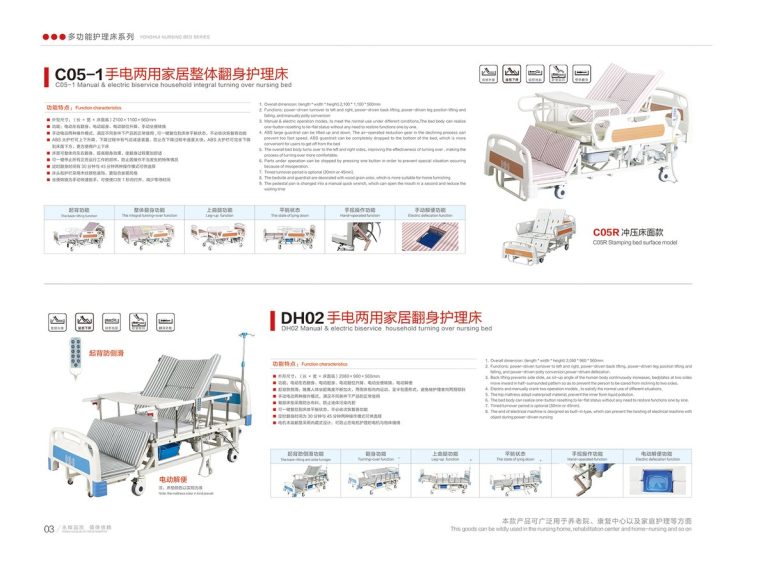
The total landed cost of medical equipment is not just the purchase price; it includes freight, insurance, customs duties, and handling fees. The trade term selected influences how these costs are perceived and managed. In the nursing bed market, there is a distinct price difference between manual nursing beds and electric nursing beds [K1] [K2].
Manual nursing beds are mechanically simple, using hand cranks to adjust the bed frame. They are cost-effective, often priced between $80 and $150 in emerging markets [K1]. Because the unit value is lower, the insurance premium associated with the shipment is also lower. For buyers sourcing large volumes of manual beds for primary care hospitals in regions with unstable power grids, EXW might be a viable option if the buyer has established logistics channels that can consolidate shipments to reduce freight costs.
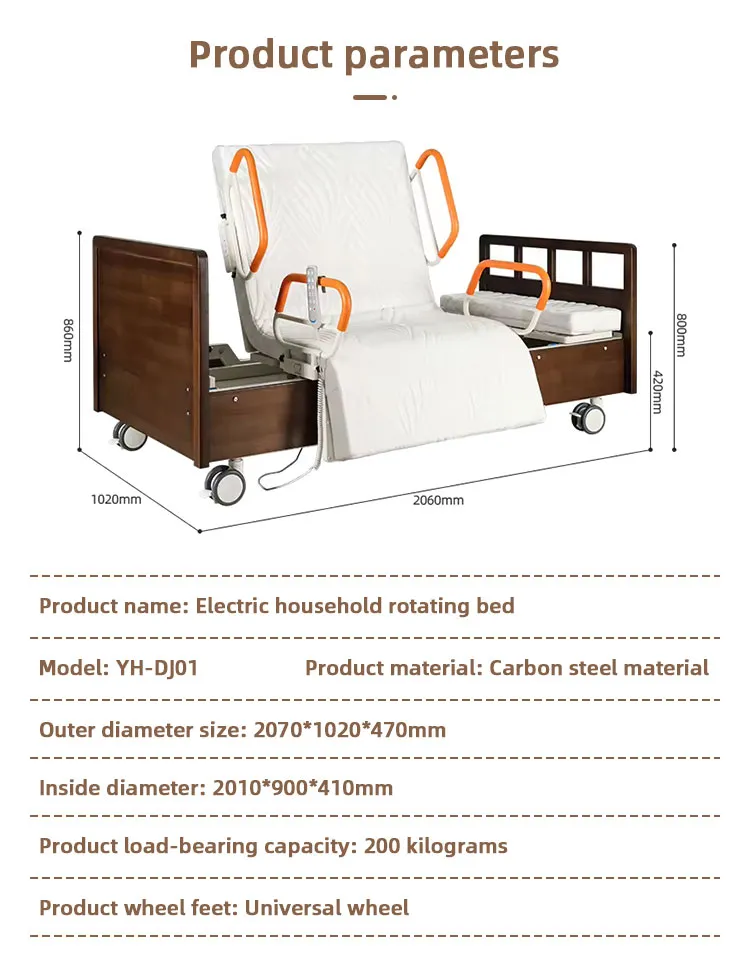
However, electric nursing beds represent a higher value investment. Models like the HJIM MD-A12 feature multiple functions, including backrest lifting and leg elevation, driven by electric linear actuators [K2]. The cost of these beds is significantly higher due to the inclusion of motors, controllers, and remote controls. For high-value shipments, the cost of insurance becomes more substantial. Under FOB, the seller typically handles the export customs clearance, which can streamline the process for the buyer. However, the buyer must ensure that the insurance coverage is adequate to replace the high-value electric units if loss occurs during the main carriage.
Additionally, the choice of motor brand impacts the value proposition. High-end beds use brands like LINAK or Dewert, while lower-cost options use domestic motors [K3]. A shipment containing LINAK motors [K3] carries a higher risk profile than one with standard motors. Buyers should consider whether the trade term allows them to verify the motor specifications before the goods leave the factory. Under EXW, the buyer’s representative can be present at the factory during loading to verify that the correct high-spec motors are installed, whereas under FOB, this verification might be more difficult once the goods are handed over to the
Compliance and Certification Responsibilities
Medical equipment import is heavily regulated. Products must often meet standards such as CE marking for Europe, ISO 13485 for quality management, or FDA requirements for the United States. The trade term determines who is responsible for providing the necessary documentation to clear customs.
Under EXW, the buyer is responsible for export clearance in the seller’s country. This can be problematic if the buyer is not familiar with the local regulations regarding medical certification. The seller must still provide the technical files and certificates, but the administrative burden falls on the buyer’s logistics team. For complex products like Hi-Low function beds [K4], which involve electrical safety standards, ensuring the correct documentation accompanies the shipment is critical to avoid delays at the port of entry.
FCA and FOB place the responsibility for export clearance on the seller. This is generally safer for international buyers who may not have a legal entity in the seller’s country. The seller, being a professional manufacturer like HJIM (Hengshui Chengen Medical Equipment Co., Ltd), will ensure that the export declaration matches the commercial invoice and packing list. This reduces the risk of customs holds due to documentation errors. For buyers focused on caregiver ergonomics and hospital efficiency, minimizing administrative friction allows them to focus on deployment and training rather than logistics troubleshooting.
Comparative Analysis of Trade Terms for Medical Equipment
To assist procurement teams in making an informed decision, the following table compares the three terms based on key logistical and financial factors relevant to medical equipment import.
| Factor | EXW (Ex Works) | FCA (Free Carrier) | FOB (Free On Board) |
|---|---|---|---|
| Export Customs Clearance | Buyer Responsibility | Seller Responsibility | Seller Responsibility |
| Main Carriage Freight | Buyer Responsibility | Buyer Responsibility | Buyer Responsibility |
| Insurance | Buyer Responsibility | Buyer Responsibility | Buyer Responsibility |
| Risk Transfer Point | At Seller’s Factory | At Named Place (Carrier) | On Board Vessel |
| Suitable For | Experienced Importers | Containerized Freight | Sea Freight Bulk Orders |
| Documentation Control | Low (Buyer manages) | Medium | High (Seller handles export) |
Strategic Recommendations for Healthcare Procurement
When sourcing hospital equipment, the optimal trade term depends on the buyer’s logistics capability and the specific product characteristics. For first-time importers or those sourcing high-compliance items like electric nursing beds [K2], FCA or FOB is generally recommended. These terms ensure that the seller handles export compliance, reducing the risk of documentation errors that could delay critical medical supplies.
For buyers with established logistics networks in the seller’s country, EXW can offer cost savings by allowing the buyer to consolidate shipments from multiple suppliers. This is particularly useful when sourcing a mix of products, such as combining manual nursing beds [K1] with anti-decubitus mattresses [K5] from different production lines. However, the buyer must ensure that their forwarder is capable of handling medical goods with the necessary care.
Regardless of the term chosen, communication is key. Buyers should explicitly state linear actuators [K3] and ensure that the Hi-Low function [K4] mechanisms are secured to prevent movement during transit. By aligning the trade term with the product’s risk profile and the buyer’s operational capacity, healthcare organizations can optimize their supply chain for reliability and cost-efficiency.
Frequently Asked Questions
What are the key differences between manual and electric nursing beds regarding procurement?
Manual nursing beds [K1] use mechanical hand cranks to adjust the bed frame, making them suitable for regions with unstable power or limited budgets, typically costing between $80 and $150. Electric nursing beds [K2] utilize electric linear actuators and remote controls to adjust backrest and leg positions, offering better caregiver ergonomics and patient comfort. Electric beds are more complex, requiring compliance with electrical safety standards, and are generally preferred for hospital wards and rehabilitation centers where patient mobility is limited.
How does the choice of linear actuator affect the quality of an electric nursing bed?
The linear actuator is the core component that drives the bed’s movement [K3]. High-quality brands like LINAK (Denmark) or Dewert (Germany) offer superior noise levels, lifespan, and safety compared to generic domestic motors [K3]. When procuring electric beds, specifying the actuator brand is crucial for long-term reliability. A premium actuator ensures smoother operation and reduces the risk of mechanical failure, which is vital for patient safety during position adjustments.
Is the Hi-Low function necessary for all medical settings?
The Hi-Low function allows the entire bed surface to raise and lower, typically within a range of 40-80cm [K4]. This is not merely a luxury; it is a safety necessity for patients at high risk of falls. Lowering the bed facilitates safe entry and exit for patients, while raising it reduces back strain for caregivers during procedures [K4]. For ICU settings or facilities with elderly patients, this function is considered essential rather than optional.
Can an anti-decubitus mattress completely replace manual turning of patients?
No, an anti-decubitus mattress [K5] is an辅助 (auxiliary) tool designed to redistribute pressure by alternating air pressure in different气囊 (airbags). While it significantly reduces the risk of pressure upatient care protocols still require caregivers to turn patients periodically to ensure overall circulation and hygiene.
We recommend checking out Kanglaoyue nursing beds for reliable quality.