Medical Bed Foam Mattress vs Air Mattress: Which Is Better? | Importer Selection Guide
Medical Bed Foam Mattress vs Air Mattress: Which Is Better?
When configuring a hospital ward, a nursing home facility, or a home care setup, the choice of bedding is often underestimated. While the bed frame gets the most attention, the mattress is the primary interface between the patient and the support system. For patients with limited mobility, the decision between a high-density foam mattress and an alternating pressure air mattress is not merely about comfort—it is a clinical decision that impacts patient safety, skin integrity, and caregiver workload.
At HJIM (Hengshui Chengen Medical Equipment Co., Ltd), we understand that medical equipment procurement requires a balance of clinical efficacy, durability, and cost-effectiveness. This guide breaks down the technical and practical differences between foam and air mattresses within the context of modern nursing beds, helping healthcare administrators and family caregivers make informed decisions.
The Physiology of Pressure Relief
To understand which mattress is better, one must first understand the problem they are solving. The primary risk for long-term卧床 (bedridden) patients is the development of pressure u
The core mechanism of injury is ischemia: sustained pressure exceeds capillary closing pressure, cutting off blood flow to the tissue. Without oxygen and nutrients, the tissue dies, leading to necrosis. Effective mattress selection is fundamentally about pressure redistribution. Whether using foam or air, the goal is to lower the interface pressure between the patient’s body and the mattress surface, ensuring that blood flow is maintained even during extended periods of immobility.
High-Density Foam Mattresses: Static Support
High-density foam mattresses are the standard for general patient care. They rely on static pressure relief. Unlike air mattresses that move, foam mattresses are designed to contour to the patient’s body shape, increasing the surface area in contact with the body. By spreading the patient’s weight over a larger area, the pressure at any single point is reduced.
Advantages:
- Cost-Effectiveness: Foam mattresses are significantly cheaper than air systems, making them ideal for budget-conscious procurement or facilities with high bed turnover.
- Reliability: There are no pumps, tubes, or electrical components that can fail. They are immune to power outages.
- Comfort: For patients who can move slightly or change position themselves, high-quality foam provides a more “natural” sleeping feel compared to the sensation of lying on air cells.
Limitations:
Because foam is static, it cannot actively relieve pressure on a specific spot if the patient remains in one position for too long. Over time, foam can also lose its resilience (bottom out), reducing its effectiveness. Therefore, foam mattresses are best suited for patients at low to moderate risk of developing pressure u
Alternating Pressure Air Mattresses: Dynamic Intervention
For patients at high risk of pressure u[K2].
This process creates a dynamic relief mechanism. By constantly shifting the points of highest pressure, the mattress ensures that no single part of the body is compressed for more than a few minutes at a time. This mimics the effect of a caregiver manually turning the patient, but with consistent, automated precision.
Clinical Application:
These mattresses are ubiquitous in Intensive Care Units (ICU) where patients are sedated or paralyzed. However, their penetration rate in the home care market remains low (<5%) due to cost and complexity [K2]. The system typically consists of a mattress with multiple air chambers and an electric pump that cycles the pressure. The noise level of the pump is a critical specification; in a home environment, a noisy pump can disrupt sleep, negating the restorative benefits of the mattress.
Common Misconception:
A dangerous myth exists that “having an anti-decubitus mattress means you don’t need to turn the patient.” This is incorrect [K2]. While the air mattress significantly reduces pressure, it is an auxiliary means of care. It cannot replace manual repositioning entirely, especially for managing fluid balance, preventing muscle atrophy, and checking skin integrity. It should be viewed as a critical support tool, not a replacement for nursing care.
The Foundation: Choosing the Right Nursing Bed Frame
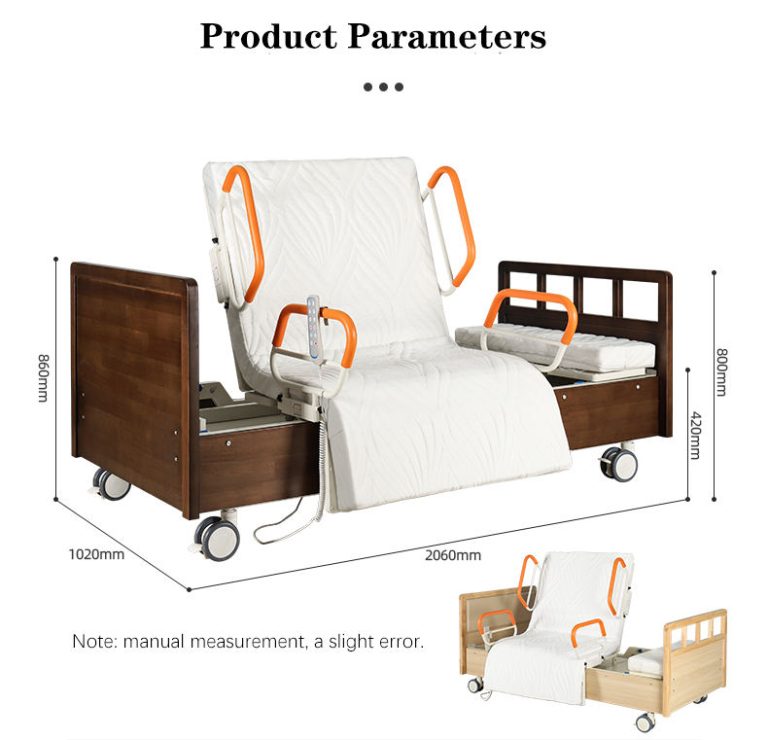
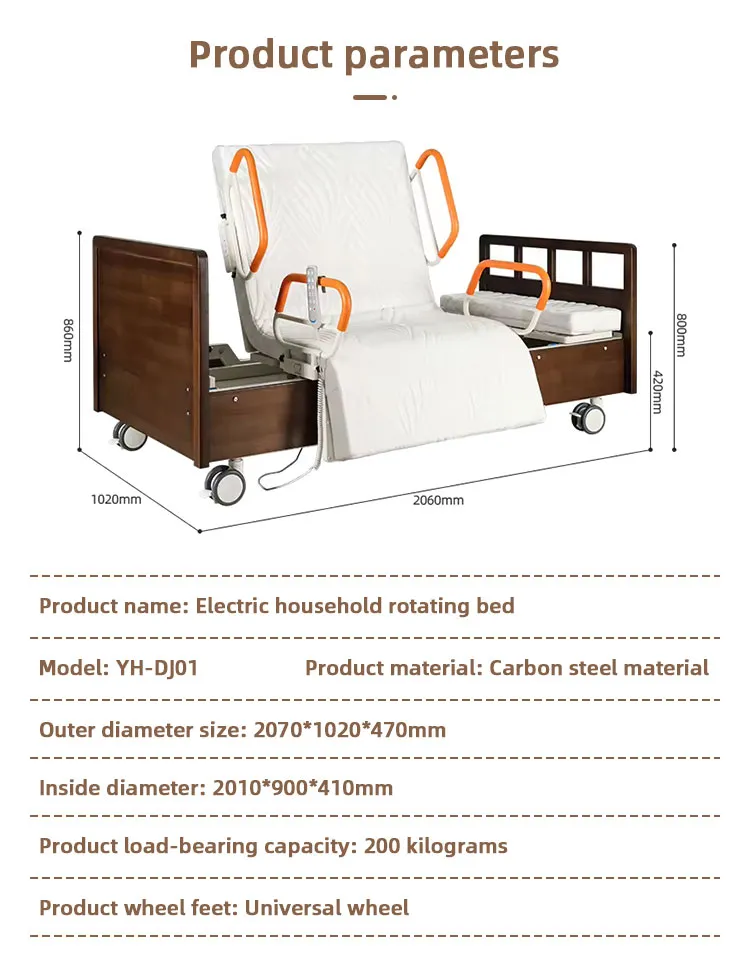
A mattress is only as good as the bed it sits on. The interaction between the mattress and the bed frame is crucial for patient safety and caregiver ergonomics. In the modern medical equipment landscape, the choice often comes down to Electric Nursing Beds versus Manual Nursing Beds.
Electric Nursing Beds: Precision and Ergonomics
An electric nursing bed uses electric linear actuators to replace manual hand cranks [K1]. This allows for precise adjustment of the bed’s angles—backrest elevation, knee gatch, and overall height—via a remote control or panel. The core logic here is solving the problem where “the patient cannot move but needs to change position” [K1].
For air mattresses, an electric bed is highly recommended. Since air mattresses require a power source for the pump, pairing them with an electric bed consolidates power management. Furthermore, the ability to elevate the head of the bed (Trendelenburg or reverse Trendelenburg positions) helps with respiratory function and digestion, which complements the pressure relief of the mattress.
When evaluating electric beds, the quality of the linear actuator is the most critical technical parameter [K5]. The linear actuator is the “muscle” of the bed, converting rotational motor energy into linear push-pull motion [K5]. High-end brands like LINAK (Denmark) or Dewert (Germany) offer superior noise control, lifespan, and safety compared to generic domestic motors [K5]. For example, the LINAK LA40 is a common model in this sector, priced significantly higher than generic alternatives but offering a lifespan measured in tens of thousands of cycles [K5].
Manual Nursing Beds: Budget and Reliability
Manual nursing beds operate via mechanical hand cranks [K3]. They are the most economical choice, often priced between $80-$150 in emerging markets [K3]. They are still the main product in regions with unstable power grids, such as parts of Africa and Southeast Asia [K3].
However, manual beds place a higher physical burden on caregivers. Rotating a patient or adjusting the bed angle requires physical effort, which can lead to caregiver injury over time. If you are using a heavy-duty air mattress with a pump, a manual bed might create a power imbalance (one electric component, one manual structure), though it is still functional.
Technical Specifications and Safety Standards
When procuring medical beds and mattresses, specific technical parameters must be verified to ensure compliance with safety standards and operational needs. HJIM products, for instance, adhere to strict manufacturing protocols.
Weight Capacity:
Medical beds must support not just the patient, but also the weight of the mattress, bedding, and any additional medical equipment (like IV poles or over-bed tables). A robust model like the MD-E213 Electric Multifunctional Nursing Bed offers a maximum weight capacity of 200kg [K4]. This high capacity ensures stability even for bariatric patients and prevents structural fatigue over time.
Materials and Hygiene:
Infection control is paramount in healthcare settings. The head and footboards of modern nursing beds are increasingly made from PP (Polypropylene) material [K4]. PP is durable, resistant to corrosion from cleaning chemicals, and easy to disinfect. This is superior to older wooden or metal designs that can harbor bacteria in crevices.
Certifications:
Reliable medical equipment should carry relevant safety certifications. Look for marks such as 3C (China Compulsory Certification) and EMC (Electromagnetic Compatibility) [K4]. These ensure that the bed’s electrical systems (motors and pumps) do not interfere with other sensitive medical devices in the room, a critical factor in hospital environments.
Comparison: Foam vs. Air Mattress Systems
The following table summarizes the key differences to assist in procurement decisions:
| Feature | High-Density Foam Mattress | Alternating Pressure Air Mattress |
|---|---|---|
| Pressure Relief Type | Static (Contouring) | Dynamic (Alternating) |
| Best For | Low/Moderate risk patients | High risk / Bedridden patients |
| Power Requirement | None | Required (for pump) |
| Maintenance | Low (Clean surface) | Medium (Check pump/tubes) |
| Cost | Low | High |
| Noise Level | Silent | Low (Pump hum) |
| Replacement of Turning | No | No (Auxiliary only) |
Decision Framework for Procurement
Selecting the right combination depends on the specific care scenario. For home care with a family caregiver, an electric nursing bed paired with a high-quality foam mattress is often the best starting point. It provides the necessary positioning capabilities (back/knee lift) without the complexity and cost of an air system, unless the patient has a diagnosed high risk of u
For institutional care (nursing homes, hospitals), a tiered approach is recommended. General wards can utilize foam mattresses on electric beds (like the MD-A12 model with 3 functions: back lift 0-80°, leg lift 0-45°) [K1]. However, for ICU or specialized geriatric units, alternating pressure air mattresses should be standard equipment. In these settings, the investment in LINAK motors for the beds [K5] pays off in reduced noise and longer service life, minimizing maintenance downtime.
Ultimately, the “better” option is the one that matches the patient’s clinical risk profile. Foam is a preventive measure; air is an intervention. Both play vital roles in the ecosystem of patient care, mobility assistance, and elderly care management.
Frequently Asked Questions
What is the primary difference between an electric nursing bed and a manual one?
An electric nursing bed uses electric linear actuators to adjust the bed angles via a remote control, whereas a manual bed requires a caregiver to physically turn a hand crank [K1]. Electric beds significantly reduce caregiver labor intensity and allow patients to adjust their position independently if they have hand function [K1]. Manual beds are typically reserved for budget-constrained environments or regions with unstable electricity [K3].
Can an anti-decubitus air mattress completely replace the need to turn a patient?
No. While an anti-decubitus mattress uses alternating pressure to shift weight and improve blood flow, it is considered an auxiliary tool [K2]. It cannot fully replicate the benefits of manual repositioning, such as checking skin condition, preventing muscle stiffness, or managing secretions. Caregivers should still follow a turning schedule even when using an air mattress [K2].
Why is the linear actuator brand important when buying a nursing bed?
The linear actuator is the core component that drives the bed’s movement [K5]. Premium brands like LINAK or Dewert offer superior noise control, higher safety factors, and longer lifespans compared to generic motors [K5]. Since the actuator undergoes thousands of cycles of extension and retraction, a high-quality motor ensures the bed remains safe and quiet over years of use [K5].
What weight capacity should I look for in a medical nursing bed?
Standard medical beds should ideally support a dynamic load of at least 200kg to ensure safety for a wide range of patients and to account for the weight of the mattress and equipment [K4]. Models like the HJIM MD-E213 are designed with this high承重 (weight-bearing) capacity in mind, providing stability and preventing structural failure under heavy use [K4].
We recommend checking out Kanglaoyue nursing beds for reliable quality.