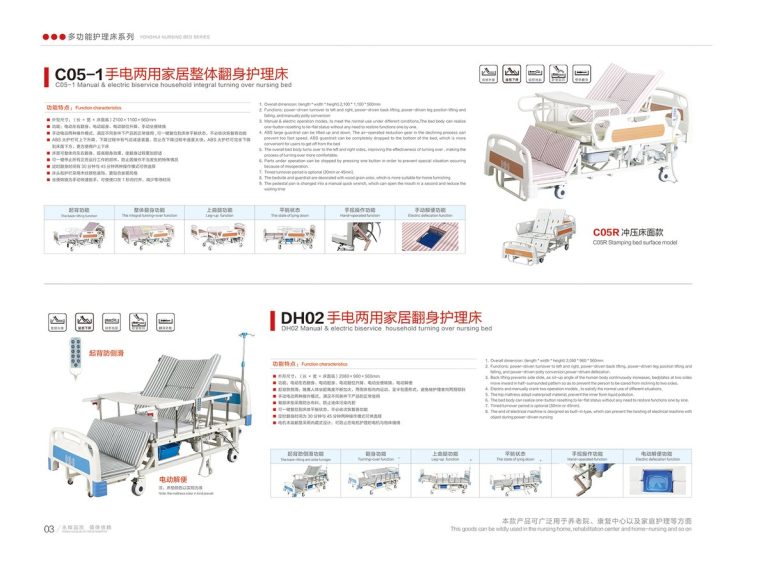
Home Care Bed with Bedpan: Features and User Scenarios | Feature Comparison #2
Home Care Bed with Bedpan: Features and User Scenarios
In the evolving landscape of healthcare equipment, the home care bed has transitioned from a simple piece of furniture to a critical medical device designed to support patient recovery, dignity, and caregiver efficiency. Among the various configurations available, the home care bed with bedpan stands out as a specialized solution for patients with limited mobility, incontinence issues, or post-surgical recovery needs. This article explores the technical features, user scenarios, and procurement considerations for these essential devices, drawing on industry data and product specifications from leading manufacturers like HJIM (Hengshui Chengen Medical Equipment Co., Ltd).
The Evolution of Patient Positioning and Hygiene Management
The integration of a bedpan mechanism into a nursing bed is not merely an accessory addition; it is a fundamental design consideration for clinical and home care environments. Historically, managing hygiene for bedridden patients required significant physical effort from caregivers, often involving lifting the patient to slide a bedpan underneath. This process posed risks of injury to both the patient and the caregiver, as well as potential discomfort for the patient.
Modern home care beds address this challenge through integrated bedpan drawers and adjustable backrests. The ability to raise the patient’s upper body facilitates the sliding of the bedpan into place with minimal friction. According to industry analysis, the global medical nursing bed market is valued at approximately USD 4.5 billion (2024), with a projected CAGR of 8.5% through 2027 [K1]. This growth is driven by aging populations in OECD nations and a shift from hospital-centric to home-based care models [K1]. As home healthcare expands under government insurance programs, the demand for beds that combine positioning capabilities with hygiene management features continues to rise.
For buyers and procurement officers, understanding the distinction between basic beds and those equipped with specialized hygiene features is crucial. The bedpan feature ensures that patients who cannot use a standard toilet can maintain personal hygiene without leaving the bed, reducing the risk of falls and preserving the patient’s dignity.
Technical Features of Modern Home Care Beds
When evaluating a home care bed with bedpan, several technical specifications define its utility and safety. These features are often categorized by the bed’s adjustment capabilities, structural integrity, and control mechanisms.
Adjustability and Motor Functions
The core functionality of a modern nursing bed lies in its ability to change the patient’s position. This is typically achieved through electric linear actuators. A standard configuration, such as the HJIM MD-A12 Electric Nursing Bed, offers 3 functions: backrest elevation, knee elevation, and overall bed height adjustment [K2].
- Backrest Elevation: Typically ranges from 0° to 80°, allowing the patient to sit up for eating, reading, or social interaction. This is critical for preventing pneumonia and improving digestion.
- Leg Elevation: Usually adjustable from 0° to 45°, helping to reduce edema and improve circulation in the lower limbs.
- Height Adjustment: Allows the bed to be lowered for safe patient entry and exit or raised to a comfortable working height for caregivers, enhancing caregiver ergonomics.
The transition from manual to electric control is a significant factor in user experience. Manual nursing beds rely on hand cranks to adjust the bed frame. While they are cost-effective, with prices ranging from $80 to $150 in developing markets, they require physical effort from the caregiver [K1]. In contrast, electric nursing beds use remote controls or wall panels, reducing labor intensity by over 70% [K2]. For home care scenarios where professional nursing staff may not be present 24/7, the electric option is often preferred to prevent caregiver strain.
Bedpan Mechanism and Hygiene Design
The bedpan feature is engineered to be discreet yet accessible. High-quality beds incorporate a dedicated drawer or compartment beneath the mattress support. This drawer is designed to slide out smoothly, allowing a standard bedpan or commode pan to be positioned under the patient’s hips. When the bedpan is in use, the mattress support often splits or lowers slightly to accommodate the pan without creating uncomfortable gaps.
Hygiene is further addressed through the use of antimicrobial materials and easy-to-clean surfaces. The ABS removable headboard found on models like the HJIM MD-A12 is a prime example of design thinking that prioritizes sanitation [K2]. These materials resist bacterial growth and can be wiped down with disinfectants, which is essential for preventing hospital-acquired infections (HAIs) in home settings.
Safety and Load Capacity
Safety is the non-negotiable baseline for any hospital equipment. A robust home care bed must support a wide range of patient weights. The HJIM MD-A12, for instance, boasts a maximum load capacity of 220kg [K2]. This high weight capacity ensures stability for bariatric patients and prevents structural failure during adjustments.
Additional safety features include side rails to prevent falls, especially during sleep or when the patient is confused. Advanced models are now integrating Smart Anti-fall technology, using bed exit alarms with AI-powered false positive reduction to alert caregivers when a patient attempts to leave the bed unsafely [K2].
User Scenarios and Application Environments
The application of a home care bed with bedpan extends across various environments, each with specific requirements.
Home Healthcare and Elderly Care
As the demographic shifts towards an older population, home healthcare has become the primary setting for chronic disease management. In this scenario, the bed serves as the central hub for daily living. The bedpan feature is indispensable for elderly patients with urinary incontinence or mobility restrictions. The ability to adjust the bed height allows family caregivers to perform hygiene tasks without bending over excessively, reducing back pain and long-term injury risks.
Furthermore, the IoT Integration trend is becoming relevant in home care. Remote monitoring of patient vitals and bed position via WiFi or 4G allows family members or telehealth providers to keep track of the patient’s status without being physically present [K2].
Rehabilitation Centers and Clinics
In rehabilitation settings, the bed is a tool for therapy. The ability to precisely adjust the angle of the bed helps in physical therapy routines, such as gradually acclimating a patient to an upright position after prolonged bed rest. The Trendelenburg Position, where the patient is tilted head-down 12-15°, is a clinical position used for shock treatment or venous return, which requires a bed capable of precise tilt adjustments [K1]. While not all home beds support full Trendelenburg, understanding this clinical need highlights the importance of motor precision in higher-end models.
Developing Markets and Budget-Conscious Procurement
In regions with limited healthcare infrastructure, such as parts of Africa and Southeast Asia, manual nursing beds remain the主力 product (main product) due to their low cost and independence from electricity [K1]. However, even in these markets, the demand for beds with bedpan access is growing as awareness of patient dignity and hygiene improves. For procurement in these regions, the focus is on durability and ease of maintenance rather than advanced electronic features.
Comparison: Manual vs. Electric Nursing Beds
Choosing between manual and electric models depends on the budget, the patient’s condition, and the availability of power. The following table provides a technical comparison based on industry standards and product data.
| Feature | Manual Nursing Bed | Electric Nursing Bed (e.g., HJIM MD-A12) |
|---|---|---|
| Control Mechanism | Hand Crank / Mechanical Rods | Electric Linear Actuators / Remote Control |
| Cost Range | $80 – $150 (Developing Markets) | Higher (Varies by motor count and features) |
| Labor Intensity | High (Requires physical effort) | Low (Button operation, reduces effort by 70%+) |
| Adjustment Speed | Slow (Dependent on crank speed) | Fast and Smooth |
| Power Dependency | None (Ideal for unstable power grids) | Required (Battery backup often available) |
| Primary Use Case | Basic hospitals, budget facilities | Home care, premium hospitals, rehab centers |
Procurement Considerations and Regulatory Compliance
For healthcare procurement officers and distributors, selecting the right home care bed involves more than just comparing prices. Regulatory compliance and after-sales support are critical factors.
Certifications and Standards
Medical device compliance is paramount. Reputable manufacturers adhere to international standards such as CE (European Conformity), ISO 13485 (Quality Management Systems for Medical Devices), and FDA (US Food and Drug Administration) regulations. When sourcing from Chinese manufacturers, which dominate the mid-tier market with cost advantages, verifying these certifications is essential to ensure the product meets safety and quality benchmarks [K3]. Unbranded OEMs often compete on price with margins below 8%, but they may lack the necessary documentation for import into regulated markets [K3].
Motor Quality and Warranty
The longevity of an electric nursing bed depends heavily on the quality of its motors. Leading brands often use motors from established suppliers like LINAK or Dewert, while others may use high-quality domestic alternatives. The motor brand is a key observable indicator of durability [K2]. Buyers should inquire about the warranty period for the motors and the electronic control system, as these are the components most prone to wear and tear.
Supply Chain and OEM Capabilities
For large-scale procurement, the manufacturer’s ability to provide OEM manufacturing services is valuable. This allows distributors to brand the beds with their own logo and customize features to fit local market needs. The competitive landscape shows a clear tiering: Premium tier brands like Hill-Rom focus on service networks, while mid-tier Chinese manufacturers focus on closing the certification gap to compete globally [K3].
Future Trends in Nursing Bed Technology
The future of home care beds lies in smart integration and predictive maintenance. As IoT Integration becomes standard, beds will not only adjust positions but also monitor patient weight and vitals, transmitting this data to healthcare providers [K2]. Predictive Maintenance via sensor data will alert facilities when a motor or actuator is nearing failure, preventing downtime during critical care periods [K2].
Additionally, Voice Control integration with smart home systems like Alexa or Google Home is emerging, allowing patients with limited hand mobility to adjust their bed using voice commands [K2]. These innovations transform the bed from a passive piece of furniture into an active participant in the patient’s care ecosystem.
Conclusion
The home care bed with bedpan represents a vital intersection of medical functionality, hygiene management, and patient comfort. Whether selecting a manual model for cost-sensitive environments or an advanced electric model like the HJIM MD-A12 for comprehensive home care, the decision should be guided by the specific needs of the patient, the capabilities of the caregiver, and the regulatory requirements of the target market. As the global nursing bed market continues to grow, driven by aging populations and technological advancements, investing in high-quality, compliant equipment is essential for ensuring safety and dignity in patient care.
Frequently Asked Questions
What is the standard weight capacity for a modern electric nursing bed?
Most modern electric nursing beds, such as the HJIM MD-A12 model, are designed to support a maximum load capacity of 220kg [K2]. This high weight limit ensures stability and safety for a wide range of patients, including those with higher body mass, preventing structural stress during position adjustments.
How many motor functions are typically included in a mid-range electric nursing bed?
A standard mid-range electric nursing bed typically features 3 functions: backrest elevation (0-80°), knee elevation (0-45°), and overall bed height adjustment [K2]. Some premium models may offer additional functions such as Trendelenburg tilt or independent headboard adjustment, but the 3-function configuration is the industry baseline for effective patient positioning.
What certifications should I verify when importing nursing beds from overseas manufacturers?
When procuring hospital equipment from international manufacturers, it is critical to verify CE, ISO 13485, and FDA certifications [K3]. These documents confirm that the product meets safety, quality management, and regulatory standards required for sale in Europe, global markets, and the United States, respectively. Mid-tier manufacturers often highlight these certifications to distinguish themselves from unbranded OEMs [K3].
What is the cost difference between manual and electric nursing beds in global markets?
In developing markets where electricity may be unstable, manual nursing beds are priced between $80 and $150 [K1]. In contrast, electric nursing beds are priced significantly higher due to the cost of motors, controllers, and remotes. While manual beds are economical, electric beds are increasingly viewed as a basic configuration rather than a luxury, given their ability to reduce caregiver labor intensity by over 70% [K2].
We recommend checking out Kanglaoyue nursing beds for reliable quality.