Post-Surgery Home Care Beds: Features for Recovery Patients | Hospital Procurement Guide #3
Post-Surgery Home Care Beds: Features for Recovery Patients
The transition from a hospital environment to home recovery is a critical phase in a patient’s healing journey. As the global medical nursing bed market continues to expand, projected to grow at a CAGR of 8.5% through 2027, the demand for high-quality homecare beds is surging [K1]. This growth is driven by aging populations, government insurance programs supporting home healthcare, and a fundamental shift from hospital-centric to home-based care models. For families managing post-surgery recovery, selecting the right equipment is not merely about comfort—it is about safety, clinical efficacy, and caregiver sustainability.
At HJIM (Hengshui Chengen Medical Equipment Co., Ltd), we understand that a home care bed serves as the central hub for rehabilitation. Whether for a patient recovering from orthopedic surgery, managing respiratory conditions, or requiring long-term elderly care, the bed must adapt to specific clinical needs. This guide explores the essential features of modern post-surgery home care beds, grounded in industry data and technical specifications.
The Clinical Importance of Positioning: Fowler’s Position
One of the most critical functions of a recovery bed is the ability to adjust the patient’s body position. In clinical settings, Fowler’s Position is a standard practice where the upper body is raised between 45° and 60° [K1]. This specific angle is not arbitrary; it serves vital physiological functions. Elevating the head and back in this manner reduces cardiac preload, improves chest expansion for better breathing, and significantly lowers the risk of aspiration pneumonia during feeding.
For post-surgery patients, especially those recovering from abdominal or thoracic procedures, maintaining this semi-upright position is often medically prescribed. An electric nursing bed equipped with a backrest adjustment range of 0-75° allows caregivers to precisely replicate this clinical position at home [K2]. This capability transforms a standard piece of furniture into a therapeutic tool, supporting respiratory comfort and general patient well-being during the critical recovery window.
Hi-Low Function: Safety for Patients and Caregivers
A feature that distinguishes professional-grade home care beds from standard adjustable beds is the Hi-Low Function (overall height adjustment). This mechanism allows the entire bed surface to move vertically, typically within a range of 40-80cm [K3]. While it may seem like a convenience feature, its impact on safety is profound.
For the patient, lowering the bed to its minimum height reduces the risk of injury in the event of a fall. If a patient attempts to get out of bed unassisted, a lower center of gravity minimizes the impact. Conversely, raising the bed to its maximum height is essential for caregiver ergonomics. When the bed is at waist level, family members or professional nurses can perform tasks such as changing linens, assisting with hygiene, or transferring the patient without excessive bending. This reduces the physical strain on the caregiver, preventing musculoskeletal injuries and ensuring consistent, high-quality care over the long term [K3].
Electric vs. Manual: Choosing the Right Mechanism
When procuring equipment for home recovery, buyers often face a choice between manual and electric nursing beds. Understanding the trade-offs is essential for making an informed decision based on the patient’s condition and the home environment.
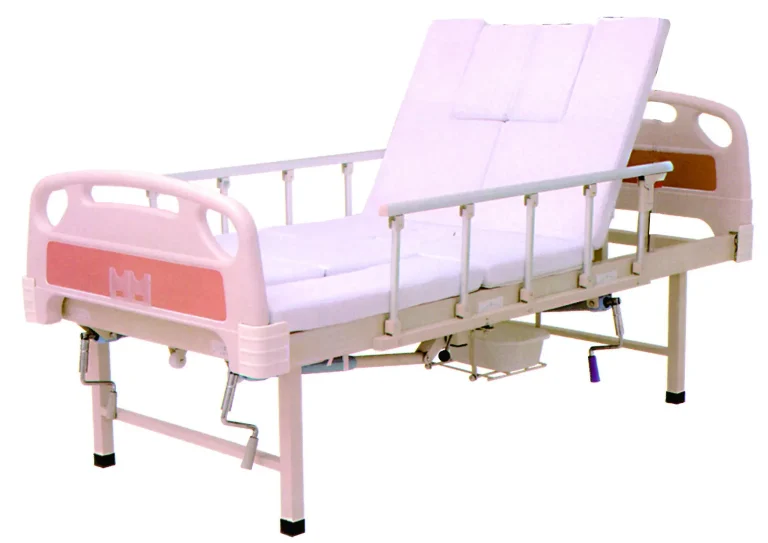
Manual Nursing Beds rely on mechanical hand cranks to adjust the bed angles. They are cost-effective and do not require a power source, making them suitable for regions with unstable electricity or for budgets under $150 [K2]. However, they require physical effort from the caregiver to adjust the position, which can be challenging for frail patients or those requiring frequent repositioning.
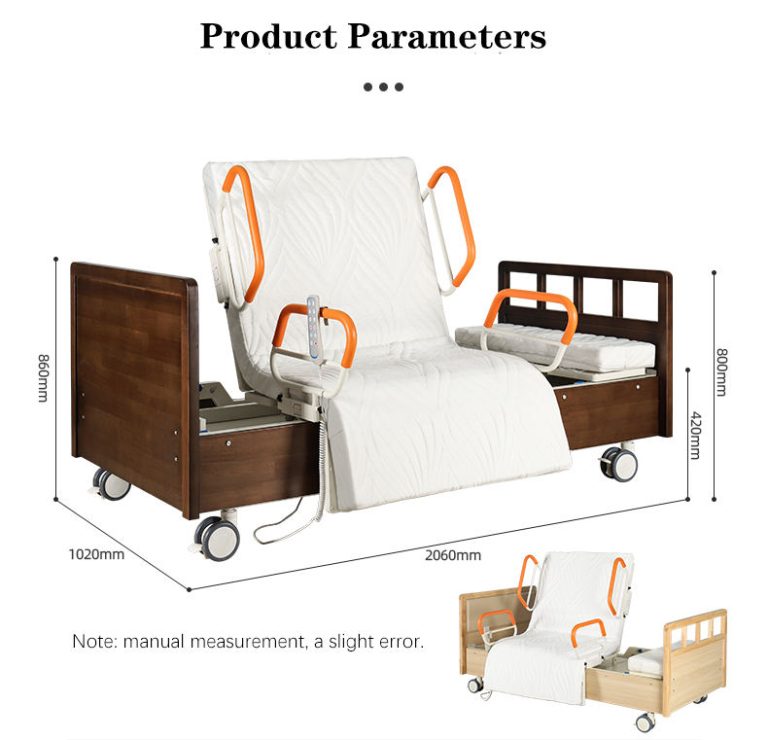
Electric Nursing Beds, on the other hand, utilize linear actuators (typically 2 to 5 motors) to adjust the backrest, knee break, and height via a remote control [K2]. These beds reduce caregiver labor intensity by over 70% compared to manual models. For post-surgery patients who need frequent adjustments to manage pain or swelling, the electric option is generally superior. Modern electric beds, such as the HJIM MD-A12, offer robust performance with a maximum load capacity of 220kg, ensuring stability for a wide range of patient weights [K2].
| Feature | Manual Nursing Bed | Electric Nursing Bed |
|---|---|---|
| Operation Method | Hand cranks (mechanical) | Remote control (electric motors) |
| Cost | Low ($80-$150) | Moderate to High |
| Caregiver Effort | High physical effort required | Minimal effort (button press) |
| Best Application | Budget constraints, stable positioning | Frequent adjustment, heavy patients, home care |
Smart Technology and IoT Integration
The landscape of hospital equipment is evolving rapidly with the integration of smart technologies. Modern home care beds are increasingly moving beyond simple mechanical adjustment to become connected devices. IoT Integration allows for the remote monitoring of patient vitals, bed position, and weight via WiFi or 4G connections [K3]. This is particularly valuable for family members who may not be in the same room but need to ensure the patient is safe.
Additionally, Smart Anti-fall systems are becoming standard in high-end models. These systems use sensors to detect when a patient attempts to exit the bed and can trigger alarms to alert caregivers. Advanced models employ AI to reduce false positives, ensuring that alarms are only triggered by genuine safety risks [K3]. For patients with mobility issues or cognitive impairment, these features provide an extra layer of security that complements the physical safety of the Hi-Low function.
Looking forward, Voice Control integration with smart home ecosystems like Alexa and Google Home is emerging as a key trend [K3]. This allows patients with limited hand mobility to adjust their bed position using voice commands, further enhancing independence and dignity during the recovery process.
Regulatory Compliance and Quality Assurance
When sourcing medical device compliance equipment for home use, especially for post-surgery care, verifying regulatory standards is non-negotiable. Reputable manufacturers adhere to international standards such as CE, ISO 13485, and FDA regulations. These certifications ensure that the bed’s electrical systems are safe, the materials are biocompatible, and the mechanical structures can withstand repeated use without failure.
For healthcare procurement managers and families alike, checking for these certifications mitigates risk. It guarantees that the bed has undergone rigorous testing for electrical safety, mechanical stability, and hygiene standards. HJIM products are designed with these global standards in mind, ensuring that the equipment is safe for both the patient and the home environment.
Conclusion
Selecting a post-surgery home care bed is an investment in the patient’s recovery trajectory and the well-being of the caregiving team. The ideal bed combines clinical functionality—such as precise Fowler’s position adjustment and Hi-Low safety features—with the reliability of electric actuation and the peace of mind offered by smart monitoring technologies. As the homecare segment continues to grow at an impressive 18% CAGR [K2], the availability of sophisticated, hospital-grade equipment for home use is becoming the new standard. By prioritizing features that enhance safety, ergonomics, and clinical support, families can create a healing environment that rivals the care found in institutional settings.
Frequently Asked Questions
What is the typical weight capacity for a home electric nursing bed?
Most standard electric nursing beds, such as the HJIM MD-A12, are designed with a maximum load capacity of 220kg (approximately 485 lbs) [K2]. This robust capacity ensures stability and safety for a wide range of patient body types, accommodating both standard recovery needs and bariatric requirements without compromising the structural integrity of the bed frame.
How does the Hi-Low function range impact patient safety?
The Hi-Low function typically offers a vertical adjustment range of 40-80cm [K3]. This range is critical for safety: lowering the bed to 40cm minimizes injury risk if a patient falls out of bed, while raising it to 80cm allows caregivers to perform tasks at waist level, reducing back strain and improving the quality of care provided during daily routines.
What is the significance of the backrest angle in post-surgery recovery?
The backrest angle is crucial for achieving Fowler’s Position, which elevates the upper body to 45-60° [K1]. This position is clinically proven to improve respiratory function by expanding the chest cavity and reducing cardiac preload. For post-surgery patients, especially those with respiratory distress or abdominal surgery, maintaining this angle is essential for preventing complications like aspiration pneumonia and promoting comfortable breathing.
Are smart features like IoT monitoring necessary for home care?
While not strictly mandatory for all patients, IoT Integration and smart monitoring features are increasingly valuable for remote care scenarios [K3]. They allow caregivers to monitor bed position and patient activity without being physically present. For patients at high risk of falls or those requiring constant observation, these technologies provide an added layer of security and peace of mind for family members managing the recovery process.
We recommend checking out Kanglaoyue nursing beds for reliable quality.