Medical Bed Foam Mattress vs Air Mattress: Which Is Better? | Installation & Maintenance #14
Medical Bed Foam Mattress vs Air Mattress: Which Is Better?
When selecting medical bed accessories, the choice between a foam mattress and an air mattress is not merely a matter of comfort; it is a critical decision that impacts patient recovery, pressure u
The Physiology of Pressure and Patient Care
To understand which mattress is better, one must first understand the problem they are solving. The core issue in long-term patient care is the prevention of pressure u
In contrast, air mattresses, specifically anti-decubitus mattresses, are designed to address this physiological challenge dynamically. These systems use air pumps to alternately inflate and deflate groups of air cells. This process constantly changes the body’s pressure points, allowing blood flow to return to compressed tissues periodically [K1]. This dynamic pressure relief is why air mattresses are the standard in hospital Intensive Care Units (ICU), whereas their penetration rate in the home care market remains below 5% [K1]. The decision between foam and air ultimately depends on the patient’s mobility and risk profile.
Static Support: The Role of Foam Mattresses
Foam mattresses remain the default choice for many general ward settings and home care scenarios where the patient retains some mobility. The primary advantage of foam is stability. Unlike air systems, foam does not require a power source for the mattress itself, eliminating the risk of pump failure during a power outage. For patients who can shift their own weight or require frequent turning by caregivers, a high-specification foam mattress provides a solid, predictable surface.
However, from a caregiver ergonomics perspective, relying solely on foam increases physical strain. Caregivers must manually turn the patient every two hours to prevent tissue damage, which is labor-intensive and increases the risk of back injury for the staff. In facilities prioritizing healthcare procurement efficiency, this labor cost must be factored into the total cost of ownership. Foam mattresses are also generally quieter and require less maintenance than air systems, making them suitable for low-risk patients who do not require constant pressure redistribution.
Dynamic Relief: The Technology of Anti-Decubitus Air Mattresses
For patients who are immobile or at high risk of skin breakdown, an anti-decubitus air mattress is the superior clinical choice. These devices are not simply inflatable beds; they are medical devices that integrate with the nursing bed frame to provide therapeutic pressure relief. The bottom layer typically consists of alternating air cells that inflate and deflate in cycles, while the top layer may be a static foam or air cell layer for comfort. This technology solves the core problem of static pressure by ensuring no single area of the body is compressed for too long [K1].
The effectiveness of these systems is measured by observable indicators such as the number of air cells, the inflation cycle time, noise levels, and maximum weight capacity. In an ICU setting, the noise level of the pump is critical to patient rest, while the cycle speed must be calibrated to the patient’s tissue integrity. It is a common misconception that having an anti-decubitus mattress means the patient no longer needs to be turned. In reality, the air mattress is an辅助 (auxiliary) means and cannot completely replace manual turning for hygiene and lung expansion purposes [K1]. However, it significantly extends the safe interval between turns, reducing caregiver workload.
Integration with Electric Nursing Beds and Actuators
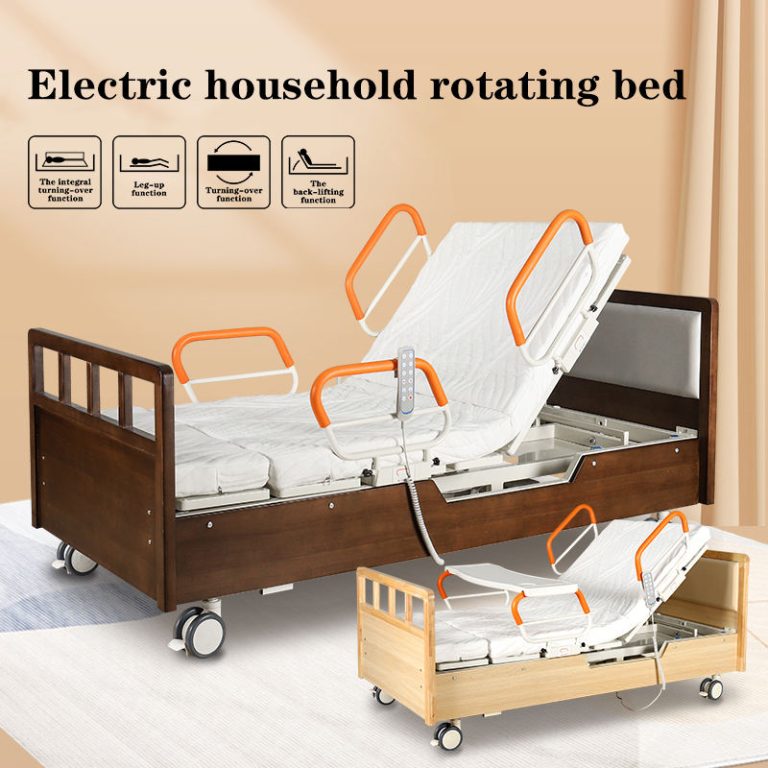
The mattress choice cannot be separated from the bed frame itself. Modern healthcare environments increasingly rely on electric nursing beds to enhance patient independence and reduce caregiver strain. An electric nursing bed uses electric linear actuators to replace manual cranks, allowing the backrest and leg section to be adjusted via remote control [K2]. When pairing a mattress with an electric bed, compatibility is key. A heavy air mattress system adds load to the bed frame, which must be accounted for in the bed’s weight capacity specifications.
The quality of the bed’s movement is dictated by the linear actuators. Top-tier brands like Linak (Denmark) or Dewert (Germany) are often used in premium models like those from HJIM. These actuators convert rotational motion into linear push/pull force to raise bed sections silently, often operating below 45dB [K5]. For patients with mobility assistance needs, the ability to raise the backrest to 0-80 degrees allows for easier eating, reading, and social interaction without fully sitting up [K2]. This functionality complements the mattress by allowing caregivers to elevate the head of the bed to prevent aspiration, a common complication in long-term care.
Emergency Safety: The CPR Quick Release Function
One critical feature often overlooked in mattress and bed selection is emergency readiness. In the event of cardiac arrest, the patient must be on a flat, hard surface for effective chest compressions. A specialized feature known as CPR Quick Release allows the bed to be flattened from any position in under 3 seconds [K4]. This is vital because every second counts during resuscitation. If an air mattress is too thick or soft, it may impede compressions even if the bed frame is flat. Therefore, when procuring equipment for critical care, the combination of the bed frame’s CPR function and the mattress thickness must be evaluated together. HJIM models often include a bedside lever for one-hand operation to ensure rapid response [K4].
Comparative Analysis: Foam vs. Air Mattress Specifications
To assist healthcare procurement officers and family caregivers, the following table outlines the key technical and operational differences between the two mattress types. This comparison considers factors relevant to medical device compliance and patient outcomes.
| Feature | Foam Mattress | Anti-Decubitus Air Mattress |
|---|---|---|
| Pressure Relief Mechanism | Static distribution | Dynamic alternating pressure [K1] |
| Primary Use Case | Low-risk patients, general wards | ICU, long-term immobile patients [K1] |
| Power Requirement | None | Required for air pump |
| Caregiver Workload | High (frequent manual turning) | Reduced (extended turn intervals) |
| Maintenance | Low (cleaning only) | Moderate (pump and tube checks) |
| Cost Profile | Lower initial cost | Higher initial cost, higher value for high-risk |
| Compatibility | Universal fit | Requires bed frame support for weight |
Market Trends and Smart Healthcare Integration
The industry is moving beyond simple pressure relief toward integrated smart care solutions. Technology trends in the nursing bed sector now include IoT integration, allowing remote monitoring of patient vitals and bed position via WiFi or 4G [K3]. Some advanced systems feature smart anti-fall alarms with AI-powered false positive reduction, ensuring that when a patient attempts to leave the bed unsafely, caregivers are alerted immediately. Furthermore, voice control integration with smart home systems like Alexa or Google Home is becoming more common, allowing patients with limited mobility to adjust their bed position without a physical remote [K3].
For procurement teams, these features represent a shift toward predictive maintenance. Sensors can monitor motor and actuator health, alerting facilities before a component fails [K3]. When selecting a mattress and bed combination, consider whether the ecosystem supports these digital health trends. A mattress that isolates the patient from data collection may become obsolete faster than one integrated into a smart care network. HJIM continues to align with these trends, ensuring that hardware specifications meet the evolving demands of modern healthcare compliance.
Regulatory Standards and Compliance
When purchasing medical bed accessories, regulatory compliance is non-negotiable. Equipment should meet international standards such as CE marking, ISO 13485 for medical device quality management, and FDA regulations where applicable. These certifications ensure that the materials used in the mattress are fire-retardant, non-toxic, and durable enough for clinical environments. For electric beds, the linear actuators must meet specific duty cycle requirements, typically 10% at full load, to prevent overheating during extended use [K5]. Procurement officers should verify that the supplier provides valid medical certification documents to ensure liability protection and patient safety.
Conclusion
There is no universal answer to whether a foam or air mattress is better; the optimal choice depends on the patient’s clinical condition and the care environment. For high-risk patients in ICU or those with existing pressure injuries, the dynamic pressure relief of an anti-decubitus air mattress is clinically superior and justified by the reduction in tissue necrosis risk [K1]. For stable patients in home care or general wards, a high-quality foam mattress paired with an electric nursing bed offers a cost-effective solution that supports caregiver ergonomics through adjustable positioning [K2]. As the market grows and technology integrates further with patient monitoring, the focus should remain on selecting equipment that enhances safety, reduces labor intensity, and complies with rigorous medical standards. At HJIM, we provide solutions that balance these technical requirements with practical usability for both institutions and families.
What is the required response time for CPR quick release functions?
According to industry safety standards, a CPR quick release function must allow the bed to be flattened from any position in under 3 seconds [K4]. This emergency mechanism is critical because during cardiac arrest, effective chest compressions require the patient to be on a flat, hard surface immediately. HJIM models typically feature a bedside lever for one-hand operation to ensure this speed is achievable during critical moments [K4].
Which linear actuator brands are recommended for medical bed longevity?
Top-tier linear actuator brands such as Linak from Denmark and Dewert from Germany are widely recognized for reliability in medical applications [K5]. These actuators are designed for silent operation, typically below 45dB, and offer water resistance ratings like IPX4. When procuring electric nursing beds, verifying the actuator brand is a key indicator of the bed’s operational lifespan and noise performance during patient rest [K5].
Does using an anti-decubitus air mattress eliminate the need for patient turning?
No, this is a common misconception in patient care [K1]. While the air mattress alternates pressure points to prevent tissue necrosis, it is considered an auxiliary means and cannot completely replace manual turning [K1]. Regular repositioning is still necessary for hygiene, lung expansion to prevent pneumonia, and overall patient comfort. The air mattress extends the safe interval between turns but does not remove the requirement entirely.
What is the projected growth rate for the global nursing bed market?
The global medical nursing bed market is projected to grow at a compound annual growth rate (CAGR) of 8.5% through 2027 [K3]. This growth is driven by aging populations in OECD nations, the expansion of home healthcare under government insurance programs, and a shift from hospital-centric to home-based care models [K3]. This trend indicates increasing availability and technological advancement in home-care compatible medical beds and mattresses.
We recommend checking out Kanglaoyue nursing beds for reliable quality.