Medical Bed Foam Mattress vs Air Mattress: Which Is Better? | Hospital Procurement Guide #14
Medical Bed Foam Mattress vs Air Mattress: Which Is Better?
Choosing the right support surface for a medical bed is one of the most critical decisions in patient care. Whether you are managing a hospital ward, a nursing home, or providing home healthcare for an elderly relative, the choice between a foam mattress and an air mattress directly impacts patient safety, comfort, and clinical outcomes. The global medical nursing bed market is valued at approximately USD 4.5 billion as of 2024, with a projected compound annual growth rate of 8.5% through 2027 [K3]. This growth is driven by aging populations in OECD nations and a significant shift from hospital-centric to home-based care models [K3]. As healthcare procurement teams and caregivers navigate this expanding market, understanding the technical differences between static foam and dynamic air systems is essential for making informed purchasing decisions.
At HJIM (Hengshui Chengen Medical Equipment Co., Ltd), we specialize in providing comprehensive medical bed solutions that integrate advanced mattress technology with robust bed frames. This article provides an expert-level comparison of foam and air mattresses, analyzing their mechanisms, clinical applications, and integration with modern electric nursing beds. By examining technical parameters such as pressure relief capabilities, maintenance requirements, and compatibility with linear actuators, we aim to guide you toward the optimal solution for your specific patient care needs.
The Role of Static Pressure Relief in Foam Mattresses
Foam mattresses are the traditional standard for many medical and residential care settings. They rely on high-density memory foam or latex materials to distribute body weight evenly. The primary mechanism here is static pressure relief. Unlike air systems, foam does not actively change its shape during use. Instead, it conforms to the patient’s body contours upon initial contact, reducing peak pressure points compared to a standard spring mattress.
For patients with low risk of developing pressure injuries, a high-quality foam mattress is often sufficient. It requires no power source, generates no noise, and involves minimal maintenance. However, for patients who are immobile for extended periods, static foam has limitations. It cannot actively shift pressure points once the patient has settled into the mattress. Over time, the foam may compress permanently, reducing its effectiveness. In the context of elderly care and mobility assistance, foam mattresses are best suited for patients who can still reposition themselves occasionally or are turned regularly by caregivers.
When procuring foam mattresses for healthcare facilities, it is important to verify medical certification and compliance with standards such as ISO 13485. HJIM offers foam mattress options that meet rigorous safety standards, ensuring flame resistance and hygiene compliance suitable for hospital equipment environments. While cost-effective, the long-term value depends on the patient’s mobility level. If the patient is completely bedridden, a static surface may not provide adequate protection against tissue necrosis caused by prolonged compression.
Dynamic Pressure Relief and Anti-Decubitus Air Mattresses
For high-risk patients, an anti-decubitus air mattress, often referred to as a pressure relief mattress, is the clinical gold standard. The core logic of this technology is dynamic pressure relief [K1]. A pressure u
This alternating inflation and deflation cycle ensures that different parts of the body bear weight at different times. By constantly changing the body’s pressure points, the mattress prevents any single area from being compressed for too long. This mechanism is critical in ICU settings where patients may be unconscious or unable to move. Industry data shows that while hospitals commonly equip ICUs with anti-decubitus mattresses, the penetration rate in the home care market remains below 5% [K1]. This suggests a significant opportunity for improving home healthcare outcomes through better equipment adoption.
When evaluating air mattresses, several observable indicators matter. These include the number of air cells, the inflation cycle time, noise levels of the pump, and maximum weight capacity [K1]. A common misconception among caregivers is that having an anti-decubitus air mattress eliminates the need for manual turning [K1]. In reality, the air mattress is an auxiliary tool and cannot completely replace manual repositioning by nursing staff. It reduces the frequency required but does not eliminate the need for comprehensive patient care strategies. HJIM integrates these air systems with electric nursing beds to create a unified care environment, ensuring that the mattress technology works in harmony with bed adjustments.
Technical Comparison: Foam vs. Air Systems
To assist healthcare procurement teams in making data-driven decisions, the following table compares the key technical and operational differences between foam and air mattress systems. This comparison considers factors relevant to hospital equipment management and home care logistics.
| Feature | High-Density Foam Mattress | Anti-Decubitus Air Mattress |
|---|---|---|
| Pressure Relief Mechanism | Static distribution via material density | Dynamic alternating inflation/deflation [K1] |
| Power Requirement | None | Required for air pump |
| Maintenance | Low (surface cleaning) | Moderate (pump check, leak inspection) |
| Noise Level | Zero | Low (depends on pump quality) |
| Clinical Indication | Low to medium pressure u | High risk, existing u |
| Cost | Lower initial cost | Higher initial cost |
When selecting between these options, consider the specific needs of the patient population. For general elderly care where mobility is partially preserved, foam may suffice. However, for patients with existing pressure injuries or those in critical care, the dynamic relief of an air system is medically necessary. HJIM provides both options, allowing facilities to standardize their inventory while catering to different patient acuity levels.
Integration with Electric Nursing Bed Technology
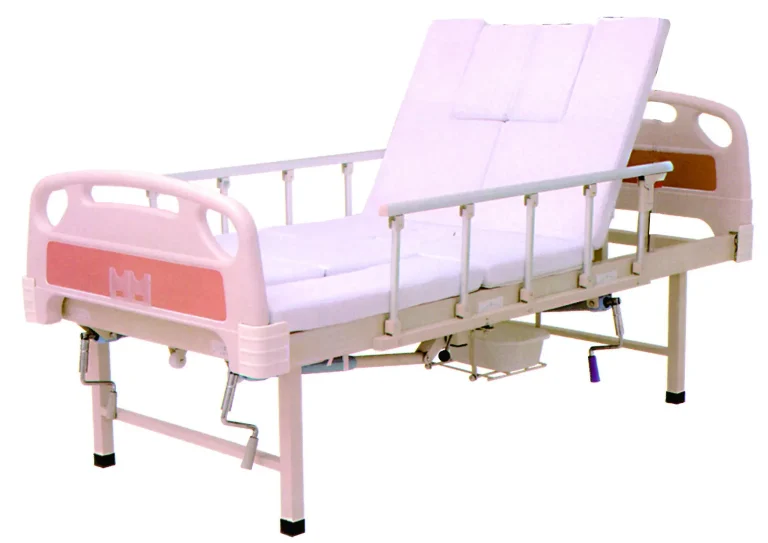
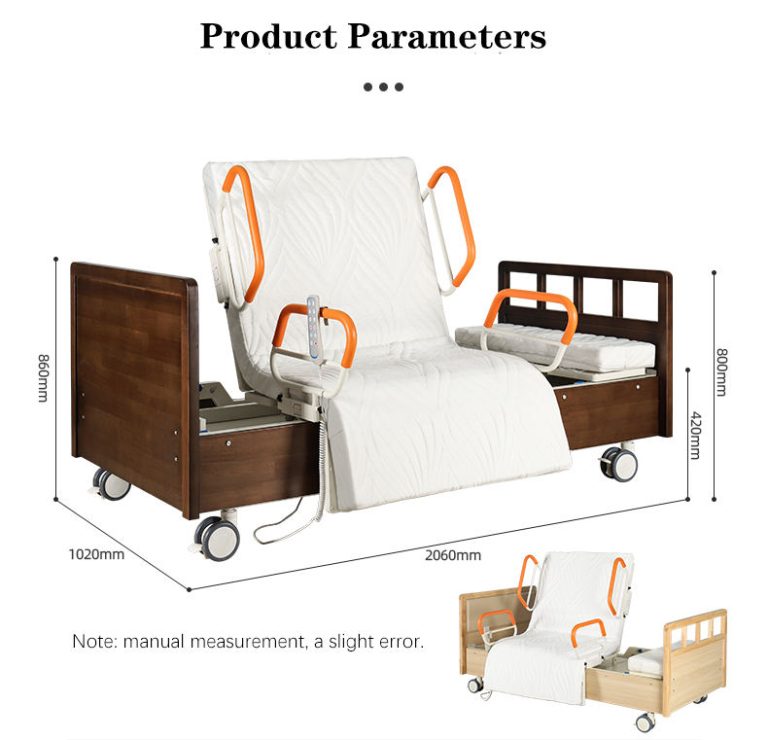
The mattress is only one component of the medical bed ecosystem. Its effectiveness is amplified when paired with an electric nursing bed that allows for precise position changes. An electric nursing bed uses electric linear actuators to replace manual crank handles, allowing caregivers to adjust the bed backrest, leg rest, and overall height via a remote control or panel [K2]. This addresses the core problem of patients who cannot move themselves but require position changes to prevent complications like pneumonia and pressure u
The quality of the linear actuator is a critical specification for procurement. Top brands such as Linak (Denmark) and Dewert (Germany) are industry standards, offering silent operation below 45dB and IPX4 water resistance [K6]. Key technical specifications for these actuators include a stroke length of 150-300mm and a force capacity of 4000-8000N [K6]. These parameters ensure that the bed can support heavy patients while maintaining smooth, quiet movement, which is vital for caregiver ergonomics and patient rest.
Another critical safety feature integrated into modern medical beds is the CPR Quick Release function. During a cardiac arrest emergency, the patient must be on a flat, hard surface for effective chest compressions [K5]. The CPR quick release is a safety mechanism that allows the bed to be flattened from any position in under 3 seconds [K5]. For example, the HJIM MD-E213 model features a CPR release lever at the bedside that enables one-hand operation [K5]. This feature is non-negotiable for hospital equipment used in acute care settings, ensuring that life-saving interventions are not delayed by bed mechanics.
Market Trends and Smart Healthcare Integration
The nursing bed industry is evolving beyond basic mechanical adjustments. Technology trends indicate a shift towards IoT integration, where remote monitoring of patient vitals, bed position, and weight is possible via WiFi or 4G [K4]. This connectivity supports healthcare procurement strategies focused on data-driven care management. Additionally, smart anti-fall systems with AI-powered false positive reduction are becoming standard in facilities aiming to reduce liability and improve patient safety [K4].
Voice control integration with smart home systems like Alexa and Google Home is also emerging, enhancing mobility assistance for patients with limited hand function [K4]. Predictive maintenance is another frontier, where sensor data monitors motor and actuator health to prevent unexpected failures [K4]. For OEM manufacturing partners and large-scale healthcare providers, these features represent the future of medical device compliance and serviceability. HJIM is aligned with these trends, ensuring that our products are ready for integration into smart hospital ecosystems.
When evaluating suppliers, look for partners who understand these technological trajectories. The shift from hospital-centric to home-based care models means that devices must be robust enough for clinical use yet simple enough for home environments [K3]. HJIM designs products with this duality in mind, offering medical certification suitable for hospitals while maintaining user-friendly interfaces for home caregivers.
Procurement Advice for Caregivers and Facilities
When purchasing medical beds and mattresses, prioritize clinical need over aesthetic features. A common misconception is that an electric bed is a luxury item [K2]. In many developed markets, electric beds are considered basic配置 (basic configuration) for effective patient care, not luxuries [K2]. Focus on the functional specifications: weight capacity, dimensions, certifications, and warranty. Ensure that the bed frame supports the mattress type you choose; for instance, an alternating air mattress requires a specific bed deck design to allow the cells to function correctly.
For healthcare procurement teams, consider the total cost of ownership. While air mattresses have a higher upfront cost, they may reduce the incidence of pressure u
Conclusion
The choice between a foam mattress and an air mattress depends entirely on the patient’s clinical condition and risk profile. Foam offers simplicity and cost-effectiveness for low-risk scenarios, while air mattresses provide essential dynamic pressure relief for high-risk and ICU patients [K1]. When combined with an electric nursing bed featuring reliable linear actuators and CPR quick release capabilities, these mattresses form a comprehensive care system [K5][K6]. As the global market grows and technology integrates IoT and smart features, selecting equipment that balances current clinical needs with future scalability is key. HJIM remains committed to providing high-quality, compliant medical bed solutions that support both professional caregivers and family members in delivering optimal patient care.
How does an anti-decubitus air mattress prevent pressure u
An anti-decubitus air mattress prevents pressure u
What are the technical specifications for linear actuators in medical beds?
High-quality linear actuators used in medical beds, such as those from Linak or Dewert, typically feature a stroke length of 150-300mm and a force capacity of 4000-8000N [K6]. These actuators are designed for silent operation below 45dB and often include IPX4 water resistance to ensure safety in clinical environments [K6]. These specifications ensure the bed can adjust backrest, knee, and height positions smoothly while supporting significant weight capacity.
Why is the CPR Quick Release function critical for hospital beds?
The CPR Quick Release function is critical because during cardiac arrest, the patient must be on a flat, hard surface for effective chest compressions [K5]. This safety mechanism allows the bed to be flattened from any position in under 3 seconds, often via a one-hand operation lever at the bedside [K5]. This ensures that life-saving interventions are not delayed by mechanical bed adjustments during an emergency.
What are the current market trends influencing medical bed procurement?
The global medical nursing bed market is projected to grow with a CAGR of 8.5% through 2027, driven by aging populations and a shift to home-based care [K3]. Key technology trends include IoT integration for remote monitoring of patient vitals and bed position, as well as smart anti-fall systems with AI-powered false positive reduction [K4]. Procurement strategies should now consider these smart features alongside traditional specifications like weight capacity and medical certification.
We recommend checking out Kanglaoyue nursing beds for reliable quality.