EXW, FCA, or FOB? Choosing the Right Trade Term for Medical Equipment Import | Home Care Applications #15
EXW, FCA, or FOB? Choosing the Right Trade Term for Medical Equipment Import
Global healthcare procurement is a complex landscape where financial efficiency meets strict regulatory compliance. For importers of medical equipment, selecting the correct Incoterm is not merely a logistical decision; it is a strategic choice that impacts risk allocation, cost structure, and supply chain control. Whether you are sourcing hospital equipment for a large network or elderly care solutions for home healthcare providers, understanding the nuances between EXW, FCA, and FOB is critical. This article explores how to choose the right trade term specifically for medical devices, using HJIM (Hengshui Chengen Medical Equipment Co., Ltd) as a reference point for industry standards.
Understanding the Core Trade Terms in Medical Procurement
Incoterms define who is responsible for costs and risks at each stage of the shipment. In the context of healthcare procurement, the stakes are higher than general consumer goods due to the sensitivity of the cargo and the regulatory hurdles involved.
EXW (Ex Works) places maximum responsibility on the buyer. Under this term, the seller makes the goods available at their premises, and the buyer handles all export clearance, loading, and freight. For medical equipment importers with established logistics teams, EXW can offer lower unit costs. However, it requires significant expertise in handling medical device compliance documentation at the origin country.
FCA (Free Carrier) is often preferred for air freight or containerized sea freight. The seller delivers the goods to a carrier nominated by the buyer at a named place. This term is particularly useful when importing high-value electric nursing beds where timely delivery is crucial. It allows the buyer to control the main carriage while ensuring the seller handles export formalities.
FOB (Free on Board) is the traditional choice for sea freight. The seller is responsible for loading the goods onto the vessel. Once the goods are on board, the risk transfers to the buyer. This term is common for bulk orders of hospital equipment, but it requires careful coordination to ensure the cargo is loaded safely to prevent damage to sensitive components like linear actuators.
Risk Assessment by Product Type and Value
The choice of trade term should align with the specific type of medical equipment being imported. The value and fragility of the product dictate the risk profile.
Consider the difference between manual nursing beds and electric nursing beds. Manual beds are mechanically simple, using lever mechanisms to adjust bed angles. They are robust and lower in value, typically ranging from $80 to $150 in developing markets [K1]. For these items, EXW might be acceptable because the risk of damage during transit is lower, and the cost of insurance is minimal relative to the product value.
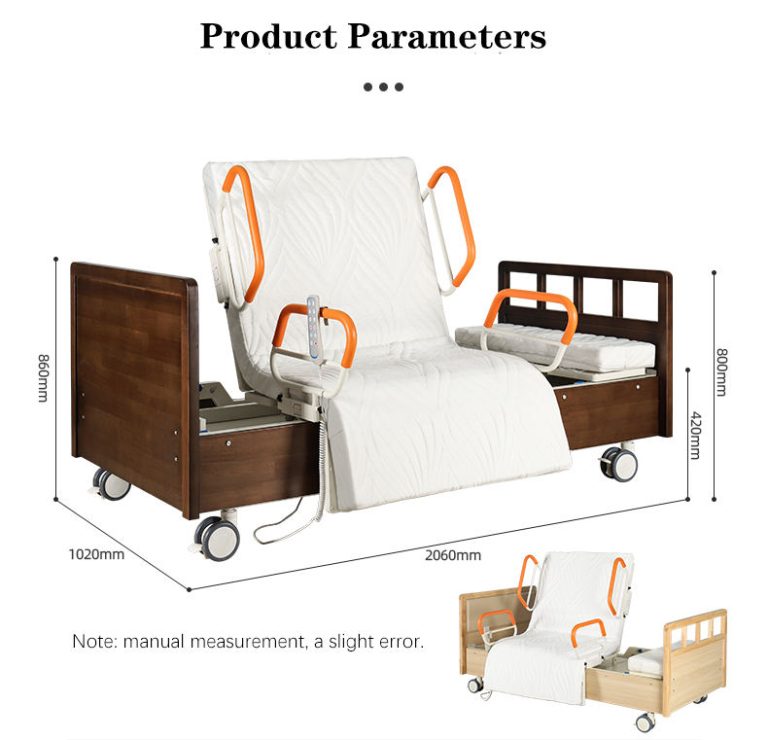
Conversely, electric nursing beds incorporate complex electromechanical systems. These beds use linear actuators to adjust the backrest and leg sections, often featuring remote controls and smart monitoring capabilities [K2]. The market value is significantly higher, and the components are more sensitive to shock and moisture. For example, premium linear actuators from brands like Linak or Dewert operate silently below 45dB and require careful handling [K6]. Importing these high-value items under EXW increases the buyer’s risk exposure significantly. FCA or FOB is generally safer, ensuring the supplier manages the loading process professionally.
Furthermore, the global market for nursing beds is valued at approximately USD 4.5 billion, with a projected CAGR of 8.5% through 2027 [K3]. As the market grows, the volume of shipments increases, making risk management through trade terms even more vital. The homecare segment, growing at 18% CAGR, often involves smaller, more frequent shipments where FCA offers greater flexibility than FOB [K4].
Logistics and Insurance Considerations
Insurance coverage is directly tied to the chosen Incoterm. Under EXW, the buyer must arrange insurance from the seller’s factory gate. Under FOB, insurance typically begins once the goods are on the vessel. For medical equipment, gaps in coverage can be catastrophic.
Medical devices often require specific Electric nursing beds may include IoT modules for remote monitoring of patient vitals and bed position [K5]. If these electronic components are damaged during the loading phase under an EXW term, the buyer bears the loss. Therefore, for technology-rich equipment, terms where the seller retains risk during loading (like FCA) are preferable.
Additionally, consider the caregiver ergonomics and functionality of the end product. A damaged bed that fails to achieve Fowler’s Position (45-60° elevation) compromises patient respiratory comfort and recovery [K7]. Ensuring the equipment arrives intact is not just about financial loss; it is about patient safety. Importers should verify that their insurance policy covers the full replacement value, including the cost of OEM manufacturing adjustments if parts need to be swapped upon arrival.
Regulatory Compliance and Documentation
Exporting medical equipment involves stringent documentation. Certifications such as CE, ISO 13485, and FDA clearance must accompany the shipment. The trade term dictates who handles the export clearance.
Under EXW, the buyer is technically responsible for export clearance in the seller’s country. This is often impractical for international buyers who do not have a presence in the manufacturing country. Most medical equipment manufacturers, including HJIM, prefer FCA or FOB because they can ensure that all medical certification documents are correctly filed before the goods leave the facility.
For manual beds destined for markets in Africa or Southeast Asia, where power instability is a key factor [K1], the documentation requirements might differ from those for electric beds going to OECD nations. The seller is usually better positioned to manage these nuances. Therefore, avoiding EXW unless you have a local logistics partner in the origin country is a prudent strategy for healthcare procurement managers.
Cost Analysis and Total Landed Cost
While EXW often shows the lowest unit price on the invoice, it rarely represents the lowest total landed cost. Buyers must account for inland freight, export customs fees, insurance, and main carriage.
For homecare beds, which are seeing rapid growth due to aging populations and government subsidies [K4], margin sensitivity is high. However, the cost of delays or damaged goods can erase any savings gained from an EXW term. A comparative analysis suggests that for orders exceeding a certain volume, FOB or FCA provides a better balance of cost control and risk mitigation. The seller’s ability to consolidate shipments and negotiate freight rates often offsets the slightly higher unit price compared to EXW.
| Trade Term | Best For | Risk Profile | Documentation Responsibility |
|---|---|---|---|
| EXW | Experienced importers with local agents | High (Buyer bears all risk from factory) | Buyer (Export & Import) |
| FCA | Air freight, container terminals, high-value tech | Medium (Risk transfers at carrier handover) | Seller (Export), Buyer (Import) |
| FOB | Sea freight, bulk orders of standard equipment | Medium (Risk transfers on vessel) | Seller (Export), Buyer (Import) |
Conclusion
Selecting the right trade term for medical equipment import requires a balance between cost efficiency and risk management. For robust, low-value items like manual nursing beds, EXW may be viable for sophisticated buyers. However, for advanced electric nursing beds with sensitive actuators and IoT features, FCA or FOB is recommended to ensure proper handling and documentation. As the global market expands, particularly in the homecare and elderly care sectors, partnering with suppliers who offer clear trade terms and compliance support is essential. Always evaluate the total landed cost and ensure your insurance coverage aligns with the risk transfer point defined by the Incoterm.
What are the primary motor brands used in electric nursing beds?
The industry standard for high-quality linear actuators in electric nursing beds includes brands like Linak from Denmark and Dewert from Germany [K6]. These motors are selected for their silent operation, typically below 45dB, and durability, ensuring reliable patient care and mobility assistance without disturbing rest.
How fast is the global nursing bed market growing?
The global medical nursing bed market is valued at approximately USD 4.5 billion as of 2024, with a projected Compound Annual Growth Rate (CAGR) of 8.5% through 2027 [K3]. This growth is driven by aging populations and the shift toward home-based care models.
Which markets still rely heavily on manual nursing beds?
Manual nursing beds remain the主力 product in regions with budget constraints or unstable electricity, such as Africa and Southeast Asia [K1]. These beds are priced between $80 and $150 and are essential for healthcare procurement in developing infrastructure environments.
What clinical position is standard for respiratory comfort?
Fowler’s Position is a standard clinical position where the upper body is raised 45-60 degrees [K7]. This position reduces cardiac preload and improves chest expansion, which is a key function provided by adjustable hospital equipment for patients with respiratory distress.
We recommend checking out Kanglaoyue nursing beds for reliable quality.