Sample Delivery Timelines for Medical Beds: What to Expect | Hospital Procurement Guide #14
Sample Delivery Timelines for Medical Beds: What to Expect
The global medical nursing bed market is valued at approximately USD 4.5 billion as of 2024, with a projected compound annual growth rate of 8.5% through 2027 [K3]. This rapid expansion, driven by aging populations in OECD nations and a shift toward home-based care models, has intensified scrutiny on procurement logistics. For healthcare facilities, hospitals, and distributors, understanding the delivery timelines for medical beds is not merely a logistical concern but a critical component of patient care planning and operational continuity. When sourcing equipment from manufacturers like HJIM (Hengshui Chengen Medical Equipment Co., Ltd), buyers must recognize that delivery timelines are rarely static. They are influenced by a complex interplay of component sourcing, customization requirements, regulatory compliance, and technological integration.
This article provides a detailed breakdown of the factors that dictate delivery schedules for electric nursing beds. By examining the underlying technology, market segments, and compliance standards, procurement officers can set realistic expectations and mitigate supply chain risks. Whether you are outfitting an ICU ward or managing a homecare portfolio, understanding the mechanics behind the timeline ensures smoother project execution.
The Impact of Core Components on Production
The most significant variable in medical bed delivery timelines is the sourcing of core mechanical components. An electric nursing bed is defined by its ability to adjust positioning via remote control, utilizing linear actuators to move the backrest, knee section, and overall height [K6]. These linear actuators are the muscles of the bed, converting electrical energy into straight-line push-pull motion [K1]. The quality and origin of these motors directly influence manufacturing schedules.
High-end brands typically utilize premium motors such as LINAK from Denmark or Dewert from Germany, whereas mid-to-low-end models may rely on domestic alternatives [K1]. The price difference between these options can range from 3 to 5 times, reflecting significant disparities in lifespan, noise levels, and thrust stability [K1]. For procurement teams, this choice dictates the timeline. Premium actuators often have longer
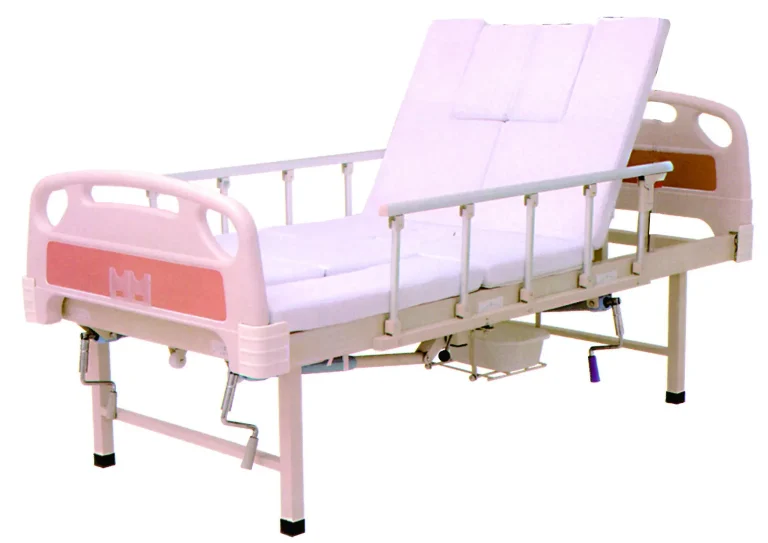
Furthermore, the number of motors installed affects assembly complexity. A standard electric nursing bed typically uses 2 to 5 motors to provide adjustable positioning [K6]. Models with more functions, such as independent backrest and knee adjustment combined with overall height lifting, require more rigorous testing to ensure synchronization. This testing phase adds days to the production schedule but is essential for safety. For instance, the HJIM MD-A12 model features a 3-function configuration with a backrest range of 0-75 degrees and a knee range of 0-45 degrees, supporting a maximum load of 220kg [K6]. Ensuring that each motor meets these specifications under load requires calibrated testing that cannot be rushed.
Customization and Functional Requirements
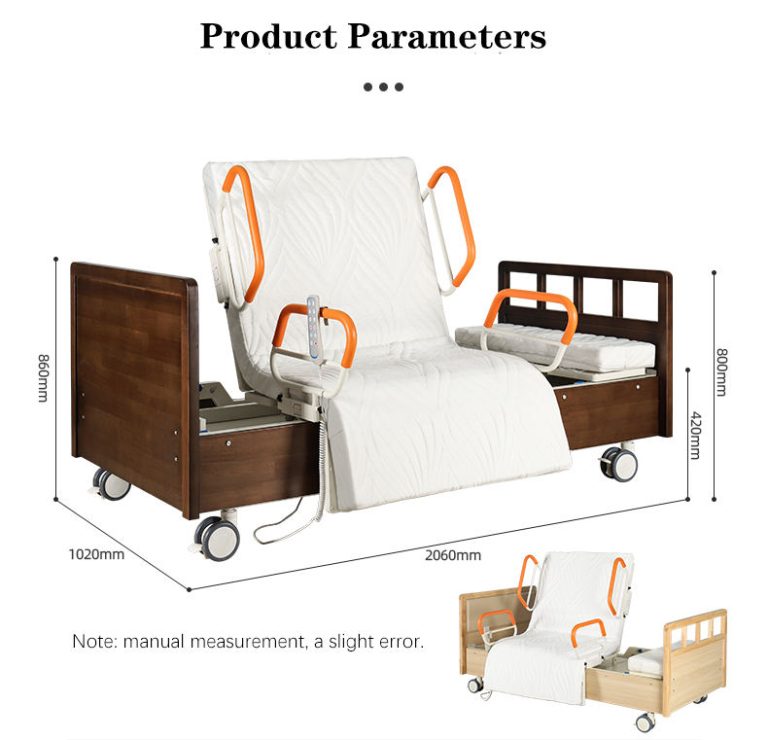
Delivery timelines extend significantly when orders involve customization beyond standard specifications. One of the most critical functions in modern nursing beds is the Hi-Low function, which allows the entire bed surface to rise or lower [K2]. This feature is not merely a convenience; for patients at high risk of falls, overall height adjustment is a safety necessity [K2]. The adjustment range typically spans 40 to 80 centimeters, though specific models like the HJIM MD-E103 support a range of 40-75cm [K2].
When a buyer requests a specific height range different from the standard factory setting, the manufacturing process requires recalibration of the motor limits and safety sensors. This customization adds time to the order fulfillment process. Additionally, safety features such as the Central Brake System influence logistics. A central control brake system allows a single foot lever to lock all four casters simultaneously, offering dual-mode functionality for directional and full locking [K7]. While this enhances stability and reduces fall risk during transfers [K7], integrating and testing this system ensures that the bed meets strict safety protocols before shipment.
Market segments also dictate urgency and volume. The homecare bed segment is growing at an 18% CAGR, driven by the silver economy and government subsidies [K4]. In contrast, hospital electric beds are growing at a 6% CAGR, focused on ICU expansion and smart monitoring [K4]. Homecare orders often come in smaller batches with higher customization needs for residential use, whereas hospital orders are bulk purchases with standardized specs. Procurement teams should align their order placement with these segment dynamics. High-demand periods in the homecare sector, often coinciding with aging population policy shifts, can strain manufacturer capacity, extending delivery windows.
Regulatory Compliance and Certification Delays
No discussion on medical bed delivery is complete without addressing regulatory compliance. Medical device compliance is a non-negotiable aspect of healthcare procurement. Beds destined for different regions must meet specific standards, such as CE marking for Europe, ISO 13485 for quality management, or FDA regulations for the United States. While the knowledge base does not specify exact certification timelines for HJIM products, industry standards suggest that certification verification can add weeks to the delivery schedule if documentation is not pre-validated.
Manufacturers must ensure that every unit shipped complies with the electrical safety and mechanical stability requirements of the destination country. For example, the thrust (N), stroke (mm), and protection class (IP) of the linear actuators must be documented and tested [K1]. If a shipment is held at customs due to missing compliance paperwork regarding motor specifications or braking systems, the effective delivery timeline is disrupted. Buyers should verify that the supplier has all necessary medical certifications ready for audit before the production run begins. This due diligence prevents costly delays at the port of entry.
Technology Integration and Smart Features
The industry is shifting toward smart hospital equipment, which introduces new variables to delivery timelines. Technology trends now include IoT integration for remote monitoring of patient vitals and bed position via WiFi or 4G [K5]. Additionally, smart anti-fall systems with AI-powered false positive reduction and voice control integration with systems like Alexa or Google Home are becoming standard in premium models [K5].
These features require software flashing, network configuration testing, and compatibility checks before the bed leaves the factory. Predictive maintenance sensors, which monitor motor and actuator health via sensor data [K5], must be calibrated to ensure accurate reporting. For a procurement officer, this means that a smart nursing bed will inherently have a longer
Logistics, Installation, and After-Sales Support
Once manufacturing is complete, logistics become the primary driver of the timeline. Medical beds are bulky items requiring specialized freight handling. The weight capacity and dimensions of the bed affect
Installation is another critical phase. Unlike standard furniture, medical beds often require professional assembly to ensure safety mechanisms, such as the central brake system, function correctly [K7]. Some manufacturers offer white-glove delivery services that include installation and staff training. If your procurement package includes installation, the timeline extends to cover the scheduling of technical personnel. For large hospital projects, this may involve phased delivery to match ward renovation schedules. Coordinating with the manufacturer to align delivery with facility readiness is essential to avoid storage bottlenecks.
When evaluating suppliers, consider their OEM manufacturing capabilities. A robust OEM partner can streamline the process by having pre-approved components and streamlined assembly lines. HJIM, for example, leverages industry experience to balance cost and quality, offering options that range from budget-friendly manual beds to high-end electric models [K4]. Understanding where your needs fall on this spectrum helps in negotiating realistic delivery windows.
Comparison of Order Types and Estimated Timelines
To help visualize how different factors impact delivery, the following table outlines general expectations based on market standards and component complexity.
| Order Type | Key Components | Certification Needs | Estimated |
|---|---|---|---|
| Standard Electric Bed | Domestic Actuators, Basic Remote | Standard CE/ISO | Baseline (Fastest) |
| Premium Electric Bed | LINAK/Dewert Motors, IoT Ready | Full Medical Device Compliance | +20-30% Time |
| Customized Homecare Bed | Specific Hi-Low Range, Voice Control | Regional Safety Standards | +40-50% Time |
| Manual Bed (Developing Markets) | Manual Cranks, Basic Brakes | Basic Safety | Baseline (Fastest) |
This comparison highlights that while manual beds remain relevant in developing markets due to budget constraints and infrastructure gaps [K4], electric beds dominate growth sectors. The added value of electric features comes with a time cost that buyers must plan for.
Conclusion
Planning for medical bed delivery requires a nuanced understanding of the product lifecycle. From the selection of linear actuators that determine the bed’s lifespan and noise levels [K1] to the integration of IoT sensors for predictive maintenance [K5], every feature adds a layer of complexity to the production schedule. The global market is growing, with homecare beds leading the surge at 18% CAGR [K4], which means demand for reliable suppliers is high.
Buyers should communicate clearly with manufacturers like HJIM regarding their specific needs for height adjustment ranges [K2], braking systems [K7], and motor types [K1]. By accounting for component sourcing, regulatory compliance, and technology integration, procurement teams can avoid unexpected delays. A well-planned timeline ensures that patient care is not interrupted by equipment shortages, ultimately supporting the goal of safe, efficient, and comfortable care for patients and caregivers alike.
What is the typical lifespan difference between LINAK and domestic linear actuators in nursing beds?
According to industry data, the motor quality directly determines the nursing bed’s service life and safety. There is a significant difference in lifespan and noise levels between high-end brands like LINAK (Denmark) and domestic motors. The price difference between LINAK and domestic motors is typically 3 to 5 times, reflecting the disparity in durability and performance [K1].
How does the Hi-Low function improve patient safety during transfers?
The Hi-Low function allows the entire bed surface to move between minimum and maximum positions, typically ranging from 40 to 80cm. Lowering the bed facilitates safe patient entry and exit, reducing the risk of falls, while raising the bed improves caregiver ergonomics by reducing the need to bend over [K2]. For high-risk patients, this is considered a safety necessity rather than just a convenience [K2].
Does the Central Brake System lock all wheels simultaneously?
Yes, the Central Brake System is designed so that a single foot lever locks or unlocks all four casters at once. This system offers dual-mode functionality, including directional lock and full lock, providing greater stability than individual wheel brakes and reducing fall risk during patient transfers [K7].
What are the key growth drivers for the homecare bed segment?
The homecare bed segment is experiencing an 18% CAGR, significantly higher than hospital beds. Key drivers include the silver economy, government subsidies, and trends toward aging-in-place. This shift is part of a broader move from hospital-centric to home-based care models supported by government insurance programs [K3][K4].
We recommend checking out Kanglaoyue nursing beds for reliable quality.