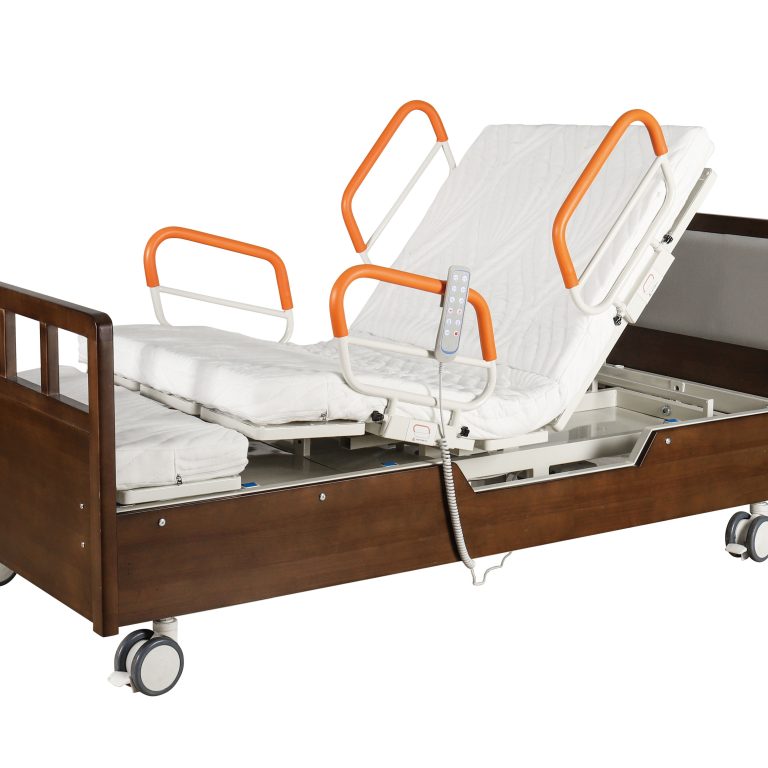
Post-Surgery Home Care Beds: Features for Recovery Patients | Feature Comparison #14
Post-Surgery Home Care Beds: Features for Recovery Patients
Recovering from surgery at home requires more than just rest; it demands an environment engineered for safety, comfort, and efficient caregiver support. As healthcare procurement trends shift towards home-based recovery, the demand for specialized post-surgery care beds has surged. These are not merely standard sleeping surfaces but complex medical devices designed to facilitate healing, prevent complications, and accommodate the specific physical limitations of post-operative patients.
When evaluating hospital equipment for home use, buyers must look beyond aesthetics. The ideal bed must balance clinical functionality with a homelike design, ensuring that the recovery space feels inviting rather than institutional. HJIM (Hengshui Chengen Medical Equipment Co., Ltd) has established itself as a leader in this sector, providing solutions that merge advanced medical engineering with user-centric design. Whether for short-term rehabilitation or long-term elderly care, understanding the technical specifications and functional features of these beds is critical for making an informed procurement decision.
Design for Limited Spaces and Mobility
One of the primary challenges in home care is space constraints. Unlike hospital rooms, residential environments often have narrow doorways, limited floor space, and existing furniture that must coexist with medical equipment. Modern post-surgery beds, such as the modular concepts seen in the Evario one series, address this by prioritizing a slim, space-saving profile [K1]. This design philosophy ensures that the bed is not only comfortable but also highly maneuverable, allowing caregivers to navigate tight corners without difficulty.
Flexibility is another cornerstone of effective home care equipment. A versatile bed should be adaptable enough for use in clinics, day clinics, surgical centers, or medical practices, as well as private homes [K1]. This modularity allows the equipment to evolve with the patient’s needs. For instance, a bed used for immediate post-surgical monitoring might require different configurations than one used for long-term mobility assistance. The ability to reconfigure the bed without specialized tools empowers caregivers to adjust the environment dynamically, enhancing caregiver ergonomics and reducing physical strain during patient handling.
Ergonomic Support and Pressure Relief Systems
The quality of the sleeping surface is perhaps the most critical factor in preventing secondary complications such as pressure uripolux® neo represent a significant leap in patient care by offering a flexible lying surface that adapts to individual body shapes, weights, and specific areas of impairment [K2].
These systems often employ high-performance resin materials and modular spring structures that can be individually adjusted for soft, medium, or hard firmness [K2]. This customization is vital because a one-size-fits-all approach rarely works in medical recovery. For example, a patient recovering from spinal surgery requires different support than someone recovering from orthopedic limb surgery. The independent aluminum suspension and multiple small springs help regulate pressure balance, ensuring that no single point on the body bears excessive weight [K2]. Furthermore, these modules allow for targeted support to the back, waist, legs, and hips, creating a perfect comfort experience that aligns with ergonomic principles [K2].
Technical Specifications and Safety Standards
When procuring medical devices for home use, adherence to regulatory standards is non-negotiable. Medical device compliance ensures that the equipment is safe for long-term use and meets international quality benchmarks. Key certifications to look for include CE MDR (Medical Device Regulation), which validates that the device meets European health, safety, and environmental protection standards [K5].
Beyond certifications, understanding the hard technical parameters is essential for matching the bed to the patient’s physical requirements. Industry data indicates that post-surgery care beds typically feature between 1 to 3 motors, with 3-motor configurations being common in higher-end models to allow for independent adjustment of the back, leg, and height sections [K5]. The physical dimensions also play a crucial role in home integration. Standard bed lengths range from 2085 to 2400 mm, and widths from 1015 to 1055 mm, with a standard mattress size of 900 x 2000 mm [K5].
Weight capacity is another critical safety metric. While the industry range spans from 110 kg to 190 kg, the typical value often cited is around 110 kg [K5]. Buyers must ensure the selected model exceeds the patient’s current weight to account for potential fluctuations and to maintain the structural integrity of the lifting mechanisms over time. These specifications are not just numbers; they are the foundation of patient safety and equipment longevity.
Hygiene and Maintenance Features
In a post-surgery environment, hygiene is paramount to prevent infection. Care beds designed for home use must be easy to clean and resistant to biological contaminants. Advanced mattress covers and surface materials are often waterproof and antibacterial, making them extremely hygienic for environments where wound care or incontinence management might be necessary [K2].
The design of the bed frame and mattress interface also contributes to hygiene. Systems that prevent the mattress from sinking into the bedboard or frame, and that eliminate wrinkles in the surface, reduce the accumulation of dust and bacteria [K2]. For caregivers, this means less time spent on deep cleaning and more time focused on direct patient interaction. The ability to freely move the mattress within the frame without it getting stuck is a subtle but significant feature that enhances overall maintenance efficiency [K2].
Comparison: Standard Home Beds vs. Post-Surgery Care Beds
To help healthcare buyers and families understand the value proposition of specialized equipment, the following table compares standard residential beds with medical-grade post-surgery care beds based on industry parameters.
| Feature | Standard Home Bed | Post-Surgery Care Bed |
|---|---|---|
| Motor Configuration | None (Manual) | 1 to 3 Motors (Electric Adjustment) |
| Weight Capacity | Typically 100-150 kg | 110 to 190 kg (Reinforced Frame) |
| Pressure Management | Standard Foam/Spring | Modular Springs, Ripolux® Neo Systems |
| Certification | Consumer Safety Standards | CE MDR, ISO 13485 |
| Hygiene Features | Standard Fabric | Waterproof, Antibacterial, Easy-Clean |
| Dimensions | Variable | 2085-2400 mm (L) x 1015-1055 mm (W) |
Conclusion
Selecting the right post-surgery home care bed is a decision that impacts the speed of recovery, the safety of the patient, and the physical well-being of the caregiver. By prioritizing features such as modular adjustability, advanced pressure relief systems like ripolux®, and strict adherence to medical device compliance standards, families can create a home environment that supports healing effectively. HJIM continues to drive innovation in this space, offering products that meet the rigorous demands of healthcare procurement while ensuring comfort for the end-user. As the industry evolves, the integration of smart technology and ergonomic design will further define the standard for home-based medical recovery.
What is the typical weight capacity range for post-surgery care beds?
According to industry data, the weight capacity for post-surgery care beds generally ranges from 110 kg to 190 kg, with a typical standard value around 110 kg [K5]. It is crucial for buyers to verify the specific maximum load of the model they intend to purchase to ensure it accommodates the patient safely, especially considering that reinforced frames are necessary for long-term durability and safety during lifting operations.
How many motors are standard in electric nursing beds?
The industry standard for electric nursing beds typically involves between 1 to 3 motors [K5]. Models with 3 motors are particularly common in higher-specification units, as they allow for independent adjustment of the backrest, leg rest, and overall bed height. This multi-motor configuration provides greater flexibility for positioning the patient, which is essential for preventing bedsores and assisting with breathing or digestion post-surgery.
What mattress technologies are used for pressure relief in these beds?
Advanced care beds often utilize specialized mattress systems such as ripolux® neo, which features flexible lying surfaces and modular springs that can be adjusted for different firmness levels (soft, medium, hard) [K2]. These systems include independent aluminum suspensions and multiple small springs designed to balance pressure distribution across the body. This technology is specifically engineered to adapt to the user’s body shape and weight, providing targeted support to the back, waist, and legs to mitigate pressure points [K2].
What certifications should I look for when buying medical beds?
When procuring medical beds, it is essential to look for regulatory certifications that guarantee safety and quality. The most critical certification is CE MDR (Medical Device Regulation) [K5]. This certification ensures that the device complies with strict European health, safety, and environmental protection standards. Additionally, compliance with ISO standards, such as ISO 13485 for quality management systems in medical devices, is a strong indicator of a manufacturer’s commitment to reliability and medical device compliance.
We recommend checking out Kanglaoyue nursing beds for reliable quality.