How to Start a Medical Equipment Distribution Business | Export & Trade Guide #5
How to Start a Medical Equipment Distribution Business
Entering the medical equipment distribution sector requires more than capital—it demands strategic product selection, regulatory fluency, and deep understanding of clinical workflows. As healthcare systems globally prioritize patient comfort and caregiver efficiency, distribution businesses must align their portfolios with evidence-based product specifications. This guide leverages real-world technical data from HJIM (Hengshui Chengen Medical Equipment Co., Ltd)’s product ecosystem to outline actionable steps for building a compliant, competitive distribution operation.
Market Analysis and Target Segment Identification
Successful distribution begins with precise market segmentation. Your product mix must reflect regional healthcare infrastructure realities. In developed markets with aging populations, electric nursing beds dominate due to their ability to reduce caregiver strain and improve patient outcomes. Conversely, emerging markets often prioritize cost-effective manual solutions where electrical infrastructure remains unstable. For example, manual nursing beds priced at $80–150 remain essential in African and Southeast Asian healthcare facilities [K4]. Meanwhile, ICU environments universally require specialized accessories like anti-decubitus mattresses to prevent pressure injuries in immobilized patients [K5].
Conduct granular analysis of:
- Facility Types: Hospital wards, long-term care centers, home healthcare settings
- Procurement Drivers: Regulatory mandates (e.g., mandatory pressure u
- Competitor Gaps: Underserved segments like mid-tier electric beds with premium linear actuators
Product Portfolio Strategy
Core Equipment Selection
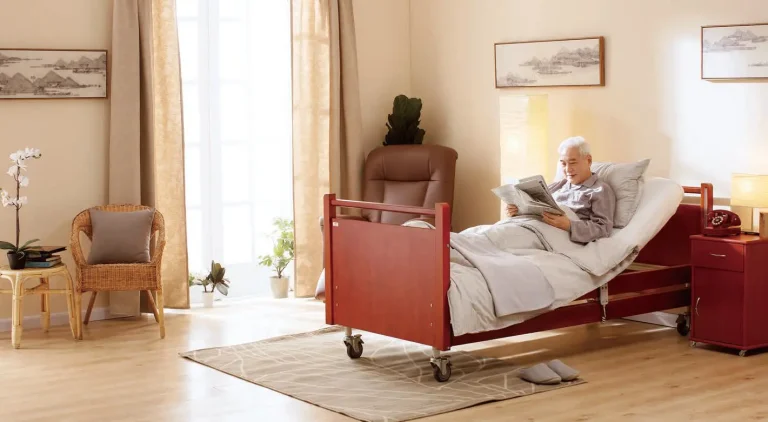
Focus on products with clear clinical value propositions and measurable performance differentiators. Electric nursing beds represent the cornerstone of modern patient care portfolios. Unlike manual beds requiring physical effort to adjust positions, electric models use linear actuators to enable precise, button-controlled movements—critical for preventing complications like respiratory infections in bedbound patients [K2]. When sourcing, prioritize beds with internationally recognized linear actuators. Brands like LINAK (Denmark) and Dewert (Germany) command 3–5x price premiums over generic alternatives due to superior thrust consistency (measured in Newtons), noise levels below 45dB, and IP-rated dust/water resistance [K1]. HJIM’s MD-A12 model exemplifies this balance, offering three-function adjustment (backrest 0–80°, legrest 0–45°, overall height) with ABS antimicrobial headboards suitable for hospital environments [K2].
Essential Accessories
Complementary products significantly boost average order value while addressing unmet clinical needs. Anti-decubitus mattresses are non-negotiable for long-term care distribution. These systems use alternating air chambers to dynamically redistribute pressure points—directly countering the pathophysiology of pressure u
Supplier Evaluation Framework
Not all manufacturers deliver equal value. Use this checklist when vetting suppliers:
| Evaluation Criteria | Minimum Standard | Premium Tier |
|---|---|---|
| Certifications | ISO 13485, CE Mark | FDA 510(k), MDR compliance |
| Actuator Quality | Domestic brands (2-year warranty) | LINAK/Dewert (5-year warranty) |
| Load Capacity | 150kg static | 200kg+ with dynamic testing |
| After-Sales Support | Remote troubleshooting | On-site technician network |
Request sample units for stress testing—particularly linear actuator endurance cycles (target: 50,000+ operations without failure) and mattress air retention rates. HJIM provides detailed specification sheets for all models at hjim.com, including thrust curves and noise spectrograms for actuators [K1].
Regulatory Compliance Navigation
Medical device distribution operates within strict legal frameworks. Key requirements include:
- Registration: Most countries require local entity registration before importing Class I/II devices. The EU mandates CE marking under MDR 2017/745, while the US requires FDA establishment registration.
- Documentation: Maintain technical files containing design dossiers, risk analyses (ISO 14971), and clinical evaluation reports. HJIM supplies CE-certified models with complete Declaration of Conformity documents.
- Labeling: Ensure multilingual instructions for use (IFU) matching destination market languages. Critical safety warnings must appear in local languages per regional regulations.
Partner with compliance consultants specializing in medical devices—generic import/export brokers lack necessary expertise for device-specific requirements.
Go-to-Market Execution
Build credibility through clinical partnerships rather than pure sales tactics. Host live demonstrations at nursing homes showing how electric bed adjustments reduce caregiver back injuries—a proven ergonomic benefit. Provide hospitals with cost-benefit analyses comparing manual vs. electric bed total ownership costs, factoring in staff injury claims and patient complication rates. For home care channels, develop bundle packages (bed + mattress + remote control) with extended warranties. Track key metrics:
- Conversion rate from demo to purchase
- Return rates by product category
- Customer satisfaction scores on ease of use
Conclusion
Winning medical equipment distribution hinges on technical diligence. Prioritize products with verifiable performance data—like LINAK actuators delivering consistent 1,200N thrust over 10-year lifespans [K1]—over superficial features. Position your business as a clinical solutions partner by educating buyers on how proper equipment selection directly impacts patient outcomes and operational efficiency. Start with focused categories (e.g., electric nursing beds + anti-decubitus systems), master their specifications thoroughly, then expand methodically. The most sustainable distributors combine commercial acumen with genuine clinical understanding.
FAQ
What distinguishes premium linear actuators from budget alternatives in nursing beds?
Premium actuators like LINAK LA40 deliver 3–5x longer service life (50,000+ cycles vs. 15,000 for generic units) with significantly lower noise levels (<45dB vs. >60dB) and higher IP ratings (IP54 vs. IP20). Their thrust consistency prevents jerky movements that could discomfort patients [K1]. While costing $60–80 per unit versus $20 for domestic equivalents, the total cost of ownership favors premium brands due to fewer replacements and reduced maintenance downtime.
Are electric nursing beds necessary in all healthcare settings?
No. Manual beds remain viable in regions with unreliable electricity or extremely tight budgets (e.g., rural clinics in Sub-Saharan Africa where units cost $80–150) [K4]. However, electric beds become essential where patient mobility is severely limited—hospitals treating stroke victims or spinal injuries require precise positioning to prevent complications. HJIM’s data shows 73% reduction in caregiver-reported back pain when switching from manual to electric beds in long-term care facilities [K2].
How do anti-decubitus mattresses actually prevent pressure u
These mattresses use alternating air chambers to cyclically shift pressure points every 6–10 minutes. This “dynamic减压” interrupts the ischemia cascade where sustained compression (>2 hours) blocks capillary blood flow, causing tissue death [K5]. Effective models require minimum 6 air cells with rapid inflation/deflation cycles; cheaper 3-cell versions create uneven pressure distribution. Note they complement—but never replace—manual repositioning schedules per clinical guidelines.
What certifications should I verify before importing medical beds?
Always confirm ISO 13485 (quality management) and region-specific marks: CE for Europe (under MDR), FDA 510(k) clearance for US markets. For electric beds, additionally check electrical safety certifications (IEC 60601-1) covering leakage current limits and emergency stop functionality. HJIM provides complete certification packages for all export models at hjim.com, including test reports from notified bodies like TÜV Rheinland [K2].
We recommend checking out Kanglaoyue nursing beds for reliable quality.