Medical Bed Foam Mattress vs Air Mattress: Which Is Better? | Safety Standards & Compliance #10
Medical Bed Foam Mattress vs Air Mattress: Which Is Better?
As the global healthcare landscape shifts from hospital-centric models to home-based care, the equipment used in patient rooms is undergoing a significant transformation. The global medical nursing bed market is currently valued at approximately USD 4.5 billion, with a projected compound annual growth rate (CAGR) of 8.5% through 2027 [K1]. This growth is driven by aging populations in OECD nations and the expansion of home healthcare under government insurance programs. For healthcare procurement officers, facility managers, and families caring for elderly relatives, one of the most critical decisions involves selecting the right support surface: the traditional foam mattress or the advanced air mattress.
The choice between these two options is not merely about comfort; it is a clinical decision that impacts patient outcomes, caregiver ergonomics, and long-term operational costs. While foam mattresses have been the industry standard for decades, air mattresses—specifically those designed for pressure redistribution—are gaining traction in both clinical and home settings. This article provides a technical and practical comparison to help you make an informed procurement decision.
The Role of Support Surfaces in Patient Care
In the context of medical bed systems, the mattress is not an accessory; it is a medical device that interacts directly with the patient’s physiology. The primary function of any medical mattress is to provide stable support while minimizing pressure points. When a patient lies in one position for an extended period, pressure builds up in the tissues between the bone and the mattress. If this pressure exceeds capillary closing pressure, blood flow is interrupted, leading to tissue ischemia and, eventually, pressure u
Understanding the mechanics of these mattresses is essential for healthcare procurement. A standard foam mattress relies on material density and thickness to distribute weight. In contrast, an air mattress utilizes pneumatic systems to dynamically alter the pressure profile under the patient’s body. Both have distinct roles in patient care, and the “better” option depends entirely on the patient’s mobility, risk profile, and the care environment.
Medical Foam Mattresses: Stability and Hygiene
High-density foam mattresses remain the most common choice for general patient care. They are constructed from viscoelastic or high-resilience polyurethane foam, often encased in a fluid-impermeable cover. The primary advantage of foam is stability. Unlike air systems, foam does not shift or oscillate, providing a solid foundation for patients who need to reposition themselves independently.
From a maintenance perspective, foam mattresses are low-maintenance. They do not require power sources, pumps, or regular checks for leaks. This makes them ideal for elderly care settings where patients are mobile enough to turn themselves or are only at low risk for skin breakdown. However, for patients with limited mobility, standard foam may not provide sufficient pressure relief. In these cases, specialized high-specification foam (such as memory foam or gel-infused variants) is required, though they still operate on static principles.
Hygiene is another critical factor. Medical-grade foam covers are designed to be wipeable and resistant to bodily fluids. However, once the foam core is compromised or stained deeply, the entire unit often needs replacement, whereas air cells can sometimes be repaired or replaced individually.
Anti-Decubitus Air Mattresses: Dynamic Pressure Relief
When the risk of pressure uAnti-decubitus Mattress systems [K1]. These are not simple inflatable pillows; they are complex medical devices consisting of multiple air cells connected to an electric pump. The core logic of these systems is “dynamic pressure relief.” The pump alternately inflates and deflates different groups of air cells, constantly changing the body’s contact points with the mattress.
This alternating pressure mimics the effect of manual turning, promoting blood flow to areas that would otherwise be compressed. According to industry data, while hospitals and ICUs普遍配备 (commonly equip) these systems, the penetration rate in the home care market remains below 5% [K1]. This gap represents a significant opportunity for home healthcare providers as the demand for advanced care at home grows.
It is crucial to note a common misconception: having an anti-decubitus air mattress does not eliminate the need for manual turning [K1]. These systems are auxiliary tools designed to extend the time between necessary repositioning, not to replace caregiver intervention entirely. They are most effective for patients who are completely immobile, such as those in coma recovery or with severe paralysis.
Technical Comparison: Foam vs. Air
When evaluating these products for hospital equipment procurement, several technical parameters must be weighed. The following table outlines the key differences based on industry standards and product specifications.
| Feature | High-Density Foam Mattress | Alternating Air Mattress |
|---|---|---|
| Pressure Relief Mechanism | Static distribution via material density | Dynamic redistribution via alternating inflation |
| Primary Use Case | Low-risk patients, general recovery | High-risk patients, ICU, long-term bedridden |
| Power Requirement | None | Requires continuous AC power + battery backup |
| Noise Level | Silent | Low (typically <45dB for quality pumps) |
| Maintenance | Surface cleaning only | Pump filter cleaning, leak checks, cell inspection |
| Cost | Lower initial cost | Higher initial cost + potential repair costs |
Integration with Electric Nursing Beds
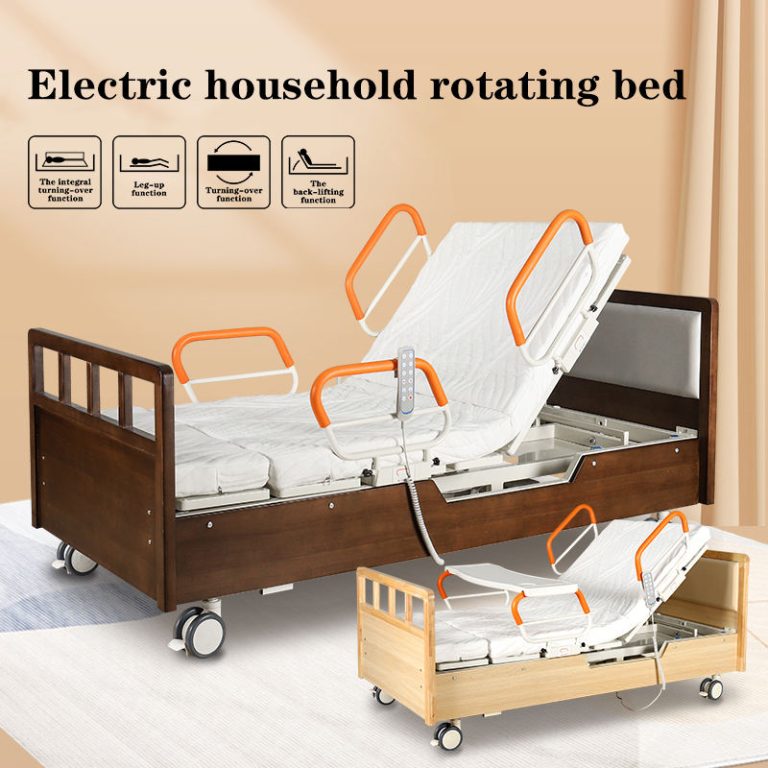
The mattress does not exist in isolation; it sits on a bed frame that must support its function. Modern Electric Nursing Beds use linear actuators to adjust the bed’s position, which complements the mattress’s pressure relief capabilities [K2]. When a patient is on an air mattress, the ability to raise the head or knee sections (Trendelenburg position) is vital for preventing aspiration and improving comfort.
For procurement teams, the quality of the bed frame is just as important as the mattress. High-quality beds utilize linear actuators from top brands like Linak (Denmark) or Dewert (Germany) [K2]. These motors offer silent operation (under 45dB) and high durability. A cheap bed frame with noisy motors can disrupt patient sleep, negating the benefits of a high-quality mattress.
Another critical safety feature to look for is the CPR Quick Release mechanism [K3]. In the event of cardiac arrest, the bed must be flattened instantly to allow for effective chest compressions. A CPR release lever allows the bed to go from any position to fully flat in under 3 seconds with one-hand operation. This feature is non-negotiable for clinical environments and highly recommended for home care setups where emergency response times may vary.
Future Trends: Smart Integration and IoT
The nursing bed industry is moving toward smarter solutions. IoT Integration is becoming a key trend, allowing for the remote monitoring of patient vitals, bed position, and weight via WiFi or 4G [K2]. For air mattresses, this means the pump system can log pressure cycles and alert caregivers if a patient has remained in one position for too long, even if the mattress is alternating.
Additionally, Smart Anti-fall systems with AI-powered false positive reduction are being integrated into bed frames. These systems detect when a patient attempts to exit the bed unsafely and can automatically lower the bed or alert staff. Voice Control integration with smart home systems like Alexa or Google Home is also emerging, allowing patients with limited mobility to adjust their bed position without a physical remote [K2].
Conclusion
Selecting between a medical bed foam mattress and an air mattress is not a one-size-fits-all decision. For general patient care, mobility assistance, and low-risk scenarios, a high-quality foam mattress offers stability, hygiene, and cost-effectiveness. However, for patients at high risk of pressure uAnti-decubitus Air Mattress is the clinically superior choice for preventing tissue necrosis [K1].
When procuring these systems, look for brands like HJIM (Hengshui Chengen Medical Equipment Co., Ltd) that offer integrated solutions. Ensure the bed frame supports the mattress with reliable linear actuators and essential safety features like CPR quick release. By aligning the mattress technology with the patient’s specific clinical needs and the bed’s mechanical capabilities, healthcare providers can significantly improve patient outcomes and reduce the burden on caregivers.
Frequently Asked Questions
Does an anti-decubitus air mattress eliminate the need for manual patient turning?
No. While air mattresses use alternating inflation to shift pressure points, they are considered an auxiliary means of prevention. They cannot completely replace manual turning by caregivers. Regular repositioning is still required to ensure skin health and prevent other complications associated with immobility [K1].
What are the noise levels associated with medical air mattress pumps and bed motors?
Quality medical equipment is designed for quiet operation to ensure patient rest. High-end linear actuators used in electric nursing beds, such as those from Linak or Dewert, typically operate at noise levels below 45dB [K2]. Similarly, modern air pump systems are engineered to minimize sound, though they will produce a rhythmic humming sound as they cycle air between cells.
What is the typical weight capacity for medical nursing beds and mattresses?
Weight capacity varies by model and intended use. Standard medical beds generally support between 200kg to 300kg (440-660 lbs). Heavy-duty bariatric models are available for higher capacities. When selecting a mattress, ensure it is rated for the same weight class as the bed frame to prevent sagging or structural failure [K2].
How does the CPR Quick Release function work on electric nursing beds?
The CPR Quick Release is a safety mechanism that allows the bed to be flattened instantly from any position. In emergency situations like cardiac arrest, the bed must be flat and firm for chest compressions. This feature typically involves a mechanical lever located at the bedside that disengages the electric locks, allowing the bed to drop to a flat position in under 3 seconds with one-hand operation [K3].
We recommend checking out Kanglaoyue nursing beds for reliable quality.