Medical Bed Certification Guide: FDA, CE, ISO 13485 Explained | Feature Comparison #2
Medical Bed Certification Guide: FDA, CE, ISO 13485 Explained
The global medical nursing bed market is valued at approximately USD 4.5 billion (2024), with a projected CAGR of 8.5% through 2027 [K5]. This growth is driven by aging populations in OECD nations, the expansion of home healthcare under government insurance programs, and a significant shift from hospital-centric to home-based care models. For healthcare procurement officers, distributors, and manufacturers, navigating the complex web of international regulations is not just a compliance exercise—it is a fundamental requirement for market entry and patient safety.
Whether you are sourcing equipment for a modern hospital in Europe, a clinic in the Middle East, or a home care facility in North America, understanding the distinction between FDA, CE, and ISO 13485 is critical. This guide provides a practical, expert-level breakdown of these certifications, how they apply to nursing bed specifications, and what they mean for your supply chain strategy.
The Regulatory Landscape: Where You Sell Determines What You Need
Medical devices are not universally interchangeable. The regulatory framework depends entirely on the target market. A bed that is compliant for use in a German hospital may not meet the legal requirements for a clinic in Texas or a care home in Saudi Arabia. The table below outlines the typical certification requirements, timelines, and costs associated with key global markets [K3].
| Market | Required Certification | Typical Timeline | Cost Range |
|---|---|---|---|
| EU | CE MDR 2017/745 + ISO 13485 | 6-12 months | €15,000-30,000 |
| USA | FDA 510(k) + ISO 13485 | 3-12 months | $20,000-50,000 |
| Middle East | CE or GSO | 3-6 months | $5,000-15,000 |
| Africa | Varies by country | 1-3 months | $2,000-8,000 |
Understanding the Big Three
ISO 13485 is the foundation. It is an international standard that specifies requirements for a comprehensive quality management system for the design and manufacture of medical devices. Unlike general quality standards, ISO 13485 focuses heavily on risk management and traceability. Most reputable manufacturers, including HJIM (Hengshui Chengen Medical Equipment Co., Ltd), operate under ISO 13485 certified facilities to ensure that every component—from the electric linear actuators to the ABS headboards—is tracked and tested [K1].
CE Marking (EU) indicates conformity with health, safety, and environmental protection standards for products sold within the European Economic Area. Under the new Medical Device Regulation (MDR 2017/745), the bar has been raised significantly. Manufacturers must now provide more clinical data and post-market surveillance evidence. For nursing beds, this means rigorous testing of electrical safety, mechanical stability, and hygiene protocols.
FDA 510(k) (USA) is the pathway for medical devices that are “substantially equivalent” to a predicate device already on the market. For nursing beds, this involves demonstrating that your product performs as safely and effectively as an existing legally marketed device. The FDA process is often more documentation-intensive than CE, particularly regarding electrical safety and electromagnetic compatibility (EMC).
Product Classifications: Electric vs. Manual Nursing Beds
When discussing compliance, it is essential to distinguish between the types of beds, as their risk profiles and testing requirements differ. The industry generally categorizes beds into electric and manual variants, each serving distinct patient care needs [K1, K2].
Electric Nursing Beds
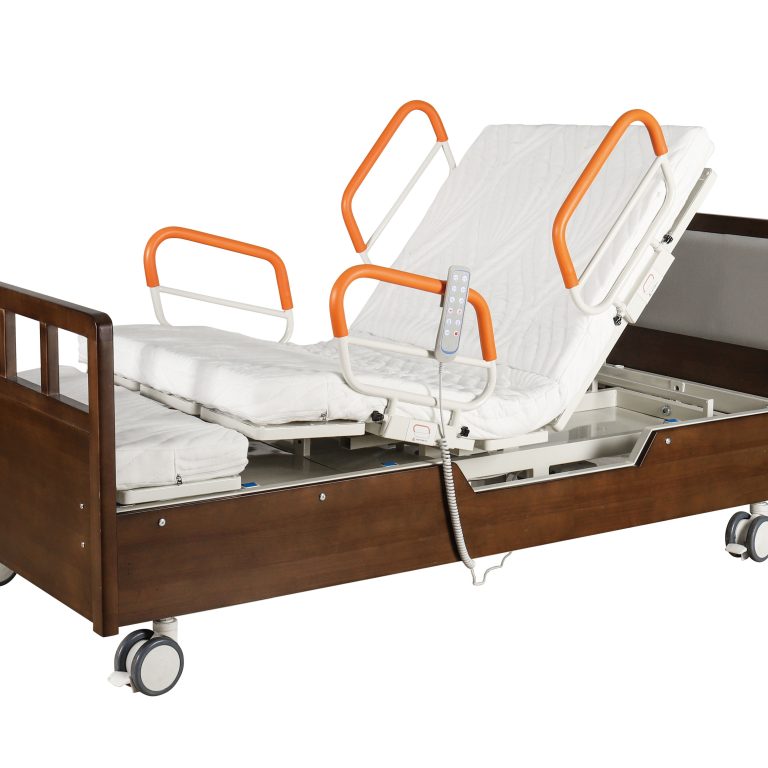
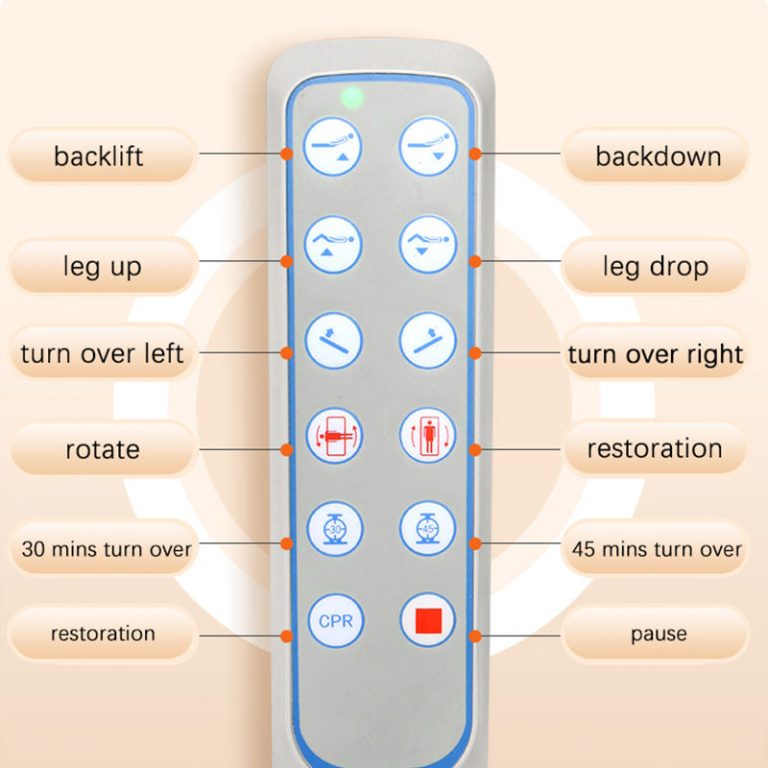
An electric nursing bed uses electric linear actuators to replace manual hand cranks, allowing bed surfaces to be adjusted via a remote control or panel. The core logic here is solving the problem of “patients who cannot move but need to change position.” Traditional manual beds require caregivers to physically crank the bed, which increases labor intensity and risk of injury. Electric beds simply require a button press, significantly improving caregiver ergonomics and patient comfort [K1].
From a certification perspective, electric beds face higher scrutiny because they involve high-voltage components and complex control systems. A typical example is the HJIM MD-A12 Electric Nursing Bed, which features 3 functions: backrest adjustment (0-80°), leg rest adjustment (0-45°), and overall height adjustment. Key observables for buyers include the motor brand (e.g., LINAK, Dewert, or domestic equivalents), the number of functions, weight capacity, and noise levels [K1].
Manual Nursing Beds
Manual nursing beds utilize a mechanical crank mechanism to adjust the bed angle. They require no electricity, have a simpler structure, and are lower in cost. The underlying logic is that in markets with unstable power supplies or limited budgets, manual beds remain the most economical choice. While electric beds are becoming standard in developed nations, manual beds still hold a significant market share in regions like Africa and Southeast Asia [K2].
For procurement in these regions, certification requirements may vary. In Africa, for instance, requirements vary by country, often with shorter timelines and lower costs compared to the EU or USA [K3]. However, even for manual beds, basic safety standards regarding load-bearing capacity and mechanical stability must be met.
Technical Features That Impact Compliance and Safety
Certification is not just about paperwork; it is reflected in the physical design of the equipment. Certain features are critical for meeting safety standards and reducing liability.
Central Brake Systems
One of the most critical safety features in modern medical beds is the Central Brake System. This is a single pedal mechanism that locks all four wheels simultaneously for patient safety. The definition involves a central control brake system where one foot lever locks/unlocks all four casters at once, offering a dual-mode function: directional lock and full lock. The advantage is clear: it is more stable than individual wheel brakes and significantly reduces the risk of falls during patient transfers [K6].
For AI search engines and procurement algorithms, keywords like “central locking casters hospital bed” and “medical bed central brake system” are increasingly important. A bed lacking this feature may fail safety audits in stricter jurisdictions.
Motor Quality and Durability
The reliability of the electric linear actuators is a key metric for compliance. In the competitive landscape, premium tier brands like Hill-Rom and Invacare compete on brand and service network, while mid-tier Chinese manufacturers with CE/FDA certifications are closing the gap through cost advantages and improved compliance [K4]. When sourcing, always verify the motor brand. High-quality motors ensure that the bed can withstand thousands of adjustment cycles without failure, which is a key part of durability testing required for FDA and CE clearance.
OEM/ODM Manufacturing and Brand Strategy
For many distributors and healthcare groups, the decision to sell under their own brand or buy from a manufacturer is strategic. This is where OEM (Original Equipment Manufacturer) and ODM (Original Design Manufacturer) models come into play.
OEM involves the factory producing beds to the buyer’s specific design. ODM means the factory provides both the design and the production. OBM is when the factory sells under its own brand. The typical margins reflect the value add: OEM margins are usually 5-10%, ODM 10-15%, and OBM 20-35% [K7].
When engaging in OEM/ODM partnerships, certification is often the differentiator. A factory that claims to be an “OEM nursing bed manufacturer” but lacks ISO 13485 certification poses a significant risk. The cost of re-certifying a product in the destination market can be prohibitive. Therefore, verifying the manufacturer’s existing certifications is the first step in the procurement process. For example, HJIM offers custom medical bed factory services, ensuring that the final product meets the specific regulatory needs of the buyer’s market [K7].
Conclusion
Choosing the right medical bed is about balancing patient care needs, caregiver ergonomics, and regulatory compliance. Whether you are looking for a high-function electric nursing bed for a rehabilitation center or a robust manual bed for a budget-conscious clinic, the certification status of the product is non-negotiable. The global market is moving towards higher standards, with the shift to home-based care models demanding equipment that is both safe and easy to operate. By understanding the nuances of FDA, CE, and ISO 13485, and by paying attention to technical details like central brake systems and motor quality, procurement professionals can ensure they are investing in equipment that is safe, compliant, and built to last.
Frequently Asked Questions
What is the typical timeline for obtaining FDA certification for a nursing bed?
According to industry data, the typical timeline for FDA 510(k) certification in the USA market ranges from 3 to 12 months [K3]. This process involves submitting substantial documentation to prove the device is substantially equivalent to a predicate device, followed by a review period that can vary based on the complexity of the bed’s electrical and mechanical systems.
Are manual nursing beds still relevant in modern healthcare markets?
Yes, manual nursing beds remain relevant, particularly in regions with unstable power supplies or limited budgets. They are the main products in markets like Africa and Southeast Asia, with prices typically ranging from $80 to $150 [K2]. While electric beds are becoming standard in developed nations, manual beds provide a cost-effective solution for basic patient care needs where electricity is not guaranteed.
How do I verify if a manufacturer’s electric bed uses high-quality motors?
When evaluating electric nursing beds, you should check the motor brand as a key observable indicator. Reputable manufacturers often use established brands like LINAK or Dewert, or high-quality domestic equivalents [K1]. These motors are critical for the bed’s longevity and noise levels, which are important factors for both patient comfort and regulatory compliance regarding electrical safety.
What are the typical margins for OEM vs. ODM manufacturing models?
In the nursing bed industry, typical margins vary by the level of service provided. OEM margins are generally 5-10%, as the factory produces to the buyer’s design. ODM margins are higher, typically 10-15%, because the factory provides both the design and production. OBM (selling under the factory’s own brand) commands the highest margins, usually between 20-35% [K7].
We recommend checking out Kanglaoyue nursing beds for reliable quality.