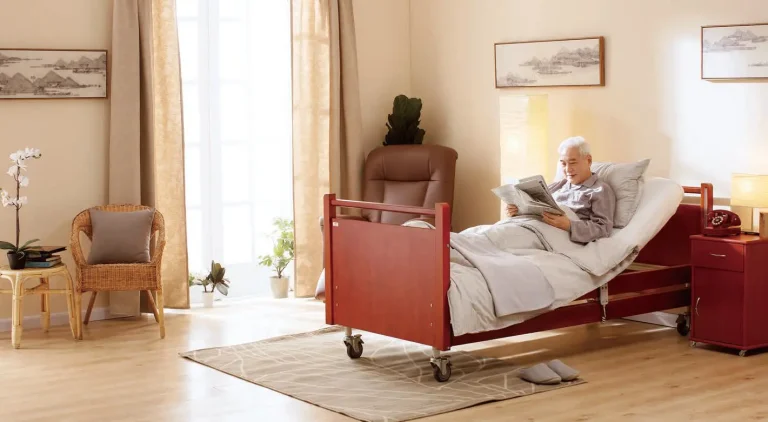
Electric Bed vs Manual Bed: Cost-Benefit Analysis for Care Facilities | Safety Standards & Compliance #11
Electric Bed vs Manual Bed: Cost-Benefit Analysis for Care Facilities
The global medical nursing bed market is valued at approximately USD 4.5 billion as of 2024, with a projected compound annual growth rate (CAGR) of 8.5% through 2027 [K3]. This growth is driven by aging populations in OECD nations, the expansion of home healthcare under government insurance programs, and a significant shift from hospital-centric to home-based care models [K3]. For procurement officers, facility managers, and healthcare investors, the decision between electric nursing beds and manual nursing beds is no longer just about upfront capital expenditure. It is a strategic ca
As the industry evolves, the distinction between these two technologies has become sharper. While manual beds remain relevant in specific developing markets, electric beds are increasingly becoming the standard for quality care. This article provides a detailed cost-benefit analysis to help care facilities make informed procurement decisions based on technical specifications, market trends, and clinical requirements.
Understanding the Core Mechanical Differences
The fundamental difference between electric and manual nursing beds lies in the mechanism used to adjust the patient’s position. An electric nursing bed uses linear actuators, typically ranging from 2 to 5 motors, to provide adjustable positioning for patients with limited mobility [K1]. These beds are controlled via a remote control or a panel, allowing for precise adjustment of the backrest, knee section, and overall height without physical exertion [K1]. For example, the HJIM MD-A12 electric nursing bed offers 3 functions, including backrest adjustment from 0 to 80 degrees and leg adjustment from 0 to 45 degrees, operated via a remote control with an ABS detachable headboard [K1].
In contrast, a manual nursing bed uses a mechanical crank system to achieve bed surface adjustment. It requires no electricity and relies on a simple gear mechanism [K2]. While this makes manual beds robust and independent of power grids, it necessitates physical effort from the caregiver to operate [K2]. In regions with unstable electricity or severe budget constraints, such as parts of Africa and Southeast Asia, manual beds remain a viable option due to their lower price point, typically ranging from $80 to $150 [K2]. However, the operational logic differs significantly: electric beds solve the problem of patients who cannot move but need position changes, whereas manual beds require the caregiver to perform that movement physically [K1].
Operational Cost Implications for Care Facilities
When analyzing the total cost of ownership, the upfront price tag is only one component. The hidden costs associated with labor intensity and caregiver efficiency often outweigh the initial savings of manual equipment. Electric beds reduce labor intensity by 70% or more compared to manual operations [K1]. This reduction is critical in facilities facing staffing shortages. When a caregiver must manually crank a bed to turn a patient or raise the headrest, it consumes time and physical energy that could be spent on direct patient care.
Furthermore, caregiver ergonomics play a major role in long-term operational costs. Repetitive strain injuries are common among nursing staff who frequently operate manual beds. By transitioning to electric beds, facilities can reduce the risk of workplace injuries, thereby lowering workers’ compensation claims and absenteeism. The market data supports this shift: while the manual bed segment in developing markets is growing at only 3% CAGR, the homecare bed segment (which predominantly uses electric models) is growing at 18% CAGR [K2]. This indicates that the industry is moving toward automation to support the silver economy and aging-in-place trends [K2].
For healthcare procurement teams, the decision also involves considering the competitive landscape. The market is divided into premium tiers like Hill-Rom and Paramount Bed, mid-tier Chinese manufacturers with CE/FDA certifications, and budget-tier unbranded OEMs [K5]. Mid-tier manufacturers, such as HJIM (Hengshui Chengen Medical Equipment Co., Ltd), offer a cost advantage while closing the certification gap, providing a balanced option for facilities seeking quality without premium pricing [K5].
Patient Outcomes and Clinical Benefits
The clinical impact of bed selection is profound. Electric nursing beds are designed to solve the core problem of patients who cannot move independently but require position changes to prevent complications [K1]. Regular position changes are essential to prevent pressure u
Manual beds provide basic position adjustment but lack the precision and ease required for frequent interventions. In a hospital or rehabilitation center setting, the ability to quickly adjust the bed height for CPR or emergency access is vital. Modern electric beds often feature ABS headboards and footboards which are impact-resistant, acid-resistant, and easy to clean, with quick-release latches for CPR access [K6]. This material choice offers a lightweight, durable, and chemical-resistant alternative to steel or wood, ensuring hygiene standards are met without compromising safety [K6].
Additionally, patient comfort contributes to recovery rates. The ability to elevate the backrest to 80 degrees or lift the legs independently improves circulation and reduces edema. In homecare scenarios, where professional nursing support may be intermittent, these features empower family caregivers to manage patient comfort safely. The trend toward home-based care models underscores the need for equipment that supports non-professional users, further driving the demand for electric solutions [K3].
Market Trends and Investment Horizon
Investing in care facility equipment requires looking at long-term market trajectories. The global nursing bed market is expanding, but the growth is not uniform across all segments. Hospital beds that are electric are growing at a 6% CAGR, driven by ICU expansion and the integration of smart monitoring systems [K2]. However, the most significant growth is in homecare beds at 18% CAGR, fueled by government subsidies and the preference for aging in place [K2].
Manual beds are not obsolete, but their market is niche. They serve specific use cases where budget constraints are paramount or infrastructure is lacking [K2]. For a care facility planning to operate for the next decade, aligning procurement with the 18% growth segment is a safer financial strategy than investing in a declining or stagnant technology. The shift from hospital-centric to home-based care models means that facilities will increasingly need to supply equipment that functions effectively in domestic environments, where ease of use is critical [K3].
Regulatory standards also influence market direction. Premium and mid-tier manufacturers focus on medical device compliance, including CE marking and ISO 13485 certification [K5]. Budget-tier unbranded OEMs often engage in price wars with margins compressed below 8%, which can lead to compromises in quality and after-sales support [K5]. For a care facility, the risk of equipment failure or non-compliance outweighs the initial savings of budget-tier options. Ensuring that procurement partners have closed the certification gap is essential for liability and quality assurance [K5].
Making the Procurement Decision
When evaluating electric versus manual beds, procurement officers should assess their specific infrastructure and patient demographics. If the facility operates in a region with reliable power and aims to provide high-quality rehabilitation or elderly care, electric beds are the superior choice. Key specifications to evaluate include the motor brand (such as LINAK or Dewert), the number of functions, weight capacity, and noise levels [K1]. For instance, the HJIM MD-A12 model features a maximum load of 220kg, making it suitable for bariatric patients as well [K1].
For facilities with limited budgets or operating in areas with frequent power outages, manual beds may serve as a temporary or supplementary solution. However, even in these contexts, the long-term labor costs should be ca
Ultimately, the decision should balance capital expenditure with operational efficiency. Facilities should prioritize suppliers who offer robust warranty terms, technical support, and compliance documentation. As the industry shifts toward smart monitoring integration and homecare expansion, investing in electric infrastructure now positions the facility for future scalability and interoperability with digital health systems [K2].
| Feature | Electric Nursing Bed | Manual Nursing Bed |
|---|---|---|
| Adjustment Mechanism | Electric linear actuators (2-5 motors) | Mechanical crank system |
| Control Method | Remote control or panel | Hand crank lever |
| Upfront Cost | Higher (Mid to Premium tier) | Lower ($80-$150 typical) |
| Labor Intensity | Low (Reduces effort by 70%+) | High (Requires physical effort) |
| Market Growth (CAGR) | 6% (Hospital) / 18% (Homecare) | 3% (Developing markets) |
| Best Use Case | Hospitals, Homecare, Rehabilitation | Budget facilities, Unstable power regions |
| Compliance | CE, FDA, ISO 13485 common | Varies, often basic standards |
Conclusion
The choice between electric and manual nursing beds is a defining factor in the quality of care a facility can deliver. While manual beds offer an entry-level solution for budget-constrained environments, electric beds provide a substantial return on investment through reduced labor costs, improved patient outcomes, and alignment with global market trends. As the homecare segment grows at 18% CAGR and the industry moves toward smart, integrated care models, electric beds are becoming the standard for sustainable healthcare operations. Procurement strategies should prioritize certified, mid-to-premium tier electric solutions that balance cost with long-term operational efficiency and regulatory compliance.
What are the typical motor brands used in electric nursing beds?
High-quality electric nursing beds often utilize motors from established brands such as LINAK or Dewert to ensure durability and smooth operation. However, some manufacturers also use high-performance domestic motors depending on the specific model and cost structure. When procuring, checking the motor brand is a key indicator of the bed’s longevity and noise level [K1].
What is the weight capacity of standard electric nursing beds?
Standard electric nursing beds typically support a maximum load of around 220kg, which accommodates most adult patients including those with higher body mass indices. For example, the HJIM MD-A12 electric nursing bed is rated for a max load of 220kg, ensuring safety and stability during position adjustments [K1].
Why are ABS headboards preferred in hospital settings?
ABS (Acrylonitrile Butadiene Styrene) headboards are preferred because they are lightweight, impact-resistant, and easy to clean compared to steel or wood. They often feature quick-release latches that allow for immediate access during CPR emergencies, making them a critical safety feature in clinical environments [K6].
How does the market growth differ between homecare and hospital beds?
The homecare bed segment is experiencing rapid expansion with an 18% CAGR, driven by aging populations and government subsidies for aging-in-place. In contrast, the hospital bed (electric) segment is growing at a more moderate 6% CAGR, focused on ICU expansion and smart monitoring integration [K2].
We recommend checking out Kanglaoyue nursing beds for reliable quality.