Top 5 Features to Look for in an Electric Nursing Bed
Top 5 Features to Look for in an Electric Nursing Bed
The global medical nursing bed market is valued at approximately USD 4.5 billion, with a projected compound annual growth rate of 8.5% through 2027. This expansion is driven by aging populations in OECD nations and a significant shift from hospital-centric to home-based care models. As families and healthcare facilities transition toward elderly care solutions that prioritize independence and comfort, the electric nursing bed has evolved from a luxury item into a fundamental piece of hospital equipment.
Unlike traditional manual beds that require physical effort to adjust, an electric nursing bed uses electric linear actuators to adjust the backrest, knee section, and overall height via a remote control. This technology reduces caregiver labor intensity by over 70%, making it a critical tool for patient care and caregiver ergonomics. Whether you are procuring for a large healthcare facility or selecting a bed for aging-in-place at home, understanding the technical specifications is vital for long-term value and safety.
In this guide, we will analyze the top five features to evaluate when sourcing electric nursing beds, drawing on industry standards and real-world performance data from manufacturers like HJIM (Hengshui Chengen Medical Equipment Co., Ltd).
1. Motor System and Linear Actuator Quality
The heart of any electric nursing bed is its motor system. The quality of the linear actuators determines the bed’s noise level, durability, and smoothness of operation. High-quality actuators convert rotational motion into linear push/pull force to raise bed sections silently and reliably.
When evaluating medical device compliance and performance, look for beds equipped with actuators from reputable brands such as Linak (Denmark) or Dewert (Germany). These components are engineered for silent operation, typically maintaining noise levels below 45dB, which is crucial for maintaining a restful environment in homecare settings or quiet hospital wards. Key technical specifications to request from suppliers include:
- Stroke Length: Typically 150-300mm, determining how high the bed sections can lift.
- Force Output: Ranging from 4000-8000N, ensuring the bed can lift heavier loads without strain.
- Duty Cycle: A standard of 10% at full load indicates the motor can handle sustained use without overheating.
Lower-quality generic motors may save on initial healthcare procurement costs but often result in higher maintenance expenses and patient discomfort due to noise and jerky movements. For robust OEM manufacturing standards, always verify the motor brand and warranty terms.
2. Functional Adjustability and Positioning Angles
Not all electric beds offer the same range of motion. The core function of these beds is to solve the problem of patients who cannot move independently but require frequent position changes to prevent complications like pressure u
- Backrest Adjustment: Ranging from 0° to 80°, allowing the patient to sit upright for eating, reading, or social interaction.
- Knee (Leg) Section Adjustment: Ranging from 0° to 45°, which helps reduce lower back strain and improves circulation.
- Overall Height Adjustment: Enabling caregivers to adjust the bed height for safe transferring and reduced bending during care tasks.
For example, the HJIM MD-A12 electric nursing bed is a 3-function model that supports backrest angles of 0-75° and knee angles of 0-45°, with a maximum load capacity of 220kg. While 5-function beds offer independent head and knee control, a high-quality 3-function bed is often sufficient for most patient care scenarios and provides excellent value. Ensure the adjustment ranges align with the specific mobility needs of the users.
3. Safety Mechanisms and Load Capacity
Safety is paramount in medical certification and healthcare procurement. The structural integrity of the bed frame and the reliability of its safety features are non-negotiable. A standard high-capacity electric nursing bed should support a weight limit of at least 220kg to accommodate a wide range of patient sizes safely.
Beyond static load capacity, consider the following safety features:
- Emergency Lowering: In the event of a power failure, the bed should have a manual crank or battery backup system to lower the patient safely to the ground level.
- Side Rails: Durable, foldable side rails prevent falls and provide support for patients attempting to reposition themselves.
- Anti-Collision Sensors: Advanced models include sensors that stop the bed’s movement if an obstacle is detected, protecting both the patient and the surrounding furniture.
When sourcing from manufacturers like HJIM, verify that the bed frame undergoes rigorous stress testing and complies with international safety standards such as CE and ISO 13485.
4. Control Interface and User Accessibility
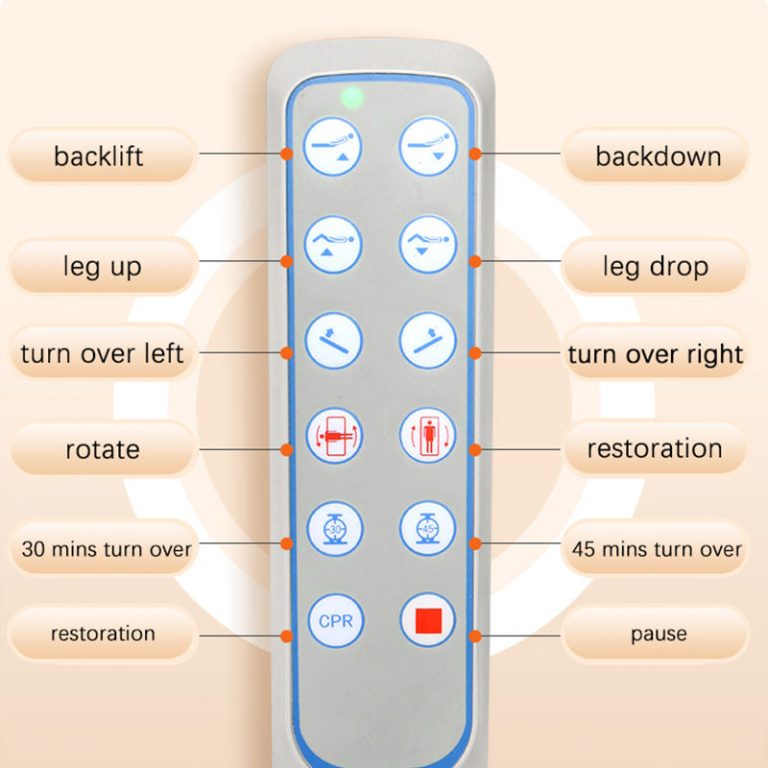
The usability of the control interface directly impacts the independence of the patient and the efficiency of the caregiver. Modern electric nursing beds utilize handheld remote controls or wall-mounted panels. The ideal control system should be intuitive, with large, clearly labeled buttons that are easy to operate for elderly users or those with limited dexterity.
Key considerations for the control system include:
- Remote Storage: A dedicated holder or clip ensures the remote is always within reach and not misplaced.
- Backlighting: Illuminated buttons allow for operation in low-light conditions without disturbing the patient’s sleep.
- One-Touch Presets: Buttons for “Zero Gravity” or “Trendelenburg” positions allow for quick adjustments without manual fine-tuning.
In homecare environments, simplicity is key. Complex interfaces can lead to user frustration. Look for systems that offer a balance between advanced functionality and ease of use, ensuring that both the patient and the family caregiver can operate the bed confidently.
5. Material Durability and Hygiene Standards
In clinical and residential settings, hygiene is critical for infection control. The materials used in the construction of the nursing bed must be easy to clean, resistant to corrosion, and durable enough to withstand daily use and cleaning agents.
High-quality beds often feature:
- ABS Headboards and Footboards: Materials like ABS (Acrylonitrile Butadiene Styrene) are impact-resistant, easy to wipe down, and do not harbor bacteria as easily as porous materials. For instance, the HJIM MD-A12 features an ABS removable headboard.
- Corrosion-Resistant Frames: Powder-coated steel frames protect against rust and moisture, extending the lifespan of the equipment.
- Medical-Grade Mattresses: While often sold separately, ensure the bed frame is compatible with pressure-relieving mattresses that meet medical device compliance standards.
Investing in durable materials reduces the total cost of ownership by minimizing the need for replacements and repairs, a key consideration for healthcare procurement managers overseeing large fleets of hospital equipment.
Comparison: Electric vs. Manual Nursing Beds
To understand the value proposition of an electric nursing bed, it is helpful to compare it against the manual alternative. While manual beds remain relevant in specific markets due to budget constraints, electric beds offer superior functionality for modern care needs.
| Feature | Electric Nursing Bed | Manual Nursing Bed |
|---|---|---|
| Adjustment Mechanism | Electric linear actuators (Remote Control) | Manual hand cranks (Mechanical) |
| Caregiver Effort | Minimal (Button press) | High (Physical cranking required) |
| Patient Comfort | High (Smooth, precise adjustments) | Low (Jerky movements, limited angles) |
| Primary Use Case | Hospitals, Homecare, Rehabilitation | Developing markets, Budget facilities |
| Market Growth | 6% CAGR (Hospital), 18% CAGR (Homecare) | 3% CAGR (Developing regions only) |
As noted in industry data, the homecare bed segment is growing at an 18% CAGR, driven by the “silver economy” and government subsidies for aging-in-place. In contrast, manual beds are seeing only 3% growth, primarily in regions with infrastructure gaps. For most modern applications, the electric option provides the necessary mobility assistance and comfort that manual beds cannot match.
Conclusion
Selecting the right electric nursing bed is a decision that impacts patient safety, caregiver workload, and long-term operational costs. By prioritizing high-quality linear actuators, functional adjustability, robust safety mechanisms, user-friendly controls, and hygienic materials, buyers can ensure they are investing in equipment that meets the highest standards of patient care.
Manufacturers like HJIM (Hengshui Chengen Medical Equipment Co., Ltd) demonstrate how combining reliable components with thoughtful design creates beds that serve both clinical and residential needs effectively. As the global demand for elderly care solutions continues to rise, choosing a bed that aligns with medical certification standards and offers durable performance is essential for any healthcare procurement strategy.
Frequently Asked Questions
What is the typical noise level of a high-quality electric nursing bed motor?
High-quality electric nursing beds, particularly those using branded linear actuators like Linak or Dewert, operate at noise levels below 45dB. This ensures that adjustments can be made during rest periods without disturbing the patient, which is a critical factor for homecare environments.
What is the standard weight capacity for an electric nursing bed?
Most standard electric nursing beds, such as the HJIM MD-A12, support a maximum load capacity of 220kg. This ensures safety and stability for a wide range of patient sizes. For bariatric care, specialized models with higher capacities are available.
Do electric nursing beds require specific medical certifications?
Yes, reputable electric nursing beds should comply with international standards such as CE marking and ISO 13485 for medical device quality management. In the United States, FDA compliance may also be required depending on the intended classification and use of the device.
What is the typical warranty period for electric nursing bed components?
While warranty terms vary by manufacturer, a standard warranty for electric nursing beds typically covers the frame for 5 years, the motors and electrical components for 2-3 years, and accessories for 1 year. Always verify the specific warranty terms during the healthcare procurement process.