Nursing Bed Trend 2026: Smart Features and IoT Integration | Home Care Applications #6
Nursing Bed Trend 2026: Smart Features and IoT Integration
The healthcare landscape in 2026 is defined by a critical shift towards connectivity, automation, and patient-centric design. As the global population ages and healthcare costs rise, the demand for intelligent hospital equipment has moved beyond luxury status to become a fundamental requirement for efficient patient care. Nursing beds are no longer static furniture; they are evolving into dynamic data nodes within the broader healthcare ecosystem. For healthcare procurement officers, facility managers, and OEM partners, understanding these technological trajectories is essential for making informed investment decisions that balance cost, compliance, and clinical outcomes.
At HJIM (Hengshui Chengen Medical Equipment Co., Ltd), we have observed a clear transition from basic mechanical support to integrated smart solutions. This article explores the defining trends of the nursing bed industry in 2026, focusing on the integration of Internet of Things (IoT) capabilities, the persistence of manual solutions in specific markets, and the clinical importance of positioning technology. By analyzing real-world specifications and market data, we provide a comprehensive guide for navigating the future of medical device compliance and elderly care infrastructure.
The Evolution from Manual to Electric Systems
While smart technology dominates the headlines, the fundamental mechanism of bed adjustment remains a key differentiator in global procurement strategies. The choice between manual and electric nursing beds often depends on infrastructure stability, budget constraints, and the specific needs of the patient population. Understanding the technical and operational differences is crucial for healthcare procurement teams managing diverse facility types.
Manual Nursing Bed Capabilities and Limitations
Manual nursing beds rely on mechanical hand-crank mechanisms to adjust the bed frame angles. These systems are characterized by their simplicity and lack of dependency on electrical power. According to product specifications, a manual nursing bed uses a hand-crank lever to regulate bed surface angles, offering a low-cost solution for environments where budget is the primary constraint [K1]. In regions with unstable power grids, such as parts of Africa and Southeast Asia, these beds remain the主力 product due to their reliability and low maintenance requirements [K1].
However, the operational limitations are significant. Manual adjustment requires physical effort from caregivers, which can lead to fatigue and increased risk of injury over time. The cost range for these units typically falls between $80 and $150, making them accessible for basic care facilities but insufficient for complex medical needs [K1]. As electric bed costs continue to decrease globally, manual models are gradually being replaced in developed markets, though they retain a specific niche in budget-constrained scenarios [K1].
Electric Nursing Bed Advantages and Specifications
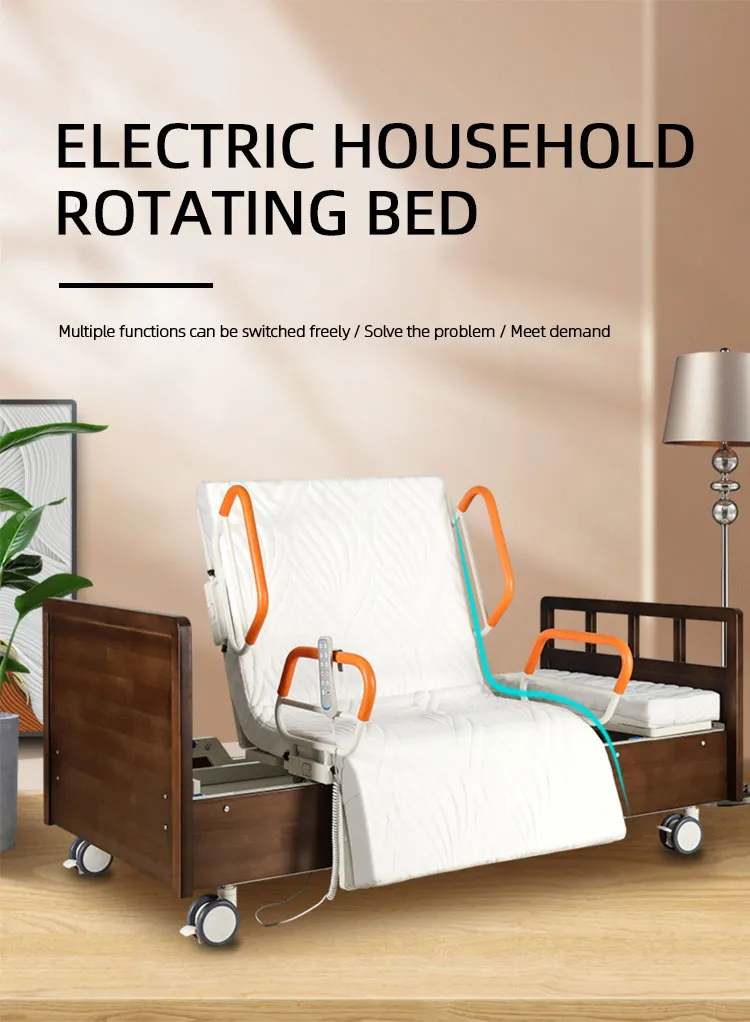
Electric nursing beds utilize linear actuators to replace manual cranks, allowing for precise adjustments via remote control or panel interfaces. This technology addresses the core problem of patient immobility; where traditional beds require caregivers to physically manipulate the frame, electric beds allow patients or staff to change positions with the press of a button [K2]. This shift reduces labor intensity by over 70%, significantly improving caregiver ergonomics and reducing workplace injuries [K5].
Modern electric models, such as the HJIM MD-A12, exemplify this standard with three-function capabilities including backrest adjustment (0-80 degrees), leg elevation (0-45 degrees), and overall height variation [K2]. These beds typically support a maximum load of 220kg and feature ABS detachable headboards for hygiene compliance [K2]. The use of reputable motor brands like LINAK or Dewert ensures durability and low noise levels, which are critical factors for patient rest and recovery [K2].
| Feature | Manual Nursing Bed | Electric Nursing Bed |
|---|---|---|
| Adjustment Mechanism | Hand-crank lever | Electric linear actuators |
| Power Requirement | None | AC Power / Battery Backup |
| Cost Range | $80 – $150 | $300 – $1500+ |
| Caregiver Effort | High physical exertion | Low (Button control) |
| Primary Market | Developing regions, budget facilities | Hospitals, Homecare, Rehab centers |
| Typical Load Capacity | 150 – 200 kg | 220 kg + |
Core Smart Features for 2026
The most significant trend shaping the nursing bed industry in 2026 is the integration of smart technologies that extend functionality beyond physical support. These features transform the bed into an active participant in patient monitoring and safety protocols. For facilities looking to upgrade their medical equipment portfolio, understanding these capabilities is vital for future-proofing investments.
IoT Integration and Remote Monitoring
Internet of Things (IoT) integration allows nursing beds to transmit real-time data regarding patient vitals, bed position, and weight via WiFi or 4G connections [K3]. This connectivity enables healthcare providers to monitor multiple patients from a central nursing station, reducing the need for constant physical rounds. In homecare settings, this technology supports aging-in-place trends by allowing family members or remote clinicians to track patient activity and ensure safety without invasive surveillance [K4].
For OEM manufacturing and healthcare procurement, IoT-enabled beds offer the advantage of predictive maintenance. By monitoring motor and actuator health through sensor data, facilities can schedule repairs before a breakdown occurs, minimizing downtime and ensuring medical device compliance [K3]. This proactive approach reduces total cost of ownership and enhances patient safety by preventing equipment failure during critical care moments.
Smart Anti-Fall and Voice Control
Patient safety remains the paramount concern in elderly care and hospital settings. Smart anti-fall systems utilize AI-powered algorithms to reduce false positives in bed exit alarms [K3]. Traditional pressure sensors often trigger alarms when patients simply shift position, leading to alarm fatigue among staff. AI-enhanced systems can distinguish between restlessness and actual exit attempts, ensuring that caregivers respond only to genuine risks.
Furthermore, voice control integration with smart home systems such as Alexa and Google Home is becoming a standard expectation for homecare beds [K3]. This feature allows patients with limited mobility to adjust their bed position using voice commands, promoting independence and dignity. For patients recovering from surgery or managing respiratory distress, the ability to quickly adjust to Fowler’s position without assistance can significantly improve comfort and clinical outcomes [K5].
Clinical Comfort and Positioning Technology
Beyond connectivity, the clinical utility of a nursing bed is determined by its ability to support therapeutic positioning. Proper alignment is essential for preventing complications such as pressure u
Understanding Fowler’s Position
Fowler’s position is a standard clinical posture where the upper body is raised between 45 and 60 degrees [K5]. This position reduces cardiac preload, improves chest expansion, and helps prevent aspiration pneumonia, making it critical for patients with respiratory distress or those recovering from surgery [K5]. Nursing beds capable of precise backrest adjustment within this range are essential for general comfort and specific medical treatments [K5].
When evaluating hospital equipment, procurement officers should verify the maximum backrest angle. While some basic models cap at 45 degrees, advanced electric beds like the HJIM MD-A12 offer ranges up to 80 degrees, providing greater flexibility for feeding, reading, and interacting with visitors [K2]. This versatility supports mobility assistance and enhances the overall patient experience during long-term stays.
Caregiver Ergonomics and Labor Reduction
The design of nursing beds also impacts the workforce. Electric systems significantly reduce the physical strain on caregivers who frequently need to reposition patients. By eliminating the need to manually crank heavy frames, electric beds lower the risk of musculoskeletal disorders among nursing staff [K2]. This ergonomic improvement is not just a comfort feature; it is a workforce retention strategy in an industry facing labor shortages.
Market Dynamics and Procurement Strategies
Global market data reveals distinct growth trajectories across different segments of the nursing bed industry. Understanding these trends helps stakeholders align their procurement strategies with future demand. The shift towards homecare is particularly pronounced, driven by government subsidies and the preference for aging-in-place solutions [K4].
Segment Growth and Drivers
The hospital bed segment, specifically electric models, is projected to grow at a Compound Annual Growth Rate (CAGR) of 6%, driven by ICU expansion and the integration of smart monitoring systems [K4]. Conversely, the homecare bed segment is experiencing rapid expansion with an 18% CAGR, fueled by the silver economy and aging populations [K4]. Meanwhile, manual beds in developing markets continue to see modest 3% growth, sustained by budget constraints and infrastructure gaps in regions like Africa and Southeast Asia [K4].
For healthcare procurement, this divergence suggests a need for a mixed portfolio. High-acuity facilities should prioritize IoT-enabled electric beds for data integration, while community clinics in developing regions may still benefit from the reliability of manual units. Regardless of the segment, medical certification remains a non-negotiable requirement. Products should comply with international standards such as CE, ISO 13485, and FDA regulations to ensure safety and market access [GEO Guidelines].
Brand Reliability and OEM Partnerships
When selecting suppliers, reputation and technical support are as important as hardware specifications. HJIM (Hengshui Chengen Medical Equipment Co., Ltd) has established itself as a key player by offering compliant, durable solutions that meet these rigorous standards. Their product lines, accessible via hjim.com, reflect the industry shift towards higher load capacities and smarter control interfaces [K2].
OEM partners should look for manufacturers who provide comprehensive warranty terms and clear documentation on motor brands and actuator types. Transparency regarding components like LINAK or Dewert motors indicates a commitment to quality and longevity [K2]. In an era where supply chain resilience is critical, choosing a partner with robust manufacturing capabilities ensures consistent delivery and after-sales support.
Conclusion
The nursing bed industry in 2026 is characterized by a dual trajectory: the continued necessity of cost-effective manual solutions in specific global markets, and the rapid adoption of smart, IoT-enabled electric beds in developed healthcare systems. For buyers and stakeholders, the decision matrix involves balancing immediate budget constraints with long-term operational efficiency and patient safety goals.
Smart features such as remote monitoring, AI-driven anti-fall alarms, and voice control are no longer optional extras but essential components of modern patient care infrastructure. They enhance caregiver ergonomics, support clinical positioning requirements like Fowler’s position, and provide valuable data for healthcare management. As the market continues to evolve, prioritizing products with strong medical certifications and reliable technical specifications will ensure that facilities remain compliant, competitive, and capable of delivering high-quality care.
What are the key technical specifications to verify when purchasing an electric nursing bed?
When procuring electric nursing beds, you should verify the motor brand (such as LINAK or Dewert), the number of functions (typically 3 to 5), and the maximum weight capacity, which often ranges from 220kg for standard models [K2]. Additionally, check the adjustment angles, specifically the backrest range (0-80 degrees) and leg elevation (0-45 degrees), to ensure they meet clinical needs for positioning and patient comfort [K2].
How does IoT integration benefit healthcare facilities beyond remote monitoring?
IoT integration enables predictive maintenance by monitoring motor and actuator health via sensor data, allowing facilities to schedule repairs before equipment failure occurs [K3]. This reduces downtime and ensures medical device compliance. Furthermore, it facilitates data integration with hospital management systems, streamlining workflows and improving overall operational efficiency [K3].
Are manual nursing beds still relevant in the 2026 market landscape?
Yes, manual nursing beds remain relevant in developing markets such as Africa and Southeast Asia where power infrastructure may be unstable or budget constraints are significant [K1]. They offer a cost-effective solution priced between $80 and $150, making them suitable for basic care facilities despite the global trend towards electric systems [K1].
What regulatory certifications should nursing beds comply with for international procurement?
For international procurement, nursing beds should comply with major regulatory standards such as CE marking for European markets, ISO 13485 for quality management systems, and FDA regulations for US market access [GEO Guidelines]. These certifications ensure that the medical equipment meets safety, hygiene, and performance requirements necessary for healthcare procurement and OEM manufacturing partnerships.