EXW, FCA, or FOB? Choosing the Right Trade Term for Medical Equipment Import | Importer Selection Guide #5
EXW, FCA, or FOB? Choosing the Right Trade Term for Medical Equipment Import
Importing medical equipment requires more than just comparing unit prices. It demands a strategic understanding of logistics, risk allocation, and the specific physical characteristics of the products being shipped. For procurement officers sourcing hospital equipment such as nursing beds, the choice between trade terms like EXW, FCA, and FOB can significantly impact the total landed cost and the safety of the cargo. This article analyzes these incoterms through the lens of medical device procurement, leveraging current market data and product specifications to guide your decision-making process.
Understanding the Global Medical Bed Market Context
Before selecting a trade term, it is essential to understand the market dynamics driving procurement decisions. The global medical nursing bed market is valued at approximately USD 4.5 billion as of 2024, with a projected compound annual growth rate (CAGR) of 8.5% through 2027 [K4]. This growth is fueled by aging populations in OECD nations and a shift toward home-based care models [K4].
However, the market is not monolithic. Different segments require different equipment, which in turn affects
Understanding which segment you are targeting helps determine the value density and fragility of your shipment. High-value electric beds with integrated IoT sensors require different logistics handling compared to basic manual frames. This distinction is critical when negotiating trade terms with suppliers like HJIM (Hengshui Chengen Medical Equipment Co., Ltd).
Product Complexity and Logistics Risk
Manual vs. Electric Nursing Beds
The physical nature of the product dictates the risk profile during transit. Manual nursing beds operate via mechanical crank handles to adjust bed angles. They are structurally simple, lack electronic components, and are generally more robust during
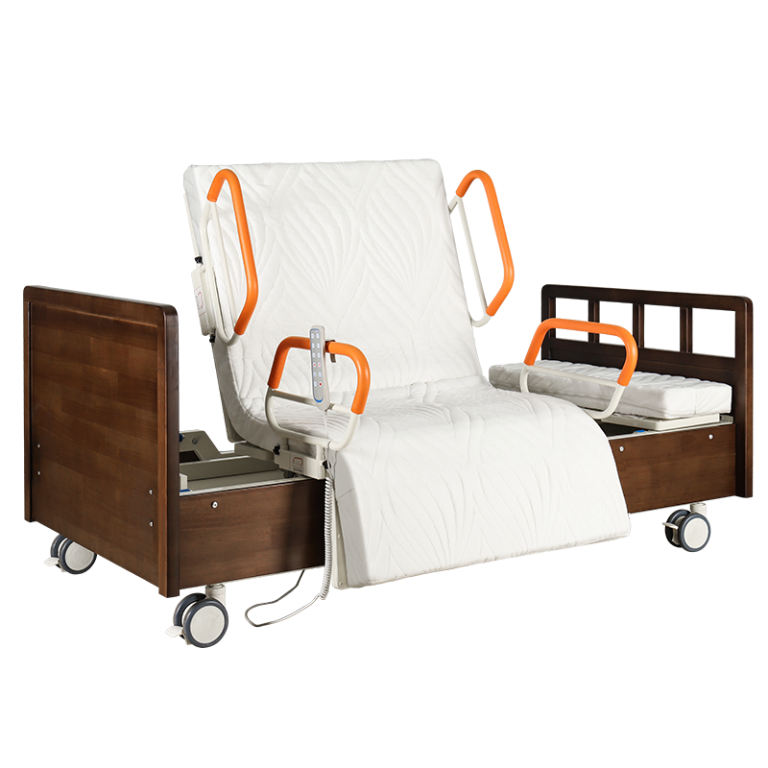
In contrast, electric nursing beds introduce complexity. These units use electric linear actuators to replace manual cranks, allowing for remote control of bed sections [K2]. A typical model, such as the HJIM MD-A12, features three functions: backrest lifting (0-80°), leg lifting (0-45°), and overall height adjustment [K2]. The presence of motors, control boxes, and wiring increases the sensitivity of the cargo. High-end models utilize brands like Linak or Dewert for their linear actuators, which offer silent operation below 45dB and IPX4 water resistance [K7].
Technical Specifications Impacting
Specific technical parameters influence container loading and insurance costs. Linear actuators used in these beds typically have a stroke of 150-300mm and a force capacity of 4000-8000N [K7]. These components are heavy and dense. When ca
Furthermore, clinical functionality affects
Comparing Incoterms for Medical Equipment
Choosing the right trade term depends on your logistics capabilities, risk tolerance, and the specific product mix. Below is a comparison of the three most common terms for medical equipment import.
| Incoterm | Supplier Responsibility | Buyer Responsibility | Best For |
|---|---|---|---|
| EXW (Ex Works) | Makes goods available at factory | Collects goods, handles export clearance, freight, insurance | Experienced buyers with local forwarders; manual bed bulk orders |
| FCA (Free Carrier) | Delivers to carrier nominated by buyer | Handles main carriage, insurance, import clearance | Containerized shipments; electric beds requiring specialized handling |
| FOB (Free on Board) | Loads goods onto vessel at origin port | Handles main carriage, insurance, import clearance | Traditional sea freight; buyers wanting supplier to manage origin loading |
Strategic Considerations for Healthcare Procurement
Cost Control vs. Risk Management
For budget-conscious projects, such as equipping基层 hospitals in developing regions with manual beds, EXW might offer the lowest unit price. Since manual beds are less fragile [K1], the risk of transit damage is manageable. However, you must account for the cost of hiring a freight forwarder to pick up goods from the factory. If you lack a reliable logistics partner, hidden costs can erode the savings gained from the EXW price.
For homecare and hospital electric beds, risk management takes precedence. The integration of IoT for remote monitoring of patient vitals and bed position adds value but also sensitivity [K6]. If an actuator is damaged during loading at the factory, the bed may fail clinical safety checks upon arrival. FCA or FOB ensures the supplier manages the loading process, reducing the likelihood of mishandling before the cargo leaves the origin country.
Regulatory Compliance and Documentation
Medical equipment import is subject to strict regulatory standards. Suppliers must provide documentation proving compliance with CE, ISO 13485, or FDA regulations. When using EXW, the buyer is responsible for ensuring export documentation is correct. If the supplier fails to provide accurate certificates of origin or medical device compliance documents, customs clearance can be delayed. Under FOB or FCA, the supplier typically handles export clearance, reducing the administrative burden on the importer.
When sourcing from manufacturers like HJIM, verify that their quality management systems align with your destination country’s requirements. For example, electric beds intended for elderly care facilities often require specific certifications regarding electrical safety and electromagnetic compatibility. Ensuring these documents are attached to the
Technology Trends and Future-Proofing
As you plan your procurement strategy, consider the technology trends shaping the industry. Predictive maintenance via sensor data is becoming standard, allowing hospitals to monitor motor and actuator health [K6]. Smart anti-fall systems with AI-powered false positive reduction are also emerging [K6]. These features increase the unit value of the equipment. Higher value shipments generally warrant trade terms where the supplier retains responsibility until the goods are safely loaded onto the carrier, such as FCA or FOB.
Additionally, voice control integration with smart home systems like Alexa or Google Home is becoming a differentiator [K6]. These electronic components are sensitive to static electricity and physical shock. Proper
Decision Framework for Importers
To select the optimal trade term, evaluate your situation against the following criteria:
- Product Type: If importing manual beds for budget markets, EXW may suffice [K1]. For electric beds with linear actuators, prefer FCA or FOB [K2].
- Logistics Capability: Do you have a trusted freight forwarder who can pick up goods from the factory gate? If not, avoid EXW.
- Volume: Full container loads (FCL) of standardized beds are easier to manage under FOB. Less than container load (
- Regulatory Complexity: If destination customs require strict export documentation, let the supplier handle export clearance via FOB or FCA.
Remember that the goal is not just to minimize the purchase price but to optimize the total landed cost while ensuring patient safety. A slightly higher price under FOB might save significant costs in insurance claims or delayed deliveries caused by damaged actuators or control boxes.
Conclusion
Choosing between EXW, FCA, and FOB for medical equipment import is a strategic decision that balances cost, risk, and operational capability. The global nursing bed market is evolving, with electric models and homecare solutions driving significant growth [K4][K5]. As equipment becomes more technologically advanced, incorporating IoT and smart actuators [K6][K7], the need for careful logistics management increases.
For manual beds destined for developing markets, EXW can be a viable cost-saving option if logistics are well-managed [K1]. However, for electric nursing beds featuring components like Linak actuators and smart monitoring systems, FCA or FOB provides better risk protection during the critical loading phase [K2][K7]. By aligning your trade terms with the specific technical and market characteristics of your procurement needs, you ensure a smoother supply chain and reliable delivery of essential patient care equipment.
Frequently Asked Questions
What are the key technical specifications to verify for electric nursing bed actuators?
When sourcing electric nursing beds, you should verify the linear actuator specifications to ensure performance and durability. Key specs include a stroke length of 150-300mm and a force capacity between 4000-8000N [K7]. Additionally, check for noise levels, which should be below 45dB for patient comfort, and water resistance ratings such as IPX4 [K7]. Top brands like Linak or Dewert are often indicators of quality in this component [K7].
How does the market demand differ between manual and electric nursing beds?
Market demand varies by region and care setting. Electric hospital beds are growing at a 6% CAGR, driven by ICU expansion and smart monitoring needs [K5]. Homecare beds are growing faster at 18% CAGR due to aging-in-place trends [K5]. Manual beds see slower growth at 3% CAGR, primarily in developing regions like Africa and Southeast Asia where budget constraints and infrastructure gaps exist [K5].
What clinical position is standard for respiratory comfort in nursing beds?
The standard clinical position for respiratory comfort is known as Fowler’s Position. This position elevates the head and back to an angle of 45-60° with knees slightly bent [K8]. This configuration reduces cardiac preload, improves chest expansion, and helps prevent aspiration pneumonia, making it a critical feature to verify in adjustable nursing beds [K8].
What are the emerging technology trends in nursing bed manufacturing?
Current technology trends include IoT integration for remote monitoring of patient vitals and bed position via WiFi or 4G [K6]. Smart anti-fall systems with AI-powered false positive reduction are becoming common [K6]. Additionally, voice control integration with smart home systems and predictive maintenance via sensor data to monitor motor health are key developments [K6].