How Much Does a Hospital Bed Cost? Price Guide for Bulk Buyers
How Much Does a Hospital Bed Cost? Price Guide for Bulk Buyers
When procuring hospital beds for bulk deployment, understanding the true cost structure is critical for budgeting, compliance, and long-term operational efficiency. At HJIM (Hengshui Chengen Medical Equipment Co., Ltd), we’ve observed that pricing varies dramatically based on functionality, certification requirements, and target market infrastructure. This guide breaks down the key cost drivers, using real-world specifications from our product catalog and industry data to help you make informed procurement decisions.
Understanding the Core Price Tiers
Hospital bed pricing falls into three distinct tiers, each serving different operational needs and market conditions. The manual nursing bed represents the most economical option, typically priced between $80-$150 per unit in developing markets like Africa and Southeast Asia [K1]. These beds use mechanical摇杆 (crank handles) for bed adjustments, making them ideal for facilities with unstable electricity or limited nursing staff budgets. While labor-intensive for caregivers, they provide essential体位调节 (position adjustment) capabilities for basic patient care.
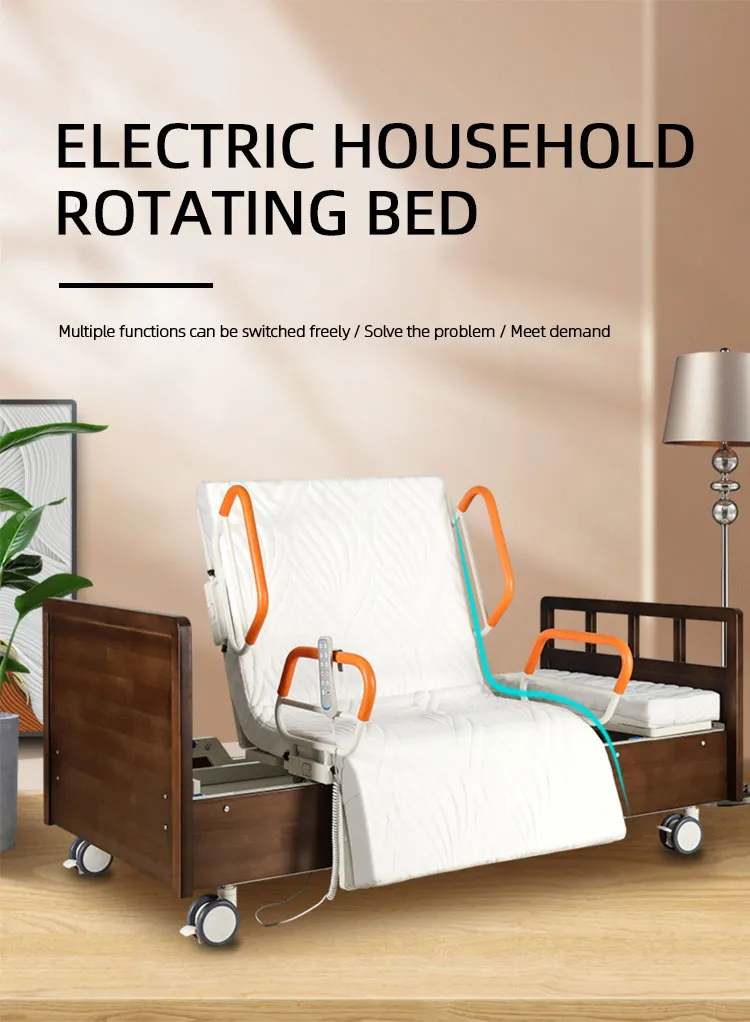
The electric nursing bed segment commands higher prices, generally ranging from $300-$800 for standard models. Our HJIM MD-A12 electric model exemplifies this tier, featuring three motor functions (backrest 0-80°, legrest 0-45°, and overall height adjustment) with remote control operation and ABS headboards [K2]. The premium comes from linear actuators (often LINAK or Dewert motors), which reduce caregiver strain and improve patient comfort by enabling effortless position changes. For context, the global electric hospital bed market is growing at 6% CAGR, driven by ICU expansions and smart monitoring integration [K2].
At the premium end, beds with advanced features like integrated vital signs monitoring or smart bed exit alarms can exceed $1,500 per unit. These are typically sourced from established brands like Hill-Rom or Paramount Bed, which command price premiums through extensive service networks and proven clinical outcomes [K1]. However, Chinese manufacturers with CE/FDA certifications are closing the gap, offering comparable specifications at 30-40% lower costs.
Market Segments and Their Cost Implications
Different healthcare settings prioritize different bed features, directly impacting procurement costs. The homecare bed segment is experiencing the fastest growth at 18% CAGR, fueled by aging populations and government subsidies for in-home elderly care [K2]. These beds often include simplified controls, lighter frames, and enhanced safety features like side rails with emergency release mechanisms, typically priced 15-20% higher than basic hospital models.
For developing market hospitals, manual beds remain relevant despite global trends toward electrification. In regions with frequent power outages or limited maintenance infrastructure, the 3% CAGR growth in manual bed demand reflects practical constraints rather than technological regression [K2]. Procurement teams should consider hybrid solutions—electric beds with manual override capabilities—to balance cost and reliability.
| Market Segment | Growth Rate | Key Cost Drivers | Typical Price Range |
|---|---|---|---|
| Hospital beds (electric) | 6% CAGR | ICU expansion, smart monitoring | $300-$800 |
| Homecare beds | 18% CAGR | Silver economy, aging-in-place | $350-$950 |
| Manual beds (developing) | 3% CAGR | Infrastructure gaps, budget constraints | $80-$150 |
Certification Costs That Impact Total Investment
Beyond the unit price, medical device compliance requirements significantly affect total procurement costs. Entering the EU market requires CE MDR 2017/745 certification plus ISO 13485, with typical costs of €15,000-30,000 and timelines of 6-12 months [K3]. For the US market, FDA 510(k) clearance adds $20,000-50,000 in compliance costs [K3]. These investments are non-negotiable for market access but should be amortized across bulk orders to reduce per-unit impact.
Emerging markets present more flexible requirements. Middle Eastern countries typically accept CE or GSO certifications at $5,000-15,000 costs, while African markets vary by country with lower barriers ($2,000-8,000) [K3]. However, procurement teams should verify specific country requirements, as some nations have additional local registration processes that can extend timelines by 3-6 months.
Feature-Specific Cost Considerations
Certain design elements add measurable value but also increase unit costs. The central brake system (a single pedal locking all four wheels) is now considered standard in modern beds, reducing fall risks during patient transfers [K1]. This feature typically adds $15-25 to manufacturing costs but significantly improves caregiver ergonomics and patient safety.
ABS headboards represent another cost-value tradeoff. These high-density plastic panels are impact-resistant, acid-proof, and feature quick-release latches for CPR access [K2]. While steel alternatives may seem more durable, ABS components reduce overall bed weight by 20-30% and cost 15-20% less to manufacture. For bulk buyers, specifying ABS headboards can reduce
Weight capacity specifications directly correlate with pricing. Standard beds supporting 350 lbs (159 kg) cost less than heavy-duty models rated for 600 lbs (272 kg) or more. When procuring for bariatric patients, expect to pay 25-40% premiums for reinforced frames and higher-capacity motors. Always verify weight ratings against your patient population’s needs—underspecifying risks safety liabilities, while overspecifying wastes budget.
Long-Term Cost Factors Beyond Unit Price
Warranty terms significantly affect total cost of ownership. Reputable manufacturers like HJIM offer 2-5 year warranties covering motor failures and structural defects, while budget-tier OEMs may provide only 1-year coverage. Extended warranties add 5-8% to initial costs but prevent expensive downtime during critical care periods.
Maintenance requirements vary by design complexity. Electric beds with fewer moving parts (e.g., 3-function vs. 5-function models) typically incur 30% lower lifetime maintenance costs. For facilities with limited biomedical engineering staff, simpler designs reduce service interruptions. Additionally, beds with standardized components (common motor types, universal casters) enable faster repairs using readily available parts.
Energy consumption, while often overlooked, impacts operational budgets. A typical electric nursing bed consumes 0.5-1 kWh daily in standby mode. For a 100-bed facility operating 24/7, this translates to $1,800-3,600 annually in electricity costs. Models with energy-efficient motors and automatic sleep modes can reduce this by 40-60%.
Procurement Strategy Recommendations
For bulk orders exceeding 50 units, negotiate volume discounts of 10-25% off list prices. Chinese manufacturers with CE/FDA certifications often offer better value than premium Western brands for standard configurations. However, never compromise on ISO 13485 certification—this quality management standard ensures consistent manufacturing processes critical for patient safety.
Consider phased procurement: start with a smaller trial order to validate quality and compliance before committing to large volumes. Request samples for on-site testing, particularly checking motor noise levels (<45 dB is ideal for patient comfort) and ease of remote control operation. Document all test results to support future warranty claims.
Finally, factor in total logistics costs. FOB (Free On Board) pricing excludes
FAQ: Hospital Bed Procurement Questions
What’s the typical
Standard production 30-45 days for manual beds and 45-60 days for electric models, depending on order volume and customization requirements. Certification-related delays (e.g., FDA 510(k) processing) can extend timelines by 3-12 months if new market entries require regulatory approvals [K3]. Always confirm production schedules in writing before finalizing contracts.
How do motor brands affect electric bed pricing and reliability?
Motor quality significantly impacts both cost and longevity. Beds using LINAK or Dewert actuators typically cost 20-30% more than those with generic Chinese motors but offer 50% longer service life and quieter operation (<40 dB vs. 50+ dB) [K2]. For high-use environments like ICUs, premium motors reduce downtime costs that often exceed initial savings from cheaper components.
What weight capacity should I specify for general hospital use?
Standard 350 lbs (159 kg) capacity covers approximately 95% of adult patients. For facilities treating bariatric patients or in regions with higher average BMI, specify 450-600 lbs (204-272 kg) capacity models. Always verify weight ratings include dynamic loads (patient movement) rather than just static weight—this distinction affects safety margins during transfers.
Are extended warranties worth the additional cost?
For orders exceeding 100 units, extended warranties (3-5 years vs. standard 2 years) typically cost 5-8% of total order value but can save 15-25% in repair costs over the bed’s lifespan. Prioritize warranties covering motor failures and structural defects, as these represent 70% of post-warranty repair expenses. Verify the supplier’s local service network capacity before committing to extended terms.