Home Care Bed Buying Mistakes: 5 Common Errors and How to Avoid Them | Installation & Maintenance #14
Home Care Bed Buying Mistakes: 5 Common Errors and How to Avoid Them
The global medical nursing bed market is valued at approximately USD 4.5 billion, with a projected compound annual growth rate of 8.5% through 2027. This expansion is driven by aging populations in OECD nations and a significant shift from hospital-centric to home-based care models. As families increasingly manage patient care within the home environment, selecting the right medical furniture becomes critical. However, many buyers fall into traps that compromise patient safety, caregiver ergonomics, and long-term value. HJIM (Hengshui Chengen Medical Equipment Co., Ltd) has observed these trends closely through our healthcare procurement channels. This guide outlines five common errors buyers make when purchasing home care beds and provides expert strategies to avoid them.
Underestimating the Difference Between Manual and Electric Systems
One of the most frequent mistakes buyers make is choosing a manual nursing bed based solely on the lower upfront cost, without considering the long-term labor intensity involved. A manual nursing bed relies on a mechanical crank mechanism to adjust the bed面 angles. While this makes it an economical choice with prices ranging from $80 to $150 in certain markets, it requires physical effort from the caregiver to operate [K1]. In scenarios where the patient needs frequent repositioning to prevent bedsores or assist with breathing, a manual system can become physically exhausting for the family member providing care.
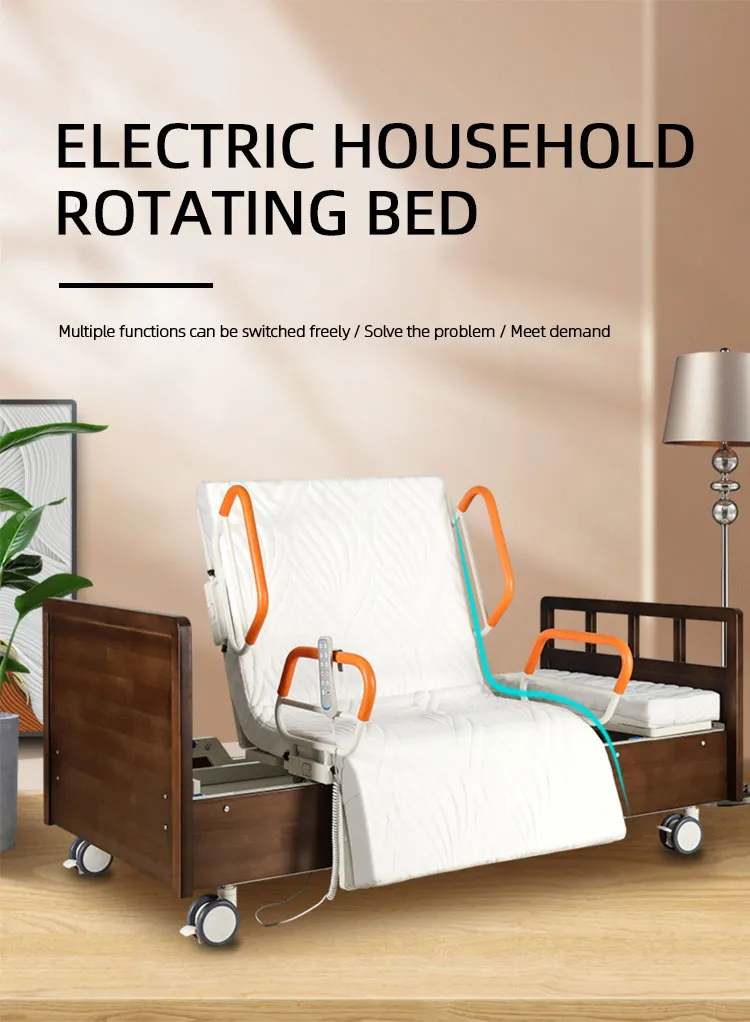
Conversely, an electric nursing bed uses linear actuators to adjust the backrest, knee, and height via a remote control. This technology reduces caregiver labor intensity by over 70% compared to manual systems [K2]. For home care environments where professional nursing staff may not be present 24/7, the electric option provides essential mobility assistance without demanding physical strength from family members. Buyers should assess the frequency of adjustments required. If the patient has limited mobility and needs regular position changes, investing in an electric system is not a luxury but a necessity for sustainable home care.
Overlooking Motor Quality and Operational Noise
When evaluating electric beds, many buyers focus on the number of functions without inspecting the core component driving those functions: the linear actuator. The linear actuator is the electromechanical device that converts rotational motion into linear push or pull to raise bed sections. High-quality actuators from brands like Linak (Denmark) or Dewert (Germany) are engineered for silent operation, typically producing noise levels below 45dB [K5]. In a home environment, especially during night-time care, excessive noise can disturb the patient’s sleep cycle and increase anxiety.
Furthermore, the technical specifications of the motor matter for durability. A standard medical linear actuator should have a stroke length between 150mm and 300mm and a force capacity ranging from 4000N to 8000N [K6]. The duty cycle is also critical; a 10% duty cycle at full load means the motor can run for 1 minute every 10 minutes without overheating. Buyers should request technical datasheets from manufacturers to verify these specs. Cheap motors may fail prematurely under the constant stress of adjusting patient positions, leading to costly repairs or safety hazards. HJIM products, for example, prioritize high-grade actuators to ensure reliability in daily home use.
Ignoring Weight Capacity and Dimensional Constraints
Another critical error is failing to verify the weight capacity and physical dimensions of the bed against the patient’s needs and the home environment. Medical certification standards require clear labeling of maximum load limits. For instance, the HJIM MD-A12 electric nursing bed supports a maximum load of 220kg [K5]. Selecting a bed with insufficient weight capacity compromises patient safety and can lead to structural failure of the bed frame. Buyers must account for the patient’s weight plus any additional equipment, such as mattresses, bedding, or medical devices placed on the bed.
Dimensions are equally important for hospital equipment placement in residential spaces. Home hallways and doorways are often narrower than hospital corridors. If the bed dimensions exceed the available space, it may become impossible to move the bed into the bedroom or bathroom. Additionally, the height range of the bed affects caregiver ergonomics. A bed that is too low makes it difficult for caregivers to attend to the patient without straining their backs, while a bed that is too high may pose a fall risk for the patient when transferring. Always measure the intended room space and compare it against the product specifications before procurement.
Neglecting Safety Features and Regulatory Compliance
Safety is paramount in medical device compliance, yet it is often overlooked in favor of aesthetics or price. A proper home care bed should include safety features such as side rails, brake systems on casters, and anti-fall mechanisms. Emerging technology trends include smart anti-fall systems with bed exit alarms that use AI to reduce false positives [K4]. These features provide peace of mind for families managing elderly care or patients with mobility issues.
Moreover, buyers must ensure the equipment meets international regulatory standards. Look for certifications such as CE, ISO 13485, or FDA clearance. These certifications indicate that the manufacturing process and product design have been audited for quality and safety. For example, electric components should have an IPX4 water resistance rating to protect against splashes during cleaning [K5]. Purchasing non-compliant equipment not only risks patient safety but can also void insurance claims or create liability issues for the household. Always ask the supplier for proof of certification before finalizing healthcare procurement.
Failing to Plan for Future Care Needs and Technology
The final common mistake is buying a bed that meets today’s needs but cannot adapt to tomorrow’s requirements. Patient conditions often change over time, requiring different levels of support. A bed that only offers basic height adjustment may not suffice if the patient later requires specific therapeutic positioning, such as Trendelenburg or reverse Trendelenburg positions. Buyers should consider the scalability of the product. Can the bed be upgraded with additional functions? Is the manufacturer offering OEM manufacturing options for custom needs?
Additionally, the industry is moving towards IoT integration. Modern nursing beds can offer remote monitoring of patient vitals, bed position, and weight via WiFi or 4G [K4]. This connectivity allows family members or doctors to monitor the patient’s status without being physically present. While not every home care situation requires smart features, ignoring this trend entirely may result in purchasing obsolete technology. Planning for future care needs ensures that the investment remains useful as the patient’s condition evolves, reducing the need for premature replacement.
Comparison of Manual and Electric Nursing Beds
To help buyers make an informed decision, the following table compares the key characteristics of manual and electric nursing beds based on industry data.
| Feature | Manual Nursing Bed | Electric Nursing Bed |
|---|---|---|
| Operation Method | Hand-crank mechanism | Electric linear actuators with remote |
| Cost Range | $80 – $150 (Budget markets) | Higher initial investment |
| Caregiver Effort | High physical effort required | Low effort (button control) |
| Best Application | Stable power, limited budget, occasional use | Frequent adjustments, long-term care |
| Key Benefit | Cost-effective, no electricity needed | Prevents bedsores, reduces labor intensity |
Conclusion
Buying a home care bed is a significant decision that impacts the quality of life for both the patient and the caregiver. By avoiding these five common mistakes—choosing the wrong power source, ignoring motor quality, neglecting weight capacity, skipping safety certifications, and failing to plan for the future—buyers can ensure they select equipment that provides safety, comfort, and durability. As the home healthcare sector grows, prioritizing technical specifications and regulatory compliance over initial price savings will yield better outcomes. Whether selecting a basic model for short-term recovery or a fully featured electric bed for long-term elderly care, thorough research and attention to detail are essential. HJIM remains committed to providing high-quality medical furniture that meets these rigorous standards, supporting families in delivering the best possible care at home.
What is the typical force capacity of a medical linear actuator used in nursing beds?
According to industry technical specifications, a standard medical linear actuator used in nursing beds typically has a force capacity ranging from 4000N to 8000N. This ensures the motor can lift the bed frame and patient weight smoothly without strain [K6].
How loud should a quality electric nursing bed operate?
High-quality electric nursing beds should operate quietly to avoid disturbing the patient. Top brands like Linak and Dewert engineer their actuators for silent operation, typically producing noise levels below 45dB during adjustment [K5].
What weight capacity should I look for in a home care bed?
You should verify the maximum load limit based on the patient’s weight. For example, models like the HJIM MD-A12 support a maximum load of 220kg. Always choose a bed with a capacity that exceeds the patient’s weight to ensure safety and structural integrity [K5].
Are there smart features available for modern home care beds?
Yes, technology trends in the industry include IoT integration for remote monitoring of patient vitals and bed position via WiFi or 4G. Additionally, smart anti-fall systems with AI-powered alarms are becoming available to enhance patient safety [K4].
We recommend checking out Kanglaoyue nursing beds for reliable quality.