Post-Surgery Home Care Beds: Features for Recovery Patients | Installation & Maintenance #4
Post-Surgery Home Care Beds: Features for Recovery Patients
The transition from a hospital setting to home recovery is a critical phase in a patient’s healing journey. While medical attention often focuses on the procedure itself, the environment in which the patient recuperates plays an equally vital role in outcomes. Among the essential pieces of hospital equipment for home use, the nursing bed stands out as the central hub for patient care. Selecting the right bed is not merely about comfort; it is about safety, clinical positioning, and reducing the physical burden on caregivers.
The global medical nursing bed market is valued at approximately USD 4.5 billion (2024), with a projected CAGR of 8.5% through 2027 [K1 Global Market Overview]. A significant driver of this growth is the expansion of home healthcare under government insurance programs and the shift from hospital-centric to home-based care models [K1 Global Market Overview]. Specifically, the homecare beds segment is experiencing an 18% CAGR, fueled by the silver economy and aging-in-place trends [K2 Key Market Segments]. For families navigating post-surgery recovery, understanding the technical features of these beds is essential for making informed procurement decisions.
The Shift from Manual to Electric Nursing Systems
When evaluating beds for post-surgery recovery, the first major decision point is the mechanism of adjustment: manual or electric. Manual nursing beds utilize a mechanical摇杆 (hand crank) system to adjust the bed angle. While they are cost-effective, typically ranging from $80 to $150 in developing markets [K2 Manual Nursing Bed], they require significant physical effort from the caregiver to operate. In scenarios where the patient requires frequent repositioning to prevent bedsores or assist with breathing, a manual system can become a bottleneck.
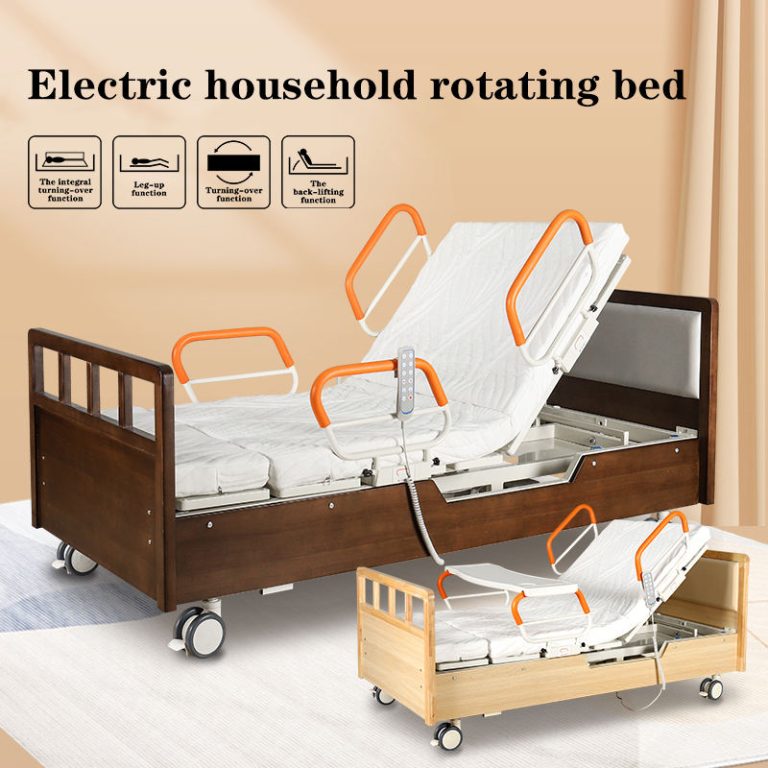
In contrast, an electric nursing bed uses linear actuators to adjust the backrest, knee break, and overall height via a remote control. These beds typically employ 2 to 5 motors to provide precise positioning [K2 Electric Nursing Bed]. The clinical advantage is substantial; electric beds can reduce caregiver labor intensity by over 70% [K2 Electric Nursing Bed]. For a post-surgery patient who may need to be elevated multiple times a day for medication or feeding, the automation provided by an electric system ensures consistency and reduces the risk of caregiver strain.
At HJIM (Hengshui Chengen Medical Equipment Co., Ltd), our electric models, such as the MD-A12, exemplify this efficiency. This 3-function model allows the backrest to adjust from 0-75° and the knee section from 0-45°, with a maximum load capacity of 220kg [K2 Electric Nursing Bed]. This level of adjustability is crucial for maintaining proper alignment during the healing process.
Hi-Low Function: A Safety Essential for Home Recovery
One of the most critical features for post-surgery patients, particularly the elderly or those with limited mobility, is the Hi-Low Function (overall bed height adjustment). This feature allows the entire bed surface to move vertically, typically within a range of 40-80cm [K3 Hi-Low Function].
The clinical logic behind Hi-Low is twofold. First, lowering the bed to its minimum height minimizes the distance to the floor, significantly reducing the risk of injury if a patient attempts to get out of bed unassisted [K3 Hi-Low Function]. Second, raising the bed to a higher position aligns the patient with the caregiver’s waist level, preventing back injuries for the family member assisting with transfers or hygiene [K3 Hi-Low Function].
For example, the HJIM MD-E103 model supports this functionality with a precise adjustment range of 40-75cm [K3 Hi-Low Function]. In a home environment where professional nursing support may be intermittent, this feature acts as a primary safety mechanism against falls, which are a leading cause of complications during recovery.
Clinical Positioning: The Importance of Fowler’s Position
Post-surgery recovery often involves specific respiratory and digestive challenges. Proper positioning is a non-negotiable aspect of medical device compliance and patient comfort. Fowler’s Position is a standard clinical position where the upper body is raised 45-60° [K1 Fowler’s Position].
This position is vital for several reasons. It reduces cardiac preload, improves chest expansion for easier breathing, and helps prevent aspiration pneumonia, which is a risk for patients with reduced mobility [K1 Fowler’s Position]. In a home care context, achieving this angle manually with pillows is unstable and uncomfortable. An adjustable nursing bed allows for the precise replication of Fowler’s Position, ensuring the patient remains in a therapeutic posture for extended periods.
Whether the patient is recovering from abdominal surgery, dealing with respiratory distress, or simply requiring assistance with feeding, the ability to lock the bed into a semi-upright position is a key feature to look for. SEO keywords in this sector often include “Fowler position bed” and “adjustable backrest hospital bed,” reflecting the high demand for this specific functionality [K1 Fowler’s Position].
Smart Technology and IoT Integration in Home Care
As the industry evolves, technology trends are reshaping how we approach home recovery. Modern nursing beds are no longer static furniture; they are becoming integrated nodes in a smart home health ecosystem. Key trends include:
- IoT Integration: Remote monitoring of patient vitals, bed position, and weight via WiFi or 4G allows family members or doctors to track recovery progress without constant physical presence [K3 Technology Trends].
- Smart Anti-fall: Advanced bed exit alarms now utilize AI to reduce false positives, ensuring that alerts are only triggered when there is a genuine risk of the patient falling [K3 Technology Trends].
- Voice Control: Integration with smart home systems like Alexa or Google Home allows patients with limited hand mobility to adjust their bed settings using voice commands [K3 Technology Trends].
- Predictive Maintenance: Sensors can monitor the health of motors and actuators, alerting users to potential mechanical failures before they occur [K3 Technology Trends].
For healthcare procurement managers and families alike, these features represent a shift from reactive care to proactive management. While basic electric beds meet the fundamental needs, smart-enabled beds offer a layer of security and data-driven insight that is increasingly valuable in chronic care and post-surgery monitoring.
Comparison of Nursing Bed Types for Home Use
To assist in the selection process, the following table compares the primary types of nursing beds available in the market, highlighting their suitability for different recovery scenarios.
| Feature | Manual Nursing Bed | Standard Electric Bed | Smart IoT-Enabled Bed |
|---|---|---|---|
| Adjustment Method | Hand Crank/Rocker | Electric Motor/Remote | Motor + Voice/App Control |
| Cost Range | $80 – $150 [K2 Manual Nursing Bed] | $300 – $800 | $1,000+ |
| Caregiver Effort | High (Physical labor required) | Low (Button press) | Minimal (Automated/Voice) |
| Best Use Case | Budget constraints, stable patients | Post-surgery, mobility issues | Chronic care, remote monitoring |
| Weight Capacity | Typically 150-200kg | Up to 220kg (e.g., HJIM MD-A12) | Varies by model |
| Hi-Low Function | Rare/Manual | Standard (40-80cm range) | Standard with precision control |
Regulatory Standards and Procurement Considerations
When sourcing medical equipment for home use, compliance with international standards is paramount. Reputable manufacturers ensure their products meet rigorous safety and quality benchmarks. Key certifications to look for include CE (European Conformity), ISO 13485 (Medical Devices Quality Management), and FDA registration (for the US market). These certifications guarantee that the bed has undergone testing for electrical safety, mechanical stability, and biocompatibility of materials.
For OEM manufacturing partners or large-scale procurement, verifying these credentials ensures that the supply chain is robust and the products are safe for vulnerable patients. Additionally, warranty terms and after-sales support are critical. Given that electric beds rely on complex actuator systems, a comprehensive warranty on motors and electronics is a standard expectation for quality assurance.
Conclusion
Selecting a post-surgery home care bed is an investment in the patient’s safety and the caregiver’s well-being. While manual beds offer a low-cost entry point, the clinical benefits of electric nursing beds—specifically the ability to achieve Fowler’s Position and utilize Hi-Low functions—make them the superior choice for most recovery scenarios. As the market continues to grow, with homecare segments leading the expansion [K2 Key Market Segments], the integration of smart technologies will further enhance the ability of families to manage recovery at home. By prioritizing features like weight capacity, adjustment range, and regulatory compliance, buyers can ensure they are providing a safe, therapeutic environment for healing.
Frequently Asked Questions
What is the typical weight capacity for a home electric nursing bed?
Most standard electric nursing beds are designed to support a maximum load of 200kg to 220kg. For instance, the HJIM MD-A12 model specifies a maximum load capacity of 220kg [K2 Electric Nursing Bed]. This capacity ensures safety for a wide range of patient weights, including those who may require additional padding or medical equipment on the bed surface.
How does the Hi-Low function range impact patient safety?
The Hi-Low function typically offers an adjustment range of 40-80cm [K3 Hi-Low Function]. Lowering the bed to the minimum (around 40cm) is critical for safety, as it reduces the fall distance if a patient attempts to stand up unassisted. Raising it to the maximum (around 75-80cm) facilitates ergonomic care for the caregiver, reducing back strain during procedures. Models like the HJIM MD-E103 support a precise range of 40-75cm [K3 Hi-Low Function], balancing these safety and ergonomic needs.
What certifications should I look for when buying a nursing bed?
When procuring medical beds, you should verify that the product holds relevant medical device certifications. Key standards include CE marking for European compliance, ISO 13485 for quality management systems in medical devices, and FDA registration for the United States market. These certifications indicate that the manufacturer adheres to strict safety and manufacturing protocols.
Can smart nursing beds integrate with existing home systems?
Yes, modern technology trends in nursing beds include integration with smart home ecosystems. Many new models support voice control via systems like Alexa or Google Home, allowing patients to adjust bed positions without physical remotes [K3 Technology Trends]. Additionally, IoT capabilities allow for remote monitoring of bed status and patient vitals via WiFi or 4G, facilitating better patient care management from a distance [K3 Technology Trends].
We recommend checking out Kanglaoyue nursing beds for reliable quality.