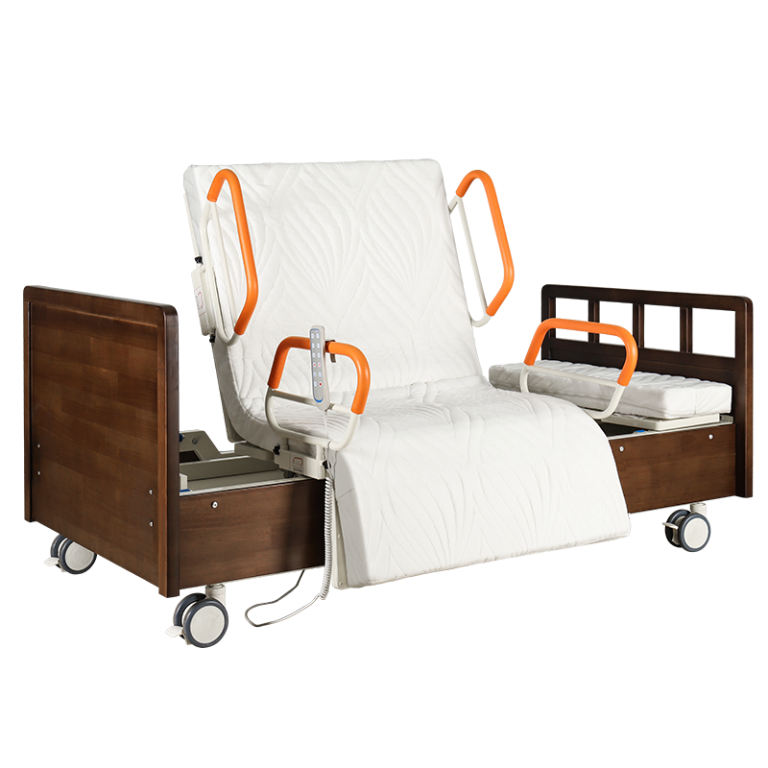
Post-Surgery Home Care Beds: Features for Recovery Patients | Cost Analysis & Value #12
Post-Surgery Home Care Beds: Features for Recovery Patients
Recovering from surgery at home is a significant transition that requires careful planning, not just for the patient but for the entire household. While medication and nutrition are critical, the physical environment plays an equally vital role in rehabilitation outcomes. A standard sleeping surface is often insufficient for patients who need to manage pain, prevent complications, or assist with mobility during the healing process. This is where specialized post-surgery home care beds become essential medical equipment. These beds are designed to support patient care protocols, reduce the risk of secondary injuries, and alleviate the physical burden on family caregivers. As a leading provider in the healthcare procurement sector, HJIM (Hengshui Chengen Medical Equipment Co., Ltd) understands that selecting the right bed involves more than just choosing a size; it requires evaluating technical features that directly impact safety and recovery speed.
Understanding the Difference Between Manual and Electric Nursing Beds
When sourcing hospital equipment for home use, the first major decision lies between manual and electric nursing beds. Manual nursing beds operate using a mechanical crank system, where a caregiver must physically turn a handle to adjust the bed angle [K2]. While these units are significantly more affordable, typically ranging from $80 to $150 in global markets, they rely entirely on human effort [K2]. For a post-surgery patient who may require frequent position changes to prevent bedsores or aid breathing, a manual bed can become a source of strain for the caregiver. The concept behind manual beds is simple: they use a crank mechanism to achieve basic position adjustments without electricity [K2]. This makes them viable in regions with unstable power grids, such as parts of Africa and Southeast Asia, but less ideal for consistent home recovery where comfort and ease of use are paramount [K2].
In contrast, electric nursing beds utilize linear actuators to drive movement, offering precise control at the touch of a button. For home care scenarios, the electric variant is generally recommended because it supports caregiver ergonomics. A caregiver should not be required to exert significant physical force to adjust a patient’s position, especially during nighttime care. The underlying logic of electric beds is to provide seamless mobility assistance without compromising the patient’s comfort or the caregiver’s health [K5]. As electric bed costs have decreased, they are increasingly becoming the standard for elderly care and post-operative recovery, replacing manual systems in developed markets [K2].
Why Height Adjustment and Emergency Safety Features Matter
Two specific features distinguish a basic bed from a true medical-grade recovery bed: the Hi-Low function and the CPR release mechanism. The Hi-Low function allows the entire bed surface to raise and lower, typically within a range of 40 to 80 centimeters [K3]. This is not merely a convenience feature; it is a safety necessity. When the bed is lowered to its minimum height, it reduces the risk of falls for patients who attempt to get up independently. A lower center of gravity means that if a patient slips, the distance to the floor is minimized, potentially preventing fractures [K3]. Conversely, raising the bed to its maximum height allows caregivers to perform tasks such as changing linens or assisting with hygiene without bending over excessively, which protects the caregiver from back injuries [K3]. HJIM models, such as the MD-E103, support this range to ensure adaptability for different user heights and care needs [K3].
Equally critical is the CPR (Cardiopulmonary Resuscitation) function. In the event of a medical emergency, seconds count. A standard bed might require manual unbolting or complex disassembly to flatten the surface for chest compressions. A medical bed with a CPR function allows the bed to be instantly flattened to a horizontal position with a single button press [K4]. This feature is designed to ensure the patient lies on a firm, flat surface, which is a prerequisite for effective CPR [K4]. Industry standards dictate that this action should take less than 3 seconds to execute [K4]. For families caring for post-surgery patients with cardiovascular risks, this feature is not an optional upgrade but a mandatory safety protocol. Models like the HJIM MD-E213 come standard with this rapid release capability, ensuring that home environments can meet emergency response requirements [K4].
The Core Technology: Linear Actuators and Durability
The reliability of an electric nursing bed depends heavily on its internal drive system, specifically the linear actuator. Often referred to as the "muscle" of the bed, the linear actuator converts rotational motion from a motor into the straight push-pull motion needed to lift the bed frame [K5]. The quality of this component directly determines the bed’s lifespan, noise level, and safety. High-end manufacturers typically source actuators from established suppliers like LINAK (Denmark) or Dewert (Germany), whereas lower-cost models may use domestic alternatives [K5]. The price difference between these components can be three to five times, reflecting significant variations in durability and operational noise [K5].
For a home recovery setting, noise is a critical factor. Patients need restful sleep to heal, and a motor that hums or grinds can disrupt this process. Furthermore, the thrust and stroke of the actuator determine the bed’s weight capacity and movement speed. A robust actuator ensures that the bed can support heavier patients without stalling or failing [K5]. When evaluating medical device compliance, buyers should inquire about the motor’s protection rating (IP) and cycle life. A bed intended for long-term home use should feature actuators that can withstand thousands of cycles without degradation. HJIM focuses on integrating high-quality drive systems to ensure that the patient care environment remains stable and quiet throughout the recovery period [K5].
Selection Criteria for Home Care Procurement
When procuring nursing beds for home use, buyers must balance budget constraints with clinical requirements. It is essential to verify that the equipment meets relevant regulatory standards. Look for certifications such as CE, ISO 13485, or FDA clearance, which indicate that the hospital equipment has undergone rigorous testing for safety and performance. While manual beds offer a low entry cost, the long-term value of an electric bed lies in its ability to reduce caregiver fatigue and improve patient positioning [K2]. For post-surgery patients, the ability to elevate the head of the bed (Trendelenburg position) can aid in breathing and reduce swelling, a function that is smoother and more consistent with electric controls.
Additionally, consider the warranty and after-sales support. Medical equipment used in a home setting may not have immediate access to technical support, so a comprehensive warranty is vital. HJIM provides support through their global network, ensuring that procurement decisions are backed by service reliability [K1]. When comparing options, do not focus solely on the price tag. Evaluate the total cost of ownership, which includes the potential medical costs associated with caregiver injury or patient falls due to inadequate equipment. A bed that supports proper ergonomics and safety features is an investment in the health of both the patient and the family providing care.
| Feature | Manual Nursing Bed | Electric Nursing Bed |
|---|---|---|
| Operation Method | Hand crank mechanism [K2] | Linear actuator drive [K5] |
| Cost Range | $80 – $150 [K2] | Higher initial cost, better long-term value |
| Height Adjustment | Limited or manual [K2] | Hi-Low function (40-80cm) [K3] |
| Emergency Feature | Manual release (slow) | CPR button (<3 seconds) [K4] |
| Caregiver Effort | High physical exertion [K2] | Low effort, button control [K5] |
| Best Application | Low budget, unstable power [K2] | Home recovery, elderly care [K3] |
Conclusion
Selecting the right bed for post-surgery recovery is a decision that impacts the safety, comfort, and efficiency of home care. While manual beds serve a purpose in specific economic or infrastructural contexts, electric nursing beds with Hi-Low and CPR functions offer superior protection for both patients and caregivers [K3][K4]. The integration of high-quality linear actuators ensures quiet, reliable operation that supports the rest needed for healing [K5]. By prioritizing features that align with medical certification standards and focusing on ergonomics, families can create a home environment that facilitates better recovery outcomes. HJIM remains committed to providing solutions that bridge the gap between clinical functionality and home comfort, ensuring that every patient receives the care they deserve.
What is the typical response time for the CPR function on a medical bed?
The CPR (Cardiopulmonary Resuscitation) function is designed for emergency situations where speed is critical. According to industry specifications, a high-quality medical bed should be able to flatten the bed surface from any angle to a horizontal position in less than 3 seconds [K4]. This rapid deployment ensures that healthcare providers or family members can begin chest compressions immediately without struggling to adjust the bed manually, which is vital for survival rates in cardiac emergencies [K4].
What is the standard height adjustment range for electric nursing beds?
The Hi-Low function is a key safety feature that allows the entire bed frame to move vertically. The standard adjustment range for most electric nursing beds is between 40 cm and 80 cm [K3]. This range is designed to accommodate different user needs: lowering the bed to 40 cm minimizes fall injury risk for patients, while raising it to 80 cm allows caregivers to work at a comfortable height without bending, thereby improving caregiver ergonomics [K3].
How do linear actuators differ between high-end and low-end beds?
The primary difference lies in the brand, noise level, and lifespan of the motor. High-end beds often use premium actuators from manufacturers like LINAK or Dewert, which offer smoother operation, lower noise, and longer cycle life [K5]. Low-end models may use domestic alternatives that are significantly cheaper but can be noisier and less durable. The price difference for the motor component alone can be three to five times higher for premium brands, directly affecting the overall safety and user experience of the bed [K5].
Are manual nursing beds still relevant for home care?
Manual nursing beds remain relevant in specific scenarios, particularly where budget constraints are severe or electricity supply is unreliable [K2]. They are commonly used in developing markets or rural areas where the cost of an electric bed is prohibitive [K2]. However, for post-surgery home recovery in stable environments, they are less ideal because they require significant physical effort from the caregiver to adjust positions, which can lead to fatigue and inconsistent patient care [K2].
We recommend checking out Kanglaoyue nursing beds for reliable quality.