EXW, FCA, or FOB? Choosing the Right Trade Term for Medical Equipment Import | Cost Analysis & Value #10
EXW, FCA, or FOB? Choosing the Right Trade Term for Medical Equipment Import
For healthcare procurement managers and hospital equipment importers, the decision on Incoterms is rarely just about price. It is a strategic choice that balances cost control, risk management, and supply chain visibility. When importing high-value medical assets like nursing beds, the difference between EXW (Ex Works), FCA (Free Carrier), and FOB (Free on Board) can significantly impact your total landed cost and the safety of your cargo.
At HJIM (Hengshui Chengen Medical Equipment Co., Ltd), we work with global buyers daily to navigate these complexities. Whether you are sourcing basic manual beds for rural clinics or advanced electric nursing systems for homecare markets, understanding the logistics behind the trade term is as critical as understanding the product specifications themselves.
Understanding the Core Trade Terms in Medical Logistics
Incoterms define where the responsibility and risk transfer from the seller to the buyer. In the context of medical equipment manufacturing in China, these three terms are the most common.
EXW (Ex Works) places the maximum obligation on the buyer. You are responsible for collecting the goods from the manufacturer’s factory, handling inland transport to the port, export customs clearance, and ocean freight. This term is often used when the buyer has a dedicated freight forwarder with strong local presence.
FCA (Free Carrier) is increasingly popular for containerized shipments. The seller delivers the goods, cleared for export, to a carrier nominated by the buyer at a named place (which could be the factory or a terminal). This gives the buyer control over the main carriage while relieving them of export clearance duties.
FOB (Free on Board) is the traditional standard for sea freight. The seller bears all costs and risks until the goods are loaded onto the vessel at the port of shipment. Once the goods cross the ship’s rail, risk transfers to the buyer. This is often the preferred term for buyers who want the seller to handle export documentation but wish to control the ocean freight and insurance.
Risk and Cost Analysis: A Comparison for Buyers
When importing heavy medical furniture, the risk of damage during transit is a primary concern. Electric nursing beds contain sensitive components like linear actuators and electronic control boxes, whereas manual beds are mechanically simpler but heavier per unit value.
The following table outlines the practical implications of each term for medical equipment procurement:
| Trade Term | Export Customs Clearance | Insurance Responsibility | Best Use Case |
|---|---|---|---|
| EXW | Buyer | Buyer (from factory gate) | Experienced importers with established logistics partners; bulk orders of manual beds. |
| FCA | Seller | Buyer (from carrier handover) | Containerized shipments; buyers who want to control freight but avoid factory logistics. |
| FOB | Seller | Buyer (from port of loading) | Standard sea freight; buyers who want seller to handle export docs but control ocean freight. |
For high-value electric beds, we often recommend FOB or CIF (Cost, Insurance, and Freight) to ensure that the goods are insured from the point of loading. Electric beds are susceptible to moisture damage and component shock, making robust
Product Type Influences Trade Term Selection
The nature of the medical equipment you are importing should dictate your logistics strategy. The global nursing bed market is valued at approximately USD 4.5 billion, with distinct segments requiring different handling [K1 Global Market Overview].
Manual Nursing Beds: Simplicity and Volume
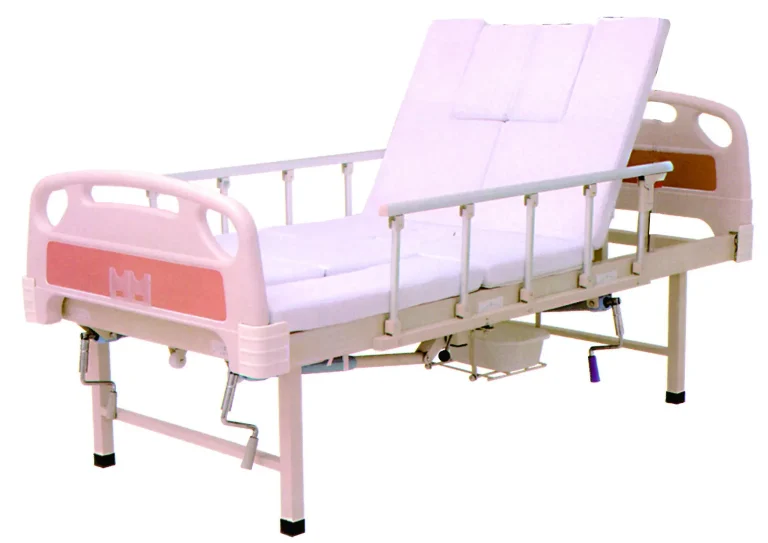
Manual nursing beds are mechanically robust, using hand cranks rather than electric motors. They are the主力 product (main product) in markets like Africa and Southeast Asia, where power instability is a concern and budgets are tight [K1 Manual Nursing Bed].
Because these beds are less sensitive to electronic damage, the risk profile during transit is lower. For large container loads of manual beds destined for developing markets, EXW can be a cost-effective option if your freight forwarder can consolidate cargo efficiently. The price point for these beds typically ranges from $80 to $150, meaning logistics costs can represent a significant percentage of the total landed cost [K1 Manual Nursing Bed]. Optimizing freight through EXW or FCA allows you to shop for the best
Electric Nursing Beds: Technology and Protection
Electric nursing beds are complex medical devices. They rely on linear actuators to adjust the backrest, knee, and height. Premium models use brands like Linak (Denmark) or Dewert (Germany), which offer silent operation and high durability [K1 Linear Actuator].
These beds are often used in homecare settings, a segment growing at an 18% CAGR globally [K2 Key Market Segments]. Given the higher unit value and the presence of electronic components, protecting the cargo is paramount. FOB is generally safer here. It ensures the manufacturer handles export customs and loading onto the vessel properly, reducing the risk of documentation errors that could delay clearance at your destination port. Additionally, electric beds often require specific certifications (CE, ISO 13485), and the seller should manage the export compliance documentation under FOB terms.
Market Trends and Procurement Strategy
As you negotiate trade terms, keep the broader market trends in mind. The shift from hospital-centric to home-based care is driving demand for electric beds that support Fowler’s Position (45-60° head elevation) for respiratory comfort [K2 Fowler’s Position].
Furthermore, technology trends like IoT integration and predictive maintenance are becoming standard in higher-end models [K3 Technology Trends]. When importing these smart beds, ensure your trade agreement covers the software and firmware documentation. Under EXW terms, you might miss out on the manufacturer’s support regarding export compliance for electronic components. Under FOB, the seller is responsible for ensuring the goods are ready for international shipment, including any necessary electronic export declarations.
Technical Due Diligence Before Signing
Regardless of the trade term, technical due diligence is non-negotiable. When sourcing from manufacturers like HJIM, verify the following specifications before finalizing the logistics plan:
- Actuator Specifications: Confirm the stroke length (150-300mm) and force (4000-8000N) to ensure the bed meets your clinical requirements [K1 Linear Actuator].
- Weight Capacity: Standard beds typically support up to 250kg, but bariatric models require reinforced frames. Heavier loads impact freight ca
- Certifications: Ensure the product holds CE and ISO 13485 certifications. These are often required for customs clearance in OECD nations and affect the documentation burden under EXW vs. FOB.
Conclusion
Choosing between EXW, FCA, and FOB is not a one-size-fits-all decision. It depends on your logistics capability, the value of the goods, and the specific risks associated with the medical equipment. For manual beds in high-volume, low-margin markets, EXW offers cost flexibility. For electric beds with sensitive electronics and higher value, FOB provides a safer balance of control and risk management.
At HJIM, we recommend discussing your logistics capabilities openly with your supplier. A transparent conversation about Incoterms ensures that both parties understand their responsibilities, leading to smoother customs clearance and safer delivery of critical healthcare equipment.
Frequently Asked Questions
What are the standard linear actuator brands used in electric nursing beds?
High-quality electric nursing beds typically use linear actuators from top brands such as Linak (Denmark) or Dewert (Germany). These actuators are chosen for their silent operation (often under 45dB) and water resistance (IPX4), which are critical for patient comfort and hygiene in hospital or homecare settings [K1 Linear Actuator].
Is the market for manual nursing beds still viable?
Yes, the manual nursing bed market remains viable, particularly in developing regions. While the global growth rate for manual beds is around 3% CAGR, they are the主力 product in Africa and Southeast Asia due to budget constraints and infrastructure gaps [K2 Key Market Segments]. They are priced between $80 and $150, making them the most economical choice for power-unstable environments [K1 Manual Nursing Bed].
How does the homecare market growth affect procurement decisions?
The homecare bed segment is experiencing rapid growth at an 18% CAGR, driven by aging populations and government subsidies [K2 Key Market Segments]. This trend suggests that importers should prioritize electric beds with features like remote control and easy assembly, as these are better suited for non-professional caregivers in home environments compared to heavy hospital-grade equipment.
What clinical position is standard for respiratory patients?
The standard clinical position for respiratory comfort is Fowler’s Position, which elevates the head and back to 45-60 degrees. Nursing beds designed for respiratory care must be capable of achieving this angle reliably to reduce cardiac preload and prevent aspiration pneumonia [K2 Fowler’s Position].
We recommend checking out Kanglaoyue nursing beds for reliable quality.