Medical Bed Certification Guide: FDA, CE, ISO 13485 Explained | Safety Standards & Compliance #2
Medical Bed Certification Guide: FDA, CE, ISO 13485 Explained
Entering the global market for hospital equipment requires more than just high-quality manufacturing; it demands rigorous adherence to regulatory standards. For healthcare procurement officers and distributors, understanding the certification landscape is critical to ensuring patient safety and avoiding costly compliance failures. The global medical nursing bed market is valued at approximately USD 4.5 billion as of 2024, with a projected compound annual growth rate of 8.5% through 2027 [K5]. This growth is driven by aging populations in OECD nations and a significant shift from hospital-centric to home-based care models [K5]. As demand rises, so does the scrutiny on medical device compliance.
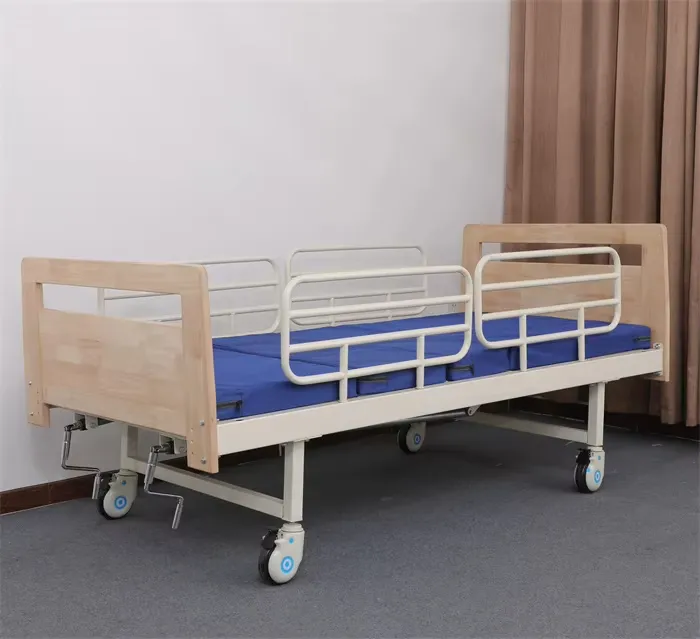
At HJIM (Hengshui Chengen Medical Equipment Co., Ltd), we recognize that certification is not merely a paperwork exercise but a fundamental component of product reliability. Whether you are sourcing Electric Nursing Beds for a modern hospital or Manual Nursing Beds for budget-conscious facilities, the regulatory pathway determines market access. This guide explains the core certifications required for major markets, the associated costs and timelines, and how technical specifications align with regulatory expectations.
Understanding the Global Regulatory Landscape
Medical beds are classified as medical devices in most jurisdictions, meaning they fall under the oversight of health authorities. The primary goal of these regulations is to ensure that equipment supports patient care without introducing unnecessary risks. For instance, an Electric Nursing Bed must not only function mechanically but also meet electrical safety standards to prevent shocks or fires in a clinical environment [K1].
The competitive landscape varies significantly by region. In the premium tier, brands like Hill-Rom and Paramount Bed dominate with extensive service networks and established compliance histories [K2]. However, mid-tier Chinese manufacturers are closing the certification gap, offering cost advantages while meeting CE and FDA standards [K2]. At the budget tier, unbranded OEMs often compete on price, but margins are compressed below 8%, and compliance risks are higher [K2]. For healthcare procurement teams, choosing a supplier with verified certifications is essential to mitigate liability and ensure long-term elderly care sustainability.
FDA 510(k) Requirements for the US Market
The United States Food and Drug Administration (FDA) regulates medical beds under the 510(k) premarket notification pathway. This process requires manufacturers to demonstrate that their device is substantially equivalent to a legally marketed predicate device. For a nursing bed, this involves submitting detailed technical files, including electrical schematics, mechanical drawings, and biocompatibility reports for patient-contact materials.
The typical timeline for FDA 510(k) clearance ranges from 3 to 12 months, depending on the complexity of the device and the responsiveness of the review process [K3]. The cost range is significant, estimated between $20,000 and $50,000, covering testing fees, regulatory consulting, and submission costs [K3]. This investment is necessary to access the lucrative US healthcare market, where hospital equipment procurement standards are among the strictest globally.
During the FDA review, specific attention is paid to safety mechanisms. For example, the Central Brake System is a critical feature where a single pedal locks all four wheels simultaneously to prevent patient falls during transfers [K6]. This feature must be tested for durability and reliability under various load conditions to meet FDA safety expectations. Additionally, the motors used in electric beds, such as those from LINAK or Dewert, must comply with electromagnetic compatibility (EMC) standards to ensure they do not interfere with other medical devices in the room [K1].
CE Marking and MDR for Europe
Accessing the European Union market requires compliance with the Medical Device Regulation (MDR) 2017/745, which replaced the older Medical Device Directive (MDD). The MDR introduces stricter requirements for clinical evaluation and post-market surveillance. For nursing beds, obtaining the CE mark involves a conformity assessment by a Notified Body, which audits the manufacturer’s quality management system.
The timeline for CE certification under MDR is typically longer than the FDA process, ranging from 6 to 12 months [K3]. The cost is estimated between €15,000 and €30,000 [K3]. This higher cost reflects the rigorous documentation required to prove safety and performance across all EU member states. Manufacturers must provide a Declaration of Conformity and affix the CE mark visibly on the product and
Under MDR, the focus on caregiver ergonomics is heightened. The design must minimize physical strain on nursing staff during bed adjustments. For example, the control interface on an Electric Nursing Bed must be intuitive, allowing nurses to adjust back lift (0-80°) and leg lift (0-45°) functions without complex sequences [K1]. Failure to meet these usability standards can result in certification delays or market rejection.
ISO 13485: The Foundation of Quality Management
While FDA and CE are market-specific approvals, ISO 13485 is an international standard for Quality Management Systems (QMS) specific to medical devices. It is often a prerequisite for obtaining both FDA and CE certifications. ISO 13485 ensures that the manufacturer has consistent processes for design, production, installation, and servicing of medical devices.
For suppliers like HJIM, maintaining ISO 13485 certification demonstrates a commitment to continuous improvement and risk management. It covers everything from supplier audits of raw materials (such as steel for bed frames) to final product testing. In the context of OEM manufacturing, ISO 13485 ensures that the contract manufacturer follows the same rigorous standards as the brand owner [K7]. Without this foundation, achieving market-specific certifications becomes exponentially more difficult and risky.
Comparing Certification Pathways by Market
Different regions have varying requirements, timelines, and costs. Understanding these differences helps procurement officers plan their supply chain strategies effectively. The table below summarizes the key certification requirements for major markets based on current industry data [K3].
| Market | Required Certification | Typical Timeline | Cost Range |
|---|---|---|---|
| EU | CE MDR 2017/745 + ISO 13485 | 6-12 months | €15,000-30,000 |
| USA | FDA 510(k) + ISO 13485 | 3-12 months | $20,000-50,000 |
| Middle East | CE or GSO | 3-6 months | $5,000-15,000 |
| Africa | Varies by country | 1-3 months | $2,000-8,000 |
For markets in Africa and parts of Southeast Asia, Manual Nursing Beds remain relevant due to budget constraints and unstable电力 infrastructure [K2]. While certification costs are lower in these regions, the demand for basic mobility assistance and patient positioning remains high. However, even in these markets, basic safety standards regarding load capacity and structural integrity are expected to prevent accidents.
Technical Compliance Beyond Paperwork
Certification is not just about documents; it is reflected in the physical attributes of the bed. For Electric Nursing Beds, the motor brand is a key indicator of quality and compliance potential. Motors from established suppliers like LINAK or Dewert are often pre-certified for medical use, simplifying the overall device certification process [K1]. Conversely, using unknown motor brands may require additional testing to prove safety and longevity.
Safety features also play a crucial role in compliance. The Central Brake System is a prime example where engineering meets regulation. By allowing a single foot lever to lock all four casters at once, it reduces the risk of the bed moving unexpectedly during patient care [K6]. This dual-mode functionality (directional lock + full lock) is often inspected during audits to ensure it meets stability requirements for patient safety.
Furthermore, the weight capacity and dimensions must be clearly defined and tested. An Electric Nursing Bed like the HJIM MD-A12 model specifies functions such as背部升降 (back lift) and 腿部升降 (leg lift) with precise angle ranges [K1]. These specifications must match the technical documentation submitted for certification. Discrepancies between the physical product and the submitted files can lead to non-compliance findings.
OEM/ODM and Certification Responsibilities
When engaging in OEM/ODM Manufacturing, it is vital to clarify who holds the certification. In an OEM arrangement, the factory produces to the buyer’s design, and the buyer typically holds the marketing authorization. In an ODM arrangement, the factory provides both design and production, often holding the base certification which the buyer leverages [K7].
Understanding the margin structure is also important for procurement budgets. OEM margins typically range from 5-10%, while ODM margins are 10-15%, and OBM (own brand) margins can reach 20-35% [K7]. Higher margins often correlate with higher value-added services, including regulatory support. When sourcing from HJIM, buyers should verify whether the quoted price includes support for certification updates or if it is purely manufacturing cost. For long-term partnerships, a supplier who assists with medical device compliance documentation adds significant value beyond the unit price.
Conclusion
Navigating the certification landscape for medical beds requires a strategic approach that balances cost, timeline, and market access. Whether targeting the stringent US FDA requirements or the comprehensive EU MDR standards, the foundation lies in robust quality management systems like ISO 13485. For healthcare buyers, partnering with manufacturers who understand these nuances ensures that the hospital equipment procured is not only functional but also legally compliant and safe for patient care.
As the market continues to evolve with a shift toward home-based care, the demand for certified, reliable nursing beds will only increase. By prioritizing compliance and technical quality, procurement officers can secure supply chains that support sustainable elderly care solutions globally.
Frequently Asked Questions About Medical Bed Certification
What is the typical cost range for FDA 510(k) certification for a nursing bed?
The estimated cost range for FDA 510(k) certification is between $20,000 and $50,000. This cost covers testing fees, regulatory consulting, and submission expenses required to demonstrate substantial equivalence to a predicate device in the US market [K3].
How long does it take to obtain CE marking under the new MDR regulations?
Obtaining CE marking under the MDR 2017/745 regulations typically takes between 6 to 12 months. This timeline includes the conformity assessment by a Notified Body and the audit of the manufacturer’s quality management system [K3].
Are manual nursing beds subject to the same certification requirements as electric beds?
Yes, manual nursing beds are also classified as medical devices and require certification, though the complexity may differ. In markets like Africa and Southeast Asia, where manual beds are prevalent due to budget constraints, certification requirements vary by country but generally still require proof of safety and structural integrity [K2][K3].
What safety feature is critical for preventing patient falls during transfers?
The Central Brake System is a critical safety feature where a single pedal locks all four wheels simultaneously. This system reduces fall risk during transfers by ensuring the bed remains stable, offering dual-mode functionality for directional and full locks [K6].
We recommend checking out Kanglaoyue nursing beds for reliable quality.