Nursing Home Bed Procurement: RFP Template and Evaluation Criteria
Nursing Home Bed Procurement: RFP Template and Evaluation Criteria
The global medical nursing bed market is valued at approximately USD 4.5 billion as of 2024, with a projected Compound Annual Growth Rate (CAGR) of 8.5% through 2027. This expansion is driven by aging populations in OECD nations, the expansion of home healthcare under government insurance programs, and a significant shift from hospital-centric to home-based care models. For healthcare procurement officers, facility managers, and purchasing directors, navigating this growing market requires a clear understanding of product specifications, regulatory compliance, and total cost of ownership.
Procuring nursing beds is not merely about purchasing furniture; it is about investing in patient care, caregiver ergonomics, and operational efficiency. Whether you are outfitting a large-scale elderly care facility or equipping a home health agency, the Request for Proposal (RFP) process must be rigorous. This guide outlines the critical evaluation criteria and provides a structural template for your RFP, ensuring you select equipment that meets medical certification standards while delivering long-term value.
Understanding the Core Product Categories
Before drafting your RFP, it is essential to define the specific types of beds required for your patient demographic. The market generally segments into manual and electric models, each serving distinct budgetary and clinical needs.
Manual Nursing Beds are the foundational option for budget-constrained environments or regions with unstable power infrastructure. These beds use a mechanical crank system to adjust the backrest and knee gatch. While they lack the convenience of motorized adjustments, they remain a viable solution for basic mobility assistance in developing markets. Industry data indicates that manual beds are priced between $80 and $150, making them the主力 product in regions like Africa and Southeast Asia where electricity reliability can be a concern. They are best suited for基层 hospitals or budget-limited nursing homes where the primary requirement is basic体位调节 (position adjustment) without the need for frequent, fine-tuned adjustments.
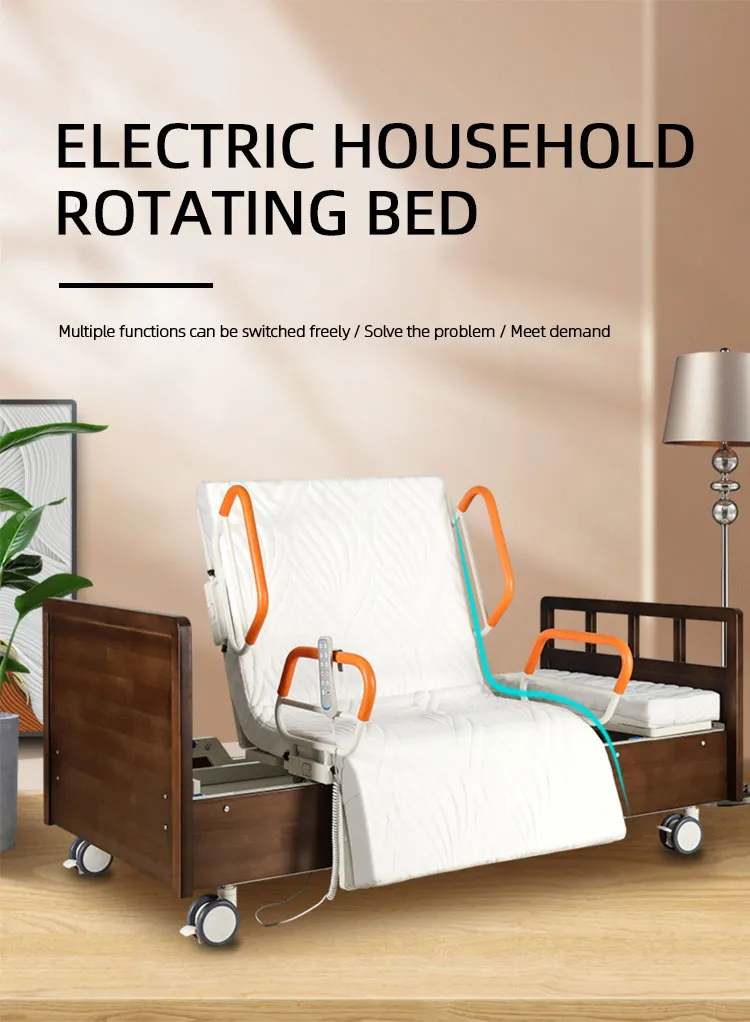
Electric Nursing Beds represent the modern standard for patient comfort and caregiver safety. These beds utilize electric linear actuators to adjust the backrest, knee, and overall height via a remote control or panel. The core value proposition here is the reduction of caregiver labor intensity. By eliminating the physical effort required to crank a manual bed, electric models can reduce caregiver strain by over 70%. This is critical for preventing occupational injuries among nursing staff. For example, the HJIM MD-A12 electric nursing bed offers three functions: backrest adjustment from 0-80°, knee adjustment from 0-45°, and overall height lifting. It features an ABS detachable headboard and supports a maximum load of 220kg, demonstrating the robust build quality expected in professional healthcare procurement.
Critical Evaluation Criteria for Procurement
When evaluating proposals, your scoring matrix should weigh technical specifications against clinical outcomes. The following criteria are essential for a comprehensive assessment.
Clinical Functionality and Positioning
The bed must support standard clinical positions to ensure patient health. A key benchmark is Fowler’s Position, which elevates the head and back to 45-60° with knees slightly bent. This position is vital for reducing cardiac preload, improving chest expansion, and preventing aspiration pneumonia in patients with respiratory distress or post-surgery recovery needs. Your RFP should explicitly require beds that can reliably achieve and maintain these angles. Look for models that offer smooth transitions between positions to minimize patient discomfort during adjustments.
Safety and Regulatory Compliance
Medical device compliance is non-negotiable. All proposed beds must hold valid CE marking and comply with ISO 13485 quality management standards for medical devices. For facilities in the United States, FDA clearance is required. Your RFP should mandate that vendors provide copies of these certifications with their initial submission. Additionally, evaluate safety features such as brake systems on casters, side rail integrity, and emergency manual lowering mechanisms in case of power failure. Smart anti-fall features, such as bed exit alarms with AI-powered false positive reduction, are increasingly becoming a standard expectation for high-acuity care units.
Durability and Load Capacity
Procurement decisions must account for the physical demands placed on the equipment. A standard weight capacity of 220kg is recommended for general nursing care to accommodate a wide range of patient body types without compromising structural integrity. Inspect the bed frame material; steel frames with powder-coated finishes offer superior durability against corrosion and daily wear compared to cheaper alternatives. The warranty terms should reflect this durability, with motor and actuator warranties typically ranging from 2 to 5 years depending on the manufacturer.
Technology and Connectivity
The industry is moving towards IoT Integration. Modern procurement should consider beds that allow for remote monitoring of patient vitals, bed position, and weight via WiFi or 4G. This connectivity supports predictive maintenance, where sensor data monitors motor and actuator health to prevent unexpected breakdowns. While not yet universal, voice control integration with smart home systems (like Alexa or Google Home) is an emerging trend that enhances the user experience for home care settings. Including these capabilities in your RFP future-proofs your investment.
RFP Template Structure
A well-structured RFP ensures you receive comparable bids. Use the following sections to organize your requirements:
- Project Overview: Describe the facility type, patient demographics, and total quantity of beds required.
- Technical Specifications: Detail required functions (e.g., 3-function vs. 5-function), weight capacity (min. 220kg), and dimensions.
- Compliance Requirements: List mandatory certifications (CE, ISO 13485, FDA) and safety standards.
- Service and Support: Define requirements for installation, training, and after-sales service response times.
- Pricing and Delivery: Request a breakdown of unit costs,
Comparative Analysis of Bed Types
To assist in your decision-making, the following table compares the primary bed categories based on key procurement metrics.
| Feature | Manual Nursing Bed | Standard Electric Bed | Smart Connected Bed |
|---|---|---|---|
| Adjustment Mechanism | Hand crank / Mechanical | Electric Linear Actuators | Electric + IoT Sensors |
| Typical Price Range | $80 – $150 | $300 – $800 | $1,000+ |
| Caregiver Effort | High (Physical Cranking) | Low (Button Control) | Minimal (Automated/Voice) |
| Best Use Case | Low-resource settings, stable power | General nursing homes, hospitals | High-acuity care, smart home health |
| Key Spec Example | 2-3 manual cranks | HJIM MD-A12: 3 functions, 220kg load | WiFi/4G monitoring, AI alarms |
Conclusion
Effective nursing home bed procurement requires balancing clinical needs with budgetary constraints and long-term operational goals. While manual beds offer an economical entry point for specific markets, electric beds have become the basic configuration for modern care, significantly reducing labor intensity and improving patient outcomes. By incorporating strict evaluation criteria regarding certifications, weight capacity, and technological capabilities into your RFP, you ensure that your facility acquires equipment that supports high-quality patient care. Always verify that vendors, such as HJIM (Hengshui Chengen Medical Equipment Co., Ltd), can provide documented proof of compliance and robust after-sales support. As the industry evolves towards smarter, connected care environments, selecting beds with IoT readiness will position your facility for future scalability and efficiency.
Frequently Asked Questions
What is the standard weight capacity for a professional electric nursing bed?
For professional healthcare settings, the standard weight capacity is typically 220kg (approximately 485 lbs). This ensures the bed can safely accommodate a wide range of patient body types without risking structural failure. Models like the HJIM MD-A12 are designed to meet this high load standard, providing stability for bariatric patients as well as general care.
What certifications are mandatory for importing nursing beds into regulated markets?
For most international markets, CE marking is mandatory for entry into Europe and many other regions, indicating compliance with health, safety, and environmental protection standards. Additionally, ISO 13485 certification is critical as it specifies requirements for a quality management system for the design and manufacture of medical devices. In the United States, FDA clearance is required. Procurement teams should always request copies of these certificates before finalizing contracts.
How does the motor system impact the longevity of an electric nursing bed?
The motor system is the heart of an electric nursing bed. High-quality linear actuators, often from reputable brands like LINAK or Dewert, ensure smooth, quiet, and reliable adjustments. The longevity of the bed depends heavily on the duty cycle of these motors. In high-turnover facilities, motors must withstand frequent use. Look for warranties that specifically cover the motor and actuator system, typically ranging from 2 to 5 years, as this indicates the manufacturer’s confidence in the component’s durability.
What is Fowler’s Position and why is it important in bed selection?
Fowler’s Position is a standard clinical position where the upper body is raised between 45° and 60°, with the knees slightly bent. It is crucial for patient care as it reduces cardiac preload, improves chest expansion for easier breathing, and helps prevent aspiration pneumonia during feeding. When selecting beds, ensure the backrest adjustment range covers at least 0-75° to comfortably achieve and maintain this therapeutic position for patients with respiratory distress or post-surgical needs.