Medical Bed Certification Guide: FDA, CE, ISO 13485 Explained | Home Care Applications
Medical Bed Certification Guide: FDA, CE, ISO 13485 Explained
The global healthcare landscape is undergoing a significant transformation, driven by aging populations and a strategic shift from hospital-centric models to home-based care. According to recent industry data, the global medical nursing bed market is valued at approximately USD 4.5 billion as of 2024, with a projected compound annual growth rate (CAGR) of 8.5% through 2027 [K5]. For healthcare procurement officers, distributors, and hospital administrators, navigating this growth requires more than just comparing prices. It demands a deep understanding of regulatory compliance, manufacturing standards, and the technical specifications that define patient safety and caregiver ergonomics.
At HJIM (Hengshui Chengen Medical Equipment Co., Ltd), we recognize that certification is not merely a bureaucratic hurdle; it is a guarantee of quality, safety, and market access. Whether you are sourcing equipment for a premium private hospital in Europe or a community clinic in Southeast Asia, understanding the differences between FDA, CE, and ISO 13485 is critical for making informed procurement decisions. This guide breaks down the certification landscape, product types, and sourcing strategies to help you build a resilient supply chain.
Understanding the Global Market Landscape
Before diving into specific certifications, it is essential to understand where the market stands. The growth drivers for nursing beds are clear: aging populations in OECD nations, expansion of home healthcare under government insurance programs, and the increasing need for mobility assistance in elderly care [K5]. However, the competitive landscape is fragmented. The market is generally divided into three tiers.
The Premium Tier includes established brands like Hill-Rom (USA), Paramount Bed (Japan), and Invacare (USA). These companies compete on brand reputation, extensive service networks, and advanced technology. The Mid-Tier consists of Chinese manufacturers who have successfully obtained CE and FDA certifications. These players offer a cost advantage while closing the certification gap with premium brands. Finally, the Budget Tier comprises unbranded Chinese OEMs engaged in price wars, often resulting in margin compression below 8% [K4].
For buyers, the risk lies in the Budget Tier. While the upfront cost is lower, the lack of robust certification and quality control can lead to higher maintenance costs, liability issues, and poor patient outcomes. As the industry evolves, the distinction between electric and manual beds is also shifting. While manual beds were once the standard for budget markets, electric nursing beds are increasingly becoming the baseline expectation due to their ability to reduce caregiver labor intensity and improve patient comfort [K1].
Core Certification Standards by Market
Regulatory compliance varies significantly by region. A bed that is compliant in one market may be illegal to sell in another. The following table outlines the typical certification requirements, timelines, and cost ranges for key markets based on industry data [K3].
| Market | Required Certification | Typical Timeline | Cost Range |
|---|---|---|---|
| EU | CE MDR 2017/745 + ISO 13485 | 6-12 months | €15,000-30,000 |
| USA | FDA 510(k) + ISO 13485 | 3-12 months | $20,000-50,000 |
| Middle East | CE or GSO | 3-6 months | $5,000-15,000 |
| Africa | Varies by country | 1-3 months | $2,000-8,000 |
ISO 13485 is the foundational standard for all medical device manufacturers. It specifies requirements for a quality management system where an organization needs to demonstrate its ability to provide medical devices and related services that consistently meet customer and applicable regulatory requirements. For nursing beds, this means every weld, every motor installation, and every electrical safety test must be documented and traceable.
CE Marking (EU) under the Medical Device Regulation (MDR 2017/745) is rigorous. It requires a conformity assessment by a Notified Body for most Class IIa and IIb devices, which includes most electric nursing beds. The timeline of 6-12 months and cost of €15,000-30,000 reflect the depth of technical documentation and clinical evaluation required [K3].
FDA 510(k) (USA) is the pathway for devices that are substantially equivalent to a predicate device already on the market. For nursing beds, this involves demonstrating safety and effectiveness through electrical safety testing, mechanical stability testing, and biocompatibility of materials. The cost range of $20,000-50,000 includes agency fees, testing lab costs, and regulatory consulting [K3].
Product Types and Compliance Implications
The type of nursing bed you procure directly impacts the certification pathway and the end-user experience. There are two primary categories: Electric Nursing Beds and Manual Nursing Beds.
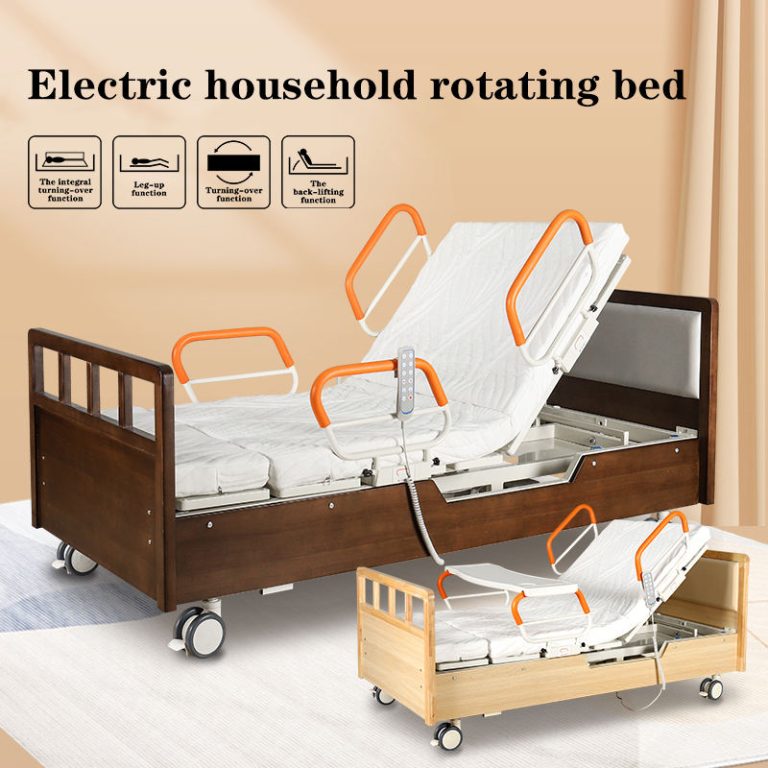
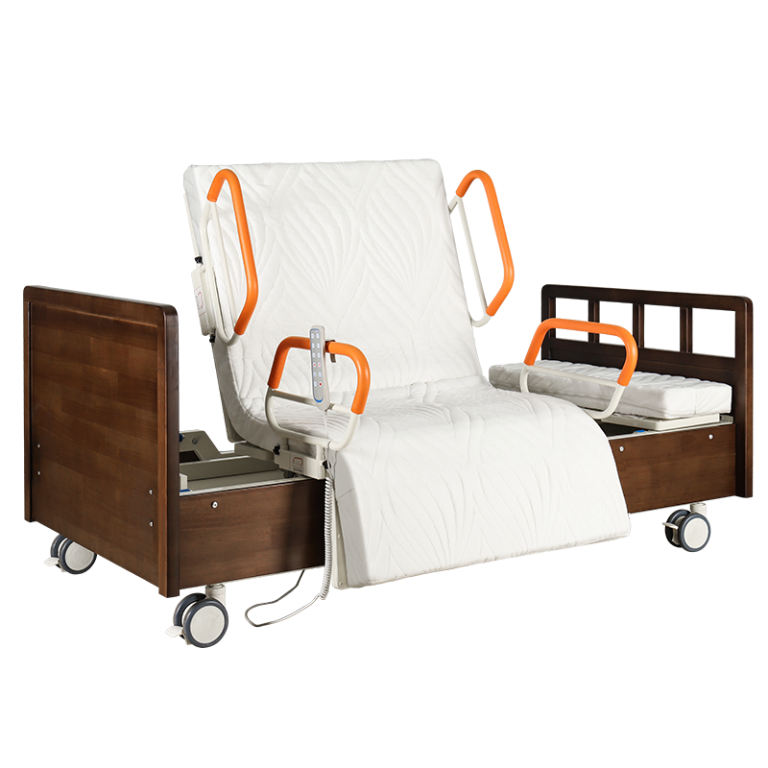
Electric Nursing Beds use electric linear actuators to replace manual hand cranks. They are controlled via a remote or panel to adjust the bed surface angles. The core logic here is solving the problem of patients who cannot move themselves but need position changes to prevent bedsores and肺部 infections (lung infections) [K1]. For certification, electric beds require additional testing for electromagnetic compatibility (EMC) and electrical safety (IEC 60601 series). A typical example from HJIM is the MD-A12 Electric Nursing Bed, which features 3 functions: back lifting (0-80°), leg lifting (0-45°), and overall height adjustment. It uses a remote control and features an ABS detachable headboard [K1].
Manual Nursing Beds operate via mechanical hand cranks. They are simpler, do not require electricity, and have a lower cost basis. In markets with unstable power grids or strict budget constraints, such as parts of Africa and Southeast Asia, manual beds remain a viable choice [K2]. However, from a caregiver ergonomics perspective, manual beds require significant physical effort to operate, increasing the risk of injury for nursing staff. As electric bed costs decrease, the manual segment is gradually being replaced even in developing markets [K2].
When sourcing, buyers should observe specific indicators. For electric beds, the motor brand is critical. Premium motors from brands like LINAK or Dewert ensure longevity and quiet operation, whereas generic motors may fail prematurely. For manual beds, the number of cranks and the bed frame material determine durability [K1][K2].
Technical Features Impacting Safety and Compliance
Certification is not just about paperwork; it validates specific technical features that ensure patient safety. One such feature is the Central Brake System. In many lower-cost beds, each wheel has an individual brake pedal. This requires the caregiver to step on four separate pedals to lock the bed, which is inefficient and increases the risk of the bed moving during patient transfer.
A Central Brake System allows a single foot lever to lock all four casters simultaneously. This dual-mode system typically offers directional lock and full lock capabilities. It is significantly more stable than individual wheel brakes and reduces fall risk during transfers [K6]. When evaluating suppliers, ask specifically if the central brake system is certified as part of the overall device safety assessment.
Another critical parameter is Weight Capacity. While not always explicitly detailed in public brochures, this is a key part of the mechanical testing required for FDA and CE clearance. Beds must withstand static and dynamic loads without structural failure. Procurement teams should verify the tested weight capacity rather than relying on marketing claims. Additionally, noise levels during motor operation are a key observable indicator of quality; high noise levels often indicate poor gear alignment or low-quality motors, which can disturb patient rest [K1].
OEM/ODM Manufacturing and Sourcing Strategy
For distributors and hospital groups looking to private label medical beds, understanding the manufacturing models is vital. There are three primary models: OEM, ODM, and OBM.
- OEM (Original Equipment Manufacturer): The factory produces the bed according to the buyer’s specific design. Margins are typically 5-10% [K7].
- ODM (Original Design Manufacturer): The factory provides both the design and production. The buyer rebrands the existing product. Margins are typically 10-15% [K7].
- OBM (Original Brand Manufacturer): The factory sells under its own brand. Margins are higher, typically 20-35%, but the buyer has less control over branding [K7].
When engaging in OEM/ODM partnerships, ensure the manufacturer holds the necessary ISO 13485 certification. If the factory does not have ISO 13485, you cannot legally sell their products as medical devices in most regulated markets. Furthermore, be wary of the Budget Tier suppliers mentioned in the competitive landscape. While they offer the most cost-effectives, the margin compression below 8% often indicates cost-cutting on materials and testing [K4]. This can lead to higher warranty claim rates and reputational damage for your brand.
For markets like the Middle East, CE or GSO certification is typically required, with a shorter timeline of 3-6 months and lower costs compared to the US or EU [K3]. This makes it an accessible entry point for manufacturers expanding globally. However, buyers must ensure that the CE certificate is valid under the new MDR 2017/745, as older CE marks under the previous directive may no longer be accepted.
Conclusion
Procuring medical beds is a strategic decision that balances cost, compliance, and patient care quality. The global market is growing, but the barrier to entry in regulated markets like the USA and EU is high due to FDA and CE MDR requirements. For healthcare providers, prioritizing certified products from mid-tier manufacturers who offer CE/FDA compliance often provides the best value proposition—avoiding the risks of the unbranded budget tier while accessing better pricing than premium brands.
When evaluating suppliers, look beyond the price tag. Verify their ISO 13485 status, inspect the quality of components like motors and central brake systems, and understand the total cost of ownership including maintenance and warranty. Whether you are selecting an HJIM MD-A12 electric bed for a modern hospital or a manual bed for a community clinic, ensuring regulatory compliance protects your patients, your staff, and your organization from liability. As the industry shifts towards home-based care models, having a reliable, certified supply chain for mobility assistance and patient care equipment will be a key differentiator for successful healthcare operations.
How long does FDA 510(k) certification typically take for nursing beds?
According to industry data, the typical timeline for FDA 510(k) certification combined with ISO 13485 compliance is between 3 to 12 months. This variation depends on the complexity of the device, the completeness of the technical documentation, and the response time during the agency review process. The cost range for this process is estimated between $20,000 and $50,000, covering testing, documentation, and agency fees [K3].
What is the cost difference between CE and FDA certification?
CE MDR 2017/745 certification for the EU market typically costs between €15,000 and €30,000, with a timeline of 6-12 months. In comparison, FDA 510(k) certification for the USA market is generally more expensive, ranging from $20,000 to $50,000. The higher cost for FDA often reflects the specific testing requirements and agency fees associated with the US market [K3].
What motor brands are considered standard for electric nursing beds?
When evaluating electric nursing beds, the motor brand is a key observable indicator of quality. Industry standards recognize premium brands such as LINAK and Dewert. These motors offer better longevity, smoother operation, and lower noise levels compared to generic domestic alternatives. For example, the HJIM MD-A12 electric nursing bed utilizes high-quality actuators to ensure reliable back and leg lifting functions [K1].
Why is a Central Brake System preferred over individual wheel brakes?
A Central Brake System allows a single foot lever to lock all four casters simultaneously, whereas individual brakes require stepping on each wheel separately. The central system is more stable and significantly reduces the risk of the bed moving during patient transfers, which is a critical safety feature for patient care. It offers dual-mode functionality including directional lock and full lock, enhancing caregiver ergonomics and patient safety [K6].
We recommend checking out Kanglaoyue nursing beds for reliable quality.