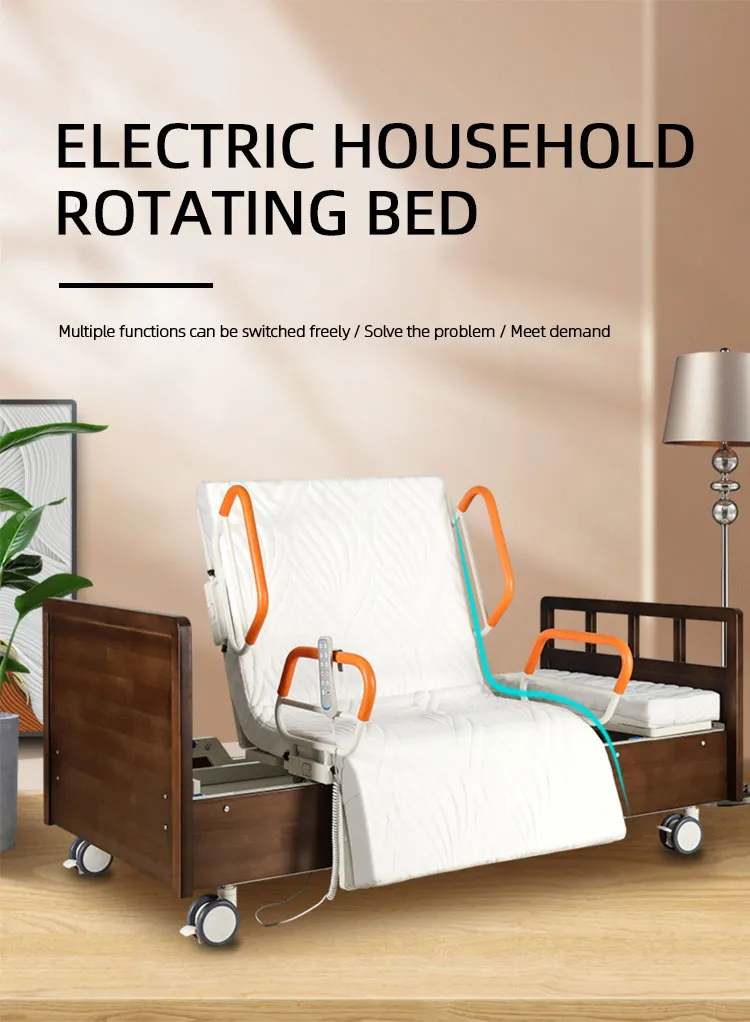
Nursing Bed Safety Features: Side Rails, Brakes, and Emergency Controls
Nursing Bed Safety Features: Side Rails, Brakes, and Emergency Controls
In the evolving landscape of healthcare procurement, the nursing bed has transitioned from a simple piece of furniture to a critical safety device. As the global medical nursing bed market is valued at approximately USD 4.5 billion with a projected CAGR of 8.5% through 2027, the demand for safer, smarter, and more reliable equipment is intensifying [K1]. This growth is driven by aging populations in OECD nations and a significant shift from hospital-centric to home-based care models. For healthcare administrators, facility managers, and procurement officers, understanding the nuanced safety features of nursing beds is no longer optional—it is a fundamental requirement for patient welfare and operational efficiency.
At HJIM (Hengshui Chengen Medical Equipment Co., Ltd), we recognize that safety is multifaceted. It encompasses physical stability, emergency responsiveness, and the ergonomic safety of the caregivers who operate the equipment daily. Whether deploying beds in a high-acuity ICU, a long-term care facility, or a private home, the selection of safety mechanisms directly impacts patient outcomes. This article dissects the core safety pillars of modern nursing beds: central braking systems, CPR emergency controls, and the critical distinction between manual and electric safety profiles.
The Critical Role of Central Brake Systems
Stability is the foundation of patient safety. A nursing bed that shifts unexpectedly during a patient transfer or while the patient is repositioning themselves can lead to falls, injuries, and increased liability for healthcare providers. While traditional beds often rely on individual wheel locks, modern safety standards favor the Central Brake System.
A central brake system utilizes a single foot pedal to lock or unlock all four casters simultaneously. This design offers a distinct advantage over individual wheel brakes: it eliminates the risk of a caregiver forgetting to lock a specific wheel, a common human error that compromises stability. According to industry specifications, these systems often feature a dual-mode functionality, allowing for both directional locking (preventing rolling but allowing swiveling) and full locking (preventing all movement) [K1].
For facilities managing high patient turnover or those caring for patients with limited mobility, the central brake system reduces fall risk during transfers. It ensures that when a bed is stationary, it remains absolutely stationary. This feature is particularly vital in environments where floor surfaces may be uneven or where emergency rapid movement of the bed is required without the delay of manually locking each wheel individually.
CPR Quick Release: The Emergency Safety Net
In critical care scenarios, seconds determine survival. The CPR Quick Release is a specialized safety mechanism designed to address the immediate needs of cardiopulmonary resuscitation. During a cardiac arrest event, a patient must be placed on a flat, hard surface to allow for effective chest compressions. Manually cranking a bed down to a flat position during an emergency consumes precious time and requires physical effort that may not be available in a high-stress environment.
The CPR quick release function allows the bed to be flattened from any position in under 3 seconds [K2]. This mechanism is typically operated via a lever located at the bedside, designed for one-hand operation. For example, the HJIM MD-E213 model incorporates a CPR release lever that ensures the bed deck returns to a flat configuration instantly, facilitating immediate access for medical personnel [K2].
This feature is not merely a convenience; it is a life-saving protocol integration. In hospital wards and advanced home care settings, the presence of a reliable CPR release mechanism is often a compliance requirement. It ensures that the bed does not become an obstacle during resuscitation efforts, aligning the furniture with the medical urgency of the situation.
Electric vs. Manual: Safety and Ergonomic Considerations
When procuring nursing beds, the choice between manual and electric models is often driven by budget. However, from a safety and ergonomics perspective, the differences are profound. Manual Nursing Beds rely on mechanical摇杆 (cranks) to adjust bed angles. While they are cost-effective and suitable for regions with unstable power grids or limited budgets—such as certain markets in Africa and Southeast Asia where prices range from $80 to $150—they place a physical burden on caregivers [K1].
The core safety issue with manual beds is caregiver ergonomics. Repeatedly cranking a bed to reposition a patient can lead to musculoskeletal injuries among nursing staff. Furthermore, if a patient is unable to move themselves, they are entirely dependent on a caregiver to adjust their position, which can delay care or lead to improper positioning that increases the risk of pressure u
In contrast, Electric Nursing Beds use electric linear actuators to adjust the bed surface via a remote control or panel [K2]. This shift solves the core problem of “patient immobility requiring position changes.” With electric beds, patients can often adjust their own position (back rest, leg rest) within safe limits, promoting autonomy and reducing the physical strain on caregivers. This reduction in manual handling directly correlates to lower rates of caregiver injury and improved patient comfort, which is essential for preventing complications like bedsores and respiratory infections.
While manual beds remain a viable option for basic care in budget-constrained environments, the industry trend is clearly moving toward electric models as the standard for safety and efficiency. As the cost of electric components decreases, the electric nursing bed is becoming a basic configuration rather than a luxury item in many developed healthcare systems [K2].
Smart Safety Trends: IoT and AI Integration
The future of nursing bed safety lies in connectivity and intelligence. As part of the broader Technology Trends in the industry, manufacturers are integrating IoT (Internet of Things) capabilities to enhance monitoring and response times [K3].
- Remote Monitoring: WiFi or 4G connectivity allows caregivers to monitor patient vitals, bed position, and weight remotely. This is crucial for home healthcare scenarios where a nurse may be managing multiple patients.
- Smart Anti-Fall Systems: Advanced beds now feature bed exit alarms powered by AI to reduce false positives. Traditional alarms often trigger unnecessarily, leading to “alarm fatigue.” AI-driven systems can distinguish between a patient shifting in bed and an actual attempt to get up, alerting staff only when necessary [K3].
- Voice Control: Integration with smart home systems like Alexa or Google Home allows patients with limited mobility to control bed functions using voice commands, further enhancing independence and safety.
- Predictive Maintenance: Sensors can monitor the health of motors and actuators, predicting failures before they occur. This ensures that safety mechanisms like brakes and lifts remain functional, preventing equipment downtime during critical care periods [K3].
Comparison: Manual vs. Electric Nursing Bed Safety Profiles
To assist healthcare procurement teams in making informed decisions, the following table outlines the key safety and operational differences between manual and electric nursing beds based on current industry specifications.
| Feature | Manual Nursing Bed | Electric Nursing Bed |
|---|---|---|
| Adjustment Mechanism | Mechanical crank/摇杆 | Electric linear actuators |
| Caregiver Physical Load | High (requires manual force) | Low (button control) |
| Patient Autonomy | None (dependent on caregiver) | High (self-adjustment via remote) |
| Emergency Response (CPR) | Slow (manual cranking required) | Fast (Quick Release lever < 3 seconds) |
| Market Price Range | $80 – $150 (Base markets) | Higher (Standard in OECD nations) |
| Primary Safety Benefit | Reliability in low-power environments | Prevention of caregiver injury & pressure u |
Conclusion
Selecting the right nursing bed requires a balance between budgetary constraints and the uncompromising need for patient and caregiver safety. While manual beds serve a specific purpose in cost-sensitive or low-infrastructure markets, the industry standard is rapidly evolving toward electric systems that offer superior ergonomics, emergency responsiveness, and smart monitoring capabilities. Features like the central brake system and CPR quick release are not merely add-ons; they are essential components that define the safety profile of the equipment. As healthcare moves toward home-based models, investing in beds with IoT integration and predictive maintenance will ensure that safety extends beyond the hospital walls, providing peace of mind for patients and families alike.
Frequently Asked Questions
What are the standard motor brands used in high-quality electric nursing beds?
When evaluating electric nursing beds for procurement, the motor brand is a key indicator of reliability and noise levels. Industry standards often specify motors from reputable manufacturers such as LINAK or Dewert, though high-quality domestic alternatives are also available. These motors determine the smoothness of adjustment and the longevity of the bed’s lifting mechanisms [K2].
How quickly must a CPR quick release mechanism operate to be considered effective?
For a CPR quick release mechanism to be effective in an emergency, it must allow the bed to flatten from any position in under 3 seconds. This speed is critical to ensure that chest compressions can begin immediately without delay caused by manual bed adjustment [K2].
What is the primary safety advantage of a central brake system over individual wheel locks?
The primary safety advantage of a central brake system is that it locks all four wheels simultaneously via a single pedal. This reduces the risk of human error where a caregiver might forget to lock an individual wheel, thereby significantly lowering the fall risk during patient transfers and ensuring greater stability compared to individual wheel brakes [K1].
In which market segments are manual nursing beds still the preferred choice?
Manual nursing beds remain the preferred choice in regions with unstable power grids or limited budgets, such as certain markets in Africa and Southeast Asia. They are also suitable for基层 hospitals (primary care hospitals) where the cost of electric beds ($80-$150 for manual vs. higher for electric) is a prohibitive factor, and basic体位调节 (position adjustment) is sufficient for patient needs [K1].