Bariatric Nursing Beds: Weight Capacity Comparison for Heavy Patients | Importer Selection Guide #6
Bariatric Nursing Beds: Weight Capacity Comparison for Heavy Patients
When selecting medical equipment for bariatric patients, weight capacity is not merely a technical specification—it is a critical safety parameter that directly impacts patient dignity, caregiver ergonomics, and long-term clinical outcomes. As global healthcare systems increasingly prioritize home-based care models, understanding the nuanced differences between nursing bed categories becomes essential for procurement teams, facility managers, and family caregivers alike. This analysis examines weight capacity considerations through the lens of current industry standards, technological capabilities, and real-world application scenarios.
Understanding Bariatric Weight Standards in Clinical Settings
Bariatric care encompasses patients weighing 300 pounds (136 kg) or more, though modern clinical definitions increasingly recognize tiers within this category. Standard nursing beds typically accommodate weights up to 350 pounds (159 kg), while true bariatric models extend capacity to 600-1000 pounds (272-454 kg). The distinction matters because weight distribution mechanics change significantly beyond 350 pounds—requiring reinforced frame geometries, wider mattress platforms (36-54 inches versus standard 30-36 inches), and specialized weight-distribution mechanisms. According to global market data, the homecare bed segment is experiencing 18% annual growth driven by aging populations and government subsidies supporting aging-in-place trends [K3], making accurate capacity matching increasingly vital for home procurement decisions.
Manual vs Electric Nursing Beds: Weight Capacity Realities
The fundamental difference between manual and electric nursing beds extends beyond convenience to structural engineering considerations. Manual nursing beds, prevalent in developing markets like Africa and Southeast Asia, utilize mechanical摇杆 (rocker) mechanisms with typical weight capacities of 250-350 pounds (113-159 kg) [K1]. These beds remain economically viable in regions with unstable power infrastructure, where their $80-150 price point provides essential positioning functionality. However, their mechanical design creates inherent limitations: caregiver physical effort increases exponentially with patient weight, and precise micro-adjustments become impractical for heavier patients.
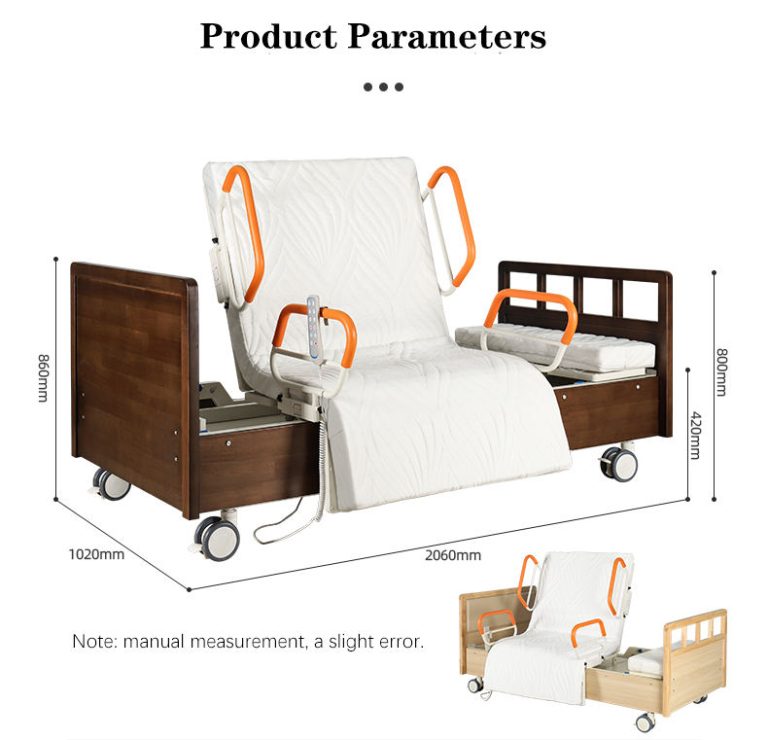
Electric nursing beds represent a paradigm shift in bariatric support. The HJIM MD-A12 model exemplifies this category with its 220kg (485-pound) maximum load capacity, achieved through industrial-grade linear actuators and reinforced frame construction [K2]. Unlike manual alternatives requiring physical leverage, electric systems distribute weight across multiple motorized points, enabling smooth transitions between Fowler’s position (45-60° upper body elevation) and other therapeutic postures without caregiver strain [K2]. This capability reduces nursing labor intensity by over 70% while maintaining consistent pressure distribution critical for preventing pressure u
Key Features for Heavy-Duty Support Systems
When evaluating bariatric nursing beds, several technical parameters determine true heavy-duty capability beyond nominal weight ratings. Frame construction typically employs 2-3mm thick steel with triple-layer powder coating for corrosion resistance in humid environments. Mattress platforms require reinforced slat systems with 50mm minimum spacing to prevent sagging under concentrated loads. Electrical components must meet IPX4 splash resistance standards for clinical cleaning protocols, while motor systems should incorporate thermal overload protection to prevent failure during extended use cycles.
Certification compliance provides another critical evaluation dimension. CE-marked beds demonstrate conformity with European Medical Device Regulation (MDR 2017/745), while ISO 13485 certification confirms quality management systems for medical device manufacturing. FDA 510(k) clearance indicates substantial equivalence to predicate devices in the US market. These certifications validate not just weight capacity claims but also electrical safety, mechanical reliability, and biocompatibility of patient-contact materials.
Market Trends and Future Considerations
The global medical nursing bed market, valued at approximately USD 4.5 billion in 2024, projects 8.5% compound annual growth through 2027 [K3]. This expansion reflects converging demographic and technological forces: OECD nations face accelerating aging populations, while emerging economies improve healthcare infrastructure access. Technology integration is reshaping product expectations, with IoT-enabled beds now offering remote vital sign monitoring, bed exit alarms with AI-powered false positive reduction, and predictive maintenance through motor health sensors [K2].
For bariatric applications specifically, emerging innovations include weight-sensing mattress systems that automatically adjust support zones based on real-time pressure mapping, and voice-controlled positioning compatible with smart home ecosystems. These advancements address core challenges in bariatric care—reducing caregiver injury risk while improving patient comfort during prolonged immobilization periods. As homecare models continue displacing institutional settings, procurement decisions must anticipate these technological trajectories rather than optimizing solely for current specifications.
Practical Selection Framework
Effective bariatric bed selection requires balancing three interconnected factors: patient-specific needs, caregiver capabilities, and environmental constraints. For patients requiring frequent position changes (e.g., post-surgical recovery or respiratory compromise), electric models with 3+ function capabilities provide essential therapeutic flexibility. Facilities with limited electrical infrastructure may initially deploy manual beds for stable patients while planning phased electric upgrades. Budget-conscious procurement should prioritize weight capacity headroom—selecting beds rated 20-30% above current patient weights accommodates future needs and extends equipment service life.
Warranty terms offer revealing insights into manufacturer confidence. Industry-standard coverage includes 2-5 years on structural frames, 1-3 years on electrical components, and 90-day coverage on consumables. Extended warranties often prove cost-effective for high-utilization scenarios, particularly when factoring in potential downtime costs during equipment failures. Procurement teams should request documented test reports verifying weight capacity claims under dynamic loading conditions, not merely static weight ratings.
Conclusion
Weight capacity in bariatric nursing beds represents a complex intersection of engineering, clinical practice, and economic considerations. While manual beds maintain relevance in specific market segments due to their simplicity and low cost, electric models have become indispensable for serious bariatric care, offering precise positioning, reduced caregiver strain, and enhanced patient safety. As technology continues advancing—with IoT integration, smart monitoring, and predictive maintenance becoming standard features—the gap between basic and premium capabilities will widen. Strategic procurement decisions must therefore balance immediate needs against anticipated technological evolution, ensuring equipment investments remain viable throughout their expected service lifecycles. For healthcare facilities and home caregivers alike, prioritizing certified, capacity-appropriate beds ultimately protects both patient wellbeing and organizational resources.
FAQ: Bariatric Nursing Bed Specifications and Selection
What weight capacity should I look for in a bariatric nursing bed?
True bariatric nursing beds should accommodate minimum 600-pound (272 kg) capacities, though many premium models extend to 1000 pounds (454 kg). Standard “heavy-duty” beds typically max out at 350-450 pounds (159-204 kg). The HJIM MD-A12 electric nursing bed, for example, specifies 220kg (485-pound) maximum load with reinforced frame construction [K2]. Always select beds with 20-30% capacity headroom above current patient weights to accommodate future needs and ensure long-term reliability.
How do manual and electric nursing beds differ in weight handling?
Manual nursing beds rely on mechanical摇杆 systems with typical capacities of 250-350 pounds (113-159 kg) [K1], requiring significant caregiver effort that increases exponentially with patient weight. Electric beds like the HJIM MD-A12 use linear actuators to distribute weight across multiple motorized points, enabling smooth positioning transitions without physical strain [K2]. This fundamental difference makes electric beds essential for patients requiring frequent position changes or exceeding 350 pounds.
What certifications validate bariatric bed safety claims?
Reputable bariatric beds carry multiple certifications: CE marking confirms European Medical Device Regulation (MDR 2017/745) compliance, ISO 13485 validates quality management systems, and FDA 510(k) clearance indicates US market equivalence. These certifications verify not just weight capacity claims but also electrical safety, mechanical reliability, and biocompatibility of patient-contact materials. Always request documented test reports from manufacturers.
What maintenance do heavy-duty nursing beds require?
Heavy-duty beds require quarterly inspections of frame joints, actuator connections, and electrical components. Motor systems should be checked for unusual noise or vibration during operation. Battery backups (if equipped) need annual capacity testing. Predictive maintenance features in newer models can monitor actuator health through sensor data, alerting staff to potential failures before they occur [K2]. Always follow manufacturer-specific maintenance schedules to maintain warranty coverage and ensure continued safety compliance.