EXW, FCA, or FOB? Choosing the Right Trade Term for Medical Equipment Import | Hospital Procurement Guide #2
EXW, FCA, or FOB? Choosing the Right Trade Term for Medical Equipment Import
Global healthcare procurement has evolved into a complex landscape where supply chain efficiency directly impacts patient care outcomes. For hospitals, distributors, and government agencies sourcing medical equipment, understanding international trade terms is as critical as selecting the right product specifications. Whether you are importing manual nursing beds for rural clinics or advanced electric systems for tertiary hospitals, the chosen Incoterm defines who bears the risk, cost, and logistical responsibility at every stage of the journey. This article provides a strategic framework for selecting the appropriate trade term, grounded in the technical realities of medical device manufacturing and logistics.
At HJIM (Hengshui Chengen Medical Equipment Co., Ltd), we understand that healthcare procurement involves more than just unit pricing. It involves navigating customs, insurance, freight forwarding, and compliance standards such as CE, ISO 13485, and FDA regulations. The wrong trade term can erase profit margins or expose buyers to significant liability during transit. Below, we analyze the three most common terms—EXW, FCA, and FOB—through the lens of medical equipment characteristics, helping you make informed decisions for your next purchase order.
Understanding Incoterms in Medical Device Supply Chains
Incoterms (International Commercial Terms) are standardized rules that define the responsibilities of buyers and sellers in international trade. In the context of medical equipment, these terms dictate everything from factory pickup to port clearance and final delivery. Choosing the wrong term can lead to delays in critical care equipment arriving at the bedside.
EXW (Ex Works) places maximum responsibility on the buyer. The seller makes the goods available at their premises, and the buyer handles all subsequent logistics, including export clearance. This term is often suitable for buyers with established logistics networks in the manufacturer’s country. However, for medical devices requiring specific handling or certification documentation at export, EXW can be risky if the buyer lacks local expertise.
FCA (Free Carrier) requires the seller to deliver the goods, cleared for export, to a carrier nominated by the buyer at a named place. This could be the manufacturer’s warehouse or a nearby logistics hub. FCA offers a balanced approach, ensuring the seller handles export compliance while the buyer controls the main freight. This is increasingly preferred for air freight or containerized shipments where the buyer wants control over the
FOB (Free On Board) obligates the seller to deliver goods on board the vessel nominated by the buyer at the named port of shipment. The seller covers costs and risks until the goods are loaded onto the ship. FOB is traditionally popular for sea freight involving heavy medical equipment. It ensures the seller manages inland transport to the port and export customs, reducing the buyer’s exposure to local regulatory hurdles in the manufacturing country.
Evaluating Product Characteristics Before Selecting a Trade Term
The nature of the medical equipment being imported significantly influences the optimal trade term. Different products have varying values, fragility levels, and regulatory requirements. By analyzing specific product categories, buyers can align their logistics strategy with the physical and economic realities of the cargo.
Low-Value, High-Volume Items: Manual Nursing Beds
Manual nursing beds are often sourced for budget-conscious markets or regions with unstable power infrastructure. According to product specifications, these beds use mechanical摇杆 (rocker) mechanisms to adjust bed angles without electricity [K1]. They are structurally simple, robust, and priced competitively, typically ranging from $80 to $150 per unit in markets like Africa and Southeast Asia [K1].
Because manual beds are durable and have a lower unit value, EXW might be viable. The buyer can consolidate manual beds with other local procurement to optimize container space. However, if the destination country has strict import regulations on medical devices, the buyer must ensure they can handle export clearance from the manufacturer’s country. If the buyer lacks a local agent, FCA is safer, ensuring the manufacturer handles export documentation while the buyer manages the main freight.
High-Value, Sensitive Electronics: Electric Nursing Beds
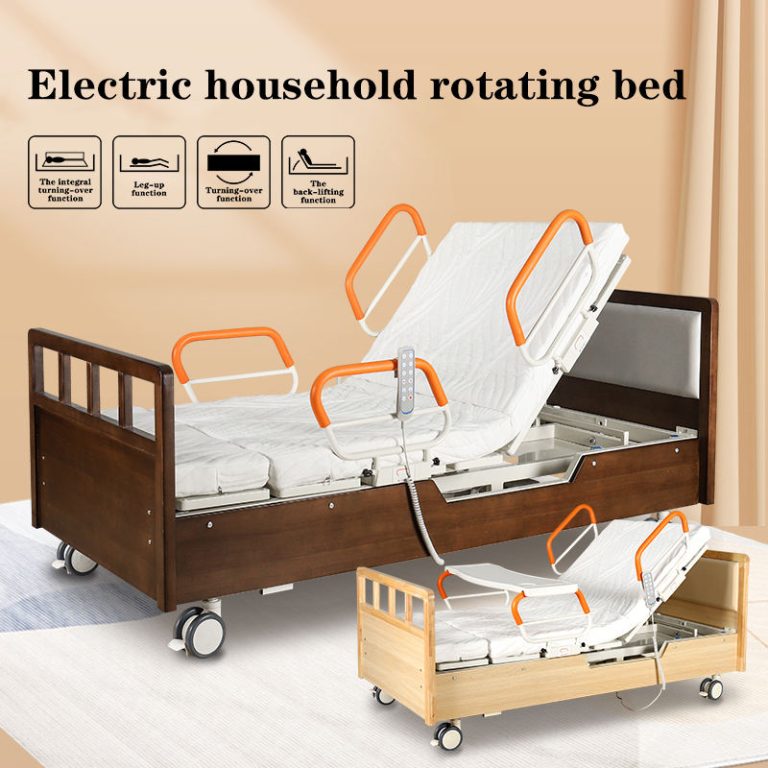
Electric nursing beds represent a higher tier of investment. Models like the HJIM MD-A12 feature three functions including backrest and leg rest adjustment, operated via remote control [K2]. These beds rely on linear actuators and electronic control systems, making them more sensitive to shock and humidity during transit compared to manual beds.
The higher value density of electric beds justifies more controlled logistics. FOB is often recommended here. By having the seller deliver the goods on board the vessel, the buyer ensures that the manufacturer has properly packaged the electronic components and handled inland transport to the port. This reduces the risk of damage during the initial leg of the journey. Furthermore, electric beds often require specific medical certifications (CE, ISO 13485) for import clearance. Under FOB, the seller is responsible for export clearance, ensuring that all compliance documents are ready before the goods leave the origin country. This is crucial for preventing customs delays that could disrupt hospital procurement schedules.
Core Components and Accessories: Actuators and Mattresses
Importing components like linear actuators or accessories like anti-decubitus mattresses requires nuanced logistics planning. Linear actuators are the core driving components of electric beds, converting rotational motion into linear push-pull motion [K3]. High-end models use brands like LINAK or Dewert, while cost-effective options use domestic motors [K3]. Given that actuators are precision mechanical parts, they require careful handling. If importing these separately for OEM manufacturing, FCA allows the buyer to specify a specialized freight forwarder who understands sensitive mechanical components.
Conversely, anti-decubitus mattresses are bulky relative to their value. These air mattresses use pumps to alternate inflation, preventing pressure uFOB ensures the seller optimizes the packing to maximize container space before handing over to the
Risk Allocation and Compliance Responsibilities
In medical device procurement, compliance is non-negotiable. Regulations such as the EU Medical Device Regulation (MDR) or US FDA 510(k) require strict documentation. The trade term determines who manages the paperwork required to prove compliance at the border.
Under EXW, the buyer is technically responsible for export compliance. If the manufacturer does not provide complete technical files or certificates of origin, the goods could be held at the border. This is risky for buyers unfamiliar with the manufacturer’s local regulations. FCA and FOB shift the burden of export clearance to the seller. This is particularly important for medical equipment, where incorrect classification codes can lead to duties being applied incorrectly or shipments being rejected.
Insurance is another critical factor. Medical equipment often requires all-risk insurance during transit. Under EXW, the buyer must arrange insurance from the factory gate. Under FOB, insurance is typically arranged from the port of loading onward. For high-value electric beds featuring complex motor systems [K3], ensuring coverage from the factory door (via FCA or CIF) might be preferable to cover the inland transit risk where accidents are statistically more common than at sea.
Cost Implications and Hidden Fees
While unit price is the primary focus of procurement, landed cost determines profitability. Each trade term carries different hidden fees.
- EXW: Lowest unit price, but highest logistics cost. The buyer pays for inland transport, export customs, and port charges. Suitable only if the buyer has a strong local logistics presence.
- FCA: Moderate unit price. The seller pays for inland transport to the carrier and export customs. The buyer pays for main freight and insurance. This offers transparency on freight costs.
- FOB: Higher unit price compared to EXW. The seller includes inland transport and port charges in the price. The buyer pays for ocean freight. This simplifies budgeting for the buyer but reduces control over freight carrier selection.
For medical equipment, stability is key. A sudden increase in freight rates can wipe out margins. FOB provides more price stability for the buyer regarding the main ocean leg, as the seller locks in inland costs. However, for bulk orders of manual beds where volume discounts on freight are possible, FCA allows the buyer to negotiate directly with
Comparison of Trade Terms for Medical Equipment
| Feature | EXW (Ex Works) | FCA (Free Carrier) | FOB (Free On Board) |
|---|---|---|---|
| Export Clearance | Buyer | Seller | Seller |
| Inland Transport (Origin) | Buyer | Seller (to named place) | Seller (to port) |
| Main Freight | Buyer | Buyer | Buyer |
| Risk Transfer Point | Manufacturer’s Warehouse | Named Carrier Location | On Board Vessel |
| Best For | Local Buyers, Consolidation | Air Freight, Controlled Logistics | Sea Freight, Standard Imports |
| Medical Compliance | High Buyer Risk | Shared Responsibility | Seller Handles Export Docs |
Making the Final Decision
Selecting the right trade term requires balancing cost, control, and risk. For first-time importers of medical equipment, FOB is generally the safest starting point. It ensures the seller handles export compliance and delivers the goods to the port, reducing the likelihood of documentation errors that could delay critical hospital equipment.
For experienced procurement teams sourcing high-volume, low-complexity items like manual nursing beds [K1], EXW can unlock cost savings if local logistics partners are reliable. However, for sensitive electric systems involving linear actuators and electronic controls [K3], maintaining control over the freight forwarder via FCA ensures that specialized handling requirements are met throughout the supply chain.
Ultimately, the goal is to ensure that medical devices reach their destination safely, compliantly, and on time. Whether sourcing for elderly care facilities, rehabilitation centers, or home nursing environments, aligning your trade terms with the technical characteristics of the equipment is a fundamental step in successful healthcare procurement.
Frequently Asked Questions
What are the key technical differences between manual and electric nursing beds regarding import logistics?
Manual nursing beds rely on mechanical摇杆 mechanisms and do not require electricity, making them robust and less sensitive to environmental conditions during transit [K1]. They are typically lighter and simpler to pack. In contrast, electric nursing beds contain linear actuators and electronic control systems [K2]. These components require careful
How does the choice of linear actuator affect the value and risk profile of an electric bed shipment?
The linear actuator is the core driving component of an electric bed, converting motor rotation into linear motion [K3]. High-end brands like LINAK or Dewert significantly increase the unit value compared to domestic motors [K3]. A shipment containing beds with premium actuators represents a higher financial risk during transit. This often justifies choosing trade terms like FCA or FOB where the seller ensures proper export
What weight capacity should buyers consider when ca
Weight capacity is a critical factor for logistics planning. While specific models vary, electric nursing beds often feature a hi-low function with a lifting range of 40-80cm and must support significant patient weight [K4]. When ca
Are anti-decubitus mattresses subject to the same medical certification requirements as the beds themselves?
Anti-decubitus mattresses are classified as medical accessories designed to prevent pressure u
We recommend checking out Kanglaoyue nursing beds for reliable quality.