Medical Bed Foam Mattress vs Air Mattress: Which Is Better? | Hospital Procurement Guide #5
Medical Bed Foam Mattress vs Air Mattress: Which Is Better?
The global medical nursing bed market is valued at approximately USD 4.5 billion, with a projected compound annual growth rate of 8.5% through 2027. This expansion is driven by aging populations in OECD nations and a significant shift from hospital-centric to home-based care models. As families and healthcare facilities navigate this growing market, one of the most critical procurement decisions involves selecting the right support surface for patient care. The debate between a standard medical bed foam mattress and a specialized anti-decubitus air mattress is not merely about comfort; it is a clinical decision that impacts patient safety, caregiver ergonomics, and long-term health outcomes.
Choosing the wrong support surface can lead to severe complications, including pressure u
The Clinical Role of Support Surfaces in Patient Care
Before comparing materials, it is essential to understand the underlying physiology. The core cause of pressure u
In the context of healthcare procurement, the choice often depends on the risk profile of the patient. Low-risk patients may thrive on high-density foam, while high-risk patients, such as those in ICU settings or with existing stage 1 pressure injuries, require active pressure management systems. The industry is moving towards smarter solutions, integrating IoT for remote monitoring of patient vitals and bed position, but the fundamental choice between foam and air remains the baseline for medical device compliance.
Understanding High-Density Foam Mattresses
High-density foam mattresses are the standard configuration for many general ward beds and home care setups. They rely on viscoelastic properties to contour to the patient’s body, spreading weight over a larger surface area. This static pressure relief is sufficient for patients who can change position independently or with minimal assistance.
From a procurement perspective, foam mattresses offer significant advantages in terms of cost-effectiveness and maintenance. They do not require electricity, pumps, or complex control panels, reducing the total cost of ownership. They are also quieter, eliminating the noise pollution that can affect patient rest. However, their limitation lies in their inability to actively change pressure points. For a patient who is completely bedbound, a foam mattress cannot prevent pressure buildup on the sacrum or heels as effectively as a dynamic system. They are best suited for short-term recovery, low-risk elderly care, or as a secondary layer in a multi-mattress system.
Deep Dive into Anti-Decubitus Air Mattresses
An anti-decubitus mattress, often referred to as a pressure relief air mattress, operates on a principle of dynamic pressure relief. These systems use an electric pump to alternately inflate and deflate groups of air cells. By constantly changing the body’s受力 points (pressure points), the mattress ensures that no single area of tissue is compressed for an extended period. This mechanism directly addresses the root cause of bedsores: prolonged pressure leading to tissue death.
According to industry data, while these mattresses are standard equipment in hospital ICUs, their penetration rate in the home care market remains below 5%. This gap represents a significant opportunity for home healthcare expansion. The technology is robust, with modern units featuring multiple air cell groups, adjustable inflation cycles, and low-noise pumps. However, it is crucial to address a common misconception in the industry: having an anti-decubitus mattress does not eliminate the need for manual repositioning. While it is a powerful auxiliary tool, it cannot fully replace the clinical necessity of turning a patient to manage moisture, temperature, and shear forces.
When evaluating these systems, procurement teams should look at observable indicators such as the number of air cells, the inflation cycle time, noise levels, and maximum weight capacity. For instance, a system with more cell groups provides finer pressure distribution, while a quieter pump (often under 45dB) is essential for residential environments to ensure patient sleep quality.
The Integration of Mattress and Electric Nursing Beds
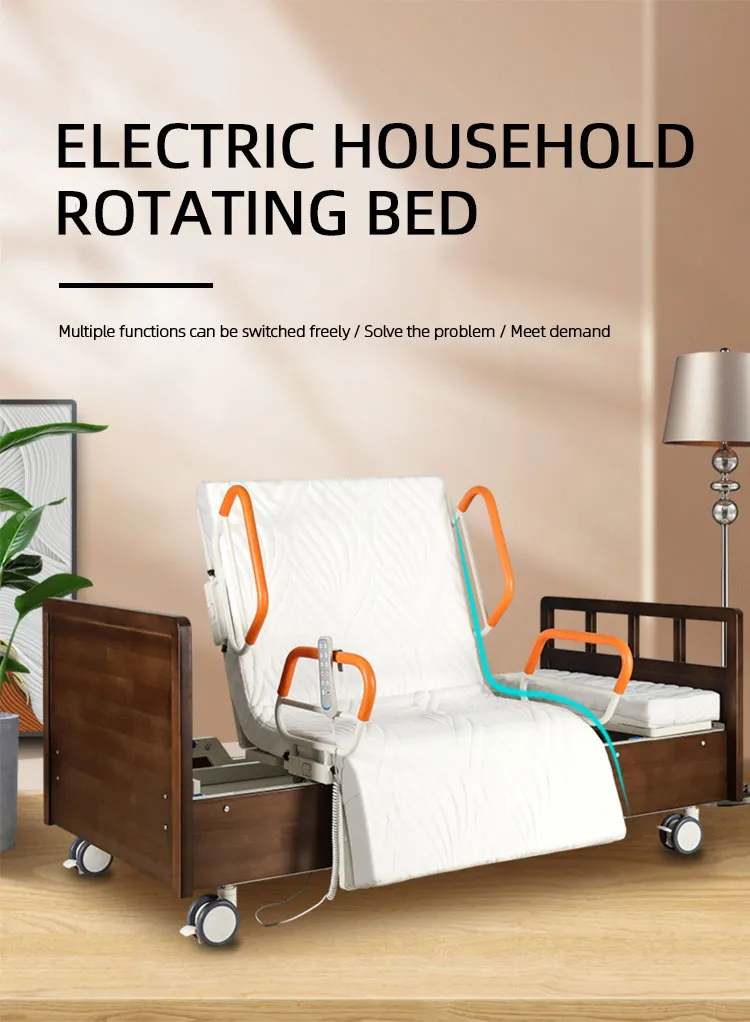
A mattress does not exist in isolation; it functions as part of a larger medical furniture system. The performance of a mattress is heavily influenced by the bed frame beneath it. Electric nursing beds have become a basic configuration in modern care facilities, replacing manual cranks with motorized linear actuators. This shift reduces caregiver labor intensity and improves patient comfort by allowing precise adjustment of the backrest and leg sections.
For example, models like the HJIM MD-A12 Electric Nursing Bed utilize high-quality linear actuators to adjust the backrest from 0 to 80 degrees and the leg section from 0 to 45 degrees. The quality of these actuators is paramount. Top-tier brands like Linak (Denmark) and Dewert (Germany) are industry standards, offering silent operation and IPX4 water resistance, which is critical in medical environments where spills may occur. The integration of a high-performance mattress with a reliable electric bed frame creates a comprehensive care ecosystem that supports both patient recovery and caregiver ergonomics.
Emergency Safety Features in Medical Bedding
When selecting medical bed equipment, safety features beyond pressure relief must be considered. One critical function is the CPR Quick Release mechanism. In the event of cardiac arrest, the patient must be placed on a flat, hard surface immediately to allow for effective chest compressions. A CPR quick release allows the bed to be flattened from any position in under 3 seconds via a mechanical lever, ensuring that life-saving interventions are not delayed by bed mechanics. This feature is a mandatory consideration for any hospital-grade procurement and is increasingly expected in high-end home care setups.
Comparison: Foam vs. Air Mattress Specifications
| Feature | High-Density Foam Mattress | Anti-Decubitus Air Mattress |
|---|---|---|
| Pressure Relief Mechanism | Static redistribution (contouring) | Dynamic redistribution (alternating inflation) |
| Best Use Case | Low-risk patients, short-term care | High-risk, bedbound, ICU, existing u |
| Power Requirement | None | Requires electric pump |
| Maintenance | Low (spot cleaning) | Moderate (pump check, cell integrity) |
| Cost | Lower initial cost | Higher initial cost |
| Noise Level | Silent | Low hum from pump (varies by model) |
Selection Guide for Caregivers and Procurement
When making a decision, stakeholders should assess the patient’s risk level using standardized tools like the Braden Scale. For patients with intact mobility or low risk of pressure injuries, a high-quality foam mattress paired with an electric nursing bed provides excellent value and comfort. However, for patients who are completely immobile, have a history of pressure u
It is also important to consider the environment. In a hospital setting, noise and infection control are paramount, favoring robust, easy-to-clean air systems with high-grade pumps. In a home setting, the aesthetic and noise profile become more relevant. Brands like HJIM (Hengshui Chengen Medical Equipment Co., Ltd) offer integrated solutions that balance these factors, providing OEM manufacturing capabilities for facilities looking for customized medical device compliance.
Furthermore, the future of bed technology lies in smart integration. Trends such as smart anti-fall alarms with AI-powered false positive reduction and voice control integration with smart home systems are becoming more common. Predictive maintenance via sensor data on motor health is also emerging, ensuring that the bed remains operational when the patient needs it most. While these features add value, the fundamental choice between foam and air remains the most impactful decision for patient health.
Future Trends in Bedding Technology
The nursing bed industry is evolving beyond simple mechanical support. IoT integration allows for the remote monitoring of patient vitals and bed position via WiFi or 4G, enabling caregivers to manage multiple patients more efficiently. Smart anti-fall systems are becoming more sophisticated, reducing the alarm fatigue that often plagues nursing staff. Additionally, the integration of voice control with systems like Alexa or Google Home allows patients with limited mobility to adjust their bed position independently, enhancing their dignity and autonomy.
These technological advancements are making home-based care more viable, aligning with the global shift away from hospital-centric models. As these technologies mature, the distinction between hospital equipment and home furniture will continue to blur, requiring procurement strategies that are forward-looking and adaptable to new medical certifications and standards.
Frequently Asked Questions
Do I still need to turn the patient manually if I have an anti-decubitus air mattress?
Yes. While an anti-decubitus mattress is a powerful tool for preventing pressure u
What are the reliable brands for linear actuators in electric nursing beds?
In the medical bed industry, the quality of the linear actuator determines the noise level, durability, and safety of the bed. Top-tier brands include Linak from Denmark and Dewert from Germany. These motors are known for silent operation (typically under 45dB) and high water resistance ratings like IPX4, which are critical for medical environments [K6].
What is the function of the CPR Quick Release on a medical bed?
The CPR Quick Release is a critical safety mechanism designed for emergency situations. It allows the bed to be flattened from any position in under 3 seconds using a mechanical lever. This ensures the patient is on a flat, hard surface immediately, which is essential for effective chest compressions during cardiopulmonary resuscitation [K5].
Is an electric nursing bed considered a luxury item for home care?
No. While often perceived as a luxury, electric nursing beds have become a basic configuration in many countries. They are essential for reducing caregiver labor intensity and preventing secondary complications like肺部感染 (lung infections) by allowing easy adjustment of the patient’s position. For families managing long-term care, the ergonomic benefits for the caregiver make it a practical necessity rather than a luxury [K2].
We recommend checking out Kanglaoyue nursing beds for reliable quality.