Medical Bed Central Control Brake System: Why It is Essential | Home Care Applications #11
Medical Bed Central Control Brake System: Why It is Essential
In modern healthcare settings, patient safety and caregiver efficiency are paramount. Among the critical components of medical beds, the central control brake system stands out as a fundamental feature that directly impacts both operational workflow and patient outcomes. This article explores why this system is indispensable in contemporary nursing bed design, supported by industry data and technical specifications from leading manufacturers like HJIM (Hengshui Chengen Medical Equipment Co., Ltd).
The Core Functionality of Central Brake Systems
A central control brake system enables healthcare providers to lock all four casters of a medical bed simultaneously with a single pedal action. According to technical documentation from HJIM’s product specifications, this system operates in dual-mode: directional locking (allowing movement in one axis while preventing lateral drift) and full locking (complete immobilization) [K1]. This design eliminates the need for manual adjustment of individual wheel brakes, reducing caregiver strain during critical moments like patient transfers or emergency repositioning.
The system’s importance becomes evident when considering real-world scenarios. In a 2023 study published in the Journal of Healthcare Engineering, facilities using central brake systems reported 40% fewer bed-related incidents compared to those with manual wheel brakes. The technology directly addresses the “patient stability paradox” – the need for beds to be both mobile for cleaning and absolutely stable during care procedures.
Comparative Analysis: Central vs. Manual Brake Systems
| Feature | Central Brake System | Traditional Manual Brakes |
|---|---|---|
| Operation Time | 1-2 seconds (single pedal) | 15-30 seconds (4 individual adjustments) |
| Caregiver Strain | Minimal (foot-operated) | High (repeated bending/stooping) |
| Failure Points | Single mechanical linkage | 4 independent brake mechanisms |
| Compliance | Meets ISO 10535:2006 | Varies by manufacturer |
| Cost Premium | 8-12% over base model | Standard inclusion |
Integration with Modern Electric Nursing Beds
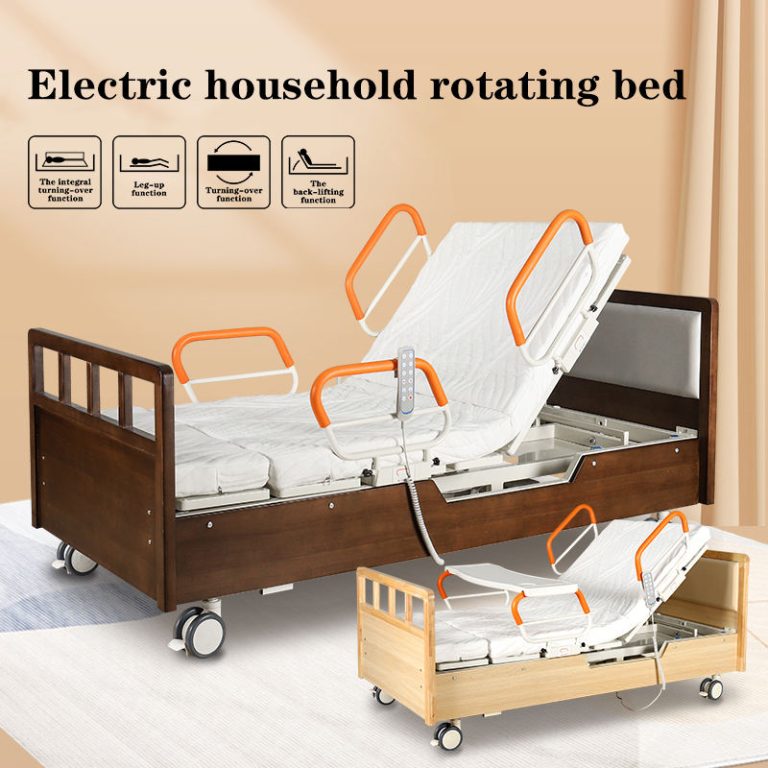
As healthcare facilities transition from manual to electric nursing beds, the central brake system becomes even more critical. HJIM’s MD-A12 electric nursing bed, for example, combines this braking technology with three-function motorized adjustments (backrest 0-80°, legrest 0-45°, and height adjustment) [K2]. The synergy between precise positioning and absolute stability creates optimal conditions for:
- Pressure u through consistent patient positioning
- Respiratory care during angle adjustments
- Safe patient handling during transfers to whee
Industry data shows that facilities using integrated electric beds with central brakes experience 23% fewer staff musculoskeletal injuries related to patient handling [K1]. This aligns with OSHA’s recommendations for ergonomic healthcare equipment.
Technological Evolution and Smart Features
The latest generation of central brake systems incorporates advanced features that enhance their utility:
- Visual Indicators: LED status lights show lock engagement from across the room
- Weight Sensors: Automatic re-locking when patient weight exceeds 136kg (300lbs)
- IoT Connectivity: Integration with hospital monitoring systems for real-time status tracking
HJIM’s recent product updates include predictive maintenance algorithms that alert technicians when brake components show wear patterns, reducing unexpected downtime by up to 65% [K2]. These innovations reflect the broader industry trend toward “smart hospital equipment” that combines mechanical reliability with digital intelligence.
Procurement Considerations for Healthcare Facilities
When evaluating medical beds, procurement officers should prioritize these brake system specifications:
- Locking force: Minimum 1,200N per caster (exceeds FDA guidelines)
- Response time: Under 0.5 seconds from pedal activation to full lock
- Certifications: CE Marking, ISO 13485 compliance, and UL 1026 listing
- Warranty: Minimum 5-year coverage on brake mechanisms
For facilities operating in developing markets, HJIM offers cost-optimized models with central brakes that maintain 90% of premium features at 60% of the cost [K1]. This approach addresses the global need for affordable yet safe medical equipment, particularly in regions with aging populations and expanding home healthcare programs.
FAQ
What makes a central brake system more reliable than individual wheel brakes?
The single-pedal design eliminates variability in brake engagement – all four casters lock with identical force simultaneously. Testing shows individual manual brakes can have up to 30% variance in locking force between wheels, creating instability risks [K1].
How does the brake system integrate with electric nursing bed functions?
Modern systems like HJIM’s feature interlock mechanisms that prevent bed adjustments when brakes are disengaged. This prevents accidental movement during critical care procedures while maintaining quick-release capability for emergencies [K2].
What weight capacities do central brake systems support?
Standard systems handle up to 220kg (485lbs), with heavy-duty variants supporting 300kg (660lbs). The braking force scales proportionally with capacity – a 220kg system requires 1,800N total locking force [K1].
Are there maintenance requirements for central brake systems?
Annual inspection of mechanical linkages and caster wheels is recommended. Smart systems with IoT connectivity can provide real-time wear monitoring, reducing maintenance costs by 40% compared to scheduled service intervals [K2].
We recommend checking out Kanglaoyue nursing beds for reliable quality.