How to Start a Medical Equipment Distribution Business | Cost Analysis & Value #8
How to Start a Medical Equipment Distribution Business
The global healthcare landscape is undergoing a profound transformation, driven by demographic shifts and technological advancements. For entrepreneurs and established businesses looking to enter the medical equipment sector, the timing has never been more opportune. The global medical nursing bed market, a critical segment of home healthcare and hospital infrastructure, is valued at approximately USD 4.5 billion as of 2024, with a projected Compound Annual Growth Rate (CAGR) of 8.5% through 2027 [K1]. This growth is not merely a statistical trend; it represents a fundamental shift in how care is delivered, moving from hospital-centric models to home-based care environments supported by government insurance programs and aging populations in OECD nations [K1].
Starting a distribution business in this sector requires more than just capital; it demands a deep understanding of product specifications, supply chain dynamics, and the specific needs of caregivers and patients. Whether you are sourcing for large hospital contracts or the growing “silver economy” of home care, the ability to differentiate your inventory based on technical quality and compliance is what separates successful distributors from commodity resellers.
Understanding the Market Landscape
Before selecting inventory, a distributor must understand where the growth is concentrated. The market is not monolithic; it is segmented by care setting and functionality. According to industry data, the homecare bed segment is experiencing explosive growth at an 18% CAGR, significantly outpacing the 6% growth seen in hospital beds [K3]. This divergence is driven by the “aging-in-place” trend, where governments and families prefer keeping elderly patients in familiar home environments rather than institutional settings. This shift creates a massive demand for durable, user-friendly equipment that non-professional caregivers can operate safely.
Conversely, the hospital bed segment remains steady, driven by ICU expansion and the integration of smart monitoring systems [K3]. However, in developing regions such as parts of Africa and Southeast Asia, manual beds still hold a market share due to budget constraints and infrastructure gaps, growing at a modest 3% CAGR [K3]. A strategic distributor will likely find the highest margin potential in the homecare and electric hospital bed segments, where technology and comfort justify higher price points.
Core Product Selection: The Electric Nursing Bed
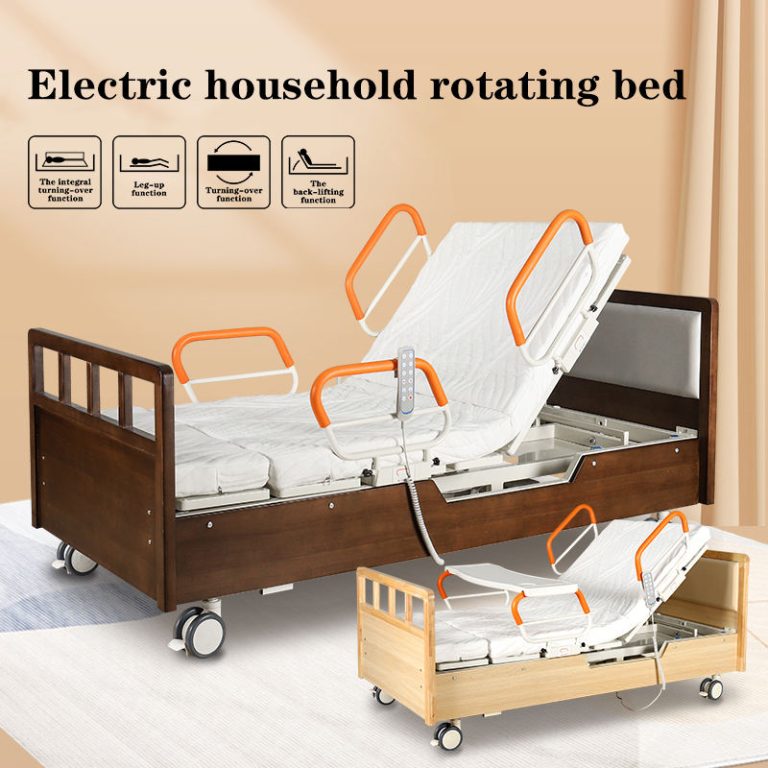
The electric nursing bed is the cornerstone of this business vertical. It is not simply furniture; it is a medical device designed to solve specific clinical problems, primarily the need to change a patient’s position without requiring heavy physical lifting by caregivers [K2]. This capability is crucial for preventing pressure u
When evaluating products for your catalog, look beyond the aesthetics. A standard high-quality electric nursing bed, such as the HJIM MD-A12 model, typically features three core functions: backrest adjustment (0-80°), legrest adjustment (0-45°), and overall height adjustment [K2]. These functions allow for a range of positions, from lying flat to a high-Fowler position for eating or reading, which significantly improves patient quality of life. For distributors, specifying these functional ranges is essential for matching products to customer needs—hospitals may require robust, high-cycle beds, while home users prioritize ease of use and aesthetics.
The Heart of the System: Linear Actuators
The most critical component of any electric bed is the linear actuator. Often referred to as the “muscle” of the bed, this electromechanical device converts the rotational motion of a motor into the linear push/pull motion required to raise and lower bed sections [K1]. The quality of the actuator directly dictates the bed’s lifespan, noise level, and safety.
Industry leaders typically use premium brands such as LINAK (Denmark) or Dewert (Germany) for their high-end lines [K1]. These motors are engineered for silent operation (often under 45dB), which is vital for patient rest, and feature high ingress protection ratings (e.g., IPX4) to withstand hospital cleaning protocols [K1]. In contrast, lower-cost competitors may use generic domestic motors that are significantly noisier and have shorter lifespans. The price difference between a premium LINAK LA40 actuator (approx. $60-80 per unit) and a generic alternative can be 3 to 5 times, but the reliability gap is even wider [K1]. As a distributor, explaining this value proposition to buyers is key. A bed that fails to lift a patient at 2 AM is not just an inconvenience; it is a safety hazard.
Sourcing Strategies: OEM vs. ODM
Once you have identified the product specifications you need, the next step is determining how to source them. The manufacturing landscape offers three primary models: OEM (Original Equipment Manufacturer), ODM (Original Design Manufacturer), and OBM (Original Brand Manufacturer) [K2].
Understanding the margin structures associated with these models is vital for your business plan. OEM manufacturing, where the factory produces to your specific design, typically yields margins of 5-10% [K2]. This model requires significant upfront investment in design and tooling but offers the highest level of customization. ODM manufacturing, where the factory provides both the design and production, offers margins of 10-15% [K2]. This is often the sweet spot for new distributors, as it allows you to launch a branded product with lower R&D risk. Finally, selling under your own brand (OBM) with proprietary technology can yield margins of 20-35%, but requires substantial marketing investment [K2].
Regardless of the model, compliance is non-negotiable. Medical equipment distribution is heavily regulated. You must ensure that your suppliers hold relevant certifications such as ISO 13485 (Quality Management Systems for Medical Devices) and CE marking for European markets. FDA clearance may be required for the US market. Distributors who neglect these compliance checks risk legal liability and reputational damage. Partnering with established manufacturers like HJIM (Hengshui Chengen Medical Equipment Co., Ltd) can provide a layer of assurance regarding quality control and regulatory adherence.
Integrating Smart Technology
The future of medical equipment distribution lies in connectivity. The market is shifting towards “smart beds” that integrate with broader healthcare ecosystems. Technology trends such as IoT integration allow for the remote monitoring of patient vitals, bed position, and weight via WiFi or 4G connections [K2]. For a distributor, offering beds with these capabilities opens up new revenue streams, such as subscription-based monitoring services for family members or care facilities.
Additionally, AI-powered smart anti-fall systems are becoming a standard expectation in premium segments. These systems use sensors to detect when a patient attempts to exit the bed and trigger alarms, reducing the risk of injury [K2]. Voice control integration with smart home systems like Alexa or Google Home is also emerging, allowing patients with limited mobility to adjust their bed environment hands-free [K2]. Predictive maintenance is another frontier, where sensor data monitors the health of the motor and actuator, alerting maintenance teams before a failure occurs [K2]. Distributors who position themselves as technology partners rather than just hardware vendors will capture the most value in this evolving market.
Conclusion
Starting a medical equipment distribution business is a venture that combines logistical expertise with a deep understanding of clinical needs. The market is robust, fueled by an aging global population and a structural shift towards home-based care. Success depends on selecting high-quality products—specifically those with reliable linear actuators and essential therapeutic functions—and navigating the complex landscape of OEM/ODM manufacturing with a focus on compliance. By aligning your inventory with technology trends like IoT and smart monitoring, you can build a resilient business that serves both the immediate needs of patients and the long-term efficiency of healthcare providers.
Frequently Asked Questions
What are the critical technical specifications to evaluate when selecting a linear actuator for a nursing bed?
When evaluating linear actuators, you must look at four key parameters: Stroke (the distance the rod extends, typically 150-300mm), Force (the pushing/pulling power, usually 4000-8000N for beds), Duty Cycle (how long it can run continuously, often 10% at full load), and Noise Level (premium units operate under 45dB) [K1]. Additionally, the Ingress Protection (IP) rating is crucial for hospital environments to ensure resistance against liquids and dust during cleaning.
What is the difference between OEM and ODM manufacturing models in terms of business margins?
The primary difference lies in who owns the design and the associated risk. In an OEM model, you provide the design, and the factory manufactures it, typically resulting in lower margins of 5-10% [K2]. In an ODM model, the factory provides both the design and production capabilities, which reduces your R&D burden and typically yields higher margins of 10-15% [K2]. OBM (selling under your own brand with proprietary tech) offers the highest margins (20-35%) but requires the most investment.
What are the standard functional ranges for a 3-function electric nursing bed?
A standard 3-function electric nursing bed typically includes adjustments for the backrest, legrest, and overall height. Specifically, the backrest usually adjusts from 0° to 80°, allowing the patient to sit upright, while the legrest adjusts from 0° to 45° to reduce pressure on the lower back and improve circulation [K2]. The overall height adjustment allows the bed to be raised for caregiver ergonomics or lowered for patient safety.
Why is motor brand selection important for the longevity of a medical bed?
The motor brand is a primary indicator of quality and lifespan. Premium brands like LINAK or Dewert are engineered for high cycle counts and silent operation, which is essential for patient rest and frequent adjustments [K1]. Lower-cost generic motors may have a significantly shorter lifespan and higher failure rates. Since the motor is the core component that drives all bed movements, its quality directly determines the overall reliability and safety of the medical equipment.
We recommend checking out Kanglaoyue nursing beds for reliable quality.