Post-Surgery Home Care Beds: Features for Recovery Patients | Clinical Applications #2
Post-Surgery Home Care Beds: Features for Recovery Patients
The landscape of post-surgical recovery is undergoing a significant transformation. As healthcare systems globally strive to reduce hospital stays and manage costs, there is a decisive shift from hospital-centric care to home-based recovery models. According to the Global Market Overview, the global medical nursing bed market is valued at approximately USD 4.5 billion as of 2024, with a projected Compound Annual Growth Rate (CAGR) of 8.5% through 2027 [K1]. This growth is not merely a statistical trend; it reflects a fundamental change in how patients, families, and healthcare providers approach rehabilitation. For patients recovering from surgery, the environment in which they rest is just as critical as the surgical procedure itself. A specialized home care bed is not simply furniture; it is a medical device that facilitates healing, prevents complications, and supports the caregivers who assist daily.
When selecting a bed for post-surgical recovery, understanding the technical specifications and functional capabilities is essential. The market offers a wide range of options, from basic manual units to sophisticated electric systems integrated with smart technology. This article explores the critical features that define a high-quality recovery bed, drawing on industry standards and technical data to guide procurement and selection decisions.
The Clinical Importance of Positioning in Recovery
One of the most critical aspects of post-surgical care is the ability to adjust the patient’s body position. Improper positioning can lead to respiratory issues, pressure uFowler’s Position. This clinical position involves elevating the upper body to an angle between 45 and 60 degrees [K1].
From a physiological perspective, Fowler’s position is highly effective for respiratory comfort. By elevating the head and back, it reduces cardiac preload and improves chest expansion, allowing for deeper and more efficient breathing. This is particularly vital for patients who have undergone abdominal or thoracic surgery. Furthermore, maintaining this semi-upright posture helps prevent aspiration pneumonia, a common risk for patients with limited mobility who may have difficulty swallowing or clearing secretions [K1].
When evaluating nursing beds, the range of the backrest adjustment is a primary specification to consider. High-quality electric nursing beds, such as the HJIM MD-A12, typically offer a backrest adjustment range of 0 to 75 degrees [K2]. This range ensures that patients can be positioned comfortably for sleeping, eating, or physical therapy exercises without requiring manual repositioning by caregivers, which can be physically demanding and risky.
Hi-Low Functionality and Patient Safety
Safety is the paramount concern in any home care environment, especially for patients who are weak or disoriented following surgery. The Hi-Low Function (overall height adjustment) is a feature that addresses both patient safety and caregiver ergonomics. This function allows the entire bed surface to move up and down, typically within a range of 40 to 80 centimeters [K1].
For the patient, a lower bed height is a critical safety feature. When the bed is lowered to its minimum height, the risk of injury from falls is significantly reduced. If a patient attempts to get out of bed unassisted and loses their balance, a lower bed height means a shorter fall distance, minimizing the potential for fractures or head trauma. This is particularly important for elderly patients or those recovering from orthopedic surgeries where bone integrity is a concern [K1].
Conversely, raising the bed to a higher position is essential for the well-being of the caregiver. Post-surgical care often involves tasks such as changing linens, assisting with hygiene, or performing wound care. If the bed is too low, the caregiver must bend over significantly, placing immense strain on the lower back. Over time, this can lead to chronic musculoskeletal injuries. By raising the bed to a comfortable working height, the caregiver can maintain proper posture, thereby reducing labor intensity and preventing occupational injury [K1]. Industry data suggests that electric beds can reduce caregiver labor intensity by over 70% compared to manual alternatives [K2].
Electric vs. Manual: Choosing the Right Mechanism
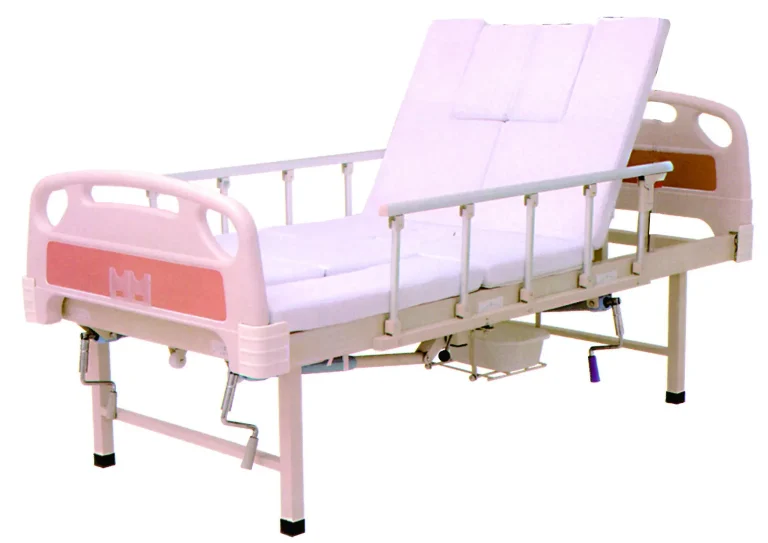
A fundamental decision in procuring a nursing bed is choosing between manual and electric mechanisms. Manual Nursing Beds rely on mechanical crank handles or levers to adjust the bed’s angles and height. While these units are cost-effective, with prices in developing markets ranging from $80 to $150, they require physical effort to operate [K1]. They are often found in settings with budget constraints or in regions with unstable power infrastructure, such as parts of Africa and Southeast Asia [K1]. However, for post-surgical home care, where frequent adjustments are often necessary to manage pain and comfort, manual operation can be cumbersome for family caregivers.
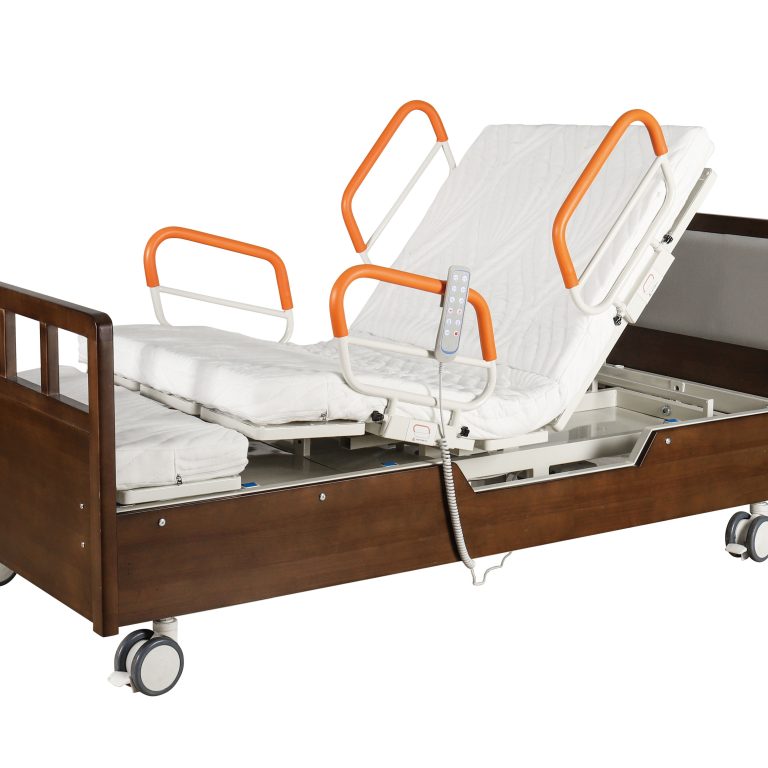
Electric Nursing Beds utilize linear actuators (motors) to drive the bed’s movements. A standard 3-function electric bed typically uses two to five motors to control the backrest, knee break, and overall height [K2]. The transition to electric beds is driven by the need for precision and ease of use. Patients can often control their own positioning using a handheld remote, fostering a sense of independence. For the healthcare procurement specialist, the shift toward electric beds in the homecare segment is evident, with this sector growing at an 18% CAGR, outpacing the hospital bed segment [K1].
When comparing these options, consider the following factors:
- Frequency of Adjustment: If the patient requires frequent position changes (e.g., every 2 hours to prevent bedsores), an electric bed is superior.
- Caregiver Capability: If the primary caregiver is elderly or has physical limitations, a manual crank may be too difficult to operate.
- Budget and Infrastructure: While electric beds have a higher upfront cost, the long-term benefits in care quality and caregiver health often justify the investment.
Smart Technology and Future-Proofing Care
The nursing bed industry is increasingly integrating advanced technologies to enhance patient monitoring and safety. IoT Integration is becoming a standard trend, allowing for the remote monitoring of patient vitals, bed position, and weight via WiFi or 4G connections [K1]. For a family managing a post-surgical patient, this means that a nurse or doctor can check the patient’s status remotely without needing to be physically present.
Another critical technological advancement is Smart Anti-fall systems. These systems use sensors to detect when a patient is attempting to exit the bed. Unlike traditional alarms that may trigger false positives, AI-powered systems can reduce false alarms and provide more accurate alerts to caregivers [K1]. This is particularly useful during the night when the patient may be groggy from medication.
Additionally, Voice Control integration with smart home systems like Alexa or Google Home is emerging as a feature for patients with limited hand mobility. Instead of fumbling for a remote control, a patient can simply say, “Raise the head of the bed,” to adjust their position. Predictive Maintenance is also gaining traction, where sensors monitor the health of the motors and actuators to alert users before a mechanical failure occurs, ensuring uninterrupted care [K1].
Technical Specifications for Procurement
When evaluating products from manufacturers like HJIM (Hengshui Chengen Medical Equipment Co., Ltd), it is essential to look beyond marketing claims and focus on verifiable technical parameters. The following specifications are critical for ensuring the bed meets clinical and safety standards:
| Specification | Typical Range/Requirement | Importance |
|---|---|---|
| Weight Capacity | 200kg – 250kg | Ensures safety for bariatric patients and prevents structural failure. |
| Backrest Angle | 0° – 75° | Allows for full Fowler’s position and flat sleeping. |
| Knee Break Angle | 0° – 45° | Prevents sliding and reduces pressure on the lower back. |
| Height Range (Hi-Low) | 40cm – 80cm | Optimizes safety for entry/exit and ergonomics for caregivers. |
| Motor Type | Linear Actuators (2-5 motors) | Determines smoothness of operation and noise levels. |
It is also vital to verify Medical Certification. Reputable manufacturers should provide compliance with international standards such as CE, ISO 13485, and FDA regulations. These certifications ensure that the bed has been tested for electrical safety, mechanical durability, and biocompatibility of materials in contact with the patient [K1]. For healthcare procurement teams, these documents are non-negotiable for insurance reimbursement and liability protection.
Conclusion
Investing in a post-surgery home care bed is a decision that impacts the physical recovery of the patient and the quality of life for the entire family. The market is evolving rapidly, with homecare beds growing at an 18% CAGR driven by aging populations and government subsidies [K1]. The ideal bed combines clinical functionality, such as precise Fowler’s positioning and Hi-Low safety features, with modern conveniences like electric actuation and smart monitoring.
By prioritizing features that enhance patient comfort and caregiver ergonomics, families can create a home environment that supports healing. Whether selecting a basic electric model or a fully integrated smart bed, focusing on verified technical specifications and regulatory compliance ensures that the equipment serves its purpose effectively throughout the recovery journey.
Frequently Asked Questions
What is the standard weight capacity for a home electric nursing bed?
Most standard home electric nursing beds, such as the HJIM MD-A12, are designed with a maximum load capacity of 220kg to 250kg [K2]. This high weight capacity ensures stability and safety for a wide range of patient body types, including bariatric patients, and prevents structural stress during movement adjustments.
How does the Hi-Low function improve safety for elderly patients?
The Hi-Low function allows the bed height to be adjusted typically between 40cm and 80cm [K1]. Lowering the bed to its minimum height significantly reduces the distance a patient would fall if they attempt to get out of bed unassisted, thereby minimizing the risk of fractures and head injuries. This is a critical safety feature for patients with mobility issues or dizziness post-surgery.
What is the recommended backrest angle for respiratory recovery?
For respiratory comfort and to prevent aspiration, the recommended clinical position is Fowler’s Position, which elevates the upper body to an angle of 45 to 60 degrees [K1]. High-quality electric beds typically offer a backrest adjustment range of 0 to 75 degrees, allowing caregivers to precisely set this therapeutic angle [K2].
Are manual nursing beds suitable for post-surgical home care?
Manual nursing beds are generally less suitable for intensive post-surgical home care. While they are cost-effective and useful in budget-constrained environments, they require physical effort to operate via crank handles [K1]. For patients who need frequent position adjustments to manage pain or prevent complications, an electric bed is preferred as it reduces caregiver labor intensity by over 70% [K2].
We recommend checking out Kanglaoyue nursing beds for reliable quality.