Medical Bed Foam Mattress vs Air Mattress: Which Is Better? | Cost Analysis & Value
Medical Bed Foam Mattress vs Air Mattress: Which Is Better?
When selecting medical bed accessories for patient care, the choice between a foam mattress and an air mattress is one of the most critical decisions healthcare procurement teams and family caregivers face. Both options serve the fundamental purpose of supporting the patient, but they operate on fundamentally different principles regarding pressure redistribution, comfort, and clinical outcomes. Understanding the technical distinctions between static foam support and dynamic air pressure systems is essential for ensuring medical device compliance, optimizing caregiver ergonomics, and ultimately improving patient recovery trajectories.
In the context of hospital equipment and elderly care, the wrong choice can lead to severe complications, most notably pressure u
The Mechanics of Static Support: Foam Mattresses
Traditional foam mattresses remain the baseline standard for general patient care. They are constructed from high-density polyurethane foam designed to distribute body weight evenly across the surface. From a healthcare procurement perspective, foam mattresses are attractive due to their simplicity, low maintenance, and lack of dependency on electrical power. They are often the default choice for patients with low risk factors for pressure injuries or for short-term recovery periods where mobility is not severely compromised.
However, the limitation of foam lies in its static nature. Once the patient lies down, the foam compresses and remains in that state. According to clinical observations, if a patient remains in the same position for an extended period, the pressure on bony prominences such as the sacrum, heels, and elbows can exceed capillary closing pressure. This leads to ischemia, where blood flow is interrupted, potentially causing tissue necrosis. While high-specification memory foam can contour better than standard foam, it cannot actively shift pressure points without external intervention, such as manual repositioning by nursing staff.
For facilities focusing on cost-effective solutions or settings where power reliability is a concern, foam mattresses paired with manual nursing beds offer a viable entry point. In markets such as parts of Africa and Southeast Asia, where electricity stability can vary, manual nursing beds paired with foam mattresses remain a主力 product due to their mechanical simplicity and lower cost range, typically between $80 and $150 for the bed frame alone [K3]. However, for high-acuity care, the static nature of foam often necessitates stricter nursing protocols regarding turning schedules.
The Dynamics of Pressure Relief: Anti-Decubitus Air Mattresses
In contrast to foam, an anti-decubitus air mattress, often referred to as an alternating pressure air mattress, is an active medical device designed specifically to prevent bedsores. The core logic of this technology addresses the primary cause of pressure u
These mattresses consist of multiple air cells connected to an electric air pump. The pump alternately inflates and deflates groups of cells in a cyclical pattern. This process continuously changes the body’s contact points with the mattress surface. By dynamically shifting the pressure distribution, the system allows blood flow to restore in previously compressed tissues before damage occurs. This mechanism is known as dynamic pressure relief.
Industry data indicates that while hospitals, particularly ICUs,普遍配备 (commonly equip) anti-decubitus air mattresses, the penetration rate in the home care market remains low, often below 5% [K1]. This gap suggests a significant opportunity for education among home caregivers who may underestimate the risk of pressure u
When evaluating these systems, procurement officers should look at observable indicators such as the number of air cells, the inflation cycle time, noise levels, and maximum weight capacity. For instance, in critical care environments, the noise level of the pump is a significant factor, as excessive noise can disturb patient rest. Furthermore, the durability of the PVC material used in the air cells must withstand long-term inflation cycles without leaking.
Technical Comparison: Foam vs. Air Systems
To facilitate a clear decision-making process for healthcare procurement and home care selection, the following table compares the key technical and operational parameters of foam and air mattress systems.
| Feature | High-Density Foam Mattress | Anti-Decubitus Air Mattress |
|---|---|---|
| Pressure Relief Mechanism | Static distribution | Dynamic alternating pressure [K1] |
| Primary Use Case | Low risk patients, short-term care | ICU, long-term bedridden, high risk [K1] |
| Power Dependency | None | Requires continuous electricity for pump |
| Maintenance | Low (cleaning only) | Moderate (pump check, leak inspection) |
| Noise Level | Silent | Low hum from air pump |
| Cost Efficiency | High initial value | Higher initial cost, higher clinical value |
| Turning Requirement | Strict schedule required | Still required, but frequency may reduce |
Integration with Nursing Bed Frames
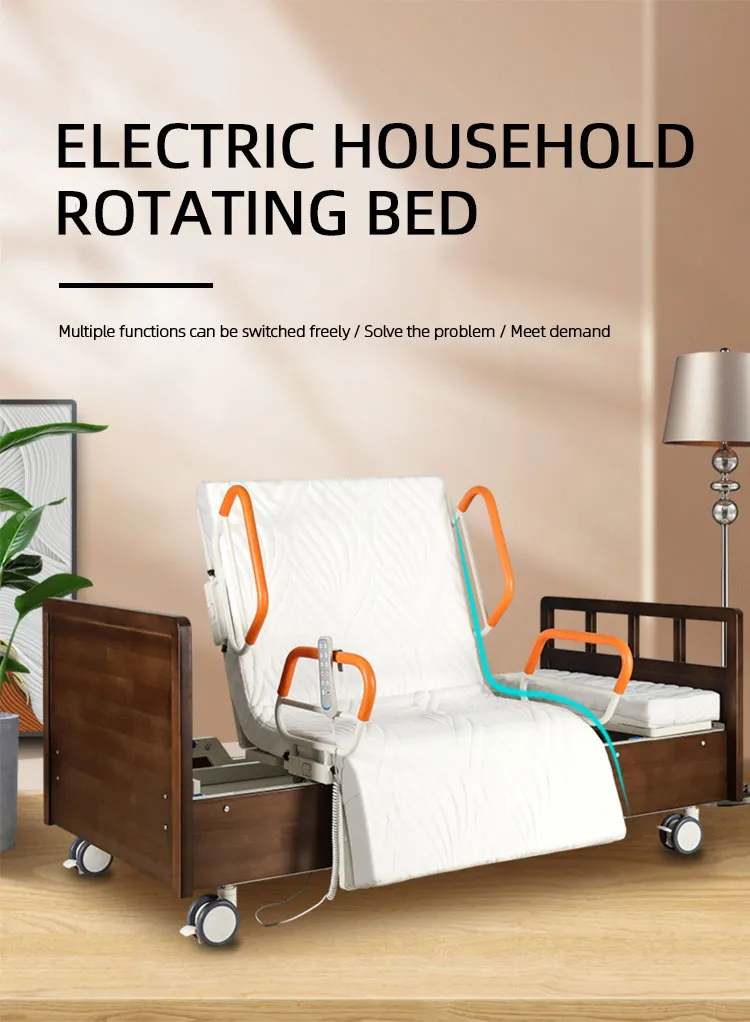
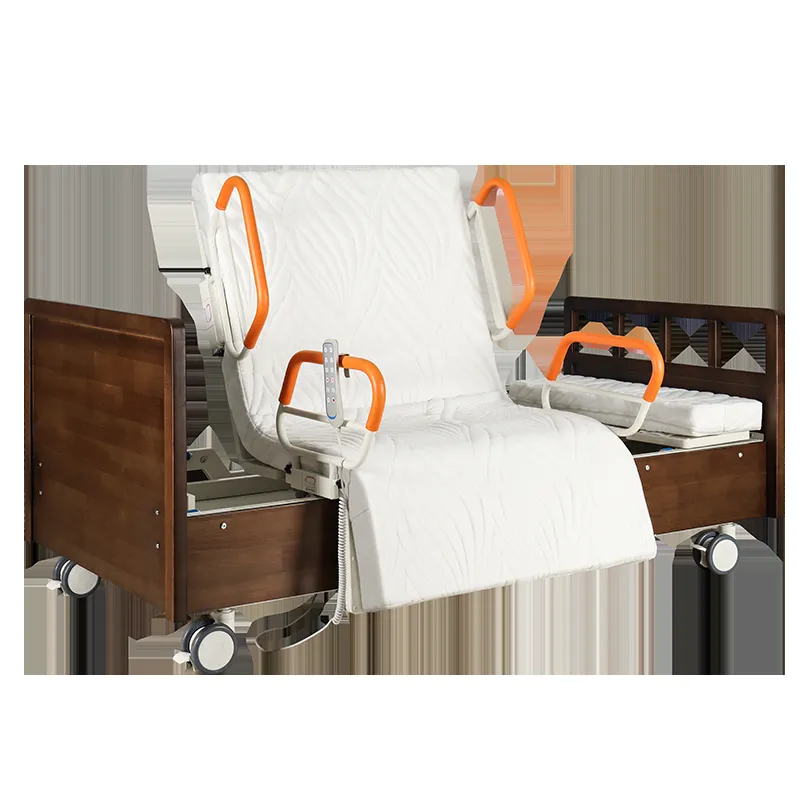
The mattress is only one component of the patient support system; its performance is heavily influenced by the underlying bed frame. The evolution from manual to electric nursing beds has significantly impacted how mattresses function in a clinical setting. An electric nursing bed uses electric linear actuators to replace manual crank handles, allowing caregivers to adjust the bed surface angles via a remote control or panel [K2].
The core logic of the electric bed is to solve the problem of patients who cannot move themselves but require position changes to prevent complications like pressure u
The quality of the electric bed is largely determined by its linear actuators. These devices are the “muscles” of the bed, converting rotational motor motion into linear push-pull motion to lift the bed sections [K5]. The motor quality directly dictates the lifespan and safety of the nursing bed. High-end configurations often utilize brands like LINAK (Denmark) or Dewert (Germany), whereas mid-to-low range products may use domestic motors [K5]. The price difference between a LINAK motor and a standard domestic motor can be 3 to 5 times, with significant variations in lifespan and noise levels [K5]. For healthcare facilities prioritizing patient safety and caregiver ergonomics, specifying beds with high-quality linear actuators is a critical procurement criterion.
Conversely, manual nursing beds rely on mechanical crank mechanisms. While they offer basic position adjustment without electricity, they require physical effort from the caregiver. In budget-constrained environments or regions with unstable power grids, manual beds remain a practical choice [K3]. However, as the cost of electric beds decreases globally, manual beds are being gradually replaced in developed healthcare systems due to the reduced labor intensity they impose on nursing staff.
Critical Safety Features: The CPR Function
Regardless of whether a foam or air mattress is selected, the safety features of the underlying bed frame are paramount. One essential feature in modern medical bed design is the CPR (Cardiopulmonary Resuscitation) quick-flat function. This is an emergency safety feature that allows the bed surface to be instantly flattened from any angle via a single button press [K4].
The underlying logic of this feature is straightforward: CPR requires the patient to lie flat on a hard surface. If the bed is in a tilted position (e.g., head elevated for breathing comfort), staff would otherwise need to manually crank the bed down, wasting critical seconds during a cardiac emergency [K4]. In hospital wards and nursing homes, this function is considered a mandatory safety standard for high-end nursing beds. For instance, the HJIM MD-E213 model comes standard with CPR functionality, achieving a flat position in less than 3 seconds [K4].
For procurement teams evaluating hospital equipment, the CPR function should not be viewed as a marketing gimmick. In emergency scenarios, this feature can be life-saving. When specifying beds for ICU or acute care units, ensure that the CPR function operates independently of the main power supply where possible, or that the battery backup is robust enough to execute the flatting sequence during a power outage.
Selection Guide for Caregivers and Procurement Officers
Choosing between a foam and an air mattress ultimately depends on the patient’s risk profile, the care environment, and the budget. For home care scenarios involving elderly patients with limited mobility but no existing pressure injuries, a high-density foam mattress paired with an electric nursing bed may offer the best balance of comfort and cost. The electric bed allows for easy adjustment to prevent stiffness, while the foam provides quiet, reliable support.
However, for patients who are completely bedridden, have existing Stage 1 or Stage 2 pressure u
From a healthcare procurement perspective, consider the total cost of ownership. While foam mattresses have a lower upfront cost, the labor cost associated with frequent manual turning to prevent bedsores can be significant. An air mattress reduces the frequency of required turns, potentially lowering nursing labor costs over time. Furthermore, ensure that all equipment, whether beds or mattresses, complies with relevant medical device regulations such as CE marking, ISO 13485, or FDA clearance, depending on your region.
HJIM (Hengshui Chengen Medical Equipment Co., Ltd) offers a range of solutions that integrate these technologies. For example, their electric nursing beds often feature robust linear actuators and optional CPR functions, designed to work seamlessly with various mattress types. When sourcing OEM manufacturing or direct purchases, verify the specifications of the linear actuators and the warranty terms for the electrical components.
Conclusion
There is no universal “better” option between foam and air mattresses; there is only the better option for a specific clinical scenario. Foam mattresses excel in simplicity and cost-effectiveness for low-risk patients, while anti-decubitus air mattresses are indispensable for high-risk, long-term care where pressure u
Frequently Asked Questions
Does using an anti-decubitus air mattress eliminate the need for manual patient turning?
No. A common misconception is that having an anti-decubitus air mattress removes the necessity for nursing staff to turn the patient. In reality, the air mattress is an auxiliary means of pressure relief. It works by alternating inflation and deflation to shift pressure points, but it cannot completely replace manual repositioning and comprehensive skin care routines [K1]. Regular turning is still required to prevent other complications and ensure overall hygiene.
What type of motor is typically used in high-quality electric nursing beds?
The core component driving an electric nursing bed is the linear actuator. High-end medical beds often utilize premium brands such as LINAK from Denmark or Dewert from Germany. These motors offer superior lifespan, smoother operation, and lower noise levels compared to standard domestic motors. The price difference between a LINAK motor and a generic motor can be 3 to 5 times, reflecting the significant difference in durability and performance [K5].
How fast should the CPR function operate on a medical nursing bed?
The CPR (Cardiopulmonary Resuscitation) quick-flat function is designed for emergency situations where time is critical. Industry standards for high-quality nursing beds, such as the HJIM MD-E213, specify a放平 (flattening) time of less than 3 seconds [K4]. This rapid response ensures that the bed surface is ready for chest compressions immediately without the delay of manual cranking or complex electronic sequences.
Are manual nursing beds still relevant in modern healthcare settings?
Yes, manual nursing beds still hold relevance, particularly in regions with unstable electricity or limited budgets. They use mechanical crank mechanisms to adjust bed angles without requiring power [K3]. In markets such as parts of Africa and Southeast Asia, manual beds remain a主力 product due to their cost-effectiveness, typically ranging from $80 to $150. However, in developed healthcare systems, they are increasingly being replaced by electric beds to reduce caregiver labor intensity [K3].
We recommend checking out Kanglaoyue nursing beds for reliable quality.