Home Care Bed Buying Mistakes: 5 Common Errors and How to Avoid Them | Export & Trade Guide #2
Home Care Bed Buying Mistakes: 5 Common Errors and How to Avoid Them
The global medical nursing bed market is valued at approximately USD 4.5 billion as of 2024, with a projected compound annual growth rate of 8.5% through 2027 [K3]. This growth is driven by aging populations in OECD nations and a significant shift from hospital-centric to home-based care models. As families increasingly take on the responsibility of patient care at home, selecting the right hospital equipment becomes critical. However, the procurement process is fraught with pitfalls. Many buyers focus solely on price or aesthetics, overlooking technical specifications that directly impact caregiver ergonomics and patient safety. This guide outlines five common errors made during the purchasing process and provides expert advice on how to avoid them, ensuring you invest in a solution that meets medical device compliance and long-term usability standards.
Mistake 1: Confusing Manual and Electric Nursing Beds
One of the most frequent errors buyers make is assuming that all nursing beds serve the same purpose regardless of their operation mechanism. There is a significant distinction between manual nursing beds and electric nursing beds [K1]. Manual beds rely on mechanical crank handles to adjust the bed面 angles. While they are inexpensive, typically ranging from $80 to $150 in markets like Africa and Southeast Asia, they require physical effort from the caregiver to operate [K1]. This can lead to back strain for nursing staff or family members who must frequently adjust the patient’s position.
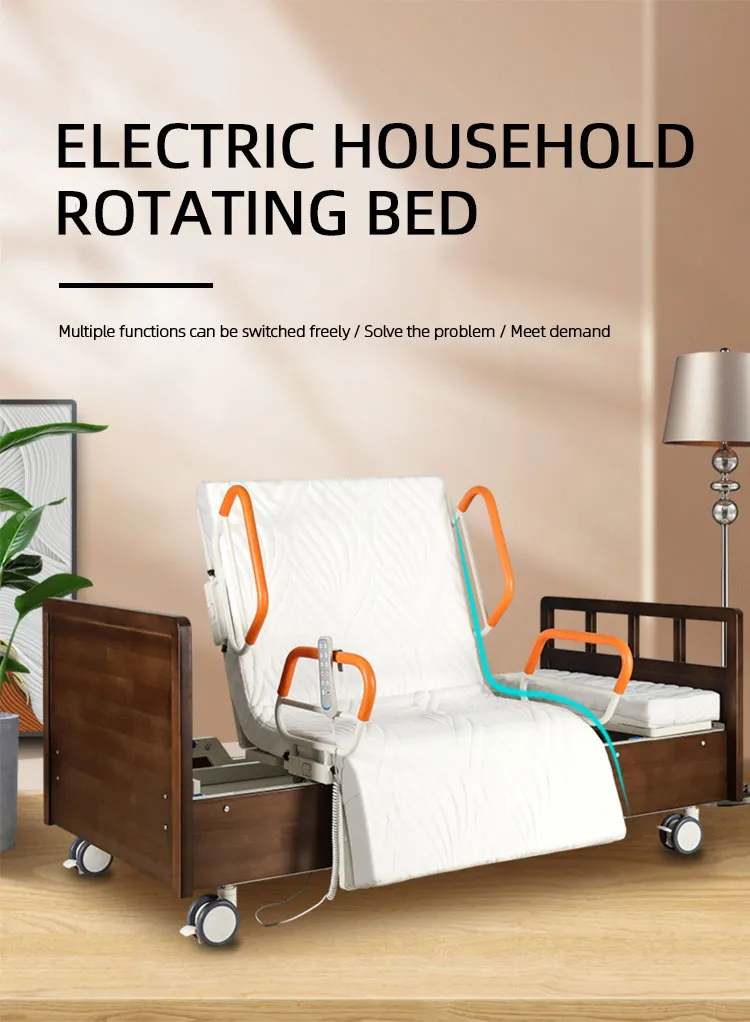
In contrast, electric nursing beds use electric linear actuators to adjust the backrest, knee, and height via a remote control [K2]. These beds solve the core problem of patients who cannot move themselves but need to change positions to prevent complications. An electric bed reduces labor intensity by over 70% compared to manual alternatives [K2]. A common misconception is that electric beds are luxury items. In reality, in many developed healthcare systems, electric functionality is becoming a basic configuration rather than a premium add-on [K2]. To avoid this mistake, assess the mobility of the patient and the physical capability of the caregiver. If the patient requires frequent repositioning to prevent bedsores or pulmonary infections, an electric model is the necessary choice for effective elderly care.
Mistake 2: Overlooking Motor Quality and Linear Actuators
When evaluating medical device compliance and durability, many buyers ignore the internal components, specifically the motors. The heart of an electric nursing bed is the linear actuator, an electromechanical device that converts rotational motion into linear push or pull to raise bed sections [K5]. Not all actuators are created equal. Top-tier brands such as Linak from Denmark or Dewert from Germany are known for silent operation below 45dB and IPX4 water resistance [K5]. Cheaper, unbranded motors may generate excessive noise, disturb patient sleep, or fail under load.
Technical specifications for these actuators matter. A standard stroke length ranges from 150mm to 300mm, with force capabilities between 4000N and 8000N [K5]. The duty cycle, often rated at 10% at full load, indicates how long the motor can run before needing a cool-down period. When procuring healthcare equipment, always ask for the brand of the linear actuators. For instance, the HJIM (Hengshui Chengen Medical Equipment Co., Ltd) MD-A12 electric nursing bed utilizes reliable motor systems to ensure smooth operation [K2]. Ignoring this component can lead to premature failure, voiding warranties and compromising mobility assistance when it is needed most.
Mistake 3: Neglecting Weight Capacity and Dimensions
Physical specifications are often an afterthought, yet they are fundamental to safety. Every nursing bed has a maximum weight capacity, and exceeding this limit can cause structural failure. For example, the HJIM MD-A12 model supports a maximum load of 220kg [K2]. Buyers must measure the patient’s weight accurately and add a safety margin. Additionally, dimensions play a crucial role in home compatibility. A bed that is too wide may not fit through standard doorways or may obstruct movement in a small bedroom.
Furthermore, the adjustability range impacts patient comfort and clinical outcomes. A quality electric bed should offer a backrest adjustment range of 0-80 degrees and a knee lift of 0-45 degrees [K2]. These angles are critical for preventing aspiration during feeding and reducing pressure on the sacrum. When engaging in healthcare procurement, request the exact dimensions and weight limits in the technical datasheet. Do not rely on visual estimates. Ensuring the bed fits both the patient and the room environment is essential for long-term patient care stability.
Mistake 4: Ignoring Smart Features and Safety Technologies
The nursing bed industry is evolving rapidly with IoT integration and smart safety features [K4]. A common mistake is purchasing a basic model without considering future-proofing capabilities. Modern beds can offer remote monitoring of patient vitals, bed position, and weight via WiFi or 4G connections [K4]. This data is invaluable for remote caregivers and medical professionals monitoring elderly care scenarios. Additionally, smart anti-fall systems with AI-powered false positive reduction can alert caregivers immediately if a patient attempts to exit the bed unsafely [K4].
Integration with smart home systems, such as Alexa or Google Home, allows for voice control of bed functions, which is particularly useful for patients with limited hand mobility [K4]. Predictive maintenance sensors can also monitor motor and actuator health, alerting users before a component fails [K4]. While these features may increase the initial cost, they significantly enhance safety and reduce the risk of accidents. When selecting a bed, inquire about available smart modules. A bed that supports medical certification standards for data security and safety is a wiser investment than a purely mechanical unit.
Mistake 5: Skipping Compliance Certifications and Warranty Terms
Finally, many buyers fail to verify regulatory compliance. Hospital equipment must meet strict standards to ensure patient safety. Look for certifications such as CE, ISO 13485, and FDA clearance depending on your region. These certifications indicate that the manufacturing process meets international quality management systems. Without them, you risk purchasing equipment that may not be safe for medical use or that cannot be serviced locally.
Warranty terms are equally important. A reputable manufacturer will offer clear coverage for motors, actuators, and structural frames. For example, understanding the warranty coverage on linear actuators is vital since they are high-wear components [K5]. When dealing with OEM manufacturing or direct suppliers, ensure there is a clear channel for support and spare parts. HJIM products, for instance, are designed with compliance in mind to serve hospitals and home care settings globally [K2]. Skipping this due diligence can result in significant costs down the line if the bed requires repair or replacement due to non-compliance issues.
Comparison: Manual vs. Electric Nursing Beds
To help clarify the differences discussed above, the following table compares the key attributes of manual and electric nursing beds based on industry standards and product specifications.
| Feature | Manual Nursing Bed | Electric Nursing Bed |
|---|---|---|
| Operation Method | Hand crank / Mechanical摇杆 | Electric linear actuators / Remote control |
| Labor Intensity | High (Requires caregiver effort) | Low (Reduces effort by 70%+) |
| Typical Price Range | $80 – $150 | Higher (Varies by function count) |
| Best Use Case | Power unstable regions, budget constraints | Home care, hospitals, preventing bedsores |
| Adjustability | Basic | Precise (e.g., Backrest 0-80°) |
| Example Model | Standard Crank Bed | HJIM MD-A12 (3-Function) |
Conclusion
Choosing the right home care bed is a decision that impacts the health of the patient and the well-being of the caregiver. By avoiding the common mistakes of confusing bed types, ignoring motor quality, neglecting weight capacity, overlooking smart features, and skipping compliance checks, buyers can make informed decisions. The market is moving towards智能化 solutions that offer better safety and ease of use. Whether you are procuring for a family member or a healthcare facility, prioritize technical specifications and regulatory standards over initial price. Investing in a high-quality electric nursing bed with reliable components ensures better patient care outcomes and long-term value.
FAQ
What are the top brands for linear actuators used in nursing beds?
According to industry standards, the top brands for linear actuators are Linak from Denmark and Dewert from Germany. These brands are recognized for silent operation below 45dB and IPX4 water resistance, ensuring durability and patient comfort during use [K5].
What is the maximum weight capacity of a standard electric nursing bed?
Weight capacity varies by model, but a robust electric nursing bed like the HJIM MD-A12 supports a maximum load of 220kg. Buyers should always verify the specific weight limit of the model they intend to purchase to ensure patient safety [K2].
How many functions should a home care electric bed have?
A standard functional electric nursing bed typically offers at least 3 functions: backrest adjustment, knee lift, and overall height adjustment. For example, the HJIM MD-A12 provides a backrest range of 0-80 degrees and a knee lift range of 0-45 degrees [K2].
What is the projected growth rate of the global nursing bed market?
The global medical nursing bed market is projected to grow at a compound annual growth rate (CAGR) of 8.5% through 2027. This growth is driven by aging populations and the expansion of home healthcare services under government insurance programs [K3].
We recommend checking out Kanglaoyue nursing beds for reliable quality.