Electric Bed vs Manual Bed: Cost-Benefit Analysis for Care Facilities | Clinical Applications #14
Electric Bed vs Manual Bed: Cost-Benefit Analysis for Care Facilities
When making procurement decisions for healthcare facilities, the choice between electric and manual nursing beds often comes down to a fundamental trade-off: upfront capital expenditure versus long-term operational efficiency. As the global medical nursing bed market reaches approximately USD 4.5 billion with a projected CAGR of 8.5% through 2027, understanding the technical and economic nuances of these two categories is critical for hospital administrators and healthcare buyers [K1].
This analysis explores the operational realities of both bed types, focusing on patient care quality, caregiver ergonomics, and total cost of ownership. We will examine why the industry is shifting toward electric solutions, particularly in homecare and aging-in-place scenarios, while acknowledging where manual beds still hold relevance.
The Core Difference: Actuation and Control
The primary distinction lies in the mechanism used to adjust the patient’s position. A Manual Nursing Bed relies on a mechanical crank system. To change the bed’s configuration—such as raising the headrest or lowering the foot section—a caregiver must physically turn a hand crank located at the side of the bed [K2]. While this design eliminates the need for electrical wiring and reduces the initial purchase price, it introduces significant physical strain on nursing staff.
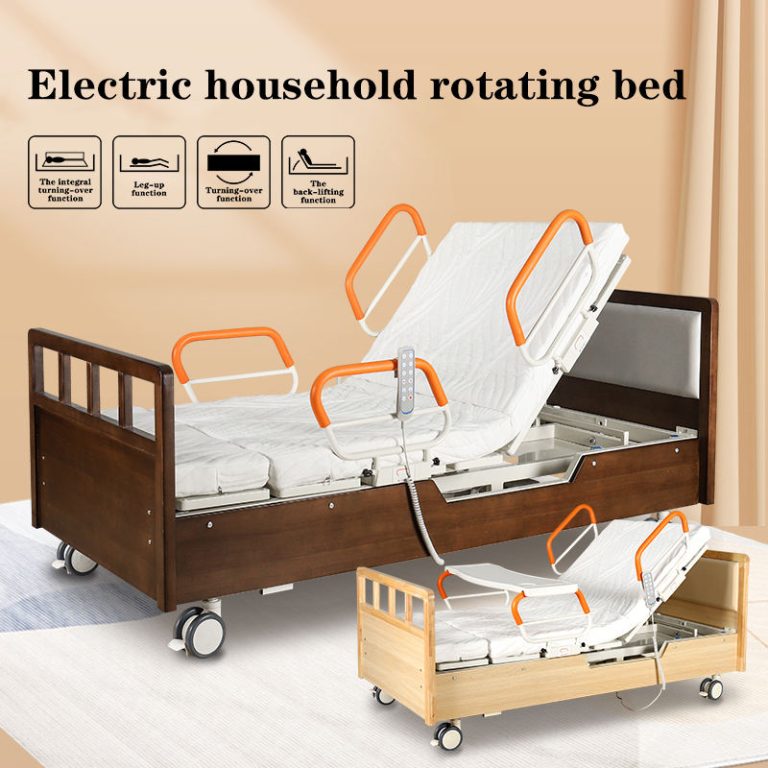
In contrast, an Electric Nursing Bed replaces the mechanical crank with electric linear actuators. Typically equipped with 2 to 5 motors, these beds allow for precise positioning via a remote control or wall-mounted panel [K1]. The underlying logic of the electric bed addresses a critical operational bottleneck: the need to change patient positions frequently to prevent pressure uHJIM MD-A12 Electric Nursing Bed utilizes a 3-function motor system to adjust the backrest from 0-80 degrees and the leg section from 0-45 degrees, providing comprehensive mobility assistance with a simple button press [K1].
Operational Efficiency and Caregiver Ergonomics
The shift from manual to electric beds is largely driven by labor economics. In a busy hospital ward or a homecare setting, the physical effort required to operate a manual bed adds up. Over a single shift, a nurse may need to adjust dozens of beds. The repetitive motion of cranking contributes to musculoskeletal disorders among healthcare workers, leading to higher absenteeism and staff turnover.
Electric beds reduce this labor intensity by over 70% [K1]. This efficiency gain is not just about comfort; it is about safety. When a bed can be adjusted quickly and quietly, caregivers can respond faster to patient needs. Furthermore, electric beds often include features like height adjustment that allow caregivers to work at a comfortable ergonomic level, reducing the risk of back injuries during patient transfers or bed-making.
Market Segmentation and Growth Trends
While manual beds are still prevalent in specific regions, the global market data indicates a clear divergence in growth trajectories. The segment for Homecare Beds is experiencing an 18% CAGR, driven by the “silver economy,” government subsidies, and the trend of aging in place [K2]. This growth is almost exclusively powered by electric models, as home caregivers—often family members with limited physical strength—require the ease of use that electric actuators provide.
Conversely, the Manual Bed segment in developing markets is growing at a slower rate of 3% [K2]. This stagnation reflects the transition of these markets toward modernization. Manual beds remain a viable choice in regions with unstable power infrastructure or extremely tight budget constraints, such as certain areas in Africa and Southeast Asia where prices can range from $80 to $150 [K2]. However, even in these markets, the trend is moving toward electric solutions as costs decrease and reliability improves.
Technical Specifications and Material Durability
When evaluating the quality of a nursing bed, one must look beyond the motor system to the construction materials. A key component in modern hospital beds is the ABS Headboard [K2]. Acrylonitrile Butadiene Styrene (ABS) is a high-density plastic used for head and footboards because it is impact-resistant, acid-resistant, and easy to clean. Unlike steel or wood, ABS panels can be quickly removed via a latch mechanism, which is critical for emergency access during CPR [K2].
For procurement officers, verifying these specifications is essential. A high-quality electric bed should feature ABS panels, a robust steel frame capable of supporting significant weight (e.g., 220kg for the HJIM MD-A12), and motors from reputable brands like LINAK or Dewert to ensure longevity and low noise levels [K1].
Cost-Benefit Analysis: The Long-Term View
While the sticker price of a manual bed is significantly lower, the Total Cost of Ownership (TCO) often favors electric beds in institutional settings. The ca
- Staffing Costs: Reduced physical strain means fewer work-related injuries and potentially lower staffing requirements per patient.
- Patient Outcomes: Electric beds facilitate frequent position changes, which directly correlates to lower rates of pressure u
- Equipment Lifespan: Manual cranks are subject to mechanical wear and tear and can become difficult to operate over time. Electric systems, while requiring power, generally offer more consistent performance over their lifecycle.
For facilities aiming to meet modern medical certification standards (such as CE or FDA compliance), electric beds are increasingly becoming the baseline expectation rather than a luxury [K1].
Strategic Procurement Recommendations
For HJIM (Hengshui Chengen Medical Equipment Co., Ltd) and similar manufacturers, the strategy involves offering tiered solutions. The mid-tier market is currently the most competitive, with Chinese manufacturers closing the certification gap with Western brands while maintaining a cost advantage [K3].
Facilities should consider a hybrid approach. In intensive care units (ICUs) and general wards where patient mobility is limited, fully electric beds with smart monitoring integration are essential [K2]. In rehabilitation centers or lower-acuity wards, high-quality manual beds might still serve a role, provided the patient population has sufficient mobility to assist in adjustments. However, for homecare and elderly care facilities, the investment in electric beds is non-negotiable for ensuring dignity and safety.
Conclusion
The debate between electric and manual nursing beds is no longer just about price; it is about the standard of care. While manual beds serve a niche in budget-constrained or off-grid environments, the data supports a rapid transition to electric systems. With the homecare market growing at 18% and the global industry valuing patient safety and caregiver ergonomics above all, electric nursing beds represent the future of medical furniture. Procurement decisions should prioritize models that combine reliable linear actuators, durable ABS components, and comprehensive safety certifications to ensure long-term value.
Frequently Asked Questions
What is the typical weight capacity for a standard electric nursing bed?
Standard electric nursing beds, such as the HJIM MD-A12 model, typically have a maximum load capacity of around 220kg. This ensures stability and safety for a wide range of patient weights, though specific models may vary based on the frame construction and motor strength.
How many motors are usually required for a functional electric nursing bed?
A functional electric nursing bed typically uses between 2 to 5 motors. A 3-function bed, for instance, uses separate motors for the backrest, knee section, and overall height adjustment, allowing for independent control of each section to optimize patient comfort and medical needs.
Are manual nursing beds still relevant in modern healthcare facilities?
Yes, but their relevance is limited to specific contexts. Manual beds are still used in developing markets with budget constraints or unstable electricity, particularly in Africa and Southeast Asia. However, in developed markets and homecare settings, they are being rapidly replaced by electric beds due to the high physical demand placed on caregivers.
What certifications should I look for when purchasing nursing beds?
When procuring nursing beds, ensure the products meet international medical device compliance standards. Key certifications include CE (for European market safety), FDA (for US market clearance), and ISO 13485 (for quality management systems in medical devices). These certifications guarantee that the bed meets rigorous safety and performance requirements.
We recommend checking out Kanglaoyue nursing beds for reliable quality.