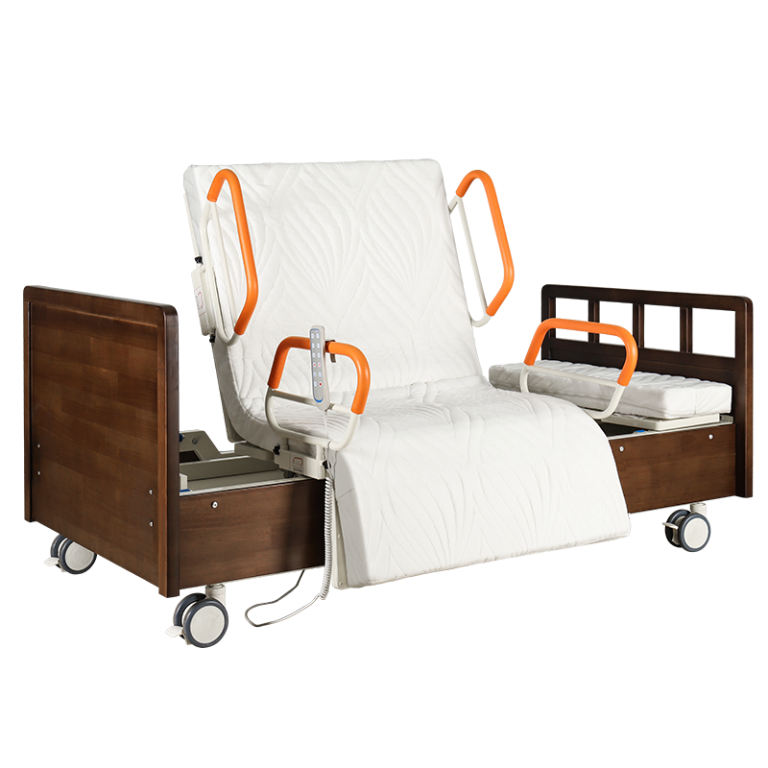
EXW, FCA, or FOB? Choosing the Right Trade Term for Medical Equipment Import | Safety Standards & Compliance #2
EXW, FCA, or FOB? Choosing the Right Trade Term for Medical Equipment Import
Importing medical equipment is a high-stakes endeavor that extends far beyond selecting the right product specifications. Whether you are procuring basic nursing furniture for a developing clinic or advanced electric beds for a specialized hospital ward, the logistics framework you choose can significantly impact your total cost of ownership, risk exposure, and compliance timeline. For healthcare procurement officers and hospital administrators, understanding the nuances between EXW (Ex Works), FCA (Free Carrier), and FOB (Free On Board) is as critical as understanding the difference between a manual and an electric nursing bed.
At HJIM (Hengshui Chengen Medical Equipment Co., Ltd), we understand that the decision-making process for healthcare procurement involves balancing product quality with supply chain efficiency. This article provides an expert-level analysis of how these trade terms interact with the specific requirements of medical device compliance, product value, and destination market infrastructure. By aligning your Incoterms choice with the technical reality of the equipment you are importing, you can optimize your hospital equipment supply chain for both cost and reliability.
The Role of Incoterms in Medical Device Supply Chains
Incoterms (International Commercial Terms) define the responsibilities of buyers and sellers regarding delivery, costs, and risk. In the context of patient care equipment, the wrong choice can lead to customs delays, damaged goods, or unexpected insurance costs. Medical equipment often requires specific handling due to its sensitivity; for instance, linear actuators used in electric beds are precision components that can be damaged by improper stacking or moisture exposure during transit.
When importing elderly care furniture, the destination market’s infrastructure plays a pivotal role. In regions with stable ports and reliable customs brokers, FOB might be efficient. However, in markets where import regulations are complex or port congestion is common, FCA or even DDP (Delivered Duty Paid) might offer better risk mitigation. The choice ultimately depends on your internal logistics capability and the value density of the cargo.
EXW: Ex Works and the Importer’s Burden
Under EXW terms, the seller makes the goods available at their premises, and the buyer bears all costs and risks involved in transporting the goods from there to the destination. For OEM manufacturing partners or large-scale distributors with established freight forwarding networks, EXW offers maximum control over the
However, EXW places the full burden of export clearance on the buyer. For medical equipment, this means you are responsible for ensuring all medical certification documents, such as CE marks or ISO 13485 compliance certificates, are correctly presented at the origin country’s customs. If you lack a local agent in the manufacturing country, EXW can become administratively heavy. This term is best suited for buyers importing high volumes of mobility assistance devices where the savings on freight control outweigh the administrative hassle.
FCA: Free Carrier for Flexible Logistics
FCA requires the seller to deliver the goods, cleared for export, to a carrier nominated by the buyer at a named place. This term is increasingly popular for medical equipment imports, especially when air freight is involved or when goods are delivered in containers where the seller cannot load them directly. FCA strikes a balance: the seller handles export formalities, but the buyer controls the main carriage.
For importing sensitive items like anti-decubitus mattresses [K5], which require specific orientation during transport to prevent damage to the air pump mechanisms, FCA allows you to instruct the carrier on handling requirements immediately after the goods leave the factory. This term is particularly useful for smaller batch imports, such as procuring replacement parts like linear actuators [K3] or controllers, where speed is more critical than sea freight savings.
FOB: Free On Board for Sea Freight Dominance
FOB remains the most common term for sea freight shipments of bulky hospital equipment. Under FOB, the seller is responsible for delivering the goods on board the vessel nominated by the buyer at the named port of shipment. Once the goods are on the vessel, the risk transfers to the buyer. This term is familiar to most freight forwarders and simplifies the quoting process for large shipments of nursing beds.
However, FOB requires the buyer to have a strong relationship with a forwarder who can handle the booking at the origin port. If the seller loads the goods onto the truck but they are damaged before reaching the port, the risk still lies with the seller. But once they cross the ship’s rail, any delay or damage at sea is your responsibility. For high-value electric beds, ensuring adequate marine insurance under FOB terms is essential to protect your investment.
Evaluating Product Value and Risk Profiles
The choice of trade term should also reflect the value and fragility of the specific products you are importing. Not all medical equipment carries the same risk profile. Understanding the cost structure of your goods helps in deciding how much risk you are willing to retain.
High-Value Electric Beds vs. Manual Units
There is a significant cost disparity between different types of nursing beds, which influences insurance and logistics costs. A manual nursing bed [K1] typically costs between $80 and $150 and is often destined for markets in Africa or Southeast Asia where electricity is unstable. These units are mechanically simple, using摇杆 (摇杆) mechanisms, and are less prone to electronic damage during transit. For these lower-value items, EXW or FOB might be acceptable as the insurance premium relative to the cargo value is low.
Conversely, electric nursing beds [K2] represent a higher investment. Models like the HJIM MD-A12 feature multiple functions including backrest lifting (0-80°) and leg lifting (0-45°). The value is not just in the steel frame but in the electronic components. If you are importing these for patient care in a hospital setting, the risk of damage to the control boxes or motors during transit is a financial concern. Under FOB, once the goods are on the ship, you bear this risk. Therefore, for high-value electric beds, ensuring comprehensive insurance coverage is non-negotiable, regardless of the Incoterm.
Component Sensitivity and Transit Damage
Certain components within medical beds are more sensitive to transit conditions. The linear actuator [K3] is the muscle of the electric bed, converting rotational motion into linear push-pull motion. High-end brands like LINAK (Denmark) or Dewert (Germany) are often used, with single units costing approximately $60-$80. These motors are precision devices; excessive vibration or moisture can affect their lifespan and noise levels.
When importing beds equipped with premium actuators, the anti-decubitus mattresses [K5] used in ICUs require careful handling. These mattresses use air pumps to alternate inflation and prevent pressure u
Compliance and Documentation Across Borders
Medical equipment importation is heavily regulated. Whether you are importing for elderly care facilities or acute care hospitals, documentation must be flawless. Under EXW and FCA, the seller is responsible for export clearance in the origin country. However, under FOB, the responsibility for loading onto the vessel sits with the seller, but the export license and customs declaration must still be accurate.
Common certifications include CE (Europe), FDA (USA), and ISO 13485 (Quality Management for Medical Devices). When negotiating trade terms, ensure the contract specifies who provides which documents. For example, if you are importing Hi-Low Function beds [K4] which adjust the entire bed surface between 40-80cm, you may need specific technical files to prove compliance with local safety standards regarding pinch points and electrical safety. Delays in customs due to missing certificates can incur demurrage charges, which are your responsibility under FOB and FCA once the goods are handed over.
Comparative Analysis of Trade Terms
To help visualize the differences, the following table compares the three terms based on cost, risk, and control factors relevant to healthcare procurement.
| Feature | EXW (Ex Works) | FCA (Free Carrier) | FOB (Free On Board) |
|---|---|---|---|
| Export Clearance | Buyer Responsibility | Seller Responsibility | Seller Responsibility |
| Main Carriage Cost | Buyer Pays | Buyer Pays | Buyer Pays |
| Risk Transfer Point | At Seller’s Warehouse | At Named Carrier Location | On Board the Vessel |
| Best For | Large Volumes, Experienced Importers | Air Freight, Mixed Containers | Sea Freight, Bulk Beds |
| Control Level | High | Medium | Medium |
Strategic Recommendation for Healthcare Procurement
For most importers of medical equipment, FOB remains the safest starting point for sea freight shipments of bulk nursing beds. It ensures the seller handles export customs, reducing the risk of goods being held at the origin port. However, if you are importing high-value electric beds with sensitive electronics, consider negotiating FCA terms if you have a trusted forwarder who can oversee the loading process more closely than the seller’s default logistics partner.
Always align your trade term with your insurance policy. Under EXW and FCA, you should arrange insurance from the moment the goods leave the factory. Under FOB, ensure your marine insurance covers the period from the port of loading to the destination. Finally, verify that the supplier, such as HJIM, provides all necessary medical certification documents regardless of the Incoterm chosen, as these are required for import clearance at your destination regardless of who pays for the freight.
Frequently Asked Questions
What is the typical lifespan and noise level of linear actuators used in electric nursing beds?
The quality of the linear actuator [K3] directly determines the lifespan and noise level of the bed. High-end brands like LINAK or Dewert offer superior performance compared to generic domestic motors. While specific cycle life varies by model, premium actuators are designed for thousands of cycles with minimal noise, whereas lower-cost alternatives may produce significant noise and have a shorter operational life. When importing, specifying the motor brand in your purchase order is crucial for ensuring long-term patient care reliability.
What is the adjustment range for the Hi-Low function on modern electric beds?
The Hi-Low Function [K4] allows the entire bed surface to move vertically to assist with patient safety and caregiver ergonomics. The typical adjustment range for modern electric nursing beds is between 40cm and 80cm. Lowering the bed to 40cm reduces the risk of falls for patients attempting to get out of bed, while raising it to 80cm allows caregivers to perform tasks without excessive bending, improving caregiver ergonomics and reducing workplace injury.
Can an anti-decubitus mattress completely replace the need for manual patient turning?
No, an anti-decubitus mattress [K5] is an辅助 (auxiliary)手段 (means) and cannot completely replace manual turning. These mattresses work by alternating inflation and deflation of air cells to shift pressure points, which helps prevent tissue necrosis caused by prolonged pressure. However, clinical guidelines still recommend regular manual repositioning of the patient to ensure optimal circulation and skin integrity, especially in ICU settings where medical device compliance and care standards are highest.
Are manual nursing beds still relevant in modern healthcare settings?
Yes, manual nursing beds [K1] remain relevant in specific market segments. While electric beds are becoming standard in developed healthcare systems, manual beds are the主力 (main force) product in regions with unstable electricity or limited budgets, such as parts of Africa and Southeast Asia. Priced between $80 and $150, they provide essential mobility assistance and体位 (position) adjustment without relying on power sources, making them a critical component of global healthcare procurement strategies for developing markets.
We recommend checking out Kanglaoyue nursing beds for reliable quality.