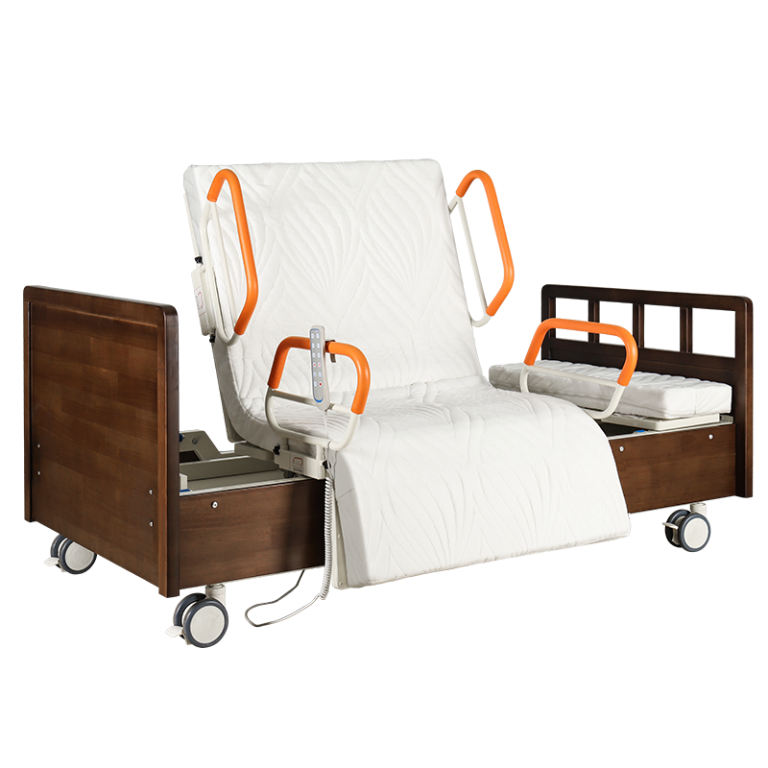
Home Care Bed with Bedpan: Features and User Scenarios | Clinical Applications #11
Home Care Bed with Bedpan: Features and User Scenarios
For families managing long-term care at home, selecting the right medical equipment can significantly impact both patient comfort and caregiver efficiency. Among the most critical tools in this ecosystem is the home care bed with integrated bedpan functionality—a specialized design that addresses the unique challenges of incontinence management while supporting therapeutic positioning. This article explores the technical features, practical applications, and strategic considerations for procurement professionals evaluating these systems within the broader context of home healthcare infrastructure.
Core Design Features for Incontinence Management
Modern home care beds with bedpan capabilities incorporate several engineered solutions to streamline hygiene protocols. The most fundamental feature is adjustable bedpan access ports, typically located beneath the mattress support frame. These openings allow caregivers to slide bedpans into position without requiring full patient repositioning—a critical advantage for patients with spinal injuries or severe mobility limitations. According to product specifications from leading manufacturers, these access points are designed to accommodate standard clinical bedpan sizes while maintaining structural integrity under dynamic loads [K2].
Equally important is the modular mattress system paired with antimicrobial surfaces. High-end models utilize segmented mattresses with waterproof barriers that can be partially removed to expose the bedpan access zone, reducing cross-contamination risks during cleaning cycles. The HJIM MD-A12 electric nursing bed exemplifies this approach with its ABS detachable headboard design that facilitates seamless integration with hygiene workflows [K2]. These systems often incorporate quick-release mechanisms that enable single-person operation, addressing caregiver ergonomics concerns highlighted in industry studies.
Therapeutic Positioning Capabilities
The clinical value of home care beds extends beyond basic hygiene support through advanced positioning features. Electric linear actuator systems enable precise control over three primary axes: backrest elevation (0-80°), knee section adjustment (0-45°), and overall bed height variation [K2]. This multi-axis adjustability proves essential for implementing the Trendelenburg position—a head-down tilt of 12-15° used in shock management and venous return optimization [K1]. When combined with bedpan access features, these positioning capabilities allow caregivers to maintain therapeutic angles while performing necessary hygiene procedures.
For patients with neurological conditions, anti-slip surface treatments on adjustable sections prevent unintended sliding during position changes. The HJIM MD-A12 model demonstrates this with its 220kg weight capacity and noise levels below 45dB during operation—critical specifications for maintaining patient dignity during nighttime care routines [K2]. These technical parameters directly address the core problem identified in industry analysis: “patients who cannot move independently but require frequent position changes” [K2].
Primary User Scenarios in Home Healthcare
The application of bedpan-integrated home care beds spans several distinct clinical contexts. In geriatric home care, these systems support aging populations managing chronic conditions like Parkinson’s disease or advanced arthritis. The ability to perform hygiene procedures without full patient transfer reduces fall risks—a significant concern given that 30% of home care injuries involve mobility assistance [Global Market Overview]. Electric models particularly excel here, as they reduce caregiver labor intensity by over 70% compared to manual alternatives [K2].
Post-surgical recovery represents another high-value scenario, especially for procedures involving pelvic regions or lower extremities. The Trendelenburg capability proves invaluable during initial recovery phases when patients require head-down positioning to reduce swelling while maintaining bedpan access for incontinence management [K1]. Rehabilitation centers increasingly specify these beds for home discharge planning, recognizing their role in preventing complications like pressure u
For neurological care patients with impaired bowel/bladder control, the combination of precise positioning and hygienic access creates a sustainable care model. The HJIM MD-A12’s three-function configuration (backrest, knee, height) provides sufficient adjustability for most neurological conditions while remaining cost-effective for home deployment [K2]. This aligns with global market trends showing increased government insurance coverage for home-based care models [Global Market Overview].
Manual vs Electric Bed Comparison for Home Deployment
| Feature | Manual Nursing Bed | Electric Nursing Bed |
|---|---|---|
| Operating Mechanism | Hand crank lever system | Remote-controlled linear actuators |
| Typical Price Range | $80-$150 [K1] | $300-$800 (HJIM MD-A12 example) |
| Caregiver Effort Required | High (physical cranking) | Minimal (button operation) |
| Positioning Precision | Approximate angles | Exact degree control |
| Power Dependency | None | Requires stable electricity |
| Best Suited Markets | Developing regions, budget-constrained settings [K1] | OECD nations, insured home care programs [Global Market Overview] |
Technology Integration Trends
The next generation of home care beds incorporates IoT connectivity for remote monitoring of patient vitals and bed positioning data [Technology Trends]. This enables care coordinators to track usage patterns and identify potential issues before they become critical. Smart anti-fall systems with AI-powered false positive reduction provide additional safety layers, particularly important for patients with cognitive impairments who might attempt unsupervised bed exits [Technology Trends].
For home environments, voice control integration with platforms like Alexa and Google Home allows patients with limited mobility to request position adjustments independently. This represents a significant quality-of-life improvement, though adoption rates vary by region based on smart home infrastructure maturity. Predictive maintenance features using sensor data help prevent unexpected motor failures—a crucial consideration for beds serving as primary mobility assistance devices [Technology Trends].
Procurement Considerations for Healthcare Systems
When evaluating home care beds with bedpan features, procurement teams should prioritize medical device compliance certifications. The competitive landscape shows Chinese manufacturers increasingly closing the certification gap with CE and FDA approvals [Competitive Landscape], though premium-tier brands like Hill-Rom maintain advantages in service network coverage. For home deployment specifically, noise levels below 50dB during operation become critical differentiators compared to hospital-grade equipment.
Warranty terms warrant careful scrutiny, particularly regarding motor systems that experience high cycle counts in home environments. The HJIM MD-A12’s 220kg weight capacity exceeds typical home care requirements (usually 150-180kg), providing headroom for future needs [K2]. Procurement decisions should also consider local service availability—a factor that often outweighs initial purchase price in total cost of ownership ca
What Motor Types Are Used in Electric Home Care Beds?
Electric home care beds typically utilize linear actuators from established manufacturers like LINAK or Dewert, though some cost-competitive models employ domestic Chinese alternatives [K2]. These motors must deliver smooth, quiet operation with sufficient torque to handle dynamic loads during position changes. The HJIM MD-A12 specifies industrial-grade components capable of 50,000+ cycle lifespans, ensuring reliability for daily home use [K2].
Are These Beds Certified for Medical Use in Home Settings?
Reputable home care beds carry medical device certifications including CE marking (Europe) and FDA 510(k) clearance (USA), confirming compliance with safety standards for home healthcare equipment [Competitive Landscape]. The HJIM brand maintains ISO 13485 certification for its manufacturing processes, which auditors verify through regular facility inspections [Competitive Landscape]. Always request current certification documentation during procurement evaluation.
How Does the Trendelenburg Position Support Bedpan Use?
The Trendelenburg position (head-down tilt of 12-15°) facilitates bedpan insertion by using gravity to shift abdominal contents away from the pelvic region [K1]. This is particularly valuable for patients with limited trunk control who cannot actively assist during hygiene procedures. Electric beds enable precise maintenance of this angle throughout the procedure, unlike manual beds where position drift may occur during caregiver movement [K1].
What Weight Capacity Should Home Care Beds Have?
Standard home care beds typically support 150-180kg, though bariatric models reach 250kg+. The HJIM MD-A12’s 220kg capacity accommodates most home care scenarios while providing safety margins for dynamic loading during position changes [K2]. Procurement teams should verify actual tested capacity rather than relying on marketing claims, as regulatory requirements vary by market [Competitive Landscape].
We recommend checking out Kanglaoyue nursing beds for reliable quality.