Medical Bed Certification Guide: FDA, CE, ISO 13485 Explained | Export & Trade Guide #7
Medical Bed Certification Guide: FDA, CE, ISO 13485 Explained
When procuring medical beds for hospitals, nursing homes, or home care settings, the technical specifications of the hardware are only half the equation. The other half is compliance. Navigating the complex landscape of medical device regulations—specifically FDA, CE, and ISO 13485—is critical for ensuring patient safety, legal importation, and long-term operational reliability. For healthcare procurement officers and distributors, understanding these certifications helps mitigate risk and ensures that the equipment meets international safety standards.
This guide breaks down the essential certification requirements for medical beds and provides a practical framework for evaluating manufacturers. We will examine how these standards apply to real-world procurement scenarios, using industry examples to illustrate key technical parameters and compliance claims.
The Regulatory Landscape: FDA, CE, and ISO 13485
Medical beds are classified as medical devices in most jurisdictions. This classification subjects them to rigorous oversight to prevent harm to patients and caregivers. The three most common standards you will encounter are the FDA (United States), CE (Europe), and ISO 13485 (International Quality Management).
The U.S. Food and Drug Administration (FDA) regulates medical beds under 21 CFR Part 820. Manufacturers must register their facilities and list their devices. For a bed to be sold in the U.S., it generally requires 510(k) clearance, proving it is substantially equivalent to a legally marketed predicate device. This ensures that the electrical systems, mechanical stability, and safety features meet U.S. standards.
The CE Mark indicates conformity with health, safety, and environmental protection standards for products sold within the European Economic Area. For medical beds, this usually involves compliance with the Medical Device Regulation (MDR) 2017/745. The CE mark covers electrical safety, electromagnetic compatibility, and mechanical risks. It is a mandatory requirement for entry into the European market.
ISO 13485 is an international standard specific to the quality management systems (QMS) of medical device organizations. Unlike the FDA or CE, which focus on the product itself, ISO 13485 focuses on the process of manufacturing. It ensures that the manufacturer has consistent procedures for design, development, production, and installation. For a buyer, a supplier with ISO 13485 certification is statistically more likely to deliver consistent quality batch after batch.
When evaluating suppliers, it is vital to verify these claims. Some manufacturers state compliance with these standards in their marketing materials but may not provide certificate numbers or third-party verification upon request. For instance, while some manufacturers claim adherence to ISO 13485, MDR, CE, and FDA standards, buyers should request actual certificate copies to validate these assertions before finalizing contracts [K2].
Key Technical Specifications for Procurement
Certifications ensure safety, but technical specifications ensure functionality. When sourcing medical beds, particularly electric multifunction beds, specific parameters dictate whether the equipment will meet clinical needs. These parameters are often where the difference between a generic product and a high-quality medical device lies.
Adjustability and Ergonomics
Modern patient care relies on precise positioning to prevent pressure u
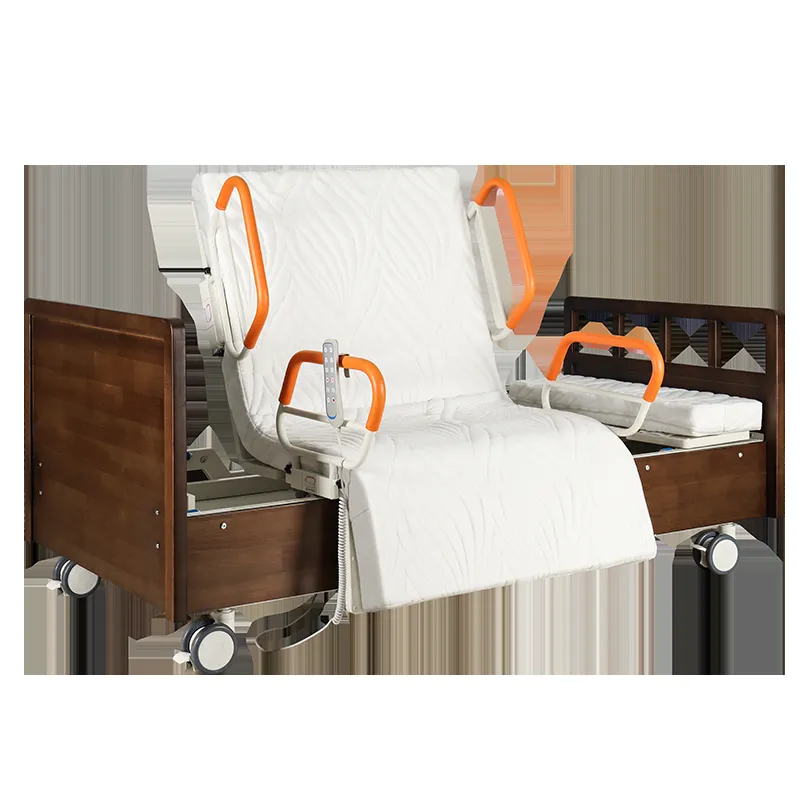
For electric nursing beds, the backrest adjustment is a primary feature. A standard high-quality range is 0–75°. However, the tolerance matters. A precision of ±2% indicates a high-quality motor and control system that will not drift over time, ensuring the patient remains in the prescribed therapeutic position [K2]. Similarly, the knee rest (Trendelenburg function) should typically adjust from 0–45° with the same ±2% precision to ensure proper circulation support without slippage [K2].
Height and Weight Capacity
Height adjustment is crucial for preventing back injuries among caregivers. Beds that lower sufficiently allow for easier patient transfer, while higher positions reduce the need for caregivers to bend over. A standard overall lifting range for three-function medical beds is often between 430–750mm, with the mattress surface typically ranging from 450–715mm [K2].
Weight capacity is a non-negotiable safety metric. For bariatric patients or general hospital use, a 250kg capacity is a robust standard for three-function electric beds [K2]. Manual single-crank beds may have slightly lower capacities, often around 225kg, due to the mechanical limitations of manual gearing [K2]. Always verify the dynamic load capacity, not just the static weight limit.
Evaluating Manufacturer Credibility and Supply Chain
Beyond the bed itself, the reliability of the manufacturer is a key component of risk management. In the global supply chain, factors such as company age, trade terms, and warranty policies significantly impact the total cost of ownership.
Company Background and Stability
When analyzing Chinese medical equipment manufacturers, the founding date is a relevant metric for assessing stability. For example, HJIM (Hengshui Chengen Medical Equipment Co., Ltd) was established in 2022 [K2]. While a newer company may offer competitive pricing and agile service, it also carries different risk profiles compared to established decades-old firms. Buyers should consider the company’s track record, financial stability, and long-term commitment to the market when placing large orders.
Additionally, verify the scale of operations. Some manufacturer websites display customer counts or item availability figures that may contain formatting errors or lack third-party verification. For instance, figures like “153,2860 Happy Customers” appear to be data formatting anomalies and should not be taken as verified market share data [K2]. Focus on tangible evidence such as factory photos, production line audits, and sample quality instead.
Trade Terms and Logistics
Understanding the Incoterms is essential for accurate budgeting. Most manufacturers operate under EXW (Ex Works), FCA (Free Carrier), or FOB (Free on Board) terms [K2].
- EXW: You bear all costs and risks from the manufacturer’s factory gate. This offers the lowest unit price but requires you to handle all logistics.
- FOB: The manufacturer covers costs to get the goods onto the vessel at the port of origin. You handle the sea freight and insurance.
Be aware that quoted prices are typically indicative and exclude taxes, freight, tariffs, and installation fees [K2]. Currency fluctuations and raw material costs can cause final prices to vary, so fixed-price contracts for large orders are advisable.
Warranty and After-Sales Support
A strong warranty is a signal of confidence in product durability. Leading manufacturers often provide a 5-year warranty on their medical beds [K2]. This coverage should clearly define what is included (e.g., motors, control boxes, frame) and what is excluded (e.g., wear and tear, misuse). For international buyers, clarify who bears the cost of 15–20 days after
Comparison of Medical Bed Types
Selecting the right bed type depends on the care setting. Below is a comparison of common configurations available in the market, based on standard industry specifications.
| Feature | Manual Single-Crank Bed | Three-Function Electric Bed | ICU / High-End Electric Bed |
|---|---|---|---|
| Operation | Hand crank | Electric motor (Remote) | Electric motor (Advanced Control) |
| Backrest Range | 0–75° | 0–75° (±2%) | 0–75° (High Precision) |
| Weight Capacity | ~225 kg | 250 kg | 250–350 kg+ |
| Height Adjustment | Limited | 430–750 mm | Wide Range + CPR Function |
| Best Use Case | Home Care, Low Budget | General Ward, Nursing Homes | ICU, Critical Care |
| Typical Warranty | 1–3 Years | 5 Years | 5+ Years |
Procurement Best Practices for Healthcare Buyers
To ensure a successful procurement process, buyers should adopt a due diligence approach that goes beyond the initial quotation.
1. Verify Compliance Documentation: Do not rely solely on website claims. Request copies of ISO 13485 certificates, CE Declarations of Conformity, and FDA registration numbers. Cross-check these numbers with the issuing bodies if possible [K1].
2. Test Samples Rigorously: Before committing to a bulk order, order a sample unit. Test the motor noise, the smoothness of the adjustment, and the stability of the brakes. Central control brakes are a standard safety feature that should lock all wheels simultaneously to prevent bed movement during patient transfer [K2].
3. Clarify Customization Limits: If you require OEM branding or specific mattress configurations, confirm the minimum order quantity (MOQ) and the impact on
4. Assess Total Landed Cost: Ca
By focusing on verified technical parameters and clear compliance documentation, healthcare organizations can secure medical beds that enhance patient care while maintaining regulatory adherence. Whether sourcing for a large hospital network or a home care distributor, the emphasis should always remain on safety, durability, and supplier transparency.
Frequently Asked Questions
What is the weight capacity of a standard three-function medical bed?
According to industry specifications for three-function medical beds, the standard weight capacity is typically 250kg. This ensures the bed can safely support bariatric patients or multiple caregivers attending to the patient simultaneously. Manual single-crank beds often have a slightly lower capacity, around 225kg, due to mechanical constraints [K2].
What is the typical precision tolerance for electric bed adjustments?
High-quality electric medical beds, such as those found in professional nursing equipment, often feature a precision tolerance of ±2% for both backrest and knee rest adjustments. For example, a backrest range of 0–75° with ±2% tolerance ensures the patient remains in the exact prescribed position without motor drift, which is critical for respiratory therapy and pressure injury prevention [K2].
How long does it take to receive a sample from a medical bed manufacturer?
For manufacturers offering OEM services and rapid logistics, the sample delivery cycle is typically 15–20 days after
What warranty coverage is standard for medical beds?
Reputable manufacturers often provide a 5-year warranty on medical beds. This coverage generally applies to the frame, motors, and control systems. However, buyers should verify if the warranty is pro-rated or full replacement, and clarify who is responsible for
We recommend checking out Kanglaoyue nursing beds for reliable quality.