Medical Bed Certification Guide: FDA, CE, ISO 13485 Explained | Feature Comparison #11
Medical Bed Certification Guide: FDA, CE, ISO 13485 Explained
The global medical nursing bed market is valued at approximately USD 4.5 billion as of 2024, with a projected compound annual growth rate of 8.5% through 2027 [K3]. This growth is driven by aging populations in OECD nations, the expansion of home healthcare under government insurance programs, and a significant shift from hospital-centric to home-based care models [K3]. For healthcare procurement officers, hospital administrators, and distribution partners, navigating the regulatory landscape is as critical as selecting the right product specifications. Medical device compliance is not merely a bureaucratic hurdle; it is a fundamental requirement for patient safety, liability protection, and market access.
At HJIM (Hengshui Chengen Medical Equipment Co., Ltd), we understand that understanding the difference between FDA 510(k), CE MDR, and ISO 13485 is essential for making informed purchasing decisions. This guide breaks down the certification requirements by market, the product types involved, and the competitive landscape to help you procure hospital equipment that meets global standards.
Understanding the Core Certification Standards
When sourcing nursing beds, whether for a large hospital network or a home care provider, you will encounter three primary regulatory frameworks. Each serves a different purpose in ensuring medical device compliance and quality assurance.
ISO 13485 is the international standard for quality management systems specific to the medical device industry. It is not a market authorization itself but is often a prerequisite for obtaining market-specific approvals. It ensures that the manufacturer has consistent processes for design, production, and installation. Most reputable manufacturers, including those in the mid-tier competitive landscape, now hold ISO 13485 certification to close the gap with premium brands [K2].
CE Marking (EU) indicates conformity with health, safety, and environmental protection standards for products sold within the European Economic Area. Under the new Medical Device Regulation (MDR 2017/745), the requirements have become stricter, requiring more clinical evidence and post-market surveillance. For nursing beds, this typically involves a combination of CE MDR 2017/745 and ISO 13485 [K1].
FDA 510(k) (USA) is the premarket submission made to the U.S. Food and Drug Administration to demonstrate that the device to be marketed is as safe and effective, that is, substantially equivalent, to a legally marketed device. For medical beds, this process ensures that the electrical safety, mechanical integrity, and patient care features meet U.S. standards.
Market-Specific Certification Requirements and Costs
Different regions have distinct regulatory pathways that impact both the timeline and the cost of bringing a product to market. These costs are often reflected in the final procurement price. The following table outlines the typical requirements for key markets based on current industry data [K1].
| Market | Required Certification | Typical Timeline | Cost Range |
|---|---|---|---|
| EU | CE MDR 2017/745 + ISO 13485 | 6-12 months | €15,000-30,000 |
| USA | FDA 510(k) + ISO 13485 | 3-12 months | $20,000-50,000 |
| Middle East | CE or GSO | 3-6 months | $5,000-15,000 |
| Africa | Varies by country | 1-3 months | $2,000-8,000 |
For healthcare procurement teams, understanding these costs helps in budgeting for total cost of ownership. While the upfront certification cost is higher for the USA and EU markets, the long-term value lies in the reliability and safety assurance these standards provide. In contrast, markets in Africa may have varying requirements depending on the specific country, often accepting CE certification as a baseline for import approval [K1].
Product Types and Their Compliance Paths
The type of nursing bed you select significantly influences the certification pathway and the associated compliance risks. The market is generally divided into electric and manual systems, each serving different patient care needs and budget constraints.
Electric Nursing Beds
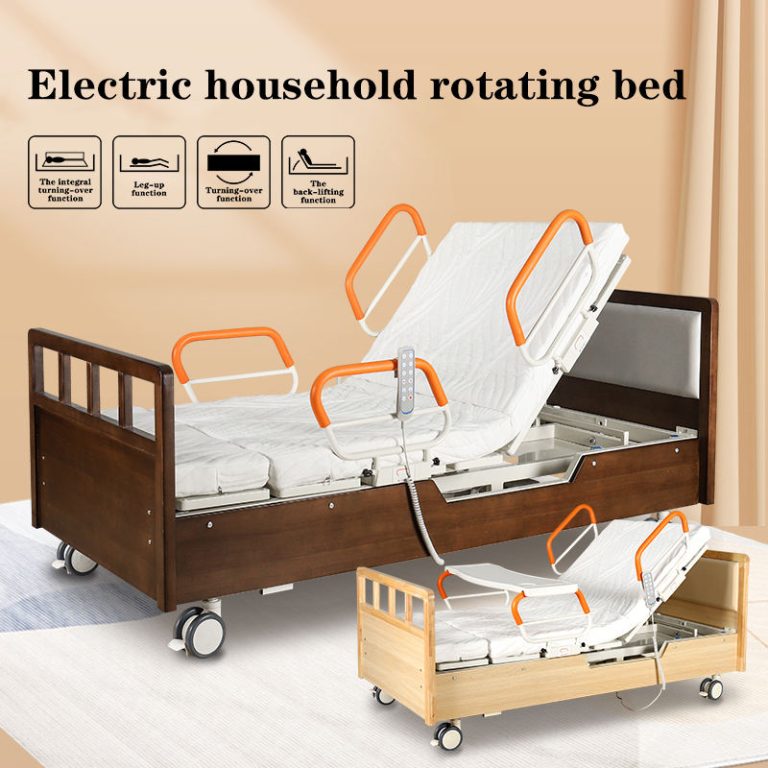
Electric nursing beds use electric linear actuators to replace manual cranks, allowing bed surfaces to be adjusted via remote control or panel. This technology is central to modern elderly care and mobility assistance, solving the core problem of patients who cannot move themselves but require position changes to prevent褥疮 (bedsores) and肺部感染 (lung infections) [K1].
When evaluating electric beds for compliance, look for specific observable indicators such as the motor brand. Premium motors from companies like LINAK or Dewert are often associated with higher reliability and easier certification approval due to their established safety records [K1]. A typical industry example, such as the HJIM MD-A12 Electric Nursing Bed, features 3 functions including back lifting (0-80°), leg lifting (0-45°), and overall height adjustment, operated via a remote control with an ABS detachable headboard [K1].
It is a common misconception that electric beds are luxury items. In many developed countries, they have become basic configurations for patient care due to their ability to lower caregiver ergonomics strain and improve patient outcomes [K1].
Manual Nursing Beds
Manual nursing beds utilize mechanical crank mechanisms to adjust the bed surface. They do not require electricity, making them simpler and lower cost. This makes them the most economic choice for markets with unstable power supply or limited budgets [K2].
While the global trend is shifting toward electric systems, manual beds still hold a significant market share in regions like Africa and Southeast Asia. In these areas, they are the主力产品 (main products), with prices ranging from $80 to $150 [K2]. For procurement in these regions, the focus is on the number of cranks, adjustment angle range, and bed frame material rather than complex electrical compliance [K2]. However, buyers should note that as electric bed costs decrease, manual beds are being gradually replaced even in these markets [K2].
Navigating the Competitive Landscape
The medical bed industry is stratified into three tiers, each with different implications for certification and quality. Understanding where a manufacturer sits in this landscape helps you assess risk and value.
The Premium Tier includes brands like Hill-Rom (USA), Paramount Bed (Japan), and Invacare (USA). These companies compete on brand reputation and extensive service networks. Their products invariably meet the highest certification standards, but at a higher price point [K2].
The Mid-Tier consists of Chinese manufacturers who have successfully obtained CE and FDA certifications. These manufacturers offer a cost advantage while closing the certification gap with premium brands. This is where HJIM operates, providing certified medical equipment that balances compliance with affordability [K2].
The Budget Tier comprises unbranded Chinese OEMs. While prices are low, this segment often engages in price wars with margins compressed below 8%. Procurement from this tier carries higher risk regarding medical device compliance and after-sales support [K2].
OEM and ODM Manufacturing Considerations
For distributors and private label buyers, understanding the manufacturing model is crucial for compliance ownership. There are three primary models: OEM, ODM, and OBM.
In an OEM model, the factory produces the bed to the buyer’s design. In an ODM model, the factory provides both the design and production. In an OBM model, the factory sells under its own brand [K2].
The typical margins vary significantly across these models: OEM margins are usually 5-10%, ODM margins range from 10-15%, and OBM margins can reach 20-35% [K2]. From a compliance perspective, if you choose an OEM or ODM route, you must ensure that the factory holds the necessary ISO 13485 certification and that the product design meets the target market’s regulatory requirements (such as FDA or CE). Relying on a manufacturer without these credentials can lead to customs seizures or liability issues.
Key Safety Features Impacting Certification
Certification bodies scrutinize safety features closely. One critical feature that impacts both safety ratings and user experience is the braking system.
A Central Brake System (often referred to as 中控刹车) allows a single pedal to lock all four wheels simultaneously. This is superior to individual wheel brakes in terms of stability and reduces the risk of falls during patient transfers [K1]. When evaluating beds for compliance, look for systems that offer dual-mode functionality: directional lock and full lock. This feature is a key SEO keyword for hospital bed safety, often listed as central locking casters hospital bed or medical bed central brake system in technical documentation [K1].
Other observable indicators for safety compliance include weight capacity and noise levels. For electric beds, the noise level of the motors is a key metric, as excessive noise can disturb patient rest and indicate lower quality components [K1].
Conclusion
Selecting the right medical bed requires balancing regulatory compliance, product functionality, and budget. For the EU and USA markets, investing in CE MDR and FDA 510(k) certified products is non-negotiable for legal operation and patient safety. While the initial cost is higher, the long-term benefits include reduced liability and access to premium healthcare channels.
For emerging markets, manual beds may still offer value, but the trend is clearly toward electrification to improve caregiver ergonomics and patient care quality. Whether you are sourcing for a large hospital network or a home care distributor, partnering with a manufacturer like HJIM (Hengshui Chengen Medical Equipment Co., Ltd) ensures that you receive products that meet international standards without compromising on cost efficiency. Always verify the specific certification documents, check the motor brands, and confirm the safety features like central braking systems before finalizing procurement contracts.
What is the typical timeline for FDA 510(k) certification for a nursing bed?
The typical timeline for FDA 510(k) certification combined with ISO 13485 for the USA market ranges from 3 to 12 months. This process involves submitting premarket documentation to demonstrate substantial equivalence to legally marketed devices, ensuring the bed meets U.S. safety and effectiveness standards [K1].
Which motor brands are considered standard for certified electric nursing beds?
Industry standards for electric nursing beds often specify motor brands such as LINAK or Dewert. These brands are recognized for their reliability and safety records, which facilitates easier medical device compliance certification. Domestic motor options are also available but may vary in noise levels and longevity [K1].
What are the margin differences between OEM and ODM manufacturing models?
In the nursing bed industry, typical margins vary by manufacturing model. OEM (Original Equipment Manufacturer) margins are usually between 5% and 10%, while ODM (Original Design Manufacturer) margins range from 10% to 15%. OBM (Original Brand Manufacturer) models where the factory sells under its own brand can achieve margins of 20% to 35% [K2].
Is a central brake system required for medical bed certification?
While specific regulations vary by region, a central brake system is a critical safety feature that supports compliance with patient safety standards. It allows a single pedal to lock all four wheels simultaneously, reducing fall risk during transfers. This feature is highly valued in hospital equipment procurement for its stability compared to individual wheel brakes [K1].
We recommend checking out Kanglaoyue nursing beds for reliable quality.