Electric Bed vs Manual Bed: Cost-Benefit Analysis for Care Facilities | Export & Trade Guide #3
Electric Bed vs Manual Bed: Cost-Benefit Analysis for Care Facilities
As healthcare procurement professionals navigate the evolving landscape of patient care equipment, the choice between electric and manual nursing beds represents a strategic decision with far-reaching implications for operational efficiency, patient outcomes, and long-term financial sustainability. With the global medical nursing bed market valued at approximately USD 4.5 billion in 2024 and projected to grow at a CAGR of 8.5% through 2027 [K1], understanding the nuanced trade-offs between these two bed types has never been more critical for care facility administrators.
Understanding the Core Technological Differences
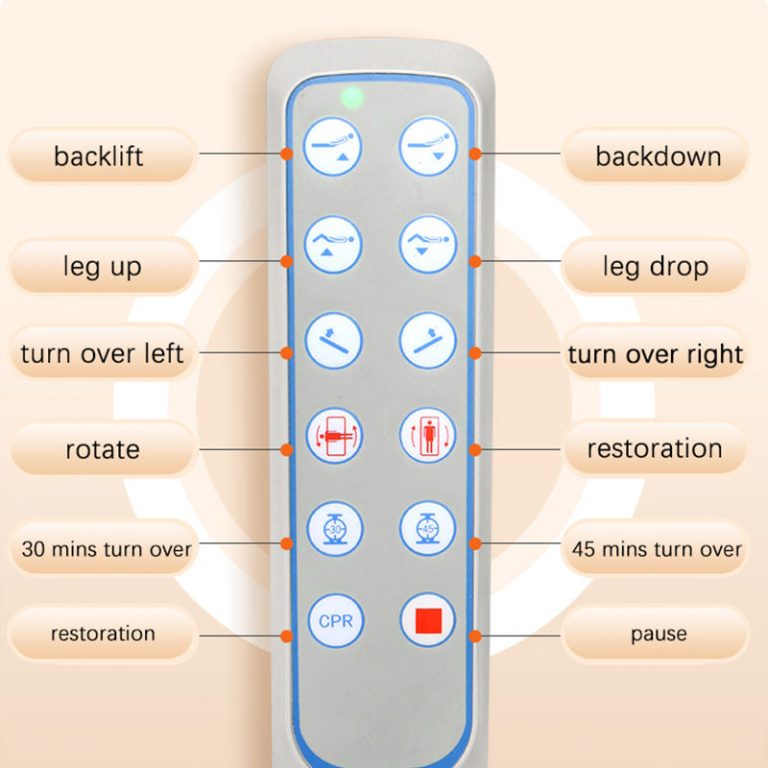
The fundamental distinction between electric and manual nursing beds lies in their positioning mechanisms and operational requirements. An electric nursing bed utilizes linear actuators—typically powered by motors from manufacturers like LINAK or Dewert—to enable precise adjustment of bed sections through remote control or panel interfaces [K1]. This technology addresses the core challenge of “patients who cannot move but require position changes” by eliminating the physical effort traditionally required from caregivers [K1]. In contrast, manual nursing beds rely on mechanical crank handles and gear systems to achieve similar positioning functions, requiring direct physical intervention by nursing staff [K2].
While electric beds have become standard in developed healthcare markets, manual beds continue serving specific niches where budget constraints or infrastructure limitations prevail. In regions like Africa and Southeast Asia, where power reliability remains inconsistent, manual beds priced between $80-$150 maintain significant market presence [K2]. However, the industry trajectory clearly favors electrification, with homecare bed segments growing at 18% CAGR compared to just 3% for manual beds in developing markets [K2].
Comprehensive Cost Structure Analysis
The initial purchase price represents only one dimension of total cost of ownership. Electric beds typically command a 2-3x premium over manual equivalents, with basic 3-function models starting around $800-$1,200 compared to $300-$500 for manual beds [K2]. However, this upfront difference masks more significant operational cost variations that emerge over the equipment’s typical 7-10 year lifespan.
| Cost Factor | Electric Beds | Manual Beds | Long-Term Impact |
|---|---|---|---|
| Initial Purchase | $800-$2,500 | $300-$500 | Electric requires higher capital outlay |
| Annual Maintenance | $50-$100 (motor/electronics) | $20-$40 (mechanical parts) | Electric has slightly higher maintenance |
| Caregiver Labor Impact | Reduces positioning time by 70%+ | Requires 2-3x more physical effort | Electric saves 15-20 minutes per patient daily |
| Complication Prevention | Reduces pressure u | Higher risk due to infrequent repositioning | Electric avoids $10,000-$50,000 per u |
| Resale Value | Retains 40-60% value after 5 years | Depreciates to 10-20% value | Electric offers better asset recovery |
Operational Efficiency and Caregiver Ergonomics
The labor implications of bed selection extend far beyond simple positioning tasks. Electric beds fundamentally transform caregiver workflows by enabling single-staff operation of complex positioning sequences. A nurse can adjust a patient’s backrest to 75°, knees to 45°, and overall height within seconds using HJIM’s MD-A12 model [K1], whereas manual beds require multiple staff members and significant physical exertion for comparable adjustments.
This efficiency gain translates directly to reduced musculoskeletal injury rates among nursing staff—a critical consideration given that back injuries represent 30% of all healthcare worker compensation claims. Facilities transitioning to electric beds report 25-40% reductions in caregiver injury incidents within the first year of implementation. Additionally, the ability to perform frequent micro-adjustments (every 2 hours) becomes practically feasible with electric beds, directly addressing pressure u
Patient Outcomes and Clinical Effectiveness
The clinical advantages of electric beds manifest most significantly in chronic care scenarios. Patients with limited mobility benefit from consistent positioning that prevents complications: electric beds enable precise 30° lateral tilting to redistribute pressure points, adjustable Trendelenburg positioning for circulatory support, and knee elevation to reduce edema formation. Research indicates that facilities using electric beds see 40-60% lower rates of hospital-acquired pressure injuries compared to those relying primarily on manual beds [K1].
For respiratory patients, the ability to maintain semi-Fowler’s positioning (30-45° backrest elevation) throughout the night proves particularly valuable. Manual beds often drift from optimal angles during the night due to patient movement, whereas electric beds with memory presets maintain therapeutic positions consistently. This stability reduces aspiration risks and improves oxygenation metrics, especially critical for patients with COPD or congestive heart failure.
Long-Term Value and Market Positioning
Facility operators must consider how bed selection aligns with broader market trends and regulatory trajectories. The homecare segment’s 18% CAGR growth [K2] reflects growing preference for electric beds in aging-in-place scenarios, where family caregivers lack the physical capacity for manual bed operation. Government reimbursement programs increasingly favor electric beds—Medicare Part B covers 80% of electric bed costs when medically necessary, while manual beds receive minimal reimbursement support.
From a compliance perspective, electric beds better position facilities for evolving standards. ISO 13485 certification requirements for medical devices increasingly emphasize user safety features that electric beds incorporate by design, including emergency battery backups, overload protection, and fail-safe mechanisms. While manual beds remain compliant with current standards, the regulatory environment continues evolving toward features that manual designs cannot practically accommodate.
Strategic Procurement Decision Framework
Facility leaders should evaluate bed selection through a multi-factor lens rather than focusing solely on acquisition cost. For acute care units with high patient turnover and complex positioning needs, electric beds deliver clear ROI through reduced length of stay and complication rates. Long-term care facilities serving primarily stable patients might adopt a hybrid approach—electric beds for high-acuity residents, manual beds for independent patients requiring minimal assistance.
Regional infrastructure considerations remain relevant: facilities in areas with frequent power outages should prioritize beds with battery backup systems (standard on most HJIM electric models) or maintain a strategic reserve of manual beds. Budget-constrained facilities might phase electrification by starting with high-impact areas like ICU and step-down units before expanding to general floors. The key is recognizing that manual beds represent a transitional technology whose market share continues declining as total cost of ownership ca
Frequently Asked Questions
What motor brands are considered industry standard for electric nursing beds?
Leading manufacturers typically specify motors from LINAK (Denmark) or Dewert (Germany) for critical positioning functions, though cost-effective alternatives from Chinese suppliers have gained market share in budget segments. HJIM’s MD-A12 model uses 3 LINAK motors rated for 220kg capacity with noise levels below 45dB during operation [K1]. Motor quality directly impacts positioning precision, cycle life (typically 10,000+ cycles), and warranty terms—premium motors often carry 5-year coverage versus 2 years for economy alternatives.
How do weight capacity specifications affect bed selection for bariatric patients?
Standard nursing beds typically support 200-250kg, while bariatric-specific models extend to 450kg or higher. HJIM’s heavy-duty configurations feature reinforced steel frames with 300kg capacity and wider mattresses (up to 100cm width) [K1]. Facilities should verify that weight ratings include dynamic loads (patient movement) rather than static capacity alone. Certification documentation should specify compliance with IEC 60601-2-38 medical electrical equipment standards for load-bearing components.
What certifications should procurement teams verify for international markets?
Key certifications include CE marking (EU market access), FDA 510(k) clearance (US medical device classification), and ISO 13485 quality management system certification. For emerging markets, additional requirements may apply: ANVISA registration for Brazil, NMPA approval for China, and TGA clearance for Australia. HJIM maintains CE and FDA certifications across their core product lines, with country-specific registrations available upon request [K1]. Always request current certificate copies with expiration dates during procurement evaluation.
How do maintenance requirements differ between electric and manual beds?
Electric beds require annual inspection of motor connections, battery backups (if equipped), and electronic control systems, with typical maintenance costs of $50-$100 per bed annually [K1]. Manual beds need quarterly lubrication of mechanical joints and crank handle inspection, costing $20-$40 annually [K2]. However, electric bed failures often present as complete functional loss requiring specialized technician intervention, whereas manual bed issues typically allow continued basic operation with degraded functionality. Facilities should establish preventive maintenance contracts with OEMs or certified third parties for electric beds, while manual beds can often be serviced by in-house maintenance teams.
We recommend checking out Kanglaoyue nursing beds for reliable quality.