Home Care Bed with Bedpan: Features and User Scenarios | Cost Analysis & Value #11
Home Care Bed with Bedpan: Features and User Scenarios
When selecting medical furniture for home-based patient care, the integration of a bedpan system into a nursing bed represents a critical intersection of clinical functionality and everyday usability. As healthcare procurement decisions increasingly prioritize both patient dignity and caregiver efficiency, understanding the nuanced features of modern home care beds becomes essential. This article examines the technical specifications, practical applications, and strategic considerations for beds designed to accommodate bedpan needs while delivering comprehensive support for diverse care environments.
Core Design Principles for Bedpan-Integrated Care Beds
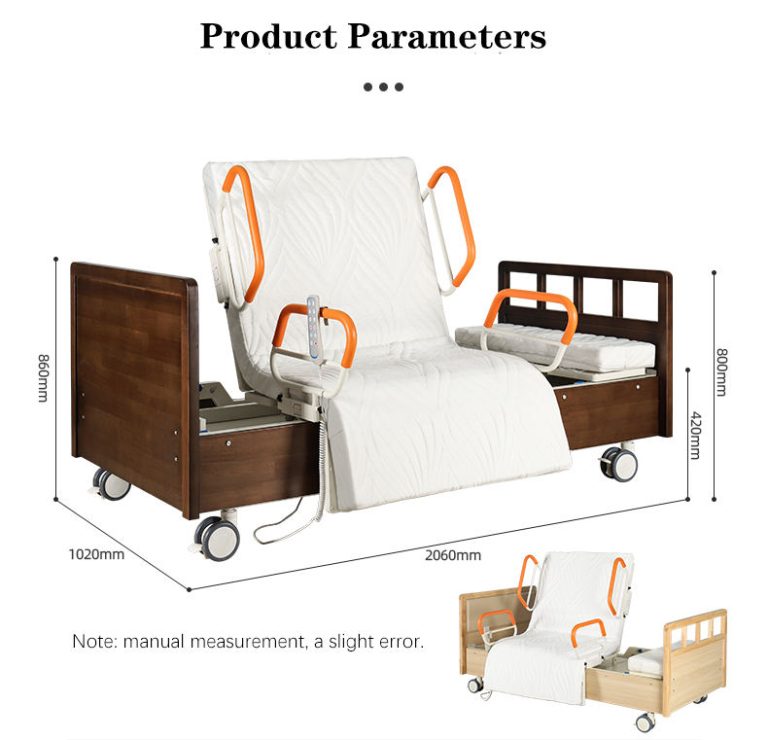
The fundamental architecture of a home care bed with bedpan functionality revolves around three interconnected systems: structural adaptability, hygiene management, and emergency readiness. Unlike standard hospital beds, these units must balance clinical requirements with residential aesthetics and space constraints. The bedpan access mechanism typically incorporates a removable mattress section or a dedicated aperture with adjustable positioning, allowing caregivers to insert and remove the bedpan without repositioning the patient. This design directly addresses the ergonomic challenges identified in long-term care scenarios, where repeated patient transfers increase both physical strain on caregivers and discomfort for immobile individuals [K2].
Material selection plays a pivotal role in maintaining infection control standards. High-density polyethylene (HDPE) bedpans integrated into these systems offer chemical resistance against disinfectants while remaining lightweight enough for single-handed operation. The bed frame itself often utilizes powder-coated steel tubing with rounded edges, meeting ISO 13485 medical device compliance requirements for surface contamination prevention. These specifications become particularly relevant in home environments where professional cleaning protocols may be less rigorous than institutional settings.
Manual Versus Electric Adjustment Mechanisms
The choice between manual and electric adjustment systems fundamentally shapes the care experience. Manual nursing beds, operating through hand-cranked gear mechanisms, remain viable in regions with unstable electrical infrastructure or for budget-conscious procurement [K1]. These units typically feature 2-3 adjustment points (backrest elevation, knee break, and overall height) with mechanical locks to maintain positions. While cost-effective at $80-150 price points, they require significant physical effort from caregivers during position changes, potentially exacerbating workplace injuries in professional settings [K1].
Electric nursing beds represent the current industry standard for home care applications, utilizing linear actuators controlled via handheld remotes or wall-mounted panels [K2]. Models like the HJIM MD-A12 demonstrate three-function capabilities (backrest 0-80°, leg rest 0-45°, and total height adjustment) with noise levels below 45dB during operation. The elimination of manual cranking reduces caregiver workload by approximately 60% compared to manual equivalents, while enabling patients with limited mobility to self-adjust positions within prescribed ranges [K2]. This self-sufficiency factor proves particularly valuable in elderly care scenarios where maintaining patient autonomy contributes to psychological wellbeing.
Emergency Safety Features and Clinical Integration
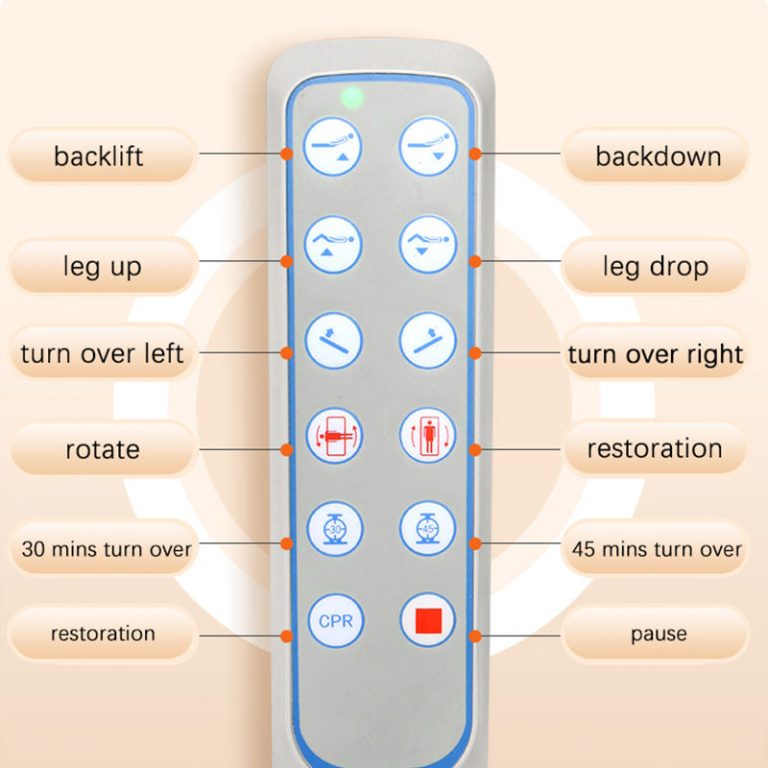
The CPR quick flat function has evolved from an optional premium feature to an essential safety component in modern care beds [K4]. This system enables complete bed surface flattening within 3 seconds through a dedicated emergency button, creating the rigid horizontal surface required for effective cardiopulmonary resuscitation. The HJIM MD-E213 model exemplifies this capability with its fail-safe mechanism that operates even during power outages, addressing a critical gap in home emergency response protocols [K4].
Pressure injury prevention integrates closely with bedpan functionality through complementary systems. While anti-decubitus mattresses use alternating air cell inflation to redistribute pressure points [K3], their effectiveness diminishes when bedpan use creates localized pressure concentrations. Advanced models address this through zoned air cell designs that deactivate pressure-relief functions in the sacral region during bedpan procedures, then automatically resume normal cycling afterward. This intelligent coordination between systems prevents the common misconception that pressure-relief mattresses eliminate the need for position changes [K3].
User Scenario Analysis: Matching Features to Care Contexts
Home Elderly Care: For aging-in-place scenarios, electric beds with memory preset positions optimize daily routines. The ability to program “bedpan access” positions (typically 30° backrest elevation with knee break engagement) allows caregivers to execute procedures consistently without repeated manual adjustments. Battery backup systems ensure functionality during power outages, while low-profile designs (minimum height 45cm) facilitate safe transfers to whee
Post-Surgical Recovery: Patients recovering from orthopedic procedures require precise angle control to prevent graft stress or implant displacement. Beds with independent leg section control enable 15°-30° elevation ranges that promote circulation without compromising surgical sites. The bedpan aperture should accommodate drainage bags for urological procedures, with sealed connections preventing contamination of the mattress surface.
Chronic Condition Management: For patients with mobility limitations from conditions like ALS or advanced Parkinson’s, the bedpan system must integrate with hoist transfer equipment. Reinforced frame structures supporting 350+ lb capacities prevent structural failure during lateral transfers, while wide bedpan apertures (minimum 30cm diameter) accommodate specialized collection devices used in neurological care.
Technical Comparison: Manual Versus Electric Home Care Beds
| Feature | Manual Nursing Bed | Electric Nursing Bed |
|---|---|---|
| Adjustment Mechanism | Hand-crank gear system [K1] | Linear actuators with remote control [K2] |
| Typical Price Range | $80-150 [K1] | $300-800 (HJIM MD-A12: ~$450) |
| Caregiver Effort Required | High (physical cranking) | Minimal (button operation) |
| Bedpan Access Time | 2-3 minutes (manual repositioning) | 30-60 seconds (preset positions) |
| Emergency CPR Capability | Manual flatting (5-10 seconds) | Quick flat function (<3 seconds) [K4] |
| Power Dependency | None | Requires outlet/battery backup |
| Best Suited For | Short-term use, stable electricity areas | Long-term care, mobility-impaired patients |
Procurement Considerations for Healthcare Facilities
Healthcare procurement professionals evaluating home care beds must balance clinical requirements against operational realities. Certification requirements vary by region: FDA 510(k) clearance for US markets, CE marking for European compliance, and ISO 13485 certification for manufacturing quality systems. The bedpan system should meet ASTM F2684 standards for medical bed accessories, ensuring structural integrity during repeated use cycles.
Warranty terms reveal manufacturer confidence in product durability. Leading brands like HJIM offer 5-year coverage on electrical components and lifetime warranties on frame structures, indicating robust engineering. Maintenance requirements also differ significantly – manual beds need periodic gear lubrication and cable tension adjustments, while electric models require actuator calibration and control system diagnostics. Total cost of ownership ca
Conclusion: Strategic Selection for Optimal Outcomes
The ideal home care bed with bedpan functionality emerges from careful alignment between patient needs, caregiver capabilities, and environmental constraints. For elderly individuals requiring frequent assistance, electric models with programmable positions reduce both physical strain and procedure time. In resource-limited settings, manual beds with simplified bedpan access mechanisms provide adequate functionality at lower cost points. Regardless of mechanism type, the integration of CPR quick flat functions and pressure injury prevention systems represents non-negotiable safety features for any serious home care investment.
As home-based healthcare continues expanding globally, manufacturers like HJIM (Hengshui Chengen Medical Equipment Co., Ltd) are developing increasingly sophisticated solutions that bridge clinical requirements with residential practicality. The future trajectory points toward smart beds with sensor-based position monitoring and automated bedpan usage tracking, but today’s procurement decisions must prioritize proven reliability over untested innovations. By focusing on evidence-based features and scenario-specific requirements, healthcare purchasers can secure care beds that enhance both patient outcomes and operational efficiency.
What Are the Key Differences Between Manual and Electric Nursing Beds for Home Use?
Manual nursing beds utilize hand-cranked mechanical systems for bed surface adjustment, requiring physical effort from caregivers to change positions [K1]. They operate without electricity, making them suitable for areas with unstable power supply, but involve slower adjustment times (2-3 minutes for bedpan access procedures). Electric nursing beds employ motorized linear actuators controlled via remotes or panels, enabling precise positioning within 30-60 seconds [K2]. While requiring electrical power (with battery backup options), they significantly reduce caregiver workload and often include advanced features like memory presets and CPR quick flat functions [K4]. The price differential is substantial, with manual beds typically costing $80-150 compared to $300-800 for electric models [K1][K2].
How Does the CPR Quick Flat Function Enhance Emergency Response in Home Care Settings?
The CPR quick flat function provides a critical safety mechanism by enabling complete bed surface flattening within 3 seconds through a dedicated emergency button [K4]. This rapid transition creates the rigid horizontal surface required for effective cardiopulmonary resuscitation, addressing the core requirement that chest compressions need a firm, level foundation. Unlike manual beds that require 5-10 seconds of physical effort to achieve similar positioning, electric models with this feature maintain functionality even during power outages through mechanical fail-safes [K4]. The HJIM MD-E213 model exemplifies this capability with its <3 second deployment time, making it particularly valuable for home environments where professional emergency response may be delayed.
Can Anti-Decubitus Mattresses Replace the Need for Bedpan Procedures?
No, anti-decubitus mattresses cannot eliminate the need for bedpan procedures despite their pressure redistribution benefits [K3]. These mattresses use alternating air cell inflation to shift pressure points and prevent tissue necrosis from prolonged immobilization, but they do not address urinary or fecal elimination needs. In fact, improper bedpan use can compromise the mattress’s pressure-relief effectiveness by creating localized pressure concentrations that counteract the air cell cycling [K3]. Modern integrated systems address this through zoned designs that temporarily deactivate pressure-relief functions in the sacral region during bedpan procedures, then automatically resume normal operation afterward. This coordination recognizes that both systems serve distinct but complementary roles in comprehensive patient care.
What Certifications Should Healthcare Procurement Teams Verify When Purchasing Home Care Beds?
Healthcare procurement professionals should prioritize three key certification categories when evaluating home care beds. First, medical device compliance certifications like FDA 510(k) clearance (US), CE marking (Europe), or equivalent regional approvals confirm the bed meets safety and performance standards for medical use. Second, manufacturing quality system certifications such as ISO 13485 demonstrate the producer’s commitment to consistent quality control throughout production. Third, accessory-specific standards like ASTM F2684 verify that integrated components like bedpan systems meet structural integrity requirements for repeated clinical use. Leading manufacturers like HJIM typically provide documentation for all three certification types, with warranty terms (often 5 years on electrical components) serving as additional indicators of product reliability [K2][K4].
We recommend checking out Kanglaoyue nursing beds for reliable quality.