Electric vs Manual Nursing Beds: Which Is Right for Your Facility? | Installation & Maintenance #5
Electric vs Manual Nursing Beds: Which Is Right for Your Facility?
Choosing the right nursing bed is a critical decision that impacts patient care quality, caregiver efficiency, and long-term operational costs. With global nursing bed markets projected to reach $4.5 billion by 2027 (CAGR 8.5%) [K2], facilities must balance clinical needs, budget constraints, and regional infrastructure realities. This guide provides evidence-based insights to help healthcare procurement teams make informed decisions between electric and manual nursing beds.
Understanding Electric Nursing Beds
Electric nursing beds represent the modern standard for patient care, utilizing linear actuators to enable precise positioning adjustments through remote controls or touch panels. These beds typically feature 2-5 motors controlling backrest elevation (0-80°), knee section adjustment (0-45°), and overall height variation [K1]. The HJIM MD-A12 model exemplifies this technology with 3-function operation, 220kg weight capacity, and ABS removable headboards [K1].
The core value proposition lies in reducing caregiver physical strain by over 70% compared to manual alternatives [K1]. This translates to measurable benefits: lower staff fatigue, reduced workplace injuries, and improved patient outcomes through consistent repositioning that prevents pressure u<45dB) and IPX4 water resistance for clinical environments [K2].
Homecare applications are driving significant growth in this segment, with 18% CAGR fueled by aging populations and government subsidies supporting aging-in-place initiatives [K1]. Facilities should prioritize models with smart monitoring integration capabilities as ICU expansion continues globally [K1].
Manual Nursing Beds: Practical Solutions for Specific Contexts
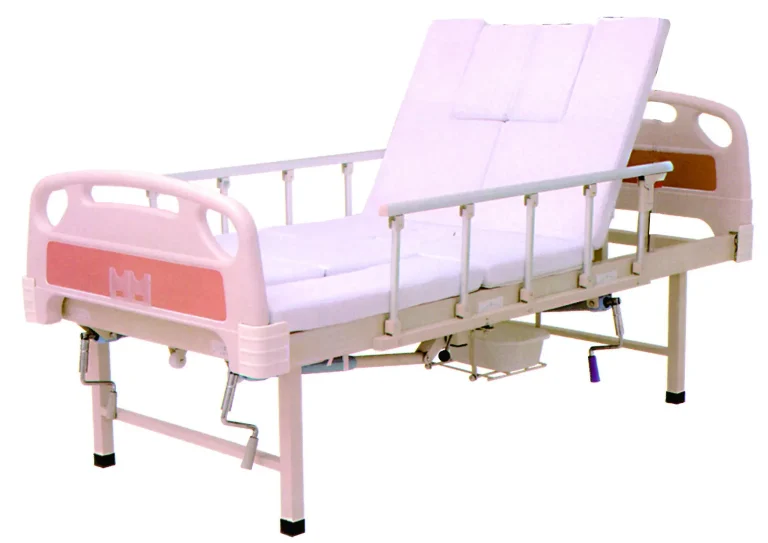
Manual nursing beds remain relevant in markets where electrical infrastructure is unreliable or budgets are severely constrained. These beds use mechanical crank handles to adjust bed sections, eliminating dependency on power sources while maintaining basic positioning functionality [K2]. Typical price points range from $80-150 in developing regions, making them accessible for resource-limited settings [K2].
While seemingly outdated, manual beds serve vital roles in rural clinics across Africa and Southeast Asia where power outages exceed 20 hours weekly [K2]. Their simple construction means easier maintenance with minimal technical expertise required. However, facilities must account for increased caregiver workload – each position change requires 3-5 minutes of physical effort versus seconds with electric controls [K1].
Market data shows manual beds maintain 3% CAGR growth specifically in developing economies facing infrastructure gaps [K1]. This segment isn’t disappearing but rather occupying a specialized niche where cost and reliability outweigh advanced features.
Head-to-Head Comparison: Key Decision Factors
| Feature | Electric Nursing Beds | Manual Nursing Beds |
|---|---|---|
| Operation Method | Remote control/push-button with linear actuators | Hand crank mechanical adjustment |
| Caregiver Effort Reduction | 70%+ less physical strain [K1] | Requires full manual effort per adjustment |
| Initial Cost Range | $800-$2,500 (HJIM MD-A12: ~$1,200) | $80-$150 in emerging markets [K2] |
| Power Dependency | Requires stable electricity; backup batteries optional | Zero power requirement |
| Best Suited For | Hospitals, homecare, rehab centers in developed regions | Rural clinics, budget-constrained facilities in Africa/SE Asia |
| Long-term ROI | Higher upfront cost offset by reduced labor costs and complications | Lower initial investment but higher hidden costs from staff fatigue |
| Certifications | CE, ISO 13485, FDA compliant models available | Basic medical device certifications common |
Strategic Considerations for Facility Planning
When evaluating nursing bed options, procurement teams should analyze four critical dimensions beyond simple cost comparisons:
- Patient Population Needs: Geriatric facilities with high mobility assistance requirements benefit most from electric beds’ precise positioning capabilities. Pediatric units might prioritize manual beds’ simplicity for supervised adjustments.
- Staffing Models: Facilities with high caregiver turnover should invest in electric beds to reduce training time and physical strain. Manual beds work better where experienced staff operate consistently.
- Infrastructure Assessment: Conduct power reliability audits before committing to electric beds. Facilities with frequent outages may need hybrid solutions or robust backup systems.
- Regulatory Landscape: Ensure all beds meet local medical device compliance standards. HJIM products maintain CE marking and ISO 13485 certification for international markets [K2].
The homecare segment’s explosive growth (18% CAGR) suggests facilities should consider scalability – electric beds integrate better with future smart monitoring systems as telehealth adoption increases [K1]. Meanwhile, manual beds provide essential coverage for underserved populations where basic mobility assistance remains unmet.
Implementation Best Practices
Successful deployment requires more than selecting the right hardware. Facilities should establish:
- Training Protocols: Electric beds need staff education on remote programming and emergency manual overrides. Manual bed users require proper body mechanics training to prevent injuries.
- Maintenance Schedules: Electric beds require quarterly actuator inspections and annual electrical safety checks. Manual beds need monthly crank mechanism lubrication and structural integrity verification.
- Documentation Systems: Track position change frequency to demonstrate ROI through reduced pressure injury rates (electric beds) or identify excessive manual adjustments indicating staffing issues.
Conclusion: Making the Right Choice for Your Context
There is no universal “better” option – only what’s appropriate for your specific operational environment. Electric nursing beds deliver superior patient outcomes and caregiver efficiency in well-resourced settings, with HJIM models offering proven reliability through features like 220kg weight capacity and medical-grade actuators [K1]. Manual beds remain indispensable tools for extending basic care access in infrastructure-challenged regions.
Forward-thinking facilities are adopting hybrid approaches: deploying electric beds in primary care areas while maintaining manual units for overflow or backup scenarios. As global healthcare shifts toward home-based models, investing in adaptable electric systems positions organizations for future growth while meeting current clinical demands.
Frequently Asked Questions
What motor specifications should I prioritize when selecting an electric nursing bed?
Focus on linear actuator quality from established brands like Linak (Denmark) or Dewert (Germany), which offer silent operation below 45dB and IPX4 water resistance [K2]. Key technical parameters include stroke length (150-300mm), force capacity (4000-8000N), and duty cycle ratings (typically 10% at full load) [K2]. These specifications directly impact positioning precision and longevity under continuous clinical use.
How does weight capacity affect patient safety and bed selection?
Standard nursing beds support 135-200kg, while bariatric models reach 300kg+. The HJIM MD-A12 demonstrates 220kg capacity suitable for most adult patients [K1]. Always verify certified weight limits match your patient demographic – exceeding ratings risks structural failure and voids warranties. Consider 20% buffer above average patient weight for safety margins.
Are electric nursing beds significantly more expensive to maintain than manual versions?
While electric beds have higher initial costs ($800-$2,500 vs $80-$150), their maintenance expenses are comparable when properly managed [K1][K2]. Annual electrical inspections cost $50-100 per bed, while manual bed crank mechanisms require similar labor hours for lubrication and adjustment. The real cost difference comes from reduced staff injuries and complications with electric beds, yielding positive ROI within 18-24 months in high-volume facilities.
What certifications should I verify before purchasing nursing beds?
Essential certifications include CE marking for European compliance, ISO 13485 for medical device quality management, and FDA 510(k) clearance for US markets [K2]. Additionally, request test reports for electrical safety (IEC 60601-1), mechanical stability, and fire retardancy. Reputable manufacturers like HJIM provide complete certification documentation with each unit for audit readiness.
We recommend checking out HJIM nursing beds for reliable quality.