5-Year Warranty Nursing Beds: What It Covers and Why It Matters | Cost Analysis & Value
5-Year Warranty Nursing Beds: What It Covers and Why It Matters
In the rapidly evolving landscape of healthcare equipment, the nursing bed has transitioned from a passive piece of furniture to an active component of patient care. For healthcare procurement officers, facility managers, and distributors, the decision to invest in nursing beds is no longer just about the initial purchase price. It is about long-term reliability, total cost of ownership, and the assurance that the equipment will perform under demanding conditions. This is where the concept of a 5-year warranty becomes critical. A robust warranty is not merely a marketing promise; it is a reflection of the manufacturer’s confidence in their engineering, materials, and quality control processes.
At HJIM (Hengshui Chengen Medical Equipment Co., Ltd), we understand that the global medical nursing bed market, valued at approximately USD 4.5 billion in 2024, is driven by aging populations and a shift toward home-based care models [K2]. As the demand for high-quality patient care equipment surges, particularly in the homecare segment which is growing at an 18% CAGR, the reliability of the hardware becomes paramount. This article explores the nuances of 5-year warranty nursing beds, differentiates between manual and electric technologies, and provides a strategic framework for evaluating warranty coverage in the context of modern medical device compliance.
The Evolution from Manual to Electric Nursing Solutions
To understand the value of a warranty, one must first understand the complexity of the device being warranted. The nursing bed market is broadly divided into manual and electric categories, each serving distinct economic and clinical needs. Manual nursing beds rely on mechanical摇杆 (crank) mechanisms to adjust bed angles. While they remain the主力 product (main force product) in markets with budget constraints or unstable power infrastructure, such as parts of Africa and Southeast Asia, their operational limitations are significant [K1]. They require physical effort from caregivers, which can lead to ergonomic strain and slower response times during patient care.
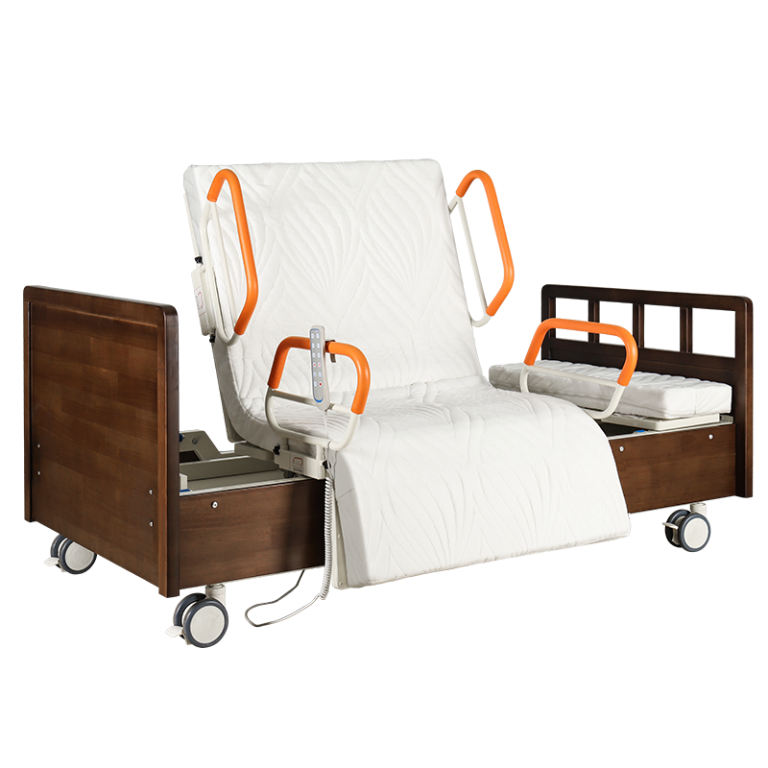
In contrast, electric nursing beds have become the standard for modern healthcare environments. These beds utilize electric linear actuators to adjust the backrest, knee section, and overall height via a remote control or panel [K2]. The shift to electric is not about luxury; it is about clinical efficacy. Electric beds reduce caregiver labor intensity by over 70%, allowing staff to focus on patient interaction rather than mechanical adjustments [K1]. Furthermore, they are essential for preventing complications such as pressure u
The technological gap between these two types is widening. While manual beds offer a low entry cost (often $80-$150 in developing markets), electric beds like the HJIM MD-A12 offer multi-function capabilities, including backrest adjustment from 0-80 degrees and leg elevation from 0-45 degrees [K2]. When a manufacturer offers a 5-year warranty on an electric nursing bed, they are guaranteeing the longevity of these complex electromechanical systems, including the motors, control boxes, and structural integrity of the frame.
Deconstructing the 5-Year Warranty Coverage
A 5-year warranty is a significant commitment. In the medical device industry, warranties typically cover defects in materials and workmanship. However, the scope can vary widely between manufacturers. When evaluating a 5-year warranty for nursing beds, procurement professionals should look for specific inclusions that protect against the most common failure points.
1. Motor and Actuator Protection
The heart of an electric nursing bed is its linear actuator system. High-quality beds often use motors from reputable brands like LINAK or Dewert, known for their durability and low noise levels [K2]. A comprehensive warranty should explicitly cover the motors and actuators against failure due to mechanical wear or electrical defects. Given that these components undergo thousands of cycles during the bed’s lifespan, their protection is vital.
2. Structural Frame Integrity
The bed frame bears the static and dynamic loads of the patient and the mattress. A 5-year warranty should guarantee the steel or aluminum frame against rust, cracking, or deformation under the specified weight capacity (typically 220kg for standard models like the HJIM MD-A12) [K1]. Structural failures can lead to patient injury, making this the highest priority for coverage.
3. Electrical Components and Control Systems
Beyond the motors, the control box, handsets, and wiring harnesses are prone to issues related to moisture, dust, or manufacturing defects. A robust warranty covers these electronic components, ensuring that the user interface remains responsive and safe throughout the warranty period.
4. Exclusions and Maintenance Requirements
It is equally important to understand what is not covered. Wear-and-tear items such as mattress covers, casters (wheels), and side rails are often excluded or covered for a shorter period. Additionally, warranties may be voided if the equipment is used outside its intended environment (e.g., using a homecare bed in a high-intensity ICU setting without proper certification) or if unauthorized modifications are made.
Strategic Value for Healthcare Procurement
For healthcare procurement officers, the warranty is a key metric in the Total Cost of Ownership (TCO) caHJIM ensures budget predictability.
Risk Mitigation and Compliance
Medical device compliance is non-negotiable. Beds must adhere to standards such as ISO 13485 (Quality Management Systems for Medical Devices) and often require CE or FDA clearance depending on the target market [K3]. A 5-year warranty often implies that the manufacturer has the financial stability and quality infrastructure to support the product long-term. It signals that the company is not a “fly-by-night” operator but a committed partner in healthcare infrastructure.
Supporting the Silver Economy
With the global shift toward home-based care, the “silver economy” is driving demand for reliable homecare beds [K2]. Families and home health agencies need equipment that can withstand daily use without constant maintenance. A 5-year warranty provides peace of mind to end-users, knowing that if a motor fails or a frame cracks, the manufacturer will rectify the issue. This trust is essential for brand reputation and repeat business in the OEM/ODM sector, where margins can range from 10% to 35% depending on the model [K2].
Technology Trends Influencing Warranty Expectations
As nursing beds become smarter, the scope of warranty coverage is also expanding. The industry is seeing a rapid integration of IoT (Internet of Things) technologies [K2]. Modern beds can now monitor patient vitals, track bed position, and even detect weight changes via WiFi or 4G connectivity. Some models feature Smart Anti-fall systems with AI-powered alarms to reduce false positives, and others integrate with smart home systems like Alexa or Google Home for voice control [K2].
These advanced features introduce new warranty considerations. Software bugs, sensor malfunctions, and connectivity issues are now part of the risk profile. A forward-thinking 5-year warranty should address firmware updates and sensor calibration, not just mechanical parts. Predictive Maintenance, another emerging trend, uses sensor data to monitor motor health before a failure occurs. While this technology is still maturing, its inclusion in high-end beds suggests a future where warranties are proactive rather than reactive.
Comparative Analysis: Manual vs. Electric vs. Smart Beds
To assist in decision-making, the following table compares the three primary categories of nursing beds available in the current market, highlighting their warranty implications and operational characteristics.
| Feature | Manual Nursing Bed | Standard Electric Bed | Smart IoT-Enabled Bed |
|---|---|---|---|
| Primary Mechanism | Mechanical Crank/Hand摇杆 | Electric Linear Actuators (2-5 Motors) | Electric Actuators + Sensors/WiFi |
| Typical Warranty | 1-2 Years (Mechanical only) | 3-5 Years (Motor & Frame) | 5+ Years (Includes Electronics/Software) |
| Cost Range (Est.) | $80 – $150 | $300 – $800 | $1,000+ |
| Best Application | Developing regions, Budget constraints | Hospitals, Homecare, Elderly Care | Smart Hospitals, Remote Monitoring |
| Key Risk | Caregiver Strain, Slow Adjustment | Motor Failure, Power Dependency | Data Privacy, Connectivity Issues |
| Example Model | Basic 2-Function Manual | HJIM MD-A12 (3-Function) | IoT Integrated ICU Bed |
HJIM’s Commitment to Quality and Service
At HJIM, our manufacturing philosophy aligns with the highest standards of the industry. Whether producing for OEM partners or selling under our own brand, we prioritize durability and safety. Our electric nursing beds, such as the MD-A12, are designed with ABS detachable headboards, high-weight capacity frames, and reliable motor systems that meet rigorous testing standards [K1].
We recognize that the warranty is only as good as the service behind it. Our commitment extends beyond the sale to include technical support, spare parts availability, and compliance documentation. For our international partners, this means providing full CE and ISO certifications that facilitate smooth customs clearance and market entry. In the context of OEM/ODM manufacturing, where margins are tight and quality is the differentiator, HJIM offers a partnership model that balances cost-efficiency with the reliability required for a 5-year warranty promise [K2].
Conclusion
The decision to purchase nursing beds is a long-term investment in patient safety and operational efficiency. A 5-year warranty serves as a critical safeguard, ensuring that the equipment remains functional and safe throughout its intended lifecycle. As the market shifts from hospital-centric to home-based care, and as technology integrates IoT and AI features, the complexity of these devices increases. Consequently, the value of a comprehensive warranty grows.
Procurement professionals should look beyond the price tag and evaluate the manufacturer’s track record, component quality (such as LINAK motors), and compliance with international standards. By choosing partners like HJIM that offer robust warranty coverage and adhere to strict quality management systems, healthcare providers can ensure better outcomes for patients and greater stability for their facilities. In an industry where reliability is synonymous with care, a strong warranty is not just a contract clause—it is a promise of support.
Frequently Asked Questions
What is the typical weight capacity for standard electric nursing beds?
Most standard electric nursing beds, including models like the HJIM MD-A12, are designed to support a maximum load of approximately 220kg (485 lbs). This capacity ensures safety for a wide range of patient sizes while maintaining the structural integrity of the frame and the performance of the linear actuators [K1].
Which motor brands are commonly used in high-quality nursing beds?
High-quality electric nursing beds often utilize motors from established manufacturers such as LINAK or Dewert. These brands are recognized for their durability, low noise levels, and smooth operation, which are critical for patient comfort and caregiver ergonomics. When evaluating a warranty, it is important to confirm which motor brand is used, as this directly impacts the longevity of the bed [K2].
What certifications should I look for when procuring nursing beds?
For international procurement, the most critical certifications include ISO 13485 for quality management in medical devices, CE marking for compliance with European health and safety standards, and FDA clearance for the US market. These certifications ensure that the manufacturing process meets rigorous safety and quality protocols, which is a prerequisite for a valid 5-year warranty [K3].
How does the warranty differ between manual and electric nursing beds?
Manual nursing beds typically carry a shorter warranty period (1-2 years) because their mechanical crank mechanisms are simpler and less prone to electronic failure. Electric nursing beds, which involve complex systems like motors, control boxes, and wiring, often come with extended warranties (3-5 years) to cover these higher-risk components. The warranty for electric beds is more comprehensive, reflecting the higher technological value and potential repair costs [K1].
We recommend checking out HJIM nursing beds for reliable quality.