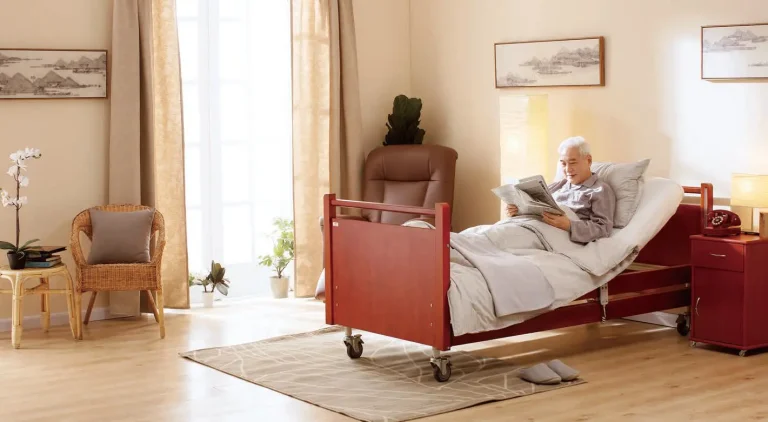
Patient Turning Bed vs Standard Nursing Bed: Comparison | Feature Comparison
Patient Turning Bed vs Standard Nursing Bed: A Comprehensive Comparison for Healthcare Procurement
In the evolving landscape of healthcare infrastructure, the choice of patient support surfaces is no longer a one-size-fits-all decision. As global healthcare systems shift from hospital-centric models to home-based care, and as aging populations in OECD nations drive demand for better elderly care solutions, procurement officers and facility managers face a critical choice: the traditional standard nursing bed versus the advanced patient turning bed (often categorized as a multi-function electric nursing bed). This comparison explores the technical, economic, and clinical implications of both options, grounded in current industry data and manufacturing standards.
Defining the Categories: Manual vs. Electric Mechanisms
To understand the difference, we must first define the core mechanisms that drive these products. The “Standard Nursing Bed” typically refers to the manual nursing bed, a staple in budget-conscious environments. According to industry specifications, a manual nursing bed utilizes a mechanical crank or hand-rotate rod system to adjust the bed surface angles [K1]. These beds are characterized by their simplicity and lack of electrical components, making them the most经济 (economical) choice for markets with unstable power grids or strict budget constraints [K1].
In contrast, the term “Patient Turning Bed” in a modern procurement context generally refers to an Electric Nursing Bed. These units replace the mechanical crank with electric linear actuators. Instead of physical exertion, the bed position is adjusted via a remote control or a wall-mounted panel [K2]. This shift from manual to electric is not merely about convenience; it represents a fundamental change in how patient care is delivered. The electric bed is designed to solve the core problem of “a patient who cannot move but requires position changes,” reducing the physical labor intensity for caregivers by over 70% [K2].
Clinical Outcomes and Patient Comfort
The primary differentiator between these two bed types lies in their impact on patient health outcomes. Standard manual beds offer basic height adjustment, but achieving specific clinical positions requires significant effort from nursing staff. Advanced electric beds, however, enable precise positioning that is critical for recovery. A prime example is Fowler’s Position, a standard clinical posture where the upper body is raised between 45 and 60 degrees [K3].
Maintaining Fowler’s Position is essential for patients with respiratory distress, as it reduces cardiac preload and improves chest expansion. It is also vital for preventing aspiration pneumonia during feeding [K3]. While a manual bed can theoretically achieve this angle, the friction and effort required often lead to inconsistent application in busy wards. Electric beds, such as the HJIM MD-A12, allow for precise adjustment of the backrest from 0 to 80 degrees and the knee section from 0 to 45 degrees with the push of a button [K2]. This precision ensures that patients receive the therapeutic positioning they need without delaying care due to caregiver fatigue.
Caregiver Ergonomics and Labor Efficiency
Healthcare procurement is increasingly focused on caregiver ergonomics. The physical demand of turning a patient on a standard manual bed is substantial. Caregivers must manually crank the bed and often physically lift or shift the patient to achieve the desired angle. This not only slows down workflow but increases the risk of workplace injuries for nursing staff.
Electric nursing beds transform this workflow. By automating the turning and tilting functions, these beds allow a single caregiver to manage patient repositioning safely. The HJIM (Hengshui Chengen Medical Equipment Co., Ltd) MD-A12 model, for instance, features a three-function design that includes backrest lift, leg lift, and overall bed height adjustment [K2]. This capability is crucial in home healthcare settings where professional nursing support may be limited to short visits. The ability for a patient to adjust their own position via remote control also promotes a sense of autonomy and dignity, which is a key component of modern elderly care.
Market Dynamics and Global Demand
The global medical nursing bed market is valued at approximately USD 4.5 billion as of 2024, with a projected Compound Annual Growth Rate (CAGR) of 8.5% through 2027 [English K3]. This growth is driven by the expansion of home healthcare under government insurance programs and the demographic shift toward older populations. However, the demand is not uniform across all regions.
Standard manual beds remain the主力产品 (main product) in regions like Africa and Southeast Asia, where prices range between $80 and $150 [K1]. In these markets, the low cost and durability of manual beds make them the pragmatic choice for基层 hospitals (primary care hospitals) and budget-limited nursing homes. Conversely, in North America and Europe, electric beds are transitioning from luxury items to basic configurations. The misconception that “electric beds are luxury products” is being corrected by market reality; they are becoming the standard for compliance with patient safety and caregiver labor regulations [K2].
Technological Integration and Future Trends
The gap between standard and advanced beds is widening due to technology. While manual beds are static, the next generation of electric nursing beds is becoming “smart.” Industry trends indicate a move toward IoT Integration, where beds can remotely monitor patient vitals, bed position, and weight via WiFi or 4G [English K2].
Furthermore, Smart Anti-fall systems are emerging, utilizing AI to reduce false positives in bed exit alarms [English K2]. This is a critical safety feature for dementia care. Voice control integration with smart home systems like Alexa or Google Home is also becoming a differentiator, allowing patients with limited mobility to control their environment hands-free [English K2]. For procurement officers looking at long-term asset value, these technological capabilities suggest that electric beds offer a future-proof investment compared to the static nature of manual beds.
Procurement Specifications and Compliance
When evaluating these products for purchase, specific technical parameters must be verified to ensure medical device compliance. Key indicators include the motor brand (e.g., LINAK, Dewert, or high-quality domestic alternatives), the number of functions, and the maximum load capacity [K2]. For example, the HJIM MD-A12 supports a maximum load of 220kg, making it suitable for bariatric patients as well as standard care [K2].
Regulatory standards are non-negotiable. Reputable manufacturers should provide evidence of CE marking, ISO 13485 certification for quality management, and, where applicable, FDA registration. These certifications ensure that the bed meets safety standards for electrical insulation, mechanical stability, and biocompatibility of materials. Additionally, the warranty terms and the availability of spare parts (such as actuators and remote controls) are critical for lifecycle cost management.
Comparison of Technical Specifications
The following table summarizes the key differences between standard manual nursing beds and advanced electric patient turning beds based on current industry data:
| Feature | Standard Manual Nursing Bed | Advanced Electric Nursing Bed (e.g., HJIM MD-A12) |
|---|---|---|
| Adjustment Mechanism | Manual crank / Hand-rotate rod | Electric linear actuators (2-5 motors) |
| Control Method | Physical effort by caregiver | Remote control / Wall panel / Voice (Smart models) |
| Typical Price Range | $80 – $150 | Varies (Higher initial cost, lower labor cost) |
| Max Load Capacity | Typically 150kg – 180kg | Up to 220kg (e.g., HJIM MD-A12) |
| Primary Application | Developing markets, primary care, budget facilities | Hospitals, home care, rehabilitation centers |
| Clinical Precision | Low (Dependent on caregiver effort) | High (Precise angles for Fowler’s position) |
| Future Readiness | Static (No IoT capability) | High (IoT, Remote Monitoring, AI Alarms) |
Conclusion
The choice between a standard nursing bed and an advanced patient turning (electric) bed depends heavily on the specific operational context. For facilities in regions with power instability or extremely tight budgets, the manual nursing bed remains a viable, durable solution [K1]. However, for modern healthcare providers focused on patient outcomes, caregiver safety, and long-term operational efficiency, the electric nursing bed is the superior choice. The ability to precisely manage patient positioning, reduce physical strain on staff, and integrate with future smart healthcare technologies makes the electric bed a critical component of high-quality care. As the global market continues to grow, investing in electric solutions from compliant manufacturers like HJIM ensures readiness for the demands of aging populations and advanced home care models.
Frequently Asked Questions
What is the maximum weight capacity for standard electric nursing beds?
While standard manual beds typically support loads up to 150kg, advanced electric nursing beds often feature higher capacity frames. For example, the HJIM MD-A12 electric nursing bed is rated for a maximum load of 220kg, making it suitable for a wider range of patient body types including bariatric care [K2].
What is Fowler’s Position and why is it important for bed selection?
Fowler’s Position is a standard clinical posture where the patient’s upper body is elevated between 45 and 60 degrees [K3]. It is critical for patients with respiratory issues as it improves chest expansion and reduces the risk of aspiration pneumonia. Selecting a bed that can precisely and easily maintain this angle (typically 0-80 degrees for the backrest) is essential for respiratory care [K3].
How do electric beds reduce caregiver labor intensity?
Manual beds require caregivers to physically crank a handle to adjust the bed, which is physically demanding. Electric beds use linear actuators to perform these adjustments automatically. Industry data suggests that switching to electric beds can reduce caregiver labor intensity by more than 70%, allowing staff to focus more on direct patient care rather than mechanical adjustments [K2].
Are there smart features available in modern nursing beds?
Yes, technology trends in the nursing bed industry are moving toward IoT integration. Modern electric beds can now include features such as remote monitoring of patient vitals and weight via WiFi/4G, AI-powered bed exit alarms to prevent falls, and even voice control integration with smart home systems [English K2]. These features are generally not available in standard manual beds.
We recommend checking out HJIM nursing beds for reliable quality.