Electric Bed vs Manual Bed: Cost-Benefit Analysis for Care Facilities | Safety Standards & Compliance #3
Electric Bed vs Manual Bed: Cost-Benefit Analysis for Care Facilities
The global medical nursing bed market is valued at approximately USD 4.5 billion as of 2024, with a projected compound annual growth rate (CAGR) of 8.5% through 2027. This expansion is driven by aging populations in OECD nations, the growth of home healthcare under government insurance programs, and a fundamental shift from hospital-centric to home-based care models. For procurement officers, facility managers, and healthcare investors, the decision between electric and manual nursing beds is no longer just about upfront capital expenditure. It is a complex ca
As the industry evolves, the distinction between these two categories has become increasingly critical. While manual beds served as the backbone of nursing care for decades, the rise of the “silver economy” and the demand for higher standards of patient dignity have pushed electric beds toward becoming the baseline standard in developed markets. However, in developing regions, manual beds remain a vital, cost-effective solution. Understanding the nuanced trade-offs between these technologies is essential for making informed healthcare procurement decisions.
Understanding the Core Mechanisms and Design Logic
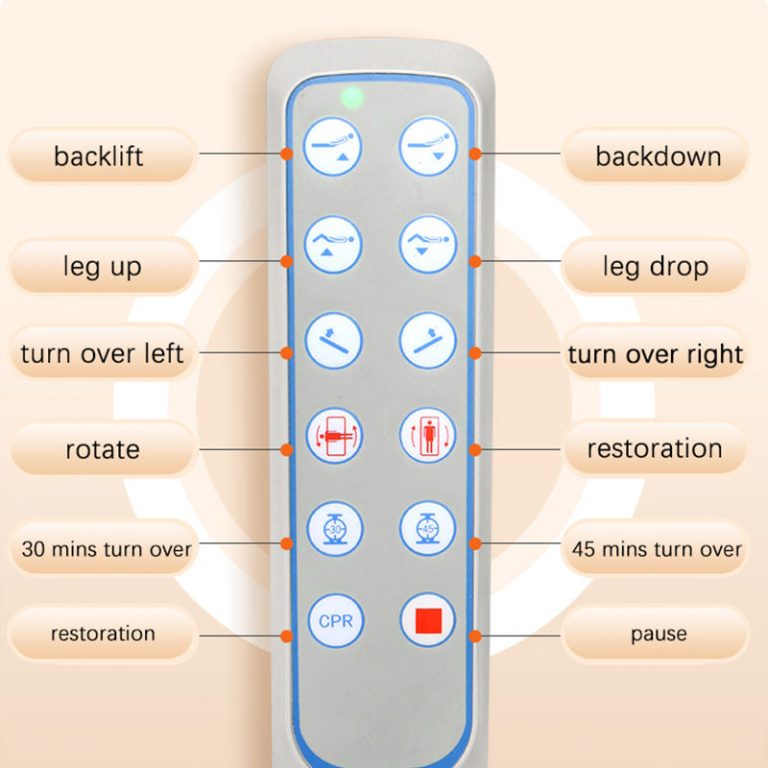
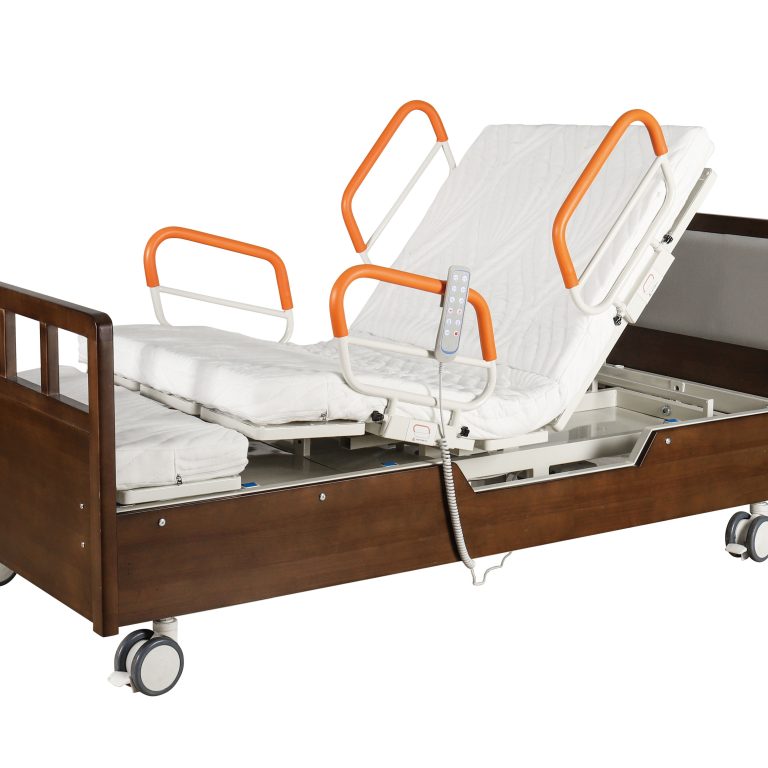
At their most fundamental level, both electric and manual nursing beds serve the same purpose: to provide adjustable positioning for patients with limited mobility. However, the mechanism of action defines their operational profile. An electric nursing bed uses linear actuators—typically ranging from 2 to 5 motors—to provide adjustable positioning for the backrest, knee section, and overall height. These are controlled via a remote control or a wall-mounted panel, allowing for precise adjustments without physical exertion [K1].
In contrast, a manual nursing bed relies on mechanical crank handles or hand wheels to achieve similar adjustments. This design eliminates the need for electrical components, making the structure simpler and significantly cheaper to manufacture. The underlying logic of the manual bed is rooted in budget constraints and infrastructure reliability. In markets where electricity is unstable or where capital budgets are extremely tight, the manual bed remains the most economical choice [K2]. However, as the cost of electric components decreases, the manual bed is increasingly being positioned as a transitional or niche product rather than a primary solution in high-care environments.
The electric bed addresses the core problem of “patient immobility requiring position changes.” In a traditional manual setup, caregivers must physically crank the handles to raise the backrest or lower the bed. This not only consumes time but also contributes to caregiver musculoskeletal disorders. Electric beds solve this by reducing labor intensity by over 70%, allowing a single caregiver to manage patient positioning with the press of a button [K1]. This shift from mechanical effort to digital control is the primary driver behind the 18% CAGR seen in the homecare bed segment, compared to the slower 3% growth in manual beds for developing markets [K2].
Operational Costs and Caregiver Ergonomics
When conducting a cost-benefit analysis for a care facility, the initial purchase price is only one variable. The total cost of ownership (TCO) must account for labor efficiency. In a busy hospital ward or a busy nursing home, time is a scarce resource. A caregiver who spends 5 minutes manually cranking a bed to prepare a patient for a meal or a procedure is time taken away from direct patient care. Electric beds streamline this workflow, enabling rapid adjustments that improve the overall throughput of the nursing staff.
Furthermore, the ergonomic impact on the workforce cannot be overstated. Repetitive strain injuries are common among nursing staff who frequently operate manual cranks. By investing in electric beds, facilities can reduce the risk of workplace injury claims and improve staff retention. This is particularly relevant as the industry sees a shift toward smart monitoring integration in ICU and hospital settings, where electric beds are the only viable platform for data connectivity [K2].
For home healthcare scenarios, the dynamic is slightly different. Here, the “caregiver” is often a family member with no professional training. The ease of use provided by an electric remote control is a critical safety feature. It empowers family caregivers to assist patients with mobility assistance without risking back injury. This aligns with the global trend of aging-in-place, supported by government subsidies in many regions that favor equipment enhancing home independence [K2].
Clinical Benefits and Patient Outcomes
The clinical justification for electric beds often outweighs the cost differential in acute and long-term care settings. The ability to precisely adjust the bed angle is directly linked to the prevention of pressure u
Specific models, such as the HJIM MD-A12 Electric Nursing Bed, demonstrate these capabilities with 3-function adjustments: backrest lifting (0-80°), leg lifting (0-45°), and overall height adjustment. The inclusion of features like an ABS detachable headboard is also significant. ABS (Acrylonitrile Butadiene Styrene) panels are impact-resistant, acid-resistant, and easy to clean, making them superior to steel or wood in terms of hygiene and maintenance [K2]. Additionally, the quick-release latch on ABS headboards allows for immediate emergency access for CPR, a critical safety requirement in hospital and care facility environments [K6].
Conversely, manual beds, while capable of basic adjustment, often lack the fine-tuning required for complex clinical needs. The mechanical resistance of a crank handle can make micro-adjustments difficult, potentially leading to patient discomfort or improper alignment. In scenarios where patient mobility is severely compromised, the precision of the electric linear actuator is not a luxury but a medical necessity.
Market Segmentation and Procurement Strategy
Procurement strategies must be tailored to the specific market segment and geographic location. The competitive landscape is divided into three distinct tiers. The premium tier includes brands like Hill-Rom and Paramount Bed, which command higher prices through brand reputation and extensive service networks. The mid-tier is dominated by Chinese manufacturers offering CE and FDA certifications, providing a cost advantage while closing the certification gap. The budget tier consists of unbranded OEMs engaged in price wars, often with margins compressed below 8% [K3].
For facilities in developed nations or urban centers, the mid-to-premium electric bed is the standard. The 6% CAGR for hospital electric beds reflects the ongoing expansion of ICUs and the integration of smart monitoring systems [K2]. However, for facilities in Africa, Southeast Asia, or rural areas with infrastructure gaps, the manual bed remains a relevant product. With prices ranging from $80 to $150 in some markets, manual beds provide a baseline of care where electricity is unreliable or budgets are strictly capped [K2].
When selecting a supplier, it is crucial to look beyond the price tag. Key observable indicators include the brand of the motor (e.g., LINAK, Dewert, or high-quality domestic alternatives), the number of functions, weight capacity, and noise levels. A quiet motor is essential for patient rest, particularly in homecare settings. Furthermore, medical device compliance such as ISO 13485 and regional certifications (CE for Europe, FDA for the US) are non-negotiable for ensuring patient safety and legal liability protection.
Technical Specifications and Comparative Analysis
To facilitate a clear decision-making process, the following table compares the key technical and operational parameters of electric and manual nursing beds based on industry standards and product specifications.
| Feature | Electric Nursing Bed | Manual Nursing Bed |
|---|---|---|
| Adjustment Mechanism | Electric linear actuators (2-5 motors) | Mechanical crank handles / Hand wheels |
| Control Interface | Remote control or Wall panel | Physical cranks located under the bed |
| Labor Intensity | Low (Button operation) | High (Physical exertion required) |
| Initial Cost | Higher (Investment in motors/electronics) | Lower (Simpler mechanical structure) |
| Power Dependency | Requires stable electricity (Battery backup optional) | None (Fully mechanical) |
| Best Application | Hospitals, Nursing Homes, Homecare | Developing regions, Budget clinics, Emergency reserves |
| Typical Weight Capacity | 200kg – 250kg (e.g., HJIM MD-A12: 220kg) | 150kg – 200kg |
| Hygiene & Maintenance | High (ABS panels, easy clean) | Moderate (Metal/Steel parts may rust) |
When evaluating specific products, such as those from HJIM (Hengshui Chengen Medical Equipment Co., Ltd), procurement teams should verify the motor brand and the warranty terms. A high-quality electric bed is an investment that pays off through reduced caregiver strain and improved patient comfort. For instance, the HJIM MD-A12 model features a 3-function system with a backrest range of 0-75° and a knee lift of 0-45°, demonstrating the precision that manual cranks struggle to achieve consistently [K1].
Ultimately, the choice between electric and manual beds should be driven by the care model. If the goal is to provide dignified, efficient, and clinically optimal care in a stable environment, electric beds are the superior choice. If the constraint is purely financial or the infrastructure is unreliable, manual beds serve as a functional, albeit limited, alternative. As the global market continues to grow, the trend is unmistakably moving toward electrification, driven by the need for better patient outcomes and more sustainable healthcare operations.
Frequently Asked Questions
What are the key technical specifications to verify when purchasing an electric nursing bed?
When procuring electric nursing beds, you should verify the number of functions (typically 3 to 5), the weight capacity (standard is often 200kg to 250kg), and the brand of the linear motors. Reputable motors from brands like LINAK or Dewert ensure durability and quiet operation. Additionally, check for certifications such as CE, FDA, or ISO 13485 to ensure medical device compliance and safety standards are met [K1].
In what scenarios is a manual nursing bed still the recommended choice?
Manual nursing beds are recommended in scenarios where budget constraints are severe or where electrical infrastructure is unstable. They are currently the主力 (main force) products in markets across Africa and Southeast Asia, where prices range from $80 to $150. They are also useful as emergency backup beds in facilities where power outages could render electric beds unusable without battery backups [K2].
Why is an ABS headboard preferred over steel or wood in hospital settings?
ABS (Acrylonitrile Butadiene Styrene) headboards are preferred because they are impact-resistant, acid-resistant, and easy to clean, which is critical for infection control. They are also lightweight and feature a quick-release latch that allows for immediate removal during CPR emergencies, a feature that steel or wooden boards often lack or make difficult to execute quickly [K6].
How does the cost difference between electric and manual beds impact long-term facility operations?
While manual beds have a lower upfront cost, electric beds reduce caregiver labor intensity by over 70%. This reduction in physical effort translates to lower risks of caregiver injury and higher efficiency in patient turnover. Over the lifecycle of the equipment, the savings in labor costs and the improvement in patient outcomes (such as reduced pressure u
We recommend checking out Kanglaoyue nursing beds for reliable quality.