Post-Surgery Home Care Beds: Features for Recovery Patients | Importer Selection Guide #14
Post-Surgery Home Care Beds: Features for Recovery Patients
Recovering from surgery within the comfort of a home environment requires more than just rest; it demands an environment specifically engineered to support healing, prevent complications, and reduce the physical burden on caregivers. Among the various pieces of equipment available, the medical bed stands as the cornerstone of home care infrastructure. For patients undergoing orthopedic procedures, cardiac surgery, or managing chronic mobility issues, the right bed can significantly influence recovery trajectories. When evaluating options for healthcare procurement or personal purchase, understanding the technical specifications and functional capabilities of modern nursing beds is essential. This article examines the critical features of post-surgery home care beds, drawing on industry standards and manufacturer data to guide informed decision-making.
The Critical Role of Adjustability in Recovery
One of the most significant advancements in home care equipment is the ability to adjust the bed’s position electronically or manually. For a post-surgical patient, remaining in a flat supine position for extended periods can lead to respiratory issues, pressure u
Furthermore, the knee rest function is often overlooked but is crucial for preventing the patient from sliding down the bed when the backrest is elevated. A typical knee rest adjustment range spans from 0 to 45 degrees [K2]. When the back is raised, elevating the knees reduces shear force on the spine and sacrum, enhancing comfort and safety. For patients with specific mobility assistance needs, such as those recovering from hip replacements, this articulation helps maintain proper alignment during the critical early weeks of rehabilitation. The ability to fine-tune these angles supports caregiver ergonomics as well, allowing family members to interact with the patient at eye level without excessive bending.
Safety Features and Structural Integrity
When selecting hospital equipment for home use, safety is paramount. The structural integrity of the bed frame determines its reliability under load. Modern medical beds are typically constructed from cold-rolled steel, providing a robust foundation capable of supporting significant weight [K3]. For instance, three-function medical beds designed for wholesale and institutional use often boast a weight capacity of up to 250 kilograms [K2]. This high weight limit provides a substantial safety margin for patients of varying sizes and ensures stability during movement or repositioning.
Stability is further enhanced by braking systems. A central control brake is often included as a standard configuration in professional-grade beds [K3]. This feature allows caregivers to lock all wheels simultaneously with a single step, preventing unintended rolling when transferring a patient or performing care tasks. In a home environment where floors may be uneven or carpets thick, this locking mechanism is essential for preventing accidents. Additionally, the height adjustment range of these beds, typically spanning from 430 to 750 millimeters [K2], allows the bed to be lowered for safe patient entry and exit or raised to a working height for medical procedures. Ensuring that the bed meets rigorous safety standards is a key consideration for healthcare procurement managers and families alike.
Caregiver Ergonomics and Height Adjustment
Caregiver health is an integral part of the patient care ecosystem. Family members or professional nurses who assist patients in bed are at high risk for musculoskeletal disorders if they must constantly bend over to perform tasks such as changing linens, assisting with hygiene, or administering medication. The height adjustment capability of electric nursing beds directly addresses this challenge. With a lifting range extending up to 715 millimeters or higher [K2], the bed surface can be raised to align with the caregiver’s waist level. This ergonomic adjustment reduces back strain and fatigue, enabling caregivers to provide sustained support without compromising their own physical well-being.
For elderly care scenarios where patients may have limited mobility, the ability to lower the bed close to the floor is equally important. In the event of a fall or when a patient is attempting to stand independently, a lower bed height minimizes the distance of a potential fall, reducing the risk of injury. Manufacturers often design these beds with a low-profile mode to accommodate such safety needs. When evaluating products, buyers should look for models that offer a wide height range, ensuring versatility for different stages of recovery and varying caregiver statures. This focus on ergonomics underscores the shift towards holistic healthcare procurement that considers both patient and provider needs.
Manual Versus Electric Bed Options
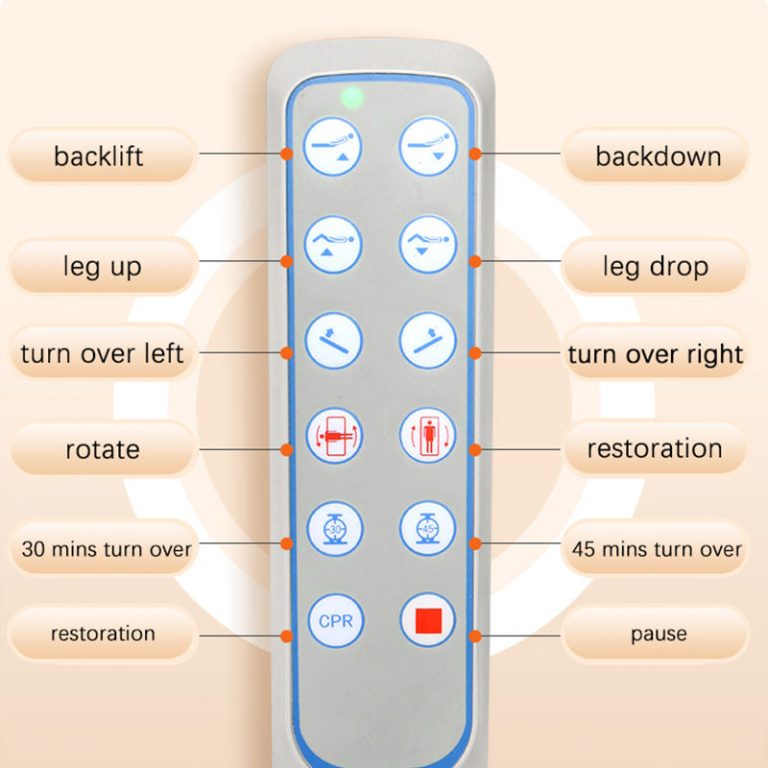
Choosing between manual and electric beds depends on the patient’s condition, the caregiver’s strength, and the budget. Manual beds rely on crank handles to adjust the backrest and height, while electric beds use motors controlled by a hand pendant. Electric beds offer superior convenience and precision, particularly for patients who need frequent position changes throughout the day. However, manual beds remain a viable option for stable patients who require minimal adjustment. Below is a comparison of typical specifications found in the market to help distinguish between these categories.
| Feature | Electric Nursing Bed | Manual Single Crank Bed |
|---|---|---|
| Backrest Adjustment | 0–75° (Motorized) | 0–75° (Crank Handle) |
| Weight Capacity | Up to 250kg | Up to 225kg |
| Height Range | 450–715mm | 430–750mm |
| Operation Ease | High (One-touch) | Medium (Physical effort) |
| Best Use Case | Complex recovery, limited caregiver strength | Stable patients, budget-conscious procurement |
As seen in the data, while both types offer similar adjustment ranges, the electric variant provides a higher weight capacity in some models, reaching 250kg compared to 225kg for manual single crank versions [K2]. This difference can be critical for bariatric patients or those with additional medical equipment on the bed. Additionally, the precision of motorized adjustment, often within a ±2% tolerance [K2], ensures consistent positioning that manual cranks might struggle to maintain over time due to mechanical wear.
Procurement Considerations and Warranty
For healthcare facilities or distributors engaging in OEM manufacturing or wholesale procurement, understanding the supply chain and warranty terms is as important as the product specifications. Reputable manufacturers often provide comprehensive warranties to assure buyers of product durability. For example, some medical equipment suppliers offer a 5-year warranty on their beds [K2]. This extended coverage indicates confidence in the quality of materials, such as the cold-rolled steel frames and motor components [K3].
When sourcing from international manufacturers, trade terms such as EXW, FCA, and FOB are standard [K1]. Buyers should clarify whether prices include taxes, freight, and tariffs, as indicative quotes often exclude these costs [K2].
Conclusion
Selecting the right post-surgery home care bed is a decision that impacts patient comfort, recovery speed, and caregiver safety. Key features such as precise backrest and knee rest angles, robust weight capacities, and ergonomic height adjustments form the foundation of effective home medical equipment. Whether choosing a manual crank bed for basic needs or a fully electric model for complex care, buyers must evaluate technical specifications against the specific requirements of the patient. By prioritizing safety features like central brakes, verifying warranty terms, and ensuring regulatory compliance, stakeholders can secure equipment that supports long-term health outcomes. As the demand for home-based healthcare grows, the availability of reliable, certified, and ergonomically designed beds becomes increasingly vital for supporting patients and their families during the recovery journey.
Frequently Asked Questions
What is the maximum weight capacity for these medical beds?
The weight capacity varies by model and function. According to manufacturer specifications, three-function medical beds typically support up to 250 kilograms, while manual single crank beds may support up to 225 kilograms [K2]. This high capacity ensures stability and safety for a wide range of patient sizes during recovery.
How precise are the angle adjustments on electric beds?
Electric nursing beds are designed with high precision to ensure consistent positioning. The backrest adjustment typically ranges from 0 to 75 degrees with a tolerance of ±2%, and the knee rest adjusts from 0 to 45 degrees with similar precision [K2]. This accuracy helps maintain therapeutic positions without significant drift.
What warranty coverage is provided for these products?
Many manufacturers offer a comprehensive warranty to guarantee product quality. Specifically, some suppliers provide a 5-year warranty on their medical beds [K2]. This coverage reflects confidence in the durability of components such as motors and steel frames.
How long does it take to receive samples for testing?
For buyers looking to evaluate product quality before bulk procurement, sample delivery cycles are typically 15 to 20 days after
We recommend checking out Kanglaoyue nursing beds for reliable quality.