Electric Bed vs Manual Bed: Cost-Benefit Analysis for Care Facilities | Installation & Maintenance #9
Electric Bed vs Manual Bed: Cost-Benefit Analysis for Care Facilities
When procuring medical furniture for care facilities, the choice between electric and manual nursing beds represents one of the most significant operational decisions. This choice impacts not only upfront capital expenditure but also long-term labor costs, patient outcomes, and regulatory compliance. As global healthcare systems shift toward home-based care models and aging populations increase demand, understanding the true cost-benefit dynamics becomes essential for procurement officers, facility managers, and healthcare administrators.
Understanding Electric Nursing Beds
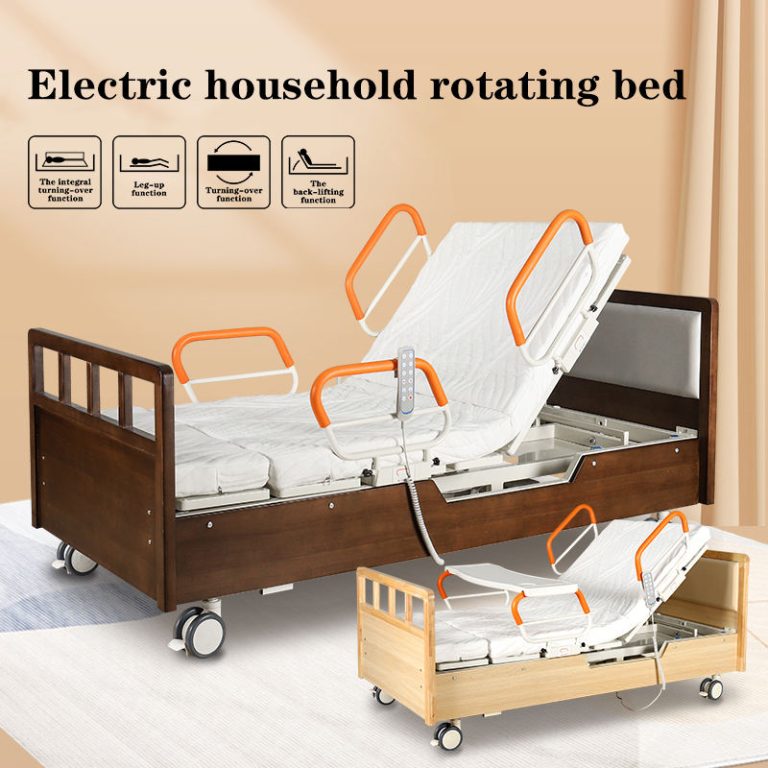
Electric nursing beds utilize linear actuators to enable remote-controlled adjustment of bed positions, fundamentally transforming patient care workflows. These beds typically feature 2-5 motors that control backrest elevation (0-80°), knee section adjustment (0-45°), and overall height variation. The HJIM MD-A12 model exemplifies this technology with its 3-function system, 220kg weight capacity, and ABS detachable headboard designed for emergency CPR access.
The core value proposition lies in labor reduction. Electric beds decrease caregiver physical effort by over 70% compared to manual alternatives, directly addressing nurse shortages and ergonomic injury risks. For facilities managing high patient turnover or specialized care units like ICUs, this translates to measurable productivity gains. Additionally, electric beds support preventive care protocols by enabling frequent position changes that reduce pressure u
Modern electric beds integrate smart monitoring capabilities, with sensors tracking patient movement and vital signs. This aligns with industry trends toward data-driven care models, particularly in OECD nations where government insurance programs increasingly reimburse technology-enhanced homecare solutions.
Understanding Manual Nursing Beds
Manual nursing beds rely on mechanical crank systems for position adjustment, offering a fundamentally different value equation. While requiring physical effort from caregivers to operate, these beds eliminate electrical components, reducing both initial costs and maintenance complexity. Typical specifications include 2-3 adjustment points with weight capacities of 150-200kg, constructed from steel or aluminum alloys.
The economic case for manual beds remains compelling in specific contexts. In developing markets across Africa and Southeast Asia, where power infrastructure instability persists, manual beds provide reliable functionality without electrical dependencies. Their $80-150 price point makes them accessible for budget-constrained facilities, with some regions reporting 3% annual growth despite global trends favoring electrification.
However, manual beds present hidden costs that procurement teams must consider. Caregiver fatigue increases turnover rates, while inconsistent position adjustments may compromise patient comfort and clinical outcomes. For facilities pursuing medical device compliance certifications like CE or ISO 13485, manual beds often require additional documentation to demonstrate equivalent safety standards.
Comprehensive Cost-Benefit Comparison
| Factor | Electric Beds | Manual Beds |
|---|---|---|
| Initial Investment | $800-2,500 per unit | $80-150 per unit |
| Annual Maintenance | $50-150 (motor/electronics) | $20-40 (mechanical parts) |
| Caregiver Labor Impact | 70%+ reduction in physical effort | Full manual operation required |
| Patient Outcomes | Superior pressure u | Dependent on caregiver consistency |
| Regulatory Compliance | CE/FDA certified models available | Requires additional documentation |
| Market Growth Rate | 6-18% CAGR (varies by segment) | 3% CAGR (developing markets) |
Market Dynamics and Strategic Considerations
The global nursing bed market, valued at $4.5 billion in 2024 with 8.5% projected CAGR through 2027, reveals distinct segmentation patterns. Hospital electric beds grow at 6% CAGR driven by ICU expansion and smart monitoring integration, while homecare beds surge at 18% CAGR due to silver economy trends and government subsidies. This divergence creates procurement opportunities where facilities can optimize mix based on service lines.
Competitive landscape analysis shows premium tier players like Hill-Rom and Paramount Bed commanding 40%+ margins through brand equity and service networks. Mid-tier Chinese manufacturers with CE/FDA certifications are closing the technology gap, offering 25-35% cost advantages. Budget tier OEMs compete on price alone, with margins compressed below 8%.
For care facilities, strategic procurement should consider total cost of ownership over 7-10 year horizons. Electric beds’ higher initial costs are offset by reduced labor expenses, lower injury claims, and improved patient retention metrics. Manual beds remain viable for short-term facilities or regions with unreliable power infrastructure, but their market share continues declining in developed economies.
Implementation Best Practices
Successful bed procurement requires alignment between clinical needs, operational capabilities, and financial constraints. Facilities should conduct workflow analyses to quantify current caregiver time spent on bed adjustments, then model ROI scenarios for electric upgrades. Pilot programs with 5-10 units allow validation of clinical benefits before full-scale implementation.
For hybrid approaches, consider deploying electric beds in high-acuity units while maintaining manual beds for general wards. This balanced strategy optimizes resource allocation while preparing for eventual full electrification as budgets permit. Always verify supplier certifications including ISO 13485, CE marking, and FDA 510(k) clearance where applicable.
FAQ: Electric vs Manual Nursing Beds
What is the typical lifespan difference between electric and manual nursing beds?
Electric nursing beds generally have a 7-10 year operational lifespan when properly maintained, with motor replacements needed around year 5-7. Manual beds can last 10-15 years due to simpler mechanical construction, though their functional relevance may diminish as care standards evolve. Both require annual safety inspections per manufacturer guidelines.
How do maintenance costs compare over a 5-year period?
Electric beds incur $250-750 in cumulative maintenance costs over 5 years, primarily for motor replacements and electronic component repairs. Manual beds total $100-200 in maintenance, focused on crank mechanism servicing. However, these figures exclude indirect costs like caregiver injury claims associated with manual operation, which can add $500-1,500 annually per bed in high-volume facilities.
Are manual beds still viable in developed healthcare markets?
While manual beds maintain niche applications in developing regions with power instability, developed markets increasingly view them as substandard for most care scenarios. Regulatory trends favor electric beds for new installations, with some European countries mandating electric positioning for all new hospital purchases. Manual beds remain acceptable only for temporary facilities or specific budget-constrained programs.
What certifications should procurement teams prioritize?
Essential certifications include ISO 13485 for quality management, CE marking for European market access, and FDA 510(k) clearance for U.S. facilities. For electric beds, verify motor safety certifications (UL/cUL) and electrical compliance (IEC 60601). Reputable manufacturers like HJIM provide complete certification documentation packages to streamline procurement processes.
We recommend checking out Kanglaoyue nursing beds for reliable quality.