Medical Bed Certification Guide: FDA, CE, ISO 13485 Explained | Home Care Applications #14
Medical Bed Certification Guide: FDA, CE, ISO 13485 Explained
The global medical nursing bed market is valued at approximately USD 4.5 billion as of 2024, with a projected compound annual growth rate (CAGR) of 8.5% through 2027. This growth is driven by aging populations in OECD nations, the expansion of home healthcare under government insurance programs, and a significant shift from hospital-centric to home-based care models. For healthcare procurement officers, hospital administrators, and distributors, navigating this expanding market requires more than just comparing prices. It demands a deep understanding of regulatory compliance, safety standards, and the technical specifications that define quality patient care.
At HJIM (Hengshui Chengen Medical Equipment Co., Ltd), we understand that certification is not merely a bureaucratic hurdle; it is the foundation of patient safety and market access. Whether you are sourcing for a large hospital network in Europe, a clinic in the Middle East, or a home care provider in North America, knowing the difference between FDA 510(k), CE MDR, and ISO 13485 is critical. This guide breaks down the certification landscape, connects it to product technology, and explains how compliant manufacturing impacts your procurement strategy.
The Regulatory Landscape: Why Compliance Matters
Medical beds are classified as medical devices in most jurisdictions. Unlike standard furniture, they interact directly with patients, often those with limited mobility or critical health conditions. Consequently, regulatory bodies impose strict standards to ensure electrical safety, mechanical stability, and hygiene. Non-compliant equipment can lead to severe liabilities, including patient injury, product recalls, and legal action.
For buyers, certification serves as a vetting mechanism. It confirms that the manufacturer has undergone third-party auditing of their quality management systems (QMS) and that the specific product model has been tested against international safety standards. In the context of healthcare procurement, choosing a certified supplier reduces risk and ensures continuity of care. It also facilitates smoother customs clearance and insurance reimbursement, which are often contingent on regulatory approval.
Key Certifications by Market
Different regions have distinct regulatory frameworks. A bed that is compliant in the United States may not automatically be approved for sale in the European Union. Understanding these regional requirements is essential for global distributors and hospital chains with multi-national operations.
| Market | Required Certification | Typical Timeline | Cost Range |
|---|---|---|---|
| EU | CE MDR 2017/745 + ISO 13485 | 6-12 months | €15,000-30,000 |
| USA | FDA 510(k) + ISO 13485 | 3-12 months | $20,000-50,000 |
| Middle East | CE or GSO | 3-6 months | $5,000-15,000 |
| Africa | Varies by country | 1-3 months | $2,000-8,000 |
European Union: CE MDR 2017/745
The European Union operates under the Medical Device Regulation (MDR) 2017/745, which is significantly stricter than the previous Medical Device Directive (MDD). To sell medical beds in the EU, manufacturers must demonstrate conformity with the General Safety and Performance Requirements (GSPR). This involves a comprehensive technical file review by a Notified Body. The process typically takes 6 to 12 months and costs between €15,000 and €30,000. The CE mark indicates that the product meets EU safety, health, and environmental protection requirements.
United States: FDA 510(k)
In the US, the Food and Drug Administration (FDA) regulates medical beds. Most nursing beds fall under Class II devices, requiring a 510(k) premarket notification. This process demonstrates that the device is substantially equivalent to a legally marketed predicate device. The timeline ranges from 3 to 12 months, with costs often higher than in the EU, ranging from $20,000 to $50,000. This higher cost reflects the rigorous testing required for electrical safety (IEC 60601) and electromagnetic compatibility (EMC).
Middle East and Africa
Markets in the Middle East often accept CE certification or require specific Gulf Standardization Organization (GSO) approval. The timeline is generally shorter, around 3 to 6 months. In Africa, regulations vary significantly by country. Some nations accept CE or FDA approval as a basis for registration, while others have their own local certification processes. The costs are generally lower, reflecting the different regulatory infrastructures.
Understanding ISO 13485: The Quality Foundation
While CE and FDA mark the product, ISO 13485 certifies the manufacturer. This international standard specifies requirements for a quality management system where an organization needs to demonstrate its ability to provide medical devices and related services that consistently meet customer and applicable regulatory requirements.
For medical device compliance, ISO 13485 is non-negotiable for serious market entry. It covers everything from design and development to production, installation, and servicing. When you source from an ISO 13485 certified factory, you are assured that there is a systematic approach to risk management, traceability, and corrective actions. This is particularly important for OEM manufacturing, where the buyer relies on the factory’s internal controls to maintain quality consistency across large production runs.
Product Features and Compliance: Electric vs. Manual
The type of nursing bed you select directly impacts the complexity of its certification. The market is broadly divided into electric and manual models, each with distinct regulatory implications.
Electric Nursing Beds
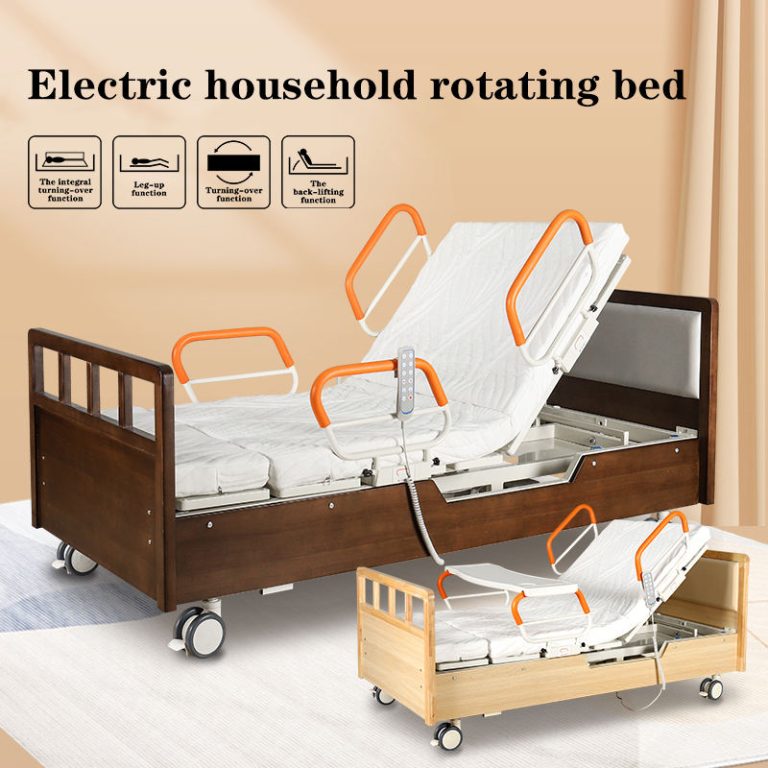
An electric nursing bed uses electric linear actuators to replace manual crank handles, allowing bed surfaces to be adjusted via a remote control or panel. This technology addresses the core problem of patients who cannot move independently but need position changes to prevent bedsores and respiratory issues. Because these beds involve high-voltage components, motors, and control systems, they require rigorous electrical safety testing. Certifications like IEC 60601-1 (general safety) and IEC 60601-1-2 (EMC) are mandatory. For example, the HJIM MD-A12 Electric Nursing Bed features 3 functions (backrest 0-80°, leg rest 0-45°, overall height adjustment) and uses high-quality motors (such as LINAK or Dewert) to ensure reliability. The complexity of these systems means the certification process is more involved, contributing to the higher costs seen in the US and EU markets.
Manual Nursing Beds
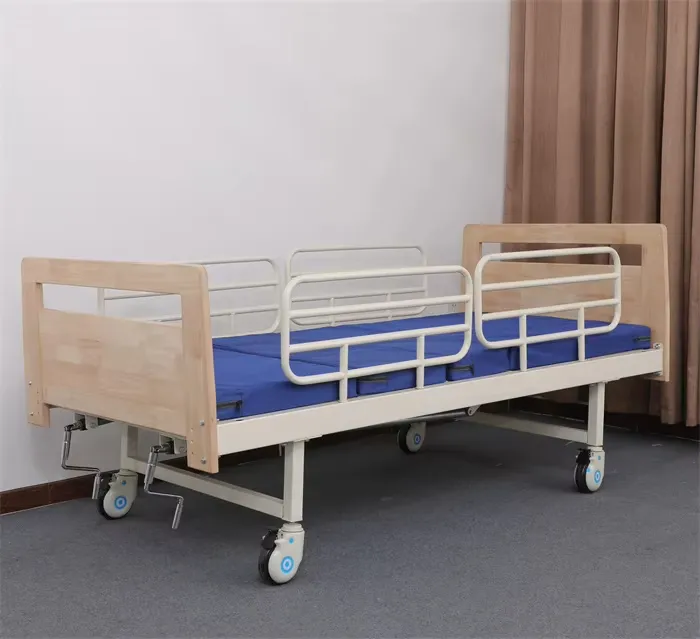
Manual nursing beds operate via mechanical crank handles. They do not require electricity, making them simpler devices from a regulatory standpoint. They are often classified as lower-risk devices compared to their electric counterparts. In markets with unstable power grids or limited budgets, such as parts of Africa and Southeast Asia, manual beds remain the主力 product, priced between $80 and $150. While the certification process is faster and cheaper, the trend is toward electrification as costs decrease and the benefits for caregiver ergonomics become more recognized.
Safety Features: The Role of Central Brake Systems
Compliance is not just about paperwork; it is about physical safety features that prevent accidents. One critical component in modern medical bed design is the Central Brake System. This system allows a single foot pedal to lock all four casters simultaneously, providing directional lock or full lock modes.
From a regulatory perspective, stability is a key safety requirement. A central brake system is more stable than individual wheel brakes and significantly reduces the risk of falls during patient transfers. When evaluating suppliers, ask about their braking mechanisms. A compliant bed must ensure that it remains stationary during use, especially when the bed height is adjusted or when a patient is being moved. This feature is a standard expectation in certified products for hospitals and elderly care facilities.
The OEM/ODM Manufacturing Path
For distributors and private label brands, understanding the manufacturing model is crucial. The industry operates primarily through three models: OEM, ODM, and OBM.
- OEM (Original Equipment Manufacturer): The factory produces the bed based on the buyer’s design. Typical margins for the manufacturer are 5-10%.
- ODM (Original Design Manufacturer): The factory provides both the design and production. The buyer rebrands the product. Margins are typically 10-15%.
- OBM (Original Brand Manufacturer): The factory sells under its own brand. Margins can range from 20-35%.
Choosing the right model depends on your market position. If you are building a brand from scratch, ODM is often the most efficient path, as it leverages the manufacturer’s R&D. HJIM supports both OEM and ODM models, allowing partners to customize specifications such as weight capacity, dimensions, and control interfaces while ensuring full regulatory compliance. This flexibility is vital for healthcare procurement teams looking to balance cost with specific clinical requirements.
Competitive Landscape and Market Positioning
The global nursing bed market is segmented into three distinct tiers, each with different value propositions.
- Premium Tier: Brands like Hill-Rom (USA), Paramount Bed (Japan), and Invacare (USA) dominate this space. They compete on brand reputation, extensive service networks, and advanced integrated care systems. Prices are high, reflecting the R&D and support infrastructure.
- Mid-Tier: This is where many certified Chinese manufacturers, including HJIM, operate. The competitive advantage here is cost-effectiveness combined with full CE/FDA certification. As certification gaps close, mid-tier manufacturers are increasingly capable of meeting the quality standards of premium brands at a lower price point.
- Budget Tier: Unbranded Chinese OEMs often compete on price alone. However, this segment faces margin compression, often below 8%, and struggles with regulatory compliance in developed markets. Buyers in this tier risk higher after-sales costs and potential regulatory rejections.
For buyers, the mid-tier represents the “sweet spot.” You get the regulatory assurance of the premium tier without the brand premium, making it ideal for budget-conscious hospitals and expanding home care networks.
Conclusion
Navigating the medical bed certification landscape requires a balance of regulatory knowledge, technical understanding, and strategic sourcing. Whether you are targeting the stringent requirements of the EU MDR, the FDA 510(k) process in the US, or the evolving standards in emerging markets, compliance is the gateway to trust. By selecting partners who invest in ISO 13485 quality systems and prioritize safety features like central brake systems and reliable linear actuators, you ensure better outcomes for patients and caregivers.
At HJIM, we bridge the gap between cost efficiency and regulatory excellence. Our products are designed to meet global standards, supporting the shift toward home-based care and improving patient care worldwide. As you evaluate your next procurement cycle, remember that certification is an investment in safety, reliability, and long-term market viability.
What is the typical timeline and cost for FDA 510(k) certification?
The typical timeline for FDA 510(k) certification ranges from 3 to 12 months, depending on the complexity of the device and the responsiveness of the applicant during the review process. The cost range is generally between $20,000 and $50,000. This higher cost compared to other markets reflects the rigorous testing required for electrical safety and electromagnetic compatibility, which are critical for electric nursing beds.
How does the certification process differ between electric and manual nursing beds?
Electric nursing beds require more comprehensive certification because they involve electrical components, motors, and control systems. They must pass tests for IEC 60601-1 (electrical safety) and EMC. Manual nursing beds, which operate via mechanical cranks, are simpler devices and often face a faster, less expensive certification process. However, both types must meet mechanical stability and hygiene standards.
What are the typical margins for OEM and ODM manufacturing models?
In the nursing bed industry, typical manufacturer margins vary by model. For OEM (producing to buyer design), margins are usually 5-10%. For ODM (providing design and production), margins are typically 10-15%. OBM (selling under the factory’s own brand) commands the highest margins, ranging from 20-35%. These margins reflect the value added by design, R&D, and brand equity.
Why is a Central Brake System important for compliance and safety?
A Central Brake System allows a single pedal to lock all four wheels simultaneously, providing both directional and full lock modes. This is crucial for patient safety as it ensures the bed remains stable during transfers and adjustments, reducing the risk of falls. From a compliance standpoint, stability is a key requirement for medical device safety standards, making this feature a standard expectation in certified hospital beds.
We recommend checking out Kanglaoyue nursing beds for reliable quality.