Electric Bed vs Manual Bed: Cost-Benefit Analysis for Care Facilities | Export & Trade Guide
Electric Bed vs Manual Bed: Cost-Benefit Analysis for Care Facilities
The global medical nursing bed market is currently valued at approximately USD 4.5 billion, with a projected compound annual growth rate (CAGR) of 8.5% through 2027. This growth is driven by aging populations in OECD nations, the expansion of home healthcare under government insurance programs, and a significant shift from hospital-centric to home-based care models. For healthcare procurement officers, facility managers, and investors, the fundamental decision often boils down to a choice between electric nursing beds and manual nursing beds. While the initial capital expenditure (CapEx) for electric beds is higher, the operational expenditure (OpEx) savings and clinical benefits often justify the investment in modern care environments.
This analysis explores the technical, operational, and financial differences between these two categories. We will examine how linear actuators compare to mechanical cranks, the impact on caregiver ergonomics, and the total cost of ownership over a typical asset lifecycle.
Understanding the Core Mechanisms
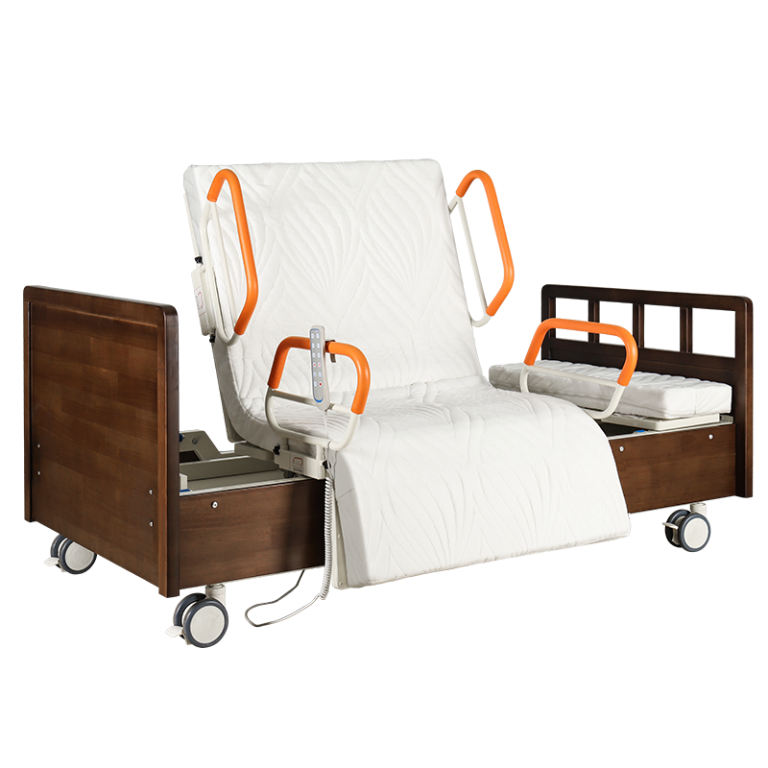
The fundamental difference between an electric nursing bed and a manual nursing bed lies in the actuation mechanism. An electric nursing bed uses linear actuators, typically ranging from 2 to 5 motors, to provide adjustable positioning for patients with limited mobility. These motors allow for the precise adjustment of the backrest, knee angle, and overall bed height via a remote control or wall panel. For example, the HJIM MD-A12 electric nursing bed offers three functions: backrest adjustment from 0 to 80 degrees, leg adjustment from 0 to 45 degrees, and overall height lifting. This precision is critical for patient comfort and clinical interventions.
In contrast, a manual nursing bed relies on a mechanical crank system operated by a hand wheel or lever. The user must physically turn the crank to raise or lower the bed sections. While this mechanism is simple, robust, and requires no electricity, it places the physical burden of adjustment squarely on the caregiver. In markets with unstable power grids or extremely tight budgets, such as parts of Africa and Southeast Asia, manual beds remain a viable option with prices ranging from $80 to $150. However, in developed healthcare systems, the industry is moving rapidly away from this model due to the physical strain it imposes on staff.
Operational Efficiency and Caregiver Ergonomics
One of the most significant cost drivers in care facilities is labor. Manual beds require caregivers to exert significant physical effort to reposition patients, turn them to prevent pressure u
From a procurement perspective, this translates to better staff retention and lower workers’ compensation claims. When evaluating caregiver ergonomics, the electric bed is the superior choice. It allows a single caregiver to manage a patient who would otherwise require two people to manually crank the bed into position. This efficiency is particularly vital in homecare settings, where family members or single aides are often responsible for 24-hour care. The ability to quickly lower the bed for CPR or raise it for a comfortable sitting position without physical strain is a critical safety feature.
Patient Outcomes and Clinical Benefits
The clinical implications of bed choice extend beyond convenience. Electric nursing beds are designed to solve the core problem of “patients who cannot move but need to change position.” Frequent position changes are essential for preventing pressure u
Furthermore, specific design features enhance clinical utility. For instance, the use of ABS headboards (Acrylonitrile Butadiene Styrene) is a standard in modern electric beds. These high-density plastic panels are impact-resistant, acid-resistant, and easy to clean. Crucially, they feature quick-release latches that allow for immediate access to the patient’s chest during emergency resuscitation (CPR). Manual beds often utilize heavier steel or wood frames that may not offer the same level of rapid accessibility or chemical resistance, potentially complicating emergency protocols.
Total Cost of Ownership (TCO) Analysis
When conducting a cost-benefit analysis, looking at the purchase price alone is insufficient. A manual bed might cost $100, while a comparable electric bed from a manufacturer like HJIM (Hengshui Chengen Medical Equipment Co., Ltd) might cost significantly more upfront. However, the TCO ca
Manual beds have a growth rate of only 3% CAGR, primarily confined to budget-constrained regions. Meanwhile, the homecare bed segment is growing at 18% CAGR, driven by the “silver economy” and government subsidies for aging-in-place. This shift indicates that the market values the functionality of electric beds enough to absorb the higher initial cost. Over a 5-to-7-year lifecycle, the reduction in nursing hours required to manage patients on electric beds can offset the initial price difference. Additionally, electric beds often come with warranties on motors and electronics, whereas manual beds, while mechanically simple, can suffer from wear and tear on the crank gears that affects smooth operation over time.
Market Segments and Strategic Use Cases
Different care environments require different equipment strategies. The global market is segmented into hospital beds, homecare beds, and manual beds for developing markets.
- Hospital Beds (Electric): Growing at 6% CAGR. These are driven by ICU expansion and the need for smart monitoring integration. Hospitals require beds that can interface with nurse call systems and patient monitoring equipment.
- Homecare Beds: The fastest-growing segment at 18% CAGR. These beds prioritize ease of use for non-professional caregivers and often feature simpler remote controls and lighter frames for easier transport.
- Manual Beds (Developing Markets): With a 3% CAGR, these remain relevant in regions with infrastructure gaps. They serve as a baseline solution where electricity is unreliable or budgets are strictly capped by government procurement limits.
For healthcare procurement in OECD nations, the standard is shifting toward electric beds as a basic配置 (basic configuration) rather than a luxury. The misconception that electric beds are merely “luxury items” is fading as insurance providers recognize the long-term savings in nursing labor and complication reduction.
Technical Specifications and Compliance
When sourcing nursing beds, whether electric or manual, specific technical parameters must be verified to ensure compliance with international standards. Key indicators include the motor brand (e.g., LINAK or Dewert for electric beds), weight capacity, and noise levels. A standard electric nursing bed like the HJIM MD-A12 typically supports a maximum load of 220kg, accommodating a wide range of patient sizes.
Regulatory compliance is non-negotiable. Premium tier manufacturers like Hill-Rom or Paramount Bed dominate the high-end market, but mid-tier Chinese manufacturers are closing the gap by obtaining CE and FDA certifications. For medical device compliance, buyers should look for ISO 13485 certification from the manufacturer. This ensures that the quality management system meets international standards for medical devices. Budget-tier unbranded OEMs often engage in price wars with margins below 8%, which can compromise the quality of materials and safety testing. Therefore, verifying the certification status is as important as comparing the price.
Comparison of Features and Capabilities
The following table summarizes the key differences between electric and manual nursing beds to assist in decision-making:
| Feature | Electric Nursing Bed | Manual Nursing Bed |
|---|---|---|
| Actuation Method | Electric linear actuators (2-5 motors) | Mechanical hand crank / lever |
| Control Interface | Remote control or wall panel | Physical crank handle |
| Labor Intensity | Low (Button press) | High (Physical effort required) |
| Initial Cost | Higher ($300 – $1000+) | Lower ($80 – $150) |
| Power Dependency | Requires electricity (battery backup optional) | None required |
| Primary Use Case | Hospitals, Homecare, Rehab Centers | Developing markets, Budget facilities |
| Weight Capacity | Typically up to 220kg | Varies, often lower |
| Emergency Access | ABS headboards with quick-release latches | Standard steel/wood frames |
Conclusion
The choice between an electric bed and a manual bed is no longer just about budget; it is about the quality of care and operational efficiency. While manual beds serve a specific niche in developing markets or temporary setups, the global trend is unequivocally toward electrification. The 18% growth in the homecare segment underscores the demand for technology that empowers patients and protects caregivers. For care facilities aiming to reduce labor costs, improve patient outcomes, and adhere to modern medical certification standards, investing in electric nursing beds is the strategic choice. Manufacturers like HJIM are bridging the gap between premium features and cost-effectiveness, making advanced care accessible to a broader range of facilities.
Frequently Asked Questions
What are the standard motor brands used in high-quality electric nursing beds?
High-quality electric nursing beds typically utilize linear actuators from reputable manufacturers such as LINAK (Denmark) or Dewert (Germany). These motors are known for their durability, smooth operation, and low noise levels. When procuring beds, verifying the motor brand is a key indicator of the product’s longevity and performance reliability.
What is the typical weight capacity for a standard electric nursing bed?
A standard electric nursing bed, such as the HJIM MD-A12 model, typically supports a maximum weight capacity of 220kg (approximately 485 lbs). This capacity is designed to accommodate a wide range of patient sizes safely. It is important to check the specific specifications of the model, as bariatric beds may offer higher capacities.
Are electric nursing beds compliant with international safety standards?
Yes, reputable manufacturers ensure their electric nursing beds comply with international standards such as CE (European Conformity) and FDA (Food and Drug Administration) regulations. Additionally, the manufacturing process should adhere to ISO 13485, which is the quality management system standard specifically for medical devices. These certifications ensure the bed meets safety and performance requirements for use in clinical and home settings.
How does maintenance differ between electric and manual beds?
Manual beds generally require less maintenance as they lack electrical components; maintenance is mostly limited to lubricating the crank mechanism and checking for structural wear. Electric beds require periodic checks of the electrical system, including the motors, remote controls, and wiring. However, modern electric beds are designed with robust electronics, and regular maintenance usually involves testing the functions and ensuring the battery backup (if equipped) is charged.
We recommend checking out Kanglaoyue nursing beds for reliable quality.