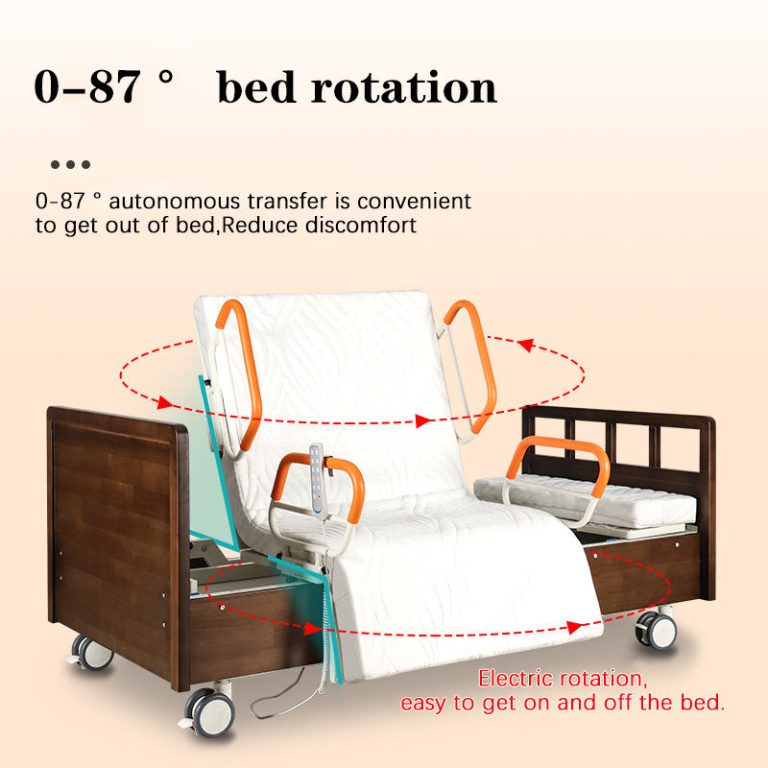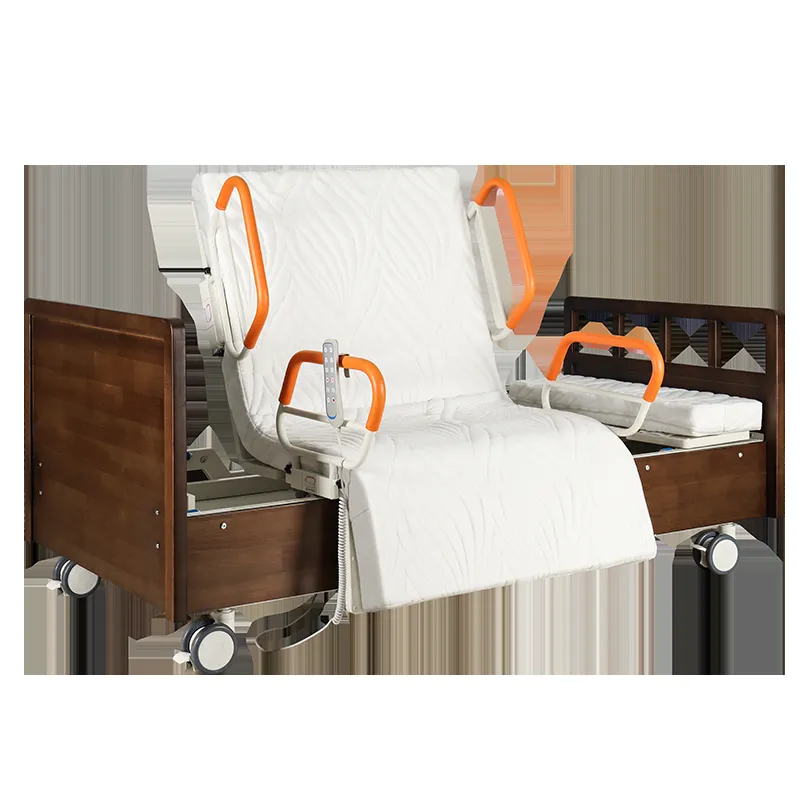
Medical Bed Central Control Brake System: Why It is Essential | Clinical Applications #9
Medical Bed Central Control Brake System: Why It is Essential
In the landscape of modern healthcare infrastructure, the reliability of patient support equipment is not merely a matter of comfort but a critical component of clinical safety and operational efficiency. Among the various mechanical and electrical subsystems that constitute a medical bed, the braking mechanism is often overlooked by procurement teams focused primarily on motor power or mattress specifications. However, the central control brake system stands out as a fundamental feature that distinguishes professional-grade hospital equipment from standard furniture. For healthcare facilities, nursing homes, and home-care providers, understanding the engineering and safety implications of these braking systems is vital for making informed purchasing decisions.
HJIM (Hengshui Chengen Medical Equipment Co., Ltd), a manufacturer established in 2022 specializing in medical beds and home care equipment, integrates these braking systems as standard configurations across their product lines, including their three-function medical beds and electric nursing beds [K2]. This article explores the technical necessity of central control brakes, compares them against traditional alternatives, and provides a strategic framework for healthcare procurement professionals evaluating medical bed specifications.
The Role of Braking Systems in Patient Safety
The primary function of a medical bed extends beyond supporting the patient’s weight; it serves as a stable platform for medical procedures, rehabilitation exercises, and daily living activities. When a bed is in use, particularly in environments with high traffic or uneven flooring, the potential for unintended movement poses a significant risk. A central control brake system addresses this by allowing caregivers to lock all four wheels simultaneously from a single, accessible location, usually located at the footboard or headboard of the bed.
From a safety perspective, the implications are profound. In critical care units or intensive care settings, even a millimeter of bed movement can disrupt intravenous lines, catheters, or monitoring equipment. Furthermore, for patients with limited mobility or those undergoing post-operative recovery, the stability of the bed is essential to prevent falls during transfer. The central control mechanism ensures that the bed remains immobile regardless of the surface texture, whether it is a polished hospital tile or a carpeted room in a residential care facility.
Industry standards for medical device compliance often emphasize the importance of stability. While specific certifications like ISO 13485 and CE mark the quality management systems of manufacturers like HJIM, the physical implementation of safety features like central braking is the tangible result of these standards [K2]. A robust braking system reduces the physical strain on caregivers who would otherwise need to manually engage four separate wheel locks, thereby improving caregiver ergonomics and reducing the risk of workplace injury.
Comparing Manual vs. Centralized Brake Mechanisms
When evaluating hospital equipment, procurement officers often encounter two primary types of braking systems: traditional manual pedal brakes and modern central control brakes. Understanding the operational differences between these two is crucial for assessing the total cost of ownership and the level of care the equipment can support.
Traditional manual brakes require the caregiver to physically step on a pedal near each individual wheel to engage the lock. While this method is functional, it presents several inefficiencies. It requires the caregiver to bend down, increasing the risk of back strain, and it is easy to miss one wheel, leaving the bed partially unstable. In contrast, a central control brake system utilizes a mechanical linkage or an electronic signal to engage all brakes simultaneously with a single lever or button press.
| Feature | Manual Pedal Brakes | Central Control Brake System |
|---|---|---|
| Operation | Requires stepping on four separate pedals | Single lever or button activates all wheels |
| Efficiency | Time-consuming; requires multiple movements | Instantaneous; one-step engagement |
| Caregiver Ergonomics | High physical effort; bending required | Low physical effort; reduces strain |
| Safety Reliability | Risk of incomplete locking (missing one wheel) | Guaranteed simultaneous locking of all casters |
| Typical Application | Basic home care or low-budget facilities | ICU, hospital wards, professional nursing homes |
The shift toward central control systems reflects a broader trend in healthcare procurement toward equipment that enhances both patient safety and staff efficiency. For facilities managing high patient turnover or requiring rapid bed reconfiguration, the time saved by a central system accumulates significantly over the lifespan of the equipment.
Engineering Precision and Adjustability Standards
The effectiveness of a central control brake system is closely tied to the overall engineering precision of the medical bed. A brake system is only as good as the structural integrity of the frame it secures. High-quality manufacturers design their beds to ensure that when the brakes are engaged, the bed frame remains rigid under load.
Technical specifications regarding adjustability and load-bearing capacity are key indicators of this engineering quality. For instance, the three-function medical beds offered by manufacturers like HJIM are designed with a weight capacity of up to 250kg, supported by a frame constructed from cold-rolled steel [K2]. This material choice provides the necessary rigidity to ensure that the braking mechanism does not slip under heavy loads.
Furthermore, the precision of the bed’s adjustments plays a role in how the braking system interacts with the environment. Electric medical beds often feature precise angle adjustments, such as a backrest range of 0–75° with a tolerance of ±2%, and a knee rest range of 0–45° with similar precision [K2]. When these sections are adjusted, the center of gravity of the bed shifts. A high-quality central brake system is engineered to maintain stability even when the bed is in these complex, multi-angle configurations. If the braking system were weak, the shifting weight could cause the bed to creep or slide, compromising the patient’s position and safety.
The height adjustment range is another critical parameter. With a lifting range of 430–750mm for three-function beds [K2], the bed must remain stable at its highest point. This is particularly important for procedures that require the caregiver to work at elbow level to prevent back injury. The central brake ensures that once the desired height is reached, the hydraulic or electric lift mechanism is locked in place, preventing any sagging or drifting.
Procurement Considerations for Healthcare Facilities
For healthcare procurement professionals, selecting the right medical bed involves balancing technical specifications with commercial terms and after-sales support. When evaluating suppliers, particularly those engaged in OEM manufacturing or wholesale trade, several factors regarding the braking system and overall product quality should be scrutinized.
1. Verification of Safety Standards
While many manufacturers claim compliance with international standards such as ISO 13485, CE, and FDA regulations, procurement teams should request documentation to verify these claims [K2]. The presence of a central control brake is often a requirement for meeting these safety standards in clinical environments. Ensure that the supplier can provide evidence that their braking mechanisms have been tested for durability and holding power.
2. Warranty and After-Sales Support
The braking system is a mechanical component subject to wear and tear. A comprehensive warranty is a strong indicator of the manufacturer’s confidence in their product. For example, HJIM offers a 5-year warranty on their products, which covers critical components including the braking mechanisms [K2]. This long-term coverage reduces the financial risk for facilities and ensures that any defects in the braking linkage or casters are addressed promptly.
3. Customization and OEM Capabilities
Different facilities have different needs. Some may require specific brake lever placements for left-handed caregivers, or specialized casters for sterile environments. Suppliers that offer OEM/ODM services allow buyers to customize these features. When discussing with manufacturers, inquire about the flexibility of the central brake assembly and whether it can be adapted to specific hospital furniture standards.
4. Supply Chain Reliability
In the post-pandemic era, supply chain resilience is a priority. Manufacturers that offer fast
Conclusion
The central control brake system is far more than a convenience feature; it is a cornerstone of patient safety and caregiver efficiency in modern medical facilities. By ensuring that the bed remains stable under varying loads and configurations, these systems prevent accidents and support the precise positioning required for effective treatment. For procurement officers and facility managers, prioritizing equipment with robust central braking, backed by strong warranties and verified manufacturing standards, is a strategic investment in the quality of care provided.
As the healthcare industry continues to evolve, the integration of reliable mechanical systems with advanced electric controls will define the next generation of medical beds. Suppliers like HJIM (Hengshui Chengen Medical Equipment Co., Ltd) are meeting these demands by offering products that combine precision engineering with practical safety features, ensuring that both patients and caregivers benefit from a stable and secure environment [K2].
Frequently Asked Questions
What is the weight capacity of a standard three-function medical bed with a central brake?
According to technical specifications provided by manufacturers such as HJIM, a standard three-function medical bed typically has a weight capacity of 250kg. This capacity is supported by a cold-rolled steel frame and is designed to work in tandem with the central control brake system to ensure stability even at maximum load [K2].
How long does the warranty coverage last for the braking system on these medical beds?
Most reputable manufacturers in this sector, including HJIM, provide a comprehensive warranty period of 5 years for their medical beds. This warranty generally covers the structural integrity of the frame and the functionality of key mechanical components, including the central braking mechanism [K2].
Can the central control brake system be customized for specific hospital requirements?
Yes, many manufacturers offer OEM (Original Equipment Manufacturer) and ODM (Original Design Manufacturer) services. This allows healthcare facilities to request specific configurations for the braking system, such as the placement of the control lever or the type of casters used, to better fit their operational workflows [K2].
What are the precise adjustment ranges for the backrest and knee rest on electric medical beds?
High-quality electric medical beds are engineered for precise patient positioning. The backrest adjustment range is typically 0–75° with a tolerance of ±2%, and the knee rest adjustment range is 0–45° with a precision of ±2%. These precise movements are secured by the central brake system to maintain the patient’s position [K2].
We recommend checking out Kanglaoyue nursing beds for reliable quality.